7 Best Optolong CLS Light Pollution Filters Compared (2026)
Compare 7 Optolong CLS light pollution filter options for deep-sky viewing and imaging. See specs, pros, cons and who each filter suits before you buy.
 By Audrey Hayes
Updated November 24, 2026
 By Audrey Hayes
Updated November 2026
Shopping for an optolong cls light pollution filter usually comes down to one question: how much sky glow are you fighting, and what do you plan to point at? A CLS-type filter blocks the sodium and mercury street-lamp wavelengths that wash out faint nebulae, galaxies and star clusters, while letting most of the emission-line light from nebulae through. The picks below were ranked against four criteria: how well the filter’s passband matches common deep-sky targets, whether it suits visual use or astrophotography, how well the model is documented by the manufacturer, and the patterns owners tend to describe in their feedback, including fit with standard 2-inch focusers and the amount of glare or color shift they report.
Our top picks at a glance
- 1TOP CHOICEBest overallOptolong 2" L-Pro Light Pollution FilterView on Amazon
- 2
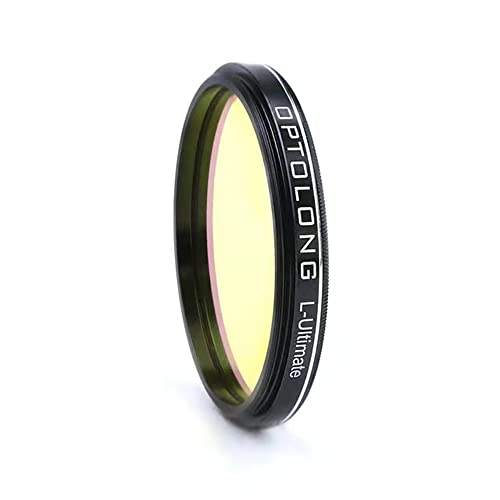 TOP CHOICEBest for imaging with a dedicated cameraOptolong L-Ultimate 2” Dual Bandpass Light Pollution Reduction Imaging FilterView on Amazon
- 3
 TOP CHOICEBest for emission nebulaeOptolong Ultra High Contrast UHC Light Pollution Reduction Filter – 2"View on Amazon
- 4
 Best for narrowband-style targetsOptolong 2" L-Enhance Dual Narrowband Light Pollution Filter (H-Alpha and H-Beta/O-III)View on Amazon
- 5
 Best for demanding deep-sky workNew Optolong Filter 2-inch L-Quad Enhance Filter (L-QEF)View on Amazon
- 6
 Best budget pickSVBONY CLS Filter, Broadband Telescope Filter, 2 Inch Light Pollution FilterView on Amazon
- 7
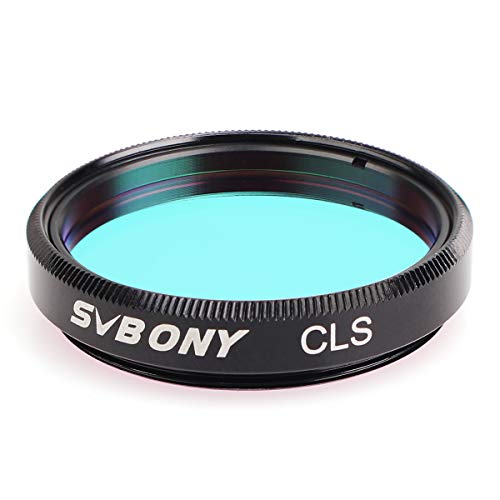 Best 1.25-inch optionSVBONY Telescope Filters, CLS 1.25", Light Pollution Broadband FilterView on Amazon
Our Top Picks
Quick Comparison
| Product | Best for | Key feature |
|---|---|---|
| Optolong 2″ L-Pro Light Pollution Filter | Broad all-round use | Balanced CLS-type passband for visual and imaging work |
| Optolong L-Ultimate 2” Dual Bandpass Light Pollution Reduction Imaging Filter | Astrophotography with a camera | Dual bandpass design for imaging |
| Optolong Ultra High Contrast UHC Light Pollution Reduction Filter – 2″ | Emission nebulae | UHC passband aimed at emission lines |
| Optolong 2″ L-Enhance Dual Narrowband Light Pollution Filter | Narrowband-style targets | Dual narrowband transmission (H-Alpha and H-Beta/O-III) |
| New Optolong Filter 2-inch L-Quad Enhance Filter (L-QEF) | Demanding deep-sky work | Quad-band enhancement design |
| SVBONY CLS Filter, Broadband Telescope Filter, 2 Inch | Budget-conscious observers | Broadband CLS-style light pollution suppression |
| SVBONY Telescope Filters, CLS 1.25″ | 1.25-inch eyepiece setups | Broadband filter in 1.25-inch format |
Optolong 2″ L-Pro Light Pollution Filter
Optolong 2" L-Pro Light Pollution Filter
Best for: Broad all-round use from suburban skies
This is the filter most observers with a 2-inch focuser start with. It suits people who want one filter that works on galaxies, clusters and emission nebulae without switching accessories every night.
Key specs
- 2-inch barrel format
- Light pollution (CLS-type) passband design
Pros
- Versatile across many deep-sky object types
- Standard 2-inch size fits most refractor and reflector focusers
- Well-known model with a wide base of owner discussion
Cons
- Less specialized than the UHC or narrowband models for certain nebulae
- Gains are modest under very bright, heavily polluted skies
Bottom line: A sensible first filter for observers with a 2-inch focuser who want broad performance.
View on AmazonOptolong L-Ultimate 2” Dual Bandpass Light Pollution Reduction Imaging Filter
Optolong L-Ultimate 2” Dual Bandpass Light Pollution Reduction Imaging Filter
Best for: Astrophotography with a dedicated camera
Aimed at imagers who shoot long exposures through a camera on a telescope. The dual bandpass design is intended to pass target emission while suppressing sky-glow wavelengths in a way suited to stacked images.
Key specs
- 2-inch format
- Dual bandpass design for imaging
Pros
- Designed with photographic use in mind
- Helps increase contrast in long exposures under light-polluted skies
- Suits a range of emission-rich targets
Cons
- Visual gains may feel less dramatic than on purpose-built visual filters
- Needs a stable mount and tracking for best results
Bottom line: Best suited to imagers with a camera and tracking mount who want to push contrast from a city site.
View on AmazonOptolong Ultra High Contrast UHC Light Pollution Reduction Filter – 2″
Optolong Ultra High Contrast UHC Light Pollution Reduction Filter – 2"
Best for: Emission nebulae
A UHC-style filter is built around the strong emission lines of gas nebulae. Owners of this type of filter often use it on objects such as the Orion Nebula and North America Nebula from suburban locations.
Key specs
- 2-inch barrel format
- Ultra high contrast (UHC) passband
Pros
- Strong effect on emission nebulae
- Simple, focused purpose that is easy to understand
- Standard 2-inch fit
Cons
- Much less useful on galaxies and star clusters
- Color rendering can look unnatural on some targets
Bottom line: A strong pick for observers whose list is dominated by emission nebulae.
View on AmazonOptolong 2″ L-Enhance Dual Narrowband Light Pollution Filter (H-Alpha and H-Beta/O-III)
Optolong 2" L-Enhance Dual Narrowband Light Pollution Filter (H-Alpha and H-Beta/O-III)
Best for: Narrowband-style targets
The listing name points to transmission at H-Alpha and H-Beta/O-III lines, the emission wavelengths that narrowband work relies on. It targets observers who want more separation between nebula light and sky glow.
Key specs
- 2-inch format
- Dual narrowband transmission: H-Alpha and H-Beta/O-III
Pros
- Targets key nebula emission lines directly
- Useful for both visual and imaging work on emission objects
- Clear design purpose stated in the model name
Cons
- Narrow passband can dim broadband targets such as galaxies
- Works best when you already know which targets suit it
Bottom line: Good for observers focused on nebulae who want a narrowband-style filter without a full narrowband setup.
View on AmazonNew Optolong Filter 2-inch L-Quad Enhance Filter (L-QEF)
New Optolong Filter 2-inch L-Quad Enhance Filer Professional L-Quad Enhance Filter (L-QEF)
Best for: Demanding deep-sky work
The quad-enhance design is aimed at observers who want a single filter covering several emission regions. It fits people who regularly move between object types under moderately bright skies.
Key specs
- 2-inch format
- Quad-band enhancement design (L-QEF)
Pros
- Designed for a wider range of emission targets than single-band filters
- Useful as an upgrade for experienced observers
- Standard 2-inch size
Cons
- Listing title contains typos and is less clear than others
- Some owners report more color shift than simpler CLS designs
Bottom line: A good step up for experienced deep-sky observers who want broader emission coverage.
View on AmazonSVBONY CLS Filter, Broadband Telescope Filter, 2 Inch Light Pollution Filter
SVBONY CLS Filter, Broadband Telescope Filter,2 Inch Light Pollution Filter | 0.1% Transmission of Off-band,90% Transmission of Key Nebula WavelengthsSuitable for Deep Sky Visual Astronomical Photogra
Best for: Budget-conscious observers
A broadband CLS-style filter with a 2-inch barrel. The listing describes strong suppression of off-band light and high transmission at key nebula wavelengths, which suits observers who want a practical entry point.
Key specs
- 2-inch barrel format
- Broadband CLS-style design for visual and photographic use
Pros
- Practical starting point for 2-inch users
- Broad use across many deep-sky object types
- Listing names visual and imaging use
Cons
- Less targeted than UHC or narrowband designs
- Specific transmission figures should be checked against the manufacturer’s listing
Bottom line: A solid pick for observers who want a 2-inch CLS filter without a premium-tier commitment.
View on AmazonSVBONY Telescope Filters, CLS 1.25″, Light Pollution Broadband Filter
SVBONY Telescope Filters, CLS 1.25", Light Pollution Broadband Filter | 90% Transmission of Nebula Emission Lines,Reduces Light Pollution ,Suitable for Deep Sky Visual Astronomical Photography
Best for: 1.25-inch eyepiece setups
The 1.25-inch version suits smaller telescopes and eyepiece sets that use the narrower barrel. It is aimed at observers who view through eyepieces and want a broadband filter for deep-sky targets.
Key specs
- 1.25-inch barrel format
- Broadband CLS-style design for deep-sky visual viewing
Pros
- Fits 1.25-inch eyepiece systems
- Broadband use across many targets
- Simple option for smaller telescopes
Cons
- Smaller format limits use with larger fields of view
- Less suited to dedicated imaging than 2-inch models
Bottom line: The right size choice for observers working with 1.25-inch eyepieces who want a broadband CLS-style filter.
View on AmazonBuying Guide
Barrel size and focuser fit
Measure your focuser or diagonal before anything else. Most of the models above come in 2-inch format, while the SVBONY 1.25-inch option is made for smaller eyepiece systems. Mismatched barrel sizes are the most common reason a filter goes unused.
Good picks for this: Optolong 2″ L-Pro Light Pollution Filter, SVBONY Telescope Filters, CLS 1.25″
Passband type: CLS, UHC or narrowband
Broadband CLS-style filters suppress a wide slice of sky-glow wavelengths and suit mixed target lists. UHC designs concentrate on emission lines and suit nebulae. Narrowband-style designs are the most selective and suit specific emission objects.
Good picks for this: Optolong Ultra High Contrast UHC Light Pollution Reduction Filter – 2″, Optolong 2″ L-Enhance Dual Narrowband Light Pollution Filter
Visual use versus astrophotography
A filter used at the eyepiece and one used in front of a camera have different demands. Imaging filters are often designed with long exposures and stacking in mind, while visual filters are judged by the view. Check whether the model is described for visual, photographic or both.
Good picks for this: Optolong L-Ultimate 2” Dual Bandpass Light Pollution Reduction Imaging Filter, SVBONY CLS Filter, Broadband Telescope Filter
Target list and sky conditions
If most of your targets are galaxies and star clusters, a broadband CLS filter is usually a better fit than a UHC or narrowband design. If you mainly chase emission nebulae from a suburban site, a more selective filter may give you more contrast.
Good picks for this: Optolong 2″ L-Pro Light Pollution Filter, New Optolong Filter 2-inch L-Quad Enhance Filter (L-QEF)
Color balance and star appearance
Every filter changes color. Some owners report a greenish or magenta cast on certain targets, and sharper or dimmer star halos depending on design. Test your setup on a familiar object before judging a filter from a single night.
Good picks for this: Optolong 2″ L-Pro Light Pollution Filter, SVBONY CLS Filter, Broadband Telescope Filter
Build quality and durability
Filters are typically threaded into a cell that screws into the eyepiece or camera barrel. Look for solid threading and a clean glass surface. Keep caps on when the filter is not in use and clean only with lens-safe materials.
Good picks for this: Optolong Ultra High Contrast UHC Light Pollution Reduction Filter – 2″, Optolong 2″ L-Enhance Dual Narrowband Light Pollution Filter
Budget and upgrade path
Many observers start with a broadband CLS filter and add a UHC or narrowband model later once they know which targets they enjoy most. Buying one specialized filter before you know your target list can leave you with a tool you rarely use.
Good picks for this: SVBONY CLS Filter, Broadband Telescope Filter, 2 Inch Light Pollution Filter, New Optolong Filter 2-inch L-Quad Enhance Filter (L-QEF)
FAQ
What does an optolong cls light pollution filter actually block?
A CLS-type filter blocks much of the sodium and mercury emission from street lighting, which is the main source of sky glow in many cities. It lets through more of the light emitted by nebulae and some other deep-sky objects, so faint targets can stand out more against a darker background.
Can I use a light pollution filter on galaxies?
Broadband CLS-style filters can help on galaxies by reducing sky glow, though the effect is usually smaller than on emission nebulae. UHC and narrowband designs tend to dim galaxies more because they pass a narrower slice of light.
Do I need a filter if I observe from a dark site?
Most observers from truly dark skies get little benefit and may lose brightness on some targets. A light pollution filter is most useful from suburban or urban locations where sky glow is strong.
What is the difference between a CLS filter and a UHC filter?
A CLS filter is a broader design that suppresses more of the sky-glow spectrum and suits mixed target lists. A UHC filter concentrates on emission lines and usually produces stronger contrast on nebulae, with less benefit for galaxies and clusters.
Will a light pollution filter work with a camera?
Yes, several models here are described for astrophotography. Imaging with a filter generally requires a stable mount, tracking and multiple long exposures. Results depend heavily on your sky, camera and processing workflow.
How do I know if the filter fits my telescope?
Check the barrel size first: 2-inch filters fit 2-inch focusers and diagonals, while 1.25-inch filters fit smaller eyepiece systems. Confirm your diagonal or eyepiece thread before you buy.
Is a more expensive filter always better?
Not necessarily. A filter matched to your sky and target list usually beats a more specialized model used in the wrong situation. Match the passband to your targets first, then consider build and documentation.
Conclusion
For most observers starting out, the Optolong 2″ L-Pro Light Pollution Filter is the most versatile choice in this list. Imagers with a camera and tracking mount may prefer the Optolong L-Ultimate 2” Dual Bandpass Light Pollution Reduction Imaging Filter. Observers focused on emission nebulae should look at the Optolong Ultra High Contrast UHC Light Pollution Reduction Filter – 2″ or the dual narrowband model. The SVBONY CLS Filter, Broadband Telescope Filter, 2 Inch Light Pollution Filter is a practical budget-minded option, and the SVBONY 1.25-inch version suits smaller eyepiece setups. Check your barrel size and target list first, and expect results to vary with your sky conditions.
Sources
- Background on outdoor light pollution, its sources and how sky glow affects astronomical observing
- Guides and reference material on deep-sky objects, emission nebulae and astronomical observing (nasa.gov)
- Information on night-sky conditions, natural darkness and the effects of artificial light at night (nps.gov)
Before you buy: helpful guides
Related reading
- Optolong L Pro Light Pollution Filter (2026): Which Should You Choose?
- Polarizer Filter Light Pollution vs Narrowband: Which Should You Choose?
- Light Pollution Filter Comparison (2026): Which Should You Choose?
- 7 Best Light Pollution Filters for Astrophotography Picks in 2026
- 6 Best 77mm Light Pollution Filter Picks Compared for Night Sky Viewing
- 5 Best Camera Light Pollution Filters for Night Sky Shots (2026)
About Audrey Hayes
Audrey Hayes is part of our editorial team and reviews and edits our telescopes & stargazing guides, checking product details against manufacturer specifications and owner feedback.
About the author
Audrey Hayes writes reviews and buying guides for Astronomy Site.