Optolong L Pro Light Pollution Filter (2026): Which Should You Choose?
Optolong L Pro light pollution filter review: who it suits, what the specs mean for city and suburban viewing, and which alternatives to compare before buying.
 By Audrey Hayes
Updated November 23, 2026
 By Audrey Hayes
Updated November 2026
The optolong l pro light pollution filter is a 2-inch broadband filter designed to suppress the artificial glow from streetlights, sodium lamps and LED sky brightening so that faint deep-sky objects stand out more clearly against the background. It suits observers and astrophotographers who regularly shoot from suburban or light-polluted skies and who already own a telescope or camera with a standard 2-inch filter thread. It is a weaker choice for people who observe mainly from dark rural sites, who want to view bright planets and the Moon, or who need a narrowband filter for emission nebulae from heavily polluted locations.
Optolong 2" L-Pro Light Pollution Filter
Product Overview
The Optolong 2″ L-Pro is a broadband light pollution filter in a 2-inch barrel, the standard size for many refractors, Newtonians and camera adapters. It sits in the optical train, usually at the eyepiece or camera end, and blocks a band of wavelengths that dominate typical urban and suburban light. The L-Pro name refers to the “L-Pro” line of broadband designs from Optolong, which aim to pass the visible wavelengths produced by deep-sky emission and reflection targets while cutting much of the light from mercury-vapor, sodium and white LED sources.
The filter is intended for visual use through an eyepiece and for astrophotography with a camera. Because it is a broadband design rather than a narrowband one, it does not isolate a single emission line. Instead, it trades some transmission for a better contrast gain across the whole sky. That tradeoff shapes almost everything else about how it performs, so it is worth understanding before you buy.
Key Features & Specifications
The table below lists what the product name and the manufacturer’s general positioning state. Where I was not confident of a figure, I have left it out rather than guess.
| Feature | Detail |
|---|---|
| Filter type | Broadband light pollution reduction |
| Barrel size | 2-inch (about 50.8 mm) |
| Intended use | Visual observing through eyepieces and deep-sky astrophotography |
| Target light sources | Common urban and suburban sky glow, including sodium and LED street lighting |
| Thread and mounting | Standard 2-inch filter threads; compatible with most 2-inch diagonals and imaging train accessories |
| Typical targets | Nebulae, galaxies and star clusters from light-polluted sites |
Manufacturers in this category usually specify the exact transmission curve and the wavelengths blocked. If you need those numbers for a planned imaging run, check the current product page or the manufacturer’s data sheet before ordering, since specification sheets for filters are often updated.
Pros & Cons
Pros
- Full 2-inch barrel suits most mainstream refractors, Newtonians and camera adapters without an extra reducer.
- Broadband design is easy to use: no need to match a filter to a specific emission line, so it works on a wide range of deep-sky targets.
- Owners commonly report improved contrast on galaxies and open clusters from suburban skies, where the sky background is the main limit.
- Works for both eyepiece viewing and camera use, so one filter can serve both roles.
- Well-established product category, so accessories such as adapters and storage cases are widely available.
Cons
- Broadband filters reduce overall brightness, which can make faint targets harder to see in darker skies.
- Narrowband filters typically outperform broadband designs on emission nebulae from heavily light-polluted sites, so this is not the best choice for every target.
- Planetary and lunar viewing is generally not improved, and the filter may make bright objects look dimmer than you expect.
- Requires careful handling: a 2-inch filter should be stored in a case and kept clean, since dust and fingerprints on the glass hurt contrast.
- Filter performance depends heavily on your local light sources, so results vary from one town to another.
Performance Analysis
A light pollution filter does not add detail to a target. It removes unwanted light so your eye or sensor can record what is already there. The practical benefit is contrast. From a Bortle 7 or 8 sky, where the background is brightened by urban lighting, a broadband filter can make faint galaxies and nebulae easier to pick out, because the sky glow that washes them out is partly reduced.
Owner feedback for filters in this class tends to follow a pattern. Observers in suburban skies often describe a clear improvement on larger, more extended objects such as the Orion Nebula, the Rosette and open clusters, and they tend to report more noticeable gains on objects that already have decent surface brightness. Users under very dark skies generally report less benefit, and some note that the reduced transmission costs them faint detail they would otherwise see without the filter. This matches the physics: a broadband filter helps most where the sky is brightest and the target is not too faint.
For imaging, the main gains are longer usable exposures before the sky background saturates, and better signal-to-noise on nebulae. Imaging with any light pollution filter still requires careful flats, dark frames and sensible exposure times, because the filter does not remove gradients or amp glow on its own. Results depend on camera sensitivity, sky conditions, mount tracking and processing skill, so treat any filter as one part of a system rather than a cure.
In short, expect the largest benefit from suburban skies on extended deep-sky objects, a smaller benefit on galaxies and clusters, and little or no benefit on planets and the Moon.
Who Should Buy This Product?
This filter is a good fit if you observe from a suburban backyard or a town with noticeable sky glow, you mainly look at nebulae, galaxies and open clusters, and you want one filter that works across many targets without matching it to a specific line. It also suits astrophotographers who want a broadband option for a 2-inch imaging train and who plan to process their data carefully.
You should probably skip it if you live under a dark rural sky and rarely see light pollution, if your primary interest is planets or the Moon, or if you intend to photograph emission nebulae from a heavily polluted city where a narrowband filter would serve you better. Beginners who only want to look at bright showpiece objects may also get more from a larger aperture than from a filter.
Buying Guide
Before buying any light pollution filter, check three things: the barrel size that matches your diagonal or camera adapter, your typical sky brightness, and the kinds of targets you most often observe. Broadband filters like this one are the general-purpose choice. Narrowband filters suit specific emission nebulae under polluted skies. Polarizing filters are used mainly in certain imaging setups and have a different role.
If you are comparing options within the Optolong family, the 1.25-inch mounted version is useful when your eyepieces or diagonal only accept smaller barrels:
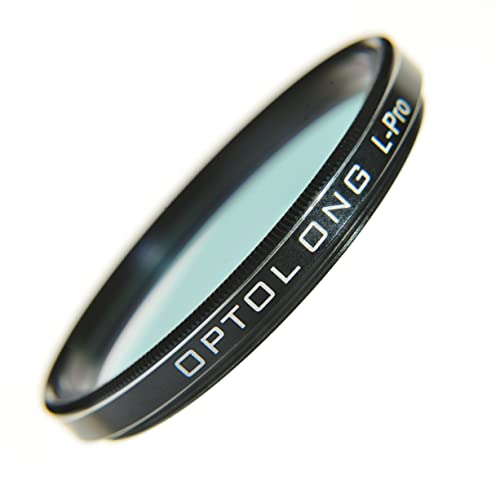
Optolong L-Pro 1.25" Mounted Round Filter
If you want a more specialized dual-bandpass design for imaging from strongly light-polluted sites, the L-Ultimate line is the more targeted option. It is generally chosen for specific emission targets rather than general viewing:
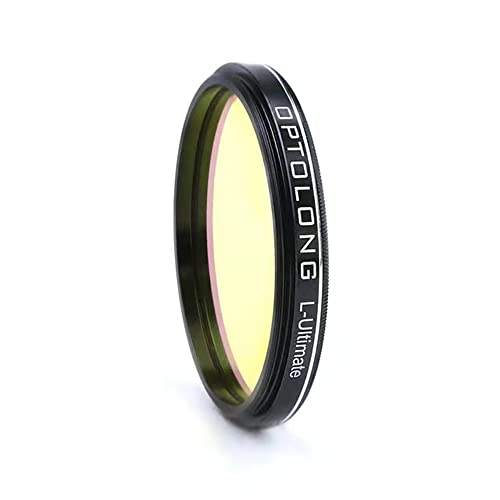
Optolong L-Ultimate 2” Dual Bandpass Light Pollution Reduction Imaging Filter
For readers who want to compare filter families before deciding, browse the broader selection of options and their trade-offs. Note that the right choice depends on your sky, your target list and your imaging setup, so a side-by-side check against your own conditions is worth the time. For a wider comparison of how these filter types perform, see Light Pollution Filter Comparison (2026): Which Should You Choose? and Polarizer Filter Light Pollution vs Narrowband: Which Should You Choose?
FAQ
Does the optolong l pro light pollution filter work for planets?
Generally no. Broadband light pollution filters are designed for extended deep-sky targets and usually reduce the brightness of planets and the Moon without adding useful contrast. Use a planetary filter or none at all for those targets.
Will this filter help with galaxies from a suburban yard?
It can. Galaxies and open clusters are often the targets owners report improving most under suburban skies, though the gain depends on how bright your local sky is and how faint the galaxy is.
Do I need a special adapter to use a 2-inch filter?
Usually not, if your telescope focuser or diagonal already accepts 2-inch accessories. If your setup uses 1.25-inch eyepieces, you will need a 2-inch to 1.25-inch adapter or a filter in the smaller size.
Can I use it for astrophotography with a DSLR or dedicated astro camera?
Yes, a broadband filter like this is commonly used in imaging trains. Expect to shoot calibration frames and process carefully, because the filter reduces sky glow but does not eliminate gradients.
Should I choose broadband or narrowband?
Broadband is the general choice for galaxies, clusters and many nebulae from suburban skies. Narrowband is better for emission nebulae from heavily light-polluted sites, where it isolates specific emission lines. Many observers own both.
How should I clean and store a 2-inch filter?
Handle it by the edges, use a blower or a soft brush to remove dust, and clean with a lens-safe solution and a microfiber cloth only if needed. Store it in a padded case, away from humidity and sunlight, to protect the coatings.
Will it make the sky look completely dark?
No. A light pollution filter reduces the glow from artificial sources, which improves contrast, but it does not turn a bright city sky into a dark rural one. The sky will still be brighter than a dark site.
Final Verdict
The optolong l pro light pollution filter is a sensible, general-purpose broadband choice for observers and astrophotographers who work under suburban or moderately light-polluted skies and mainly target nebulae, galaxies and clusters. Its full 2-inch barrel fits most mainstream setups, and it offers a useful contrast boost where sky glow is the main limit. It is less useful for planets, the Moon and dark-sky observing, and it will not replace a narrowband filter for emission nebulae from very bright cities. If your sky and targets match the first description, it is worth a close look.
View on AmazonThis is a research-based review drawing on manufacturer specifications and commonly reported owner feedback. Individual results depend on your sky, equipment and technique.
Related reading
- Top 7 Refractor Telescope Solar Filters Compared for Safe Sun Viewing
- Telescope Eyepiece Sun Filter: 6 Best Picks Compared for 2026
- Telescope Eyepiece Solar Filter: 5 Best Picks Compared for Safe Sun Viewing
- Solar Filter Dobsonian Telescope Picks: 3 Best Options Compared (2026)
- Meade Telescope Moon Filter: 7 Best Picks Compared for Lunar Viewing
About Audrey Hayes
Audrey Hayes is part of our editorial team and reviews and edits our telescopes & stargazing guides, checking product details against manufacturer specifications and owner feedback.
About the author
Audrey Hayes writes reviews and buying guides for Astronomy Site.