5 Best Camera Light Pollution Filters for Night Sky Shots (2026)
Compare the 5 best camera light pollution filters for night sky and star photography. See key specs, pros, cons and which filter suits your needs.
 By Audrey Hayes
Updated November 23, 2026
 By Audrey Hayes
Updated November 2026
A camera light pollution filter cuts the glow from streetlights, signs and city skyglow so that faint stars, the Milky Way and nebulae stand out more clearly in your night photos. Choosing one comes down to thread size, the filter’s transmission profile, how well its coatings control color cast, and whether it fits your lens and shooting style. This guide compares five clear-night filters from K&F Concept, Walking Way and Haida, drawing on manufacturer specifications and the patterns owners commonly report.
Our top picks at a glance
- 1TOP CHOICEBest overallK&F CONCEPT 58mm Clear Natural Night Filter Pollution ReductionView on Amazon
- 2TOP CHOICEBest for larger lensesK&F CONCEPT 67mm Clear Natural Night Filter Pollution ReductionView on Amazon
- 3
 TOP CHOICEBest for a natural-looking skyWalking Way 67mm Natural Night Filter for Light Pollution ReductionView on Amazon
- 4Best budget pickWalking Way 58mm Natural Night Filter for Light Pollution ReductionView on Amazon
- 5
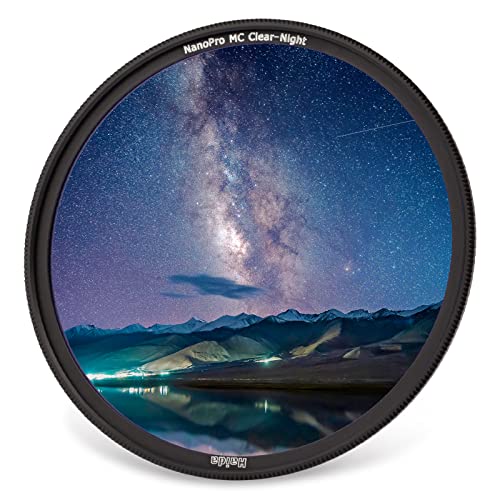 Best for a specialty night-sky setupHaida 52MM Clear-Night Filter Light Pollution Source ReductionView on Amazon
Our Top Picks
Quick Comparison
| Product | Best for | Key feature |
|---|---|---|
| K&F CONCEPT 58mm Clear Natural Night Filter | General city-sky star shots | 28 multi-layer coatings, no color cast |
| K&F CONCEPT 67mm Clear Natural Night Filter | Larger-diameter lenses | Same coating family in a 67mm thread |
| Walking Way 67mm Natural Night Filter | Natural-looking sky color | Nano-coated optical glass |
| Walking Way 58mm Natural Night Filter | Budget-minded shooters | Nano-coated optical glass in 58mm |
| Haida 52MM Clear-Night Filter | Smaller 52mm lens threads | Targets light pollution sources for sky and star work |
K&F CONCEPT 58mm Clear Natural Night Filter Pollution Reduction
K&F CONCEPT 58mm Clear Natural Night Filter Pollution Reduction | 28 Multi-Layer Coatings Light Pollution Reduction Filter for Night City Sky Star Shots.No Color Cast Nano-X Series FE707
Best for: General city-sky star shots on a 58mm lens.
This is a good starting point for photographers who shoot wide-field star scenes from urban or suburban locations and want a filter that doesn’t dominate the color of the image. The 58mm thread fits many common prime and zoom lenses.
Key specs
- 58mm filter thread
- Clear Natural Night design for light pollution reduction
- 28 multi-layer coatings, per the listing
- Nano-X Series, model FE707
Pros
- Designed to cut common artificial-light wavelengths while keeping a neutral look
- Multi-layer coating stack is a stated strength in the product description
- Fits a widely used thread size
Cons
- Will not fully remove light pollution from very bright, close sources
- Owners sometimes note that results depend heavily on exposure and processing
Bottom line: A sensible first filter for someone who owns a 58mm lens and shoots from a light-polluted town.
View on AmazonK&F CONCEPT 67mm Clear Natural Night Filter Pollution Reduction
K&F CONCEPT 67mm Clear Natural Night Filter Pollution Reduction | 28 Multi-Layer Coatings Light Pollution Reduction Filter for Night City Sky Star Shots.No Color Cast Nano-X Series FE707
Best for: Larger-diameter lenses that need a 67mm thread.
This is the same product family as the 58mm model, offered in a 67mm thread for photographers whose lenses use that size. If your glass is 67mm, this avoids step-up rings.
Key specs
- 67mm filter thread
- Clear Natural Night design for light pollution reduction
- 28 multi-layer coatings, per the listing
- Nano-X Series, model FE707
Pros
- Native 67mm fit for larger lenses
- Same coating approach as the 58mm version
- Clear design suited to night work
Cons
- Larger filters add weight and cost complexity if you need several sizes
- Like all light pollution filters, it cannot erase strong nearby sources
Bottom line: Pick this if your lens takes 67mm filters and you want a clear-night filter without adapters.
View on AmazonWalking Way 67mm Natural Night Filter for Light Pollution Reduction
Walking Way 67mm Natural Night Filter for Light Pollution Reduction Nano-Coated Optical Glass for Night Sky/Astrophotography/Star Clarity Anti-Light Pollution Filter
Best for: Natural-looking sky color in a 67mm size.
Shooters who dislike heavy magenta or green casts in post-processing may prefer this option. It is built around nano-coated optical glass aimed at astrophotography and star clarity.
Key specs
- 67mm filter thread
- Natural night design
- Nano-coated optical glass, per the listing
Pros
- Marketed for natural sky rendering
- Nano-coated glass aimed at star clarity
- Suitable for night sky and astrophotography use
Cons
- Fewer independent details are published than for the larger K&F family
- Results vary with sky brightness and camera sensor
Bottom line: A good match for a 67mm lens owner who prioritizes a neutral sky over maximum glow suppression.
View on AmazonWalking Way 58mm Natural Night Filter for Light Pollution Reduction
Walking Way 58mm Natural Night Filter for Light Pollution Reduction Nano-Coated Optical Glass for Night Sky/Astrophotography/Star Clarity Anti-Light Pollution Filter
Best for: Budget-minded shooters who want a 58mm night filter.
This is the 58mm counterpart to the 67mm Walking Way model, suited to photographers who want to try light pollution filtration without a large investment.
Key specs
- 58mm filter thread
- Natural night design
- Nano-coated optical glass, per the listing
Pros
- Common 58mm size
- Nano-coated glass for night sky work
- Accessible entry point for beginners
Cons
- Limited independent testing data available publicly
- Glow reduction is moderate in heavily lit cities
Bottom line: Best for beginners on a 58mm lens who want to see whether a clear-night filter helps their skies.
View on AmazonHaida 52MM Clear-Night Filter Light Pollution Source Reduction
Haida 52MM Clear-Night Filter Light Pollution Source Reduction for Sky/Star
Best for: A specialty night-sky setup on a 52mm lens.
Haida is a recognized filter maker, and this model targets light pollution sources for sky and star imaging. It suits photographers whose gear uses 52mm threads.
Key specs
- 52mm filter thread
- Clear-night design for light pollution source reduction
Pros
- From an established filter brand
- Targets sources rather than just general haze
- Useful for smaller 52mm lens threads
Cons
- 52mm is a less common size, so fewer lenses take it natively
- Detailed spectral data is not something I can confirm from the listing
Bottom line: Choose this if your lens takes 52mm and you want a brand-name clear-night filter.
View on AmazonBuying Guide
Filter thread size
Measure the front thread diameter of your lens (usually printed as “Ø” followed by a number on the lens barrel). Buying the exact size avoids step-up rings, which can cause vignetting at wide focal lengths. If you own lenses of different sizes, a step-up ring set lets one filter serve several lenses, but check for corner darkening first.
Good picks for this: K&F CONCEPT 58mm Clear Natural Night Filter, Haida 52MM Clear-Night Filter
Coating quality and color cast
Multi-layer and nano coatings are meant to target specific artificial-light wavelengths, such as sodium and mercury lamp emissions, while leaving the rest of the spectrum intact. Lower color cast means less work in editing. Look for listings that describe coating count or the coating material, and read owner comments about color neutrality.
Good picks for this: K&F CONCEPT 67mm Clear Natural Night Filter, Walking Way 67mm Natural Night Filter
Light pollution level at your location
A filter helps most in suburban and moderately lit areas. In dense urban cores, the sky glow is so strong that even good filters only reduce it partially. If you shoot from a dark rural site, you may not need one at all. Check a light pollution map before buying.
Good picks for this: K&F CONCEPT 58mm Clear Natural Night Filter, Walking Way 58mm Natural Night Filter
Lens and sensor compatibility
Filters placed in front of very wide lenses or on full-frame sensors can introduce reflections, so test before a long trip. Crop sensors and longer focal lengths are generally more forgiving. Consider how the filter interacts with your lens hood and any other filters.
Good picks for this: Walking Way 67mm Natural Night Filter, Haida 52MM Clear-Night Filter
Build quality and durability
Filter glass and mounting rings determine how well the filter holds up to repeated threading, cleaning and cold-weather use. Brass or aluminum rings resist cross-threading better than thin metal. Owners often report that a frame that stays snug without binding is a sign of decent machining.
Good picks for this: K&F CONCEPT 67mm Clear Natural Night Filter, Walking Way 58mm Natural Night Filter
Care and cleaning
Use a blower to remove dust, then a microfiber cloth and lens-cleaning solution. Avoid abrasive wipes, since they can scratch the coating. Keep a lens cap on when not shooting, and store the filter in its case to prevent dew and fingerprints from building up on the surface.
Good picks for this: K&F CONCEPT 58mm Clear Natural Night Filter, Haida 52MM Clear-Night Filter
Shooting with the filter
Expect longer exposures or higher ISO because the filter reduces light. Shoot RAW so you can adjust white balance and contrast later. Focus manually, since autofocus can struggle in the dark. Test your setup on a clear night before a dedicated trip.
Good picks for this: Walking Way 67mm Natural Night Filter, Walking Way 58mm Natural Night Filter
FAQ
What does a camera light pollution filter actually do?
It blocks specific wavelengths of artificial light, mainly those from sodium and mercury street lamps, so that more of the faint starlight reaches the sensor. It does not remove all glow, and it can’t make a city sky look like a dark rural one.
Will a light pollution filter work on a smartphone?
Most of these filters are sized for standard camera lens threads, so they generally don’t fit phones. Phone-specific clip-on filters exist, but this guide focuses on screw-in filters for dedicated cameras and lenses.
Do I need a filter if I shoot from a dark sky site?
Usually not. Filters are most useful in suburban and urban locations where sky glow is significant. In very dark skies, a filter can reduce contrast and color quality without a clear benefit.
How do I know what filter thread size I need?
Look at the front of your lens for a symbol followed by a number, such as Ø58 or Ø67. That number is the thread diameter in millimeters. Match your filter to it, or use a step-up ring from a smaller lens thread.
Can I stack a light pollution filter with other filters?
You can, but each added filter can increase reflections and vignetting. Stacking is best avoided on wide-angle lenses. If you need a second filter, test the combination before relying on it.
Will a light pollution filter cause a color cast in my photos?
Some filters do add a tint, which is why coating quality matters. Owners often report that neutral or natural-looking filters need less correction in editing. Shoot RAW and adjust white balance to check results.
How long do these filters last?
With careful handling and cleaning, a filter can last for many years. Coatings are most at risk from scratches and harsh cleaners, so use gentle methods and keep the front element protected when not in use.
Conclusion
For most people, the K&F CONCEPT 58mm or 67mm Clear Natural Night Filter is a reasonable starting point, depending on the thread size of your lens. If you prefer a more natural sky color, the Walking Way 67mm Natural Night Filter is worth considering. The Walking Way 58mm suits those who want a lower-cost trial on a 58mm lens, and the Haida 52MM Clear-Night Filter fits photographers with 52mm threads. Match the thread size first, then decide based on how much color correction you want to do afterward. Filters help most from suburban skies, so check your local light pollution before you buy.
Because light pollution varies widely by location and camera, consider renting or borrowing a filter to test before committing. For physical handling questions, such as safe cleaning of optical glass, a camera repair technician can offer guidance.
For broader context on how these filters compare with other astrophotography accessories, see Camera Filters for Astrophotography: 5 Best Picks Compared in 2026 and Astrophotography Color Camera Filters: What to Use and When (2026). Photographers working with smartphones may find Smartphone Camera Settings for Astrophotography: A Step-by-Step Guide useful, and those comparing lens options can read Telescope vs Camera Lens for Astrophotography: A Practical Guide (2026). For a deeper look at dedicated night-imaging hardware, see Top 5 Astrophotography Camera Buying Guide Picks for Night Sky Imaging (2026).
Sources
- Background on outdoor lighting types and energy use that influence the sodium and mercury emissions many filters target (energy.gov)
- Overview of the night sky, skyglow and how artificial light affects astronomical observation (nasa.gov)
- Guidance on light pollution, its sources and how to measure and reduce its effects on night skies
Related reading
- Top 7 Refractor Telescope Solar Filters Compared for Safe Sun Viewing
- Telescope Eyepiece Sun Filter: 6 Best Picks Compared for 2026
- Telescope Eyepiece Solar Filter: 5 Best Picks Compared for Safe Sun Viewing
About Audrey Hayes
Audrey Hayes is part of our editorial team and reviews and edits our telescopes & stargazing guides, checking product details against manufacturer specifications and owner feedback.
About the author
Audrey Hayes writes reviews and buying guides for Astronomy Site.