6 Best 77mm Light Pollution Filter Picks Compared for Night Sky Viewing
Compare the 6 best 77mm light pollution filter options for dark-sky viewing and astrophotography, with key specs, pros, cons and who each one suits.
 By Audrey Hayes
Updated November 23, 2026
 By Audrey Hayes
Updated November 2026
Shopping for a 77mm light pollution filter usually comes down to one question: how much of the artificial glow from streetlights, signs and sodium lamps can you cut without washing out the faint objects you want to see? This guide compares six products that thread a 77mm filter onto a camera lens or telescope adapter. Our selection criteria were filter type (natural night, broadband, or narrowband-style didymium), coating and glass quality, thread and mounting fit, the typical use case, and the owner feedback patterns that show up most often for each model.
Our top picks at a glance
- 1TOP CHOICEBest overallWalking Way 77mm Natural Night Filter for Light Pollution ReductionView on Amazon
- 2
 TOP CHOICEBest for multi-layer coating fansK&F CONCEPT 77mm Clear Natural Night Filter Pollution ReductionView on Amazon
- 3
 TOP CHOICEBest for broadband color controlICE 77mm LiPo Didymium Filter Broadband Light Pollution ReductionView on Amazon
- 4
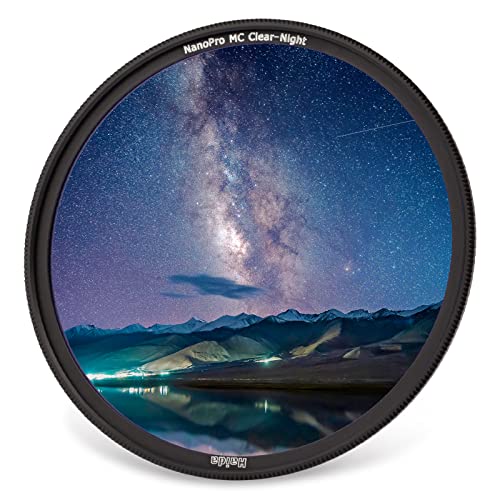 Best for Haida usersHaida 77MM Clear-Night Filter Light Pollution Source ReductionView on Amazon
- 5
 Best for camera-lens astrophotography77mm Night Sky Light Pollution Reduction Filter by Breakthrough PhotographyView on Amazon
- 6Best budget pick (smaller thread)Walking Way 52mm Natural Night Filter for Light Pollution ReductionView on Amazon
Our Top Picks
Quick Comparison
| Product | Best for | Key feature |
|---|---|---|
| Walking Way 77mm Natural Night Filter | General night sky and astrophotography | Nano-coated optical glass |
| K&F CONCEPT 77mm Clear Natural Night Filter | City sky star shots | 28 multi-layer coatings |
| ICE 77mm LiPo Didymium Filter | Broadband light pollution reduction | Didymium-style color correction |
| Haida 77MM Clear-Night Filter | Sky and star work on Haida-compatible setups | Light pollution source reduction |
| 77mm Night Sky Filter by Breakthrough Photography | Camera lens astrophotography | MRC16 and Nanotec coatings, weather-sealed |
| Walking Way 52mm Natural Night Filter | Smaller lenses on a tighter budget | Nano-coated optical glass in a 52mm size |
Walking Way 77mm Natural Night Filter for Light Pollution Reduction
Walking Way 77mm Natural Night Filter for Light Pollution Reduction Nano-Coated Optical Glass for Night Sky/Astrophotography/Star Clarity Anti-Light Pollution Filter
Best for: General night sky and astrophotography from suburban or light-polluted sites
This is a good starting point for someone who wants a natural-night filter in 77mm without a complicated setup. It suits photographers and visual observers who shoot from backyards, suburbs or edge-of-town locations and want to darken the sky background while keeping star color reasonably natural.
Key specs
- Filter size: 77mm thread
- Filter type: natural night (light pollution reduction)
- Glass: nano-coated optical glass
Pros
- Clear, natural-looking star color for a natural-night design
- Nano-coated glass is a common feature owners cite for reduced flare
- Straightforward 77mm fit for common lens and adapter sizes
Cons
- Light pollution reduction is moderate, not a substitute for a dark site
- Owners sometimes note that strong sodium lighting still leaves a color cast
Bottom line: A sensible first 77mm light pollution filter for most people shooting from a city edge or suburb.
View on AmazonK&F CONCEPT 77mm Clear Natural Night Filter Pollution Reduction
K&F CONCEPT 77mm Clear Natural Night Filter Pollution Reduction | 28 Multi-Layer Coatings Light Pollution Reduction Filter for Night City Sky Star Shots.No Color Cast Nano-X Series FE707
Best for: City sky star shots and multi-layer coating preferences
This filter is aimed at photographers who shoot the night sky from urban locations and want a filter whose listing emphasizes a heavy multi-layer coating stack. It fits people who care about minimizing color cast while still reducing skyglow.
Key specs
- Filter size: 77mm
- Filter type: clear natural night
- Coating: 28 multi-layer coatings (per listing name)
Pros
- Multi-layer coating is marketed for reduced flare and ghosting
- Designed to limit color cast in star images
- Useful for city sky and star-field photography
Cons
- Multi-coated filters can still show flare with very bright point sources
- Performance varies with the lighting type where you shoot
Bottom line: A good pick for urban star photographers who prioritize natural color over maximum darkening.
View on AmazonICE 77mm LiPo Didymium Filter Broadband Light Pollution Reduction
ICE 77mm LiPo Didymium Filter Broadband Light Pollution Reduction for Night Sky/Star Optical Glass
Best for: Broadband light pollution reduction for visual and imaging work
A didymium-style filter works differently from a natural-night filter. It is often chosen by observers and imagers who want stronger suppression of sodium and mercury-vapor glow and are willing to accept a more altered color balance.
Key specs
- Filter size: 77mm
- Filter type: LiPo didymium, broadband
- Glass: optical glass
Pros
- Stronger suppression of common urban lighting spectra
- Broadband design suits a range of targets, not only one
- Useful for visual observers at moderately light-polluted sites
Cons
- Color shift is noticeable and may need post-processing
- Can dim some nebula detail along with the background glow
Bottom line: Best for observers and imagers who want maximum glow reduction and can work with a stronger color change.
View on AmazonHaida 77MM Clear-Night Filter Light Pollution Source Reduction
Haida 77MM Clear-Night Filter Light Pollution Source Reduction for Sky/Star
Best for: Sky and star work for people already invested in Haida filters
Haida is a known filter brand among photographers, and owners who already use its 77mm system often prefer to stay within one ecosystem for thread size, mounting and coating consistency.
Key specs
- Filter size: 77mm
- Filter type: clear night, light pollution source reduction
Pros
- Brand familiar to many lens-filter users
- Designed for night sky use without heavy color bias
- Fits into an existing 77mm filter workflow
Cons
- Reduction in heavily lit urban skies is less dramatic than didymium types
- Specific coating details should be confirmed on the listing before buying
Bottom line: A solid choice for photographers who already own Haida gear and want a matching 77mm night filter.
View on Amazon77mm Night Sky Light Pollution Reduction Filter by Breakthrough Photography
77mm Night Sky Light Pollution Reduction Filter for Camera Lenses with MRC16, Nanotec Coatings, Ultra-Slim, Traction Frame, Weather-Sealed by Breakthrough Photography
Best for: Camera lens astrophotography where thin profile and weather sealing matter
This filter is built around the needs of lens shooters: a slim frame so it does not vignette wide lenses, and a traction-style frame that makes it easier to grip and remove in the cold.
Key specs
- Filter size: 77mm
- Coatings: MRC16 and Nanotec (per listing name)
- Frame: ultra-slim with traction grip
- Weather-sealed design
Pros
- Ultra-slim frame helps limit vignetting on wide lenses
- Traction frame is easier to handle with cold or gloved hands
- Coatings are marketed for reduced flare and better contrast
Cons
- Owners who shoot telescopes may need a separate adapter
- Slim frames can be less protective if dropped
Bottom line: A strong choice for camera-lens astrophotographers who want a slim, sealed, easy-to-handle 77mm night filter.
View on AmazonWalking Way 52mm Natural Night Filter for Light Pollution Reduction
Walking Way 52mm Natural Night Filter for Light Pollution Reduction Nano-Coated Optical Glass for Night Sky/Astrophotography/Star Clarity Anti-Light Pollution Filter
Best for: Smaller lenses on a tighter budget
This is the 52mm version of the Walking Way natural night design. It is not a 77mm filter, but it is included here for shooters whose lenses use a 52mm thread and who want the same nano-coated approach.
Key specs
- Filter size: 52mm
- Filter type: natural night
- Glass: nano-coated optical glass
Pros
- Fits smaller-thread lenses where a 77mm filter will not mount
- Same coating approach as the 77mm model
- Lighter and easier to carry
Cons
- Not a 77mm filter, so it will not fit most large-diameter lenses without a step-up ring
- Smaller glass can show more vignetting on wide lenses
Bottom line: Choose this only if your lens takes a 52mm filter; otherwise the 77mm listings are the better fit.
View on AmazonBuying Guide
Filter type: natural night versus didymium
Natural-night filters pass most of the visible spectrum and aim to keep star color close to reality while cutting some skyglow. Didymium-style filters block specific sodium and mercury-vapor emission lines more aggressively, which darkens the sky more but shifts colors. Decide whether you want subtle correction or maximum suppression before you buy.
Good picks for this: Walking Way 77mm Natural Night Filter; ICE 77mm LiPo Didymium Filter
Thread size and fit
A 77mm filter threads onto lenses or adapters that take 77mm front filters. Check the thread on your lens cap or the filter ring on your lens before ordering. Step-up or step-down rings let you use one filter on several lens sizes, though they add a small amount of bulk.
Good picks for this: K&F CONCEPT 77mm Clear Natural Night Filter; Haida 77MM Clear-Night Filter
Coatings and flare resistance
Multi-layer and nano coatings are intended to reduce reflections and flare from bright stars and streetlights. Check whether the listing names a specific coating system, and expect some flare regardless, especially near very bright sources.
Good picks for this: K&F CONCEPT 77mm Clear Natural Night Filter; 77mm Night Sky Filter by Breakthrough Photography
Frame design and vignetting
Thick filter frames can cause vignetting on wide-angle lenses. Slim frames reduce this risk. If you shoot wide-field star photos, favor an ultra-slim frame and test for dark corners before a long session.
Good picks for this: 77mm Night Sky Filter by Breakthrough Photography; Walking Way 77mm Natural Night Filter
Your sky and light source
Sodium street lighting, LED streetlights and mixed urban glow respond differently to each filter type. A didymium filter helps most against sodium lamps, while natural-night filters handle white LED light more gently. Match the filter to the lighting you actually see from your site.
Good picks for this: ICE 77mm LiPo Didymium Filter; Haida 77MM Clear-Night Filter
Durability and weather sealing
Night sessions bring dew, cold and handling with gloves. Weather-sealed frames and traction grips help keep the filter clean and easy to remove. Store filters in a case when not in use, and avoid touching the glass.
Good picks for this: 77mm Night Sky Filter by Breakthrough Photography
Care and cleaning
Use a blower and a microfiber cloth with lens-cleaning fluid. Dew forms quickly on cold nights, so keep a lens cloth nearby and warm the filter in a pocket if you need to. Avoid abrasive cleaners, which can damage multi-layer coatings.
Good picks for this: K&F CONCEPT 77mm Clear Natural Night Filter; Walking Way 52mm Natural Night Filter
FAQ
What does a 77mm light pollution filter do?
It sits in front of a lens or telescope adapter and blocks part of the artificial light from streetlights and signs. The sky background gets darker, which can make faint stars and nebulae stand out more, though it cannot match a truly dark site.
Will a light pollution filter fit my telescope?
Only if your telescope or camera adapter has a 77mm thread or accepts a 77mm filter. Many telescopes use other sizes, such as 1.25-inch or 2-inch eyepiece filters, so check your equipment specs first.
Is a natural night filter better than a didymium filter?
Neither is better in every case. Natural-night filters preserve star color more faithfully, while didymium-style filters suppress sodium and mercury lighting more strongly at the cost of color shifts. Your local lighting type should guide the choice.
Do light pollution filters work on LED streetlights?
They help less with LED lighting than with sodium lamps, because LEDs emit a broader spectrum. Natural-night filters may still reduce some glow, but expect a smaller improvement than you would see with older sodium street lights.
Can I use a 77mm filter for visual observing?
Yes, if you have a way to mount the filter to your eyepiece or telescope. Visual observers often prefer broadband filters for nebulae, but results depend heavily on sky darkness and target type.
Do I need to clean the filter often?
Clean it whenever you see dust, dew or fingerprints. Use a blower first, then a soft cloth. Avoid harsh chemicals, as they can damage coatings.
Conclusion
For most shooters starting with a 77mm light pollution filter, the Walking Way 77mm Natural Night Filter is a balanced first choice. Urban astrophotographers who prize natural color may lean toward the K&F CONCEPT multi-coated model, while observers at heavily sodium-lit sites may prefer the ICE didymium filter. Lens shooters who need a slim, weather-sealed frame should look at the Breakthrough Photography model, and Haida owners will find the Haida filter a natural fit. The 52mm Walking Way is only the right choice if your lens uses that thread size.
Sources
- Background on light pollution, sky brightness and how artificial lighting affects astronomical observing (nasa.gov)
- Information on outdoor lighting, dark-sky standards and the effects of skyglow on night sky viewing
- Guidance from a professional astronomy association on observing practice and light pollution impacts
Related reading
- Top 7 Refractor Telescope Solar Filters Compared for Safe Sun Viewing
- Telescope Eyepiece Sun Filter: 6 Best Picks Compared for 2026
- Telescope Eyepiece Solar Filter: 5 Best Picks Compared for Safe Sun Viewing
- Solar Filter Dobsonian Telescope Picks: 3 Best Options Compared (2026)
- Meade Telescope Moon Filter: 7 Best Picks Compared for Lunar Viewing
About Audrey Hayes
Audrey Hayes is part of our editorial team and reviews and edits our telescopes & stargazing guides, checking product details against manufacturer specifications and owner feedback.
About the author
Audrey Hayes writes reviews and buying guides for Astronomy Site.