5 Best Light Pollution Filter 67mm for Night Sky Viewing (2026)
Compare the best light pollution filter 67mm options for night sky viewing and astrophotography. Specs, pros, cons and buying tips to pick the right filter.
 By Audrey Hayes
Updated November 26, 2026
 By Audrey Hayes
Updated November 2026
A light pollution filter 67mm is one of the most practical upgrades for anyone observing or photographing the night sky from a city, suburb or any location near streetlights. The filter sits on the front of a telescope, camera lens or eyepiece and blocks specific wavelengths of artificial light, mostly from sodium and mercury street lamps, while letting the light from stars and nebulae through. This list focuses on five 67mm options that manufacturers position for broadband light pollution reduction. Our selection criteria were thread size and fit, the type of coating and glass, the stated use cases (visual or imaging), brand reputation and the patterns owners commonly describe in their feedback.
Our top picks at a glance
- 1TOP CHOICEBest overallK&F Concept 67mm Clear Natural Night Filter Pollution ReductionView on Amazon
- 2
 TOP CHOICEBest for astrophotographyWalking Way 67mm Natural Night Filter for Light Pollution ReductionView on Amazon
- 3
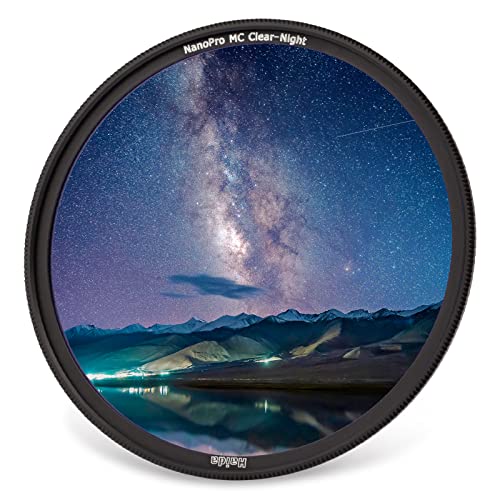 TOP CHOICEBest budget pickHaida 67MM Clear-Night Filter Light Pollution Source ReductionView on Amazon
- 4
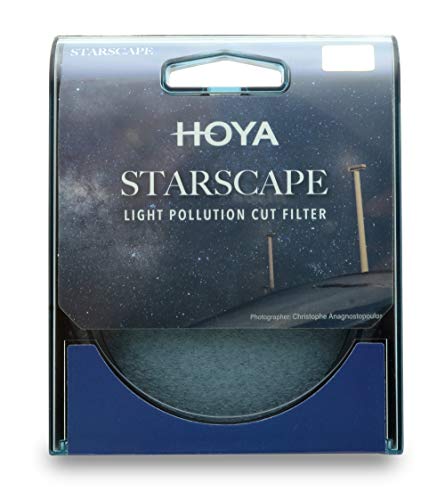 Best for visual observingHoya Starscape 67mm Light Pollution Cut FilterView on Amazon
- 5
 Best for slim mountingMarumi 67mm Slim MC StarScape Filter Broadband Light Pollution ReductionView on Amazon
Our Top Picks
Quick Comparison
| Product | Best for | Key feature |
|---|---|---|
| K&F Concept 67mm Clear Natural Night Filter (FE707) | Overall use across visual and imaging | Multi-layer coating, marketed as neutral color |
| Walking Way 67mm Natural Night Filter | Astrophotography star clarity | Nano-coated optical glass |
| Haida 67MM Clear-Night Filter | Budget-minded buyers | Light pollution source reduction design |
| Hoya Starscape 67mm Light Pollution Cut Filter | Visual observing from town | Color-correcting, minimalist black frame |
| Marumi 67mm Slim MC StarScape Filter | Setups with limited front clearance | Slim profile with broadband multi-coating |
K&F Concept 67mm Clear Natural Night Filter Pollution Reduction
K&F CONCEPT 67mm Clear Natural Night Filter Pollution Reduction | 28 Multi-Layer Coatings Light Pollution Reduction Filter for Night City Sky Star Shots.No Color Cast Nano-X Series FE707
Best for: Overall use across visual observing and imaging from light-polluted sites
This is a good fit for observers who want one filter that works on a telescope eyepiece and on a camera lens. It suits people living in suburbs or mid-sized cities where skyglow is moderate rather than severe. For a deeper look, Red Light Filter for Flashlight: 6 Best Picks Compared (2026) covers this in detail.
Key specs
- Thread size: 67mm
- Coating: multi-layer (listing states 28 layers)
- Design goal: light pollution reduction with a neutral color balance
Pros
- Neutral color rendering compared with strongly tinted filters
- Multi-layer coating aimed at reducing sodium and mercury lamp glare
- Works for both visual and camera use at 67mm
Cons
- Gains are modest under severe urban skyglow
- Owners often recommend cleaning carefully, since multi-layer coatings can show smudges
Bottom line: A sensible first filter for mixed visual and imaging use from suburban skies.
View on AmazonWalking Way 67mm Natural Night Filter for Light Pollution Reduction
Walking Way 67mm Natural Night Filter for Light Pollution Reduction Nano-Coated Optical Glass for Night Sky/Astrophotography/Star Clarity Anti-Light Pollution Filter
Best for: Astrophotography where star clarity matters
Imagers who shoot long exposures of the Milky Way or nebulae from town tend to care most about background brightness and star color. This filter is positioned for those scenarios.
Key specs
- Thread size: 67mm
- Glass: nano-coated optical glass (per listing)
- Intended use: night sky, astrophotography and star clarity
Pros
- Positioned specifically for star clarity in night imaging
- Nano-coated optical glass design
- Clearly targeted at both visual and camera users
Cons
- Less brand history in this category than some longer-established names
- Exact light cut will vary with sky conditions and camera settings
Bottom line: Worth considering for imagers who want a filter marketed on star clarity.
View on AmazonHaida 67MM Clear-Night Filter Light Pollution Source Reduction
Haida 67MM Clear-Night Filter Light Pollution Source Reduction for Sky/Star
Best for: Budget-minded buyers who want a dedicated light pollution filter
Beginners who are not sure whether a light pollution filter will help their setup often start with a lower-cost option. This one is aimed at reducing light sources without a strong color shift.
Key specs
- Thread size: 67mm
- Design: clear-night filter for source reduction
- Intended use: sky and star viewing
Pros
- Accessible entry point for the filter type
- Clear-night design keeps color balance relatively neutral
- Haida is a recognized filter maker in photography circles
Cons
- Owners often report that it does less than premium coatings in heavy skyglow
- Fewer detailed specs are published compared with higher-end models
Bottom line: A reasonable starting point if you are testing whether a light pollution filter suits your sky.
View on AmazonHoya Starscape 67mm Light Pollution Cut Filter
Hoya Starscape 67mm Light Pollution Cut Filter – Color Correcting, Minimalist, Black, Optical Glass
Best for: Visual observing from light-polluted towns
Visual observers who look through eyepieces care about contrast and color more than long-exposure noise. This model is designed around a color-correcting approach that many owners describe as easy on the eye.
Key specs
- Thread size: 67mm
- Material: optical glass
- Design: minimalist black frame, color-correcting
Pros
- Hoya is an established optics brand with long experience in filters
- Color-correcting design suits visual observing of nebulae
- Minimalist frame is simple to handle
Cons
- Visual benefit depends on how bright the local skyglow is
- Not positioned as a dedicated imaging filter
Bottom line: A strong choice for visual observers who want a reputable brand and a color-correcting design.
View on AmazonMarumi 67mm Slim MC StarScape Filter Broadband Light Pollution Reduction
Marumi 67mm Slim MC StarScape Filter Broadband Light Pollution Reduction for Night Sky/Star 67 Made in Japan
Best for: Setups with limited front clearance
A slim profile matters when a filter sits in front of a lens with a hood, a dew shield or a tight filter stack. Owners of wide-angle lenses often mention this as a practical concern.
Key specs
- Thread size: 67mm
- Design: slim frame with multi-coating
- Made in Japan (per listing)
Pros
- Slim frame reduces vignetting risk on tight setups
- Marumi has a long track record in photographic filters
- Broadband multi-coating aimed at general skyglow
Cons
- Broadband designs can dim the overall image more than narrowband filters
- Specific transmission figures are not always published
Bottom line: Best suited to photographers with wide lenses or stacked accessories who need a low-profile filter.
View on AmazonBuying Guide
Confirm the 67mm thread size
Measure the filter thread on your lens or telescope adapter before buying. Thread size is printed on the front rim or the lens cap. A 67mm filter will not thread onto a 62mm or 77mm lens, so an adapter ring may be needed if your gear uses a different size.
Good picks for this: K&F Concept 67mm Clear Natural Night Filter, Marumi 67mm Slim MC StarScape Filter
Broadband versus narrowband filters
Broadband light pollution filters block a range of wavelengths from common street lighting and let most starlight through. Narrowband filters pass only specific emission lines from nebulae and block more light overall. The filters in this list are broadband designs, which makes them more versatile for general sky viewing.
Good picks for this: Hoya Starscape 67mm Light Pollution Cut Filter, Walking Way 67mm Natural Night Filter
Coating quality and layer count
Multi-layer coatings are designed to reduce reflections and target specific light wavelengths. Manufacturers often state layer counts, but the number alone does not guarantee performance. Look for brands with a track record in optics and coatings.
Good picks for this: K&F Concept 67mm Clear Natural Night Filter, Marumi 67mm Slim MC StarScape Filter
Visual versus imaging use
Visual observers usually want a filter that improves contrast without a strong color cast. Imagers care more about background brightness, star color and how the filter behaves over long exposures. Decide which use dominates before you buy.
Good picks for this: Walking Way 67mm Natural Night Filter, Hoya Starscape 67mm Light Pollution Cut Filter
Filter frame and front clearance
Thick frames can cause vignetting on wide-angle lenses or when stacked with other filters. A slim frame gives you more flexibility, especially with dew shields or step-up rings.
Good picks for this: Marumi 67mm Slim MC StarScape Filter, Haida 67MM Clear-Night Filter
Your sky brightness
The benefit of any light pollution filter depends on how bright your sky is. Under a rural sky, a filter may add little. Under a city sky with strong sodium lighting, the difference can be more noticeable. Check your sky quality with a light pollution map before spending money on accessories.
Good picks for this: Haida 67MM Clear-Night Filter, K&F Concept 67mm Clear Natural Night Filter
Care and handling
Coated optical glass scratches easily. Use a blower to remove dust, then a microfiber cloth and lens-cleaning fluid if needed. Store filters in a hard case, and keep them capped when not in use.
Good picks for this: Hoya Starscape 67mm Light Pollution Cut Filter, Walking Way 67mm Natural Night Filter
FAQ
What does a light pollution filter 67mm actually block?
Most broadband light pollution filters reduce the glow from sodium and mercury street lamps and some LED wavelengths. They do not block stars, so the sky background darkens relative to stars and deep-sky objects.
Will a 67mm filter fit my telescope?
Some telescopes use a 67mm thread on the eyepiece or camera adapter, while others do not. Check the filter thread on your eyepiece or adapter and use a step-up or step-down ring if the sizes differ.
Do light pollution filters work for planets?
Planets are bright enough that light pollution has little effect on them. Filters are most useful for faint extended objects like galaxies and nebulae.
Can I use a light pollution filter on a camera lens?
Yes, if the lens has a 67mm thread. Filters are used on camera lenses for night sky photography, though long exposures and sky brightness will still shape the result.
Is a light pollution filter better than a dark-sky trip?
No filter fully replaces a dark site. Filters help in suburban and urban skies, but a truly dark location with no artificial light will always show more.
How should I clean a coated filter?
Blow off loose dust first, then use a microfiber cloth with a small amount of lens-cleaning fluid. Avoid pressing hard, and never use household cleaners on coated glass.
Conclusion
For most observers and imagers, a light pollution filter 67mm is a practical way to improve contrast from a suburban or city site. The K&F Concept filter suits mixed use, the Walking Way model fits imagers focused on star clarity, the Haida filter is an accessible entry point, the Hoya Starscape suits visual observers who want a color-correcting design, and the Marumi slim filter is the choice when front clearance is tight. Confirm your thread size first, then match the filter to your main use.
If you are still deciding between filter types, these related guides may help: Light Pollution Filter Comparison (2026): Which Should You Choose?, Polarizer Filter Light Pollution vs Narrowband: Which Should You Choose?, 5 Best Camera Light Pollution Filters for Night Sky Shots (2026), and 6 Best 77mm Light Pollution Filter Picks Compared for Night Sky Viewing.
Sources
- Background on light pollution, its effects and how skyglow is measured
- Information on night sky brightness, astronomy research and observing conditions (nasa.gov)
- Guidance on night sky protection and dark-sky park conditions (nps.gov)
Before you buy: helpful guides
About Audrey Hayes
Audrey Hayes is part of our editorial team and reviews and edits our telescopes & stargazing guides, checking product details against manufacturer specifications and owner feedback.
About the author
Audrey Hayes writes reviews and buying guides for Astronomy Site.