Astronomik CLS Light Pollution Filter Review: 7 Best Picks Compared (2026)
Astronomik CLS light pollution filter review: compare seven top filters for visual and astrophotography, with specs, pros, cons and who each one suits.
 By Audrey Hayes
Updated November 26, 2026
 By Audrey Hayes
Updated November 2026
If you observe from a city, suburb or any site brightened by sodium and LED streetlights, an astronomik cls light pollution filter review is a useful place to start, because a well-chosen filter can noticeably darken the sky background and bring out faint nebulae that would otherwise wash out. This guide compares seven broadband and ultra-high-contrast filters that are commonly recommended for deep-sky work. The selection criteria were specification-based: the transmission profile and what wavelengths each filter is designed to block or pass, thread and barrel size compatibility, brand reputation for optical coatings, and the patterns owners tend to describe in their feedback. None of these picks is presented as the best filter for every sky, and we have not tested them ourselves.
Our top picks at a glance
- 1TOP CHOICEBest overallSVBONY CLS Filter, Broadband Telescope Filter, 2 InchView on Amazon
- 2
 TOP CHOICEBest for camera-based night sky shotsWalking Way 67mm Natural Night Filter for Light Pollution ReductionView on Amazon
- 3
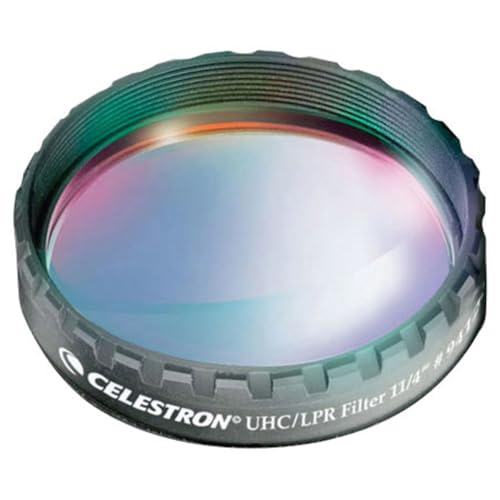 TOP CHOICEBest for visual nebula workCelestron UHC/LPR Light Pollution Reduction Filter for Telescopes – 1.25"View on Amazon
- 4
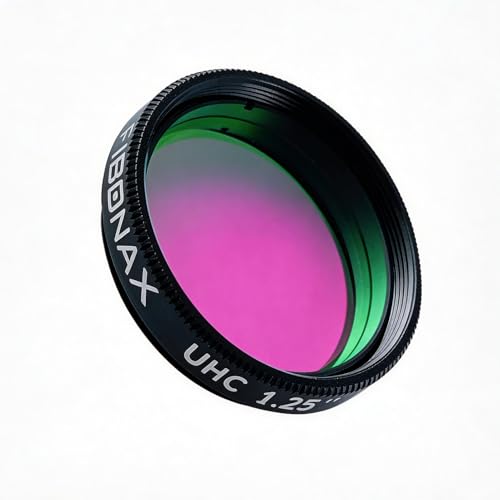 Best for planetary and Moon detailFIBONAX 1.25 Inch UHC Filter for TelescopesView on Amazon
- 5
 Best for dark-sky-adjacent observingExplore Scientific CLS Nebula Filter 1.25 Inch, Light Pollution FilterView on Amazon
- 6
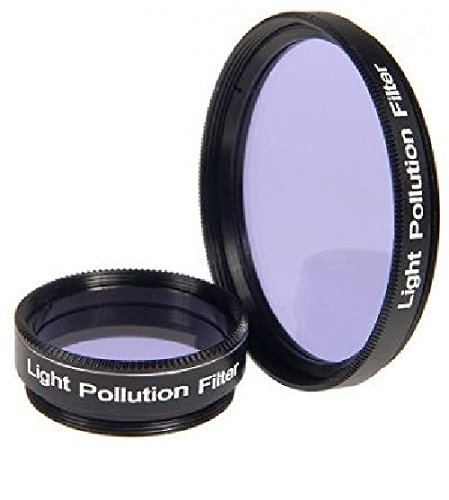 Best for 2-inch focusersSky-Watcher 2" Light Pollution FilterView on Amazon
- 7
 Best budget pick (bundle)SVBONY Telescope Filter 1.25 inches UHC Filter Astrophotography, Bundle with CLS FilterView on Amazon
Our Top Picks
Quick Comparison
| Product | Best for | Key feature |
|---|---|---|
| SVBONY CLS Filter, 2 Inch | Best overall | Broadband CLS profile at 2-inch barrel size |
| Walking Way 67mm Natural Night Filter | Camera-based night sky shots | Nano-coated optical glass in 67mm thread |
| Celestron UHC/LPR Filter, 1.25″ | Visual nebula work | Enhanced nebula contrast and darker background |
| FIBONAX 1.25 Inch UHC Filter | Planetary and Moon detail | Ultra-high-contrast profile with M28.5×0.6 threads |
| Explore Scientific CLS Nebula Filter 1.25 Inch | Dark-sky-adjacent observing | 98.3% peak transmission with darker sky background |
| Sky-Watcher 2″ Light Pollution Filter | 2-inch focuser users | 2-inch barrel for wide-field eyepieces |
| SVBONY UHC + CLS Filter Bundle | Budget pick | Two filters in one package for different targets |
SVBONY CLS Filter, Broadband Telescope Filter, 2 Inch
SVBONY CLS Filter, Broadband Telescope Filter,2 Inch Light Pollution Filter | 0.1% Transmission of Off-band,90% Transmission of Key Nebula WavelengthsSuitable for Deep Sky Visual Astronomical Photogra
Best for: Best overall
This is a good fit for observers with a 2-inch focuser who want a broadband CLS-style filter for deep-sky viewing and beginner-to-intermediate astrophotography from moderately light-polluted skies.
Key specs
- 2-inch barrel size
- Broadband CLS design for suppressing common urban light wavelengths
- Listed off-band transmission of 0.1% and key nebula wavelength transmission of 90%
Pros
- Clear wavelength specification in the listing
- Suits 2-inch eyepieces and wide-field views
- Works for both visual and imaging use
Cons
- Less effective on very bright suburban skies than narrowband filters
- Can dim some galaxies with weak emission
Bottom line: A strong first choice for a 2-inch setup under typical suburban light pollution.
View on AmazonWalking Way 67mm Natural Night Filter for Light Pollution Reduction
Walking Way 67mm Natural Night Filter for Light Pollution Reduction Nano-Coated Optical Glass for Night Sky/Astrophotography/Star Clarity Anti-Light Pollution Filter
Best for: Best for camera-based night sky shots
Suited to photographers who mount a camera on a lens or telescope with a 67mm filter thread and want a nano-coated night filter for landscape and night sky frames.
Key specs
- 67mm filter thread
- Nano-coated optical glass
- Designed for night sky and astrophotography use
Pros
- Standard 67mm thread fits many lenses
- Coating is designed to reduce reflections
- Targets general light pollution rather than one narrow band
Cons
- Not intended for eyepiece use in a telescope
- Owners sometimes note color shifts in longer exposures
Bottom line: The right pick for camera users who need a 67mm night filter rather than a telescope eyepiece filter.
View on AmazonCelestron UHC/LPR Light Pollution Reduction Filter for Telescopes – 1.25″
Celestron UHC/LPR Light Pollution Reduction Filter for Telescopes – 1.25" | Light Pollution Reduction, Enhanced Nebula Contrast, Darker Sky Background, High Transmission Optical Coating, For Visual Us
Best for: Best for visual nebula work
Aimed at visual observers with a 1.25-inch eyepiece setup who want to see emission nebulae more clearly from light-polluted sites.
Key specs
- 1.25-inch barrel size
- UHC/LPR design for light pollution reduction
- High transmission optical coating listed
Pros
- Well-known manufacturer with a long history in visual accessories
- Enhances nebula contrast in the eyepiece
- Simple screw-in installation on standard 1.25-inch eyepieces
Cons
- Dims broadband targets like galaxies more than some CLS designs
- Smaller barrel limits use with wide-field 2-inch eyepieces
Bottom line: A dependable visual choice for nebula hunters on a 1.25-inch setup.
View on AmazonFIBONAX 1.25 Inch UHC Filter for Telescopes
FIBONAX 1.25 Inch UHC Filter for Telescopes | Ultra High Contrast, Light Pollution Reduction, M28.5×0.6 Threads, Enhances Nebula & Moon Details
Best for: Best for planetary and Moon detail
Useful for observers who split time between deep-sky targets and the Moon or planets, and who want a UHC filter that also brings out surface detail.
Key specs
- 1.25-inch barrel size
- Ultra High Contrast (UHC) design
- M28.5×0.6 threads for compatible eyepieces and adapters
Pros
- Works on the Moon and some planets as well as nebulae
- Thread spec is listed clearly
- Compact footprint for 1.25-inch use
Cons
- Reduces brightness, so faint targets may need longer observing time
- Brand is less established than some competitors in this category
Bottom line: A good generalist for mixed Moon, planet and nebula sessions with a 1.25-inch eyepiece.
View on AmazonExplore Scientific CLS Nebula Filter 1.25 Inch, Light Pollution Filter
Explore Scientific CLS Nebula Filter 1.25 Inch, Light Pollution Filter | Broadband Deep Sky Filter, Nebulae and Galaxies, 98.3% Peak Transmission, Darker Sky Background
Best for: Best for dark-sky-adjacent observing
For observers at suburban or semi-rural sites with occasional dark nights who want a broadband CLS filter with high peak transmission.
Key specs
- 1.25-inch barrel size
- 98.3% peak transmission listed
- Broadband CLS design for nebulae and galaxies
Pros
- High peak transmission preserves brightness
- Targets common urban emission wavelengths
- Good match for visual observers on 1.25-inch eyepieces
Cons
- Benefit is modest on heavily light-polluted city skies
- Not designed for 2-inch eyepieces
Bottom line: Best suited to observers whose sky is moderately affected and who want to keep as much light as possible.
View on AmazonSky-Watcher 2″ Light Pollution Filter
Sky-Watcher 2" Light Pollution Filter
Best for: Best for 2-inch focusers
Intended for observers with 2-inch eyepieces and wide-field views who want a light pollution filter from a well-known telescope brand.
Key specs
- 2-inch barrel size
- Light pollution reduction design
Pros
- Fits 2-inch eyepieces for wide-field observing
- Sky-Watcher is a widely recognized telescope brand
- Straightforward screw-in installation
Cons
- Spec detail is less extensive in the listing than some competitors
- Older design compared with newer CLS coatings
Bottom line: A sensible choice for 2-inch users who value brand familiarity.
View on AmazonSVBONY Telescope Filter 1.25 inches UHC Filter Astrophotography, Bundle with CLS Filter
SVBONY Telescope Filter 1.25 inches UHC Filter Astrophotography, Bundle with 1.25 inches CLS Filter City Light Pollution Reduction Filter
Best for: Best budget pick
Works for beginners who want two different filter types in one package and plan to experiment with both UHC and CLS designs on 1.25-inch eyepieces.
Key specs
- 1.25-inch barrel size
- Bundle includes UHC and CLS filters
- Designed for astrophotography and visual use
Pros
- Two filter profiles let you compare for different targets
- Useful starting kit for experimenting
- Same brand as the top overall pick, for consistency
Cons
- Each filter is less specialized than a single dedicated premium option
- Owners sometimes report that results depend heavily on sky conditions
Bottom line: A practical bundle for beginners who want to compare filter types before committing.
View on AmazonBuying Guide
Filter Type: Broadband CLS vs. UHC vs. Narrowband
CLS filters are designed to block much of the sodium and mercury light common in urban areas while passing a broader range of deep-sky light. UHC filters use a narrower transmission profile and are often used for emission nebulae and planetary detail. Narrowband filters isolate specific emission lines and are generally stronger on dark-to-moderately-bright skies. Choose the filter type based on your target list and sky brightness.
Good picks for this: SVBONY CLS Filter, 2 Inch; Celestron UHC/LPR Light Pollution Reduction Filter
Barrel Size and Eyepiece Compatibility
Check whether your eyepieces are 1.25-inch or 2-inch before buying. A 2-inch filter will not thread onto a 1.25-inch eyepiece, and a 1.25-inch filter will not fit a 2-inch barrel without an adapter. Measure your eyepiece barrel or check the manufacturer specification.
Good picks for this: Sky-Watcher 2″ Light Pollution Filter; FIBONAX 1.25 Inch UHC Filter
Thread Size and Camera Fit
For camera use, the filter thread diameter must match your lens or adapter. Many night filters use 67mm or 77mm threads. Confirm the exact millimeter size and use a step-up ring if needed, rather than forcing a filter that does not fit.
Good picks for this: Walking Way 67mm Natural Night Filter
Transmission and Brightness
Peak transmission describes how much light a filter passes at its key wavelengths. Higher transmission keeps targets brighter, which matters most under darker skies. Lower transmission can make faint targets harder to see, so balance contrast gains against light loss for your site.
Good picks for this: Explore Scientific CLS Nebula Filter 1.25 Inch; SVBONY CLS Filter, 2 Inch
Use Case: Visual vs. Astrophotography
Visual observers can judge contrast directly at the eyepiece, while camera users must consider exposure, color balance and possible stacking artifacts. A filter that looks good visually may not perform the same way on a sensor, and the reverse is also true.
Good picks for this: Walking Way 67mm Natural Night Filter; Celestron UHC/LPR Light Pollution Reduction Filter
Build Quality and Coatings
Coatings determine how much light is lost to reflection and how well unwanted wavelengths are blocked. Look for listings that describe the coating type, such as nano-coated or high transmission optical coatings, and consider whether the brand is known for optical accessories.
Good picks for this: Walking Way 67mm Natural Night Filter; FIBONAX 1.25 Inch UHC Filter
Care and Handling
Keep the filter capped when not in use, avoid touching the glass surface, and clean only with a lens-safe brush or microfiber cloth. Store filters in a padded case to prevent scratches, which can increase scatter and reduce contrast over time.
Good picks for this: SVBONY Telescope Filter 1.25 inches UHC Filter Bundle; Explore Scientific CLS Nebula Filter 1.25 Inch
FAQ
What does an astronomik cls light pollution filter review actually tell me?
A review describes how a CLS-type filter is designed to affect light, which targets it suits and what trade-offs to expect. It does not replace checking your own sky conditions and eyepiece or camera setup.
What is the difference between a CLS and a UHC filter?
CLS filters use a broader transmission profile suited to a range of deep-sky targets, while UHC filters are narrower and often favored for emission nebulae and planetary detail. Your target list should guide the choice.
Will a light pollution filter work on a bright city sky?
Broadband filters help the most on moderately light-polluted skies. On very bright city skies, narrowband filters are generally more effective, though they are more specialized.
Can I use a light pollution filter with a camera?
Yes, but you need a filter with the correct thread size for your lens or adapter. Camera use also involves exposure and color balance considerations that differ from visual observing.
Do filters dim galaxies?
Some filters reduce light from galaxies, particularly UHC designs, because galaxies emit broadly rather than in narrow emission lines. Broadband CLS filters tend to affect galaxies less.
Should I buy a 1.25-inch or 2-inch filter?
Match the filter to your eyepiece barrel. 1.25-inch is common for smaller eyepieces, while 2-inch suits wide-field views. Check your equipment before purchasing.
Conclusion
For most observers with a 2-inch focuser under suburban skies, the SVBONY CLS Filter is a sensible starting point. Visual observers on 1.25-inch eyepieces who focus on nebulae may prefer the Celestron UHC/LPR filter, while those who also observe the Moon and planets might consider the FIBONAX UHC. Camera users need the Walking Way 67mm filter or another thread-matched option. Explore Scientific CLS suits moderately affected skies where brightness matters, and the SVBONY bundle offers a low-commitment way to compare filter types. Match the filter to your sky, your eyepiece or camera, and your target list.
Sources
- Background on how light pollution affects the night sky and astronomical observing (nasa.gov)
- Information on outdoor lighting, sky brightness and dark-sky-friendly practices
- Resources from the American Astronomical Society on observing and astronomical standards
Before you buy: helpful guides
Related reading
- Astronomik Light Pollution Filter Picks: 7 Best Compared for 2026
- 7 Best Optolong CLS Light Pollution Filters Compared (2026)
- Top 7 Light Pollution Filters for Phone Compared for Night Sky Photos
About Audrey Hayes
Audrey Hayes is part of our editorial team and reviews and edits our telescopes & stargazing guides, checking product details against manufacturer specifications and owner feedback.
About the author
Audrey Hayes writes reviews and buying guides for Astronomy Site.