5 Best Skytech Light Pollution Filter Options Compared (2026)
Compare five light pollution filters for telescopes and cameras, from nano-coated natural night filters to 1.25-inch visual filters. See which fits your sky.
 By Audrey Hayes
Updated November 24, 2026
 By Audrey Hayes
Updated November 2026
A skytech light pollution filter is one of the most practical upgrades an observer can make when the sky over home is washed out by streetlights, sports fields and glowing city haze. Light pollution filters work by blocking the narrow band of artificial light that dominates urban skies while passing the emission and reflected wavelengths that deep-sky objects give off. This guide compares five products from the listings on our shortlist, judged on the criteria that matter most at the eyepiece or on a camera sensor: filter type, thread size and mounting, coating construction, the kinds of targets each one is aimed at, and how owners typically describe their results. Nothing here comes from our own bench testing; the picks reflect specifications and recurring owner feedback patterns.
Our top picks at a glance
- 1TOP CHOICEBest overallWalking Way 67mm Natural Night Filter for Light Pollution ReductionView on Amazon
- 2
 TOP CHOICEBest for camera lensesK&F CONCEPT 58mm Clear Natural Night Filter Pollution ReductionView on Amazon
- 3
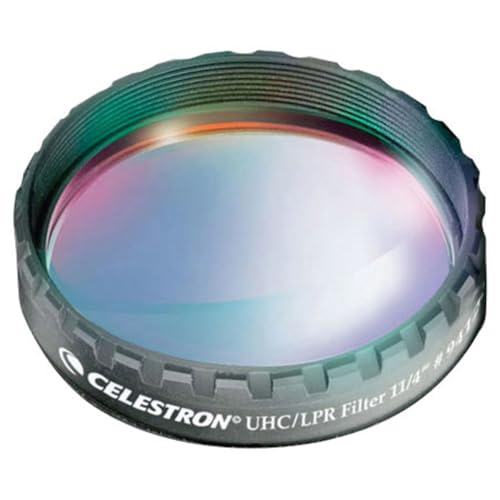 TOP CHOICEBest for visual eyepiece useCelestron UHC/LPR Light Pollution Reduction Filter for TelescopesView on Amazon
- 4
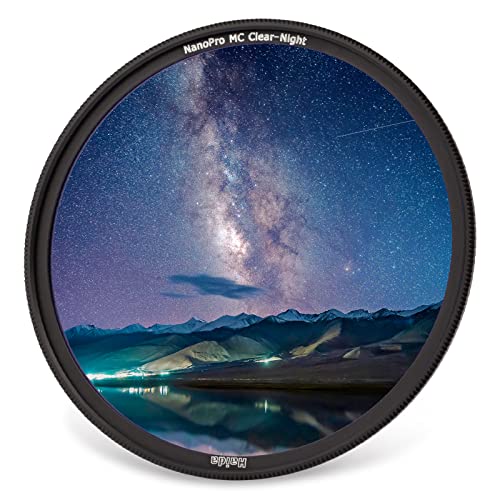 Best for large-diameter filtersHaida 77MM Clear-Night Filter Light Pollution Source ReductionView on Amazon
- 5Best for wide lensesK&F CONCEPT 82mm Clear Natural Night Filter Pollution ReductionView on Amazon
Our Top Picks
| Product | Best for | Key feature |
|---|---|---|
| Walking Way 67mm Natural Night Filter | General astrophotography with a 67mm thread | Nano-coated optical glass for star clarity |
| K&F CONCEPT 58mm Clear Natural Night Filter | Camera lenses with 58mm threads | 28 multi-layer coatings with a neutral look |
| Celestron UHC/LPR Light Pollution Reduction Filter | Visual observing through a 1.25-inch eyepiece | Enhanced nebula contrast in sodium and mercury light |
| Haida 77MM Clear-Night Filter | Large-front-element lenses and 77mm setups | Light pollution source reduction for sky and stars |
| K&F CONCEPT 82mm Clear Natural Night Filter | Wide-angle lenses with 82mm threads | Multi-layer coatings for natural color balance |
Walking Way 67mm Natural Night Filter for Light Pollution Reduction
Walking Way 67mm Natural Night Filter for Light Pollution Reduction Nano-Coated Optical Glass for Night Sky/Astrophotography/Star Clarity Anti-Light Pollution Filter
Best for: General night-sky photography with a 67mm filter thread.
This is a good fit for photographers who already own lenses with a 67mm thread and want a dedicated night-sky filter rather than an adapter stack. It targets the broad band of city glow so that stars and faint nebulosity stand out against a darker background.
Key specs
- 67mm filter thread
- Nano-coated optical glass
- Designed for night sky and astrophotography use
Pros
- Thread size matches common 67mm lens mounts
- Coating is aimed at improving star clarity rather than simply dimming the frame
- Labeled for both night sky and astrophotography use
Cons
- Filter works by cutting light, so exposures generally need to be longer
- Strong city lighting can still limit the faintest targets
Bottom line: A strong first choice for someone with a 67mm lens who mainly wants cleaner stars from a suburban or urban backyard.
View on AmazonK&F CONCEPT 58mm Clear Natural Night Filter Pollution Reduction
K&F CONCEPT 58mm Clear Natural Night Filter Pollution Reduction | 28 Multi-Layer Coatings Light Pollution Reduction Filter for Night City Sky Star Shots.No Color Cast Nano-X Series FE707
Best for: Camera lenses with a 58mm thread on a budget-conscious setup.
This filter suits photographers using entry-level or kit-style lenses with 58mm threads who want a light pollution filter that doesn’t add a heavy color cast. It is a sensible starting point for learning how light pollution filtering changes exposure and contrast.
Key specs
- 58mm filter thread
- 28 multi-layer coatings in the Nano-X series
- Marketed as producing no color cast
Pros
- Multi-layer coating count is among the more detailed descriptions in this group
- Thread size suits many standard zoom and prime lenses
- Marketed with a neutral, natural color rendering
Cons
- A 58mm size limits use to lenses with that exact thread
- Results depend heavily on local sky brightness and exposure technique
Bottom line: Best for a photographer with a 58mm lens who wants a clean-color filter to experiment with before buying larger sizes.
View on AmazonCelestron UHC/LPR Light Pollution Reduction Filter for Telescopes
Celestron UHC/LPR Light Pollution Reduction Filter for Telescopes – 1.25" | Light Pollution Reduction, Enhanced Nebula Contrast, Darker Sky Background, High Transmission Optical Coating, For Visual Us
Best for: Visual observing through a 1.25-inch eyepiece.
Visual observers with a 1.25-inch eyepiece are the intended audience here. The filter is built for the eye rather than the camera, and it is most useful on emission nebulae and some planetary nebulae where contrast matters more than raw brightness.
Key specs
- 1.25-inch barrel size
- Light pollution reduction and enhanced nebula contrast
- High transmission optical coating for visual use
Pros
- Standard 1.25-inch format fits most eyepiece-based setups
- Designed specifically for enhancing nebula contrast
- Targets sky background darkening without heavy color shift
Cons
- Not suited to camera use or 2-inch eyepieces without an adapter
- Broadband galaxies often show less improvement than nebulae
Bottom line: The most direct choice for a visual observer whose main targets are emission nebulae from a light-polluted yard.
View on AmazonHaida 77MM Clear-Night Filter Light Pollution Source Reduction
Haida 77MM Clear-Night Filter Light Pollution Source Reduction for Sky/Star
Best for: Large-front-element lenses and 77mm camera setups.
This filter is aimed at photographers with 77mm lenses who need a matching thread for landscape-and-sky work. It is particularly relevant for wide-aperture glass where a smaller filter would vignette.
Key specs
- 77mm filter thread
- Clear-night design for light pollution source reduction
Pros
- 77mm size suits larger front elements without an adapter
- Designed around reducing artificial light sources in the sky
- Clear-night label points to a neutral, untinted glass
Cons
- Larger threads are less common, so fewer lenses will take it directly
- Specific coating details are less documented than some competitors
Bottom line: A good match for a 77mm lens owner who wants a dedicated night filter in the same thread size.
View on AmazonK&F CONCEPT 82mm Clear Natural Night Filter Pollution Reduction
K&F CONCEPT 82mm Clear Natural Night Filter Pollution Reduction | 28 Multi-Layer Coatings Light Pollution Reduction Filter for Night City Sky Star Shots.No Color Cast Nano-X Series FE707
Best for: Wide-angle and large-thread lenses in night-sky work.
Photographers with 82mm lenses, often wide-angle or telephoto zooms, will find this the matching option in the same product family as the 58mm model. It is aimed at wide sky compositions where multi-layer coatings help manage color balance across a large frame.
Key specs
- 82mm filter thread
- Nano-X series with multi-layer coatings
- Marketed for natural color on night sky shots
Pros
- Same coating family as the 58mm model, so the approach carries over
- 82mm thread suits many large-diameter zoom lenses
- Marketed with a natural, non-tinted look
Cons
- Only useful if your lens actually takes an 82mm filter
- Large filters add weight and cost to a setup that may already be heavy
Bottom line: A logical pick for owners of 82mm glass who shoot wide night skies from light-polluted locations.
View on AmazonBuying Guide
Filter type: visual versus camera
Visual filters and camera filters are built differently. Visual filters usually come in 1.25-inch or 2-inch barrels that thread into an eyepiece or diagonal, while camera filters thread onto a lens front element. A filter that works well through an eyepiece may not suit a camera sensor, and vice versa.
Good picks for this: Celestron UHC/LPR Light Pollution Reduction Filter, K&F CONCEPT 58mm Clear Natural Night Filter
Thread size and fit
Camera filters are sold by thread diameter, and the number is printed on the lens barrel or in the manual. Buying one size too small is the most common mistake; step-up or step-down rings can bridge small gaps, but they add bulk and can cause vignetting on wide lenses.
Good picks for this: Haida 77MM Clear-Night Filter, K&F CONCEPT 82mm Clear Natural Night Filter
Coating construction
Multi-layer and nano coatings are meant to block unwanted wavelengths while keeping transmission high. Manufacturers often cite layer counts or coating families, but the real test is how much light the filter passes and how neutral the color stays. Check whether the listing describes the coating in concrete terms rather than vague marketing.
Good picks for this: Walking Way 67mm Natural Night Filter, K&F CONCEPT 58mm Clear Natural Night Filter
Target type: nebulae versus galaxies
Light pollution filters help most with emission nebulae, which emit strongly at the wavelengths they block through. Broadband galaxies and star clusters benefit less, since they emit across a wider spectrum. If your main targets are galaxies, set expectations accordingly.
Good picks for this: Celestron UHC/LPR Light Pollution Reduction Filter, Walking Way 67mm Natural Night Filter
Sky brightness and location
A filter’s benefit depends on how bright your sky already is. Under a Bortle 7 or 8 suburb, a good filter can transform a washed-out view. Under Bortle 4 or 5, the gain is smaller. Check your sky class with a light pollution map before spending on a filter.
Good picks for this: Haida 77MM Clear-Night Filter, K&F CONCEPT 82mm Clear Natural Night Filter
Color neutrality and exposure
Some filters add a noticeable tint, which then needs correction in editing. Look for language about neutral or natural color, and expect to lengthen exposures, since the filter blocks light. Shooting raw helps preserve color options later.
Good picks for this: K&F CONCEPT 58mm Clear Natural Night Filter, Walking Way 67mm Natural Night Filter
Durability and care
Filters are glass and easily scratched. Keep caps on when not in use, clean with a blower and microfiber cloth rather than abrasive paper, and avoid touching the coated surface. Dew can form on cold nights, so a dew heater or a lens cap held in a warm pocket helps.
Good picks for this: Celestron UHC/LPR Light Pollution Reduction Filter, Haida 77MM Clear-Night Filter
FAQ
What does a skytech light pollution filter actually do?
It blocks a narrow set of wavelengths produced by common artificial lights, such as sodium and mercury streetlamps, while letting through the emission lines that many nebulae give off. The result is higher contrast for those targets, but it does not remove the glow from the whole sky.
Can I use a light pollution filter on a camera and a telescope?
Some filters are designed for both, but most are optimized for one use. Visual filters fit eyepieces, while camera filters fit lens threads. Check the listing for the intended use before buying.
Will a light pollution filter work on galaxies?
It helps less with broadband galaxies than with emission nebulae. Galaxies emit light across a wider range of wavelengths, so the filter removes some of the signal along with the glow. Expect modest gains on galaxies and larger gains on nebulae.
Do I need to increase exposure time with a light pollution filter?
Usually yes. Because the filter blocks light, exposures generally need to be longer to reach a comparable brightness. Start with your usual settings and adjust based on what the histogram shows.
How do I know which thread size my lens needs?
Check the number printed on the front of the lens barrel, often marked with a Ø symbol, or look it up in the manual. If it doesn’t match a filter you want, a step-up or step-down ring can bridge small differences, though it may cause vignetting on wide lenses.
Is a light pollution filter worth it if I live in a dark rural area?
The benefit is smaller under a dark sky, because there is less artificial glow to block. Observers in dark skies often get more from a larger aperture or better optics than from a filter.
Conclusion
For most readers, the right choice comes down to what you attach the filter to and what you plan to observe. If you use an eyepiece and chase emission nebulae, the Celestron UHC/LPR Light Pollution Reduction Filter is the most direct match. For camera work, the Walking Way 67mm Natural Night Filter is a strong general pick if your lens takes a 67mm thread, while the K&F CONCEPT 58mm and 82mm models suit lenses with those sizes. The Haida 77MM Clear-Night Filter covers the 77mm niche. Match thread size and target type first, then consider your sky brightness.
Sources
- Overview of natural night sky resources and the effects of artificial light on dark skies (nps.gov)
- Information on light pollution, sky quality, and lighting practices that reduce glow
- Background on how astronomical objects emit across the electromagnetic spectrum (nasa.gov)
Before you buy: helpful guides
Related reading
- Polarizer Filter Light Pollution vs Narrowband: Which Should You Choose?
- Optolong L Pro Light Pollution Filter (2026): Which Should You Choose?
- Light Pollution Filter Comparison (2026): Which Should You Choose?
- 7 Best Light Pollution Filters for Astrophotography Picks in 2026
- 6 Best 77mm Light Pollution Filter Picks Compared for Night Sky Viewing
About Audrey Hayes
Audrey Hayes is part of our editorial team and reviews and edits our telescopes & stargazing guides, checking product details against manufacturer specifications and owner feedback.
About the author
Audrey Hayes writes reviews and buying guides for Astronomy Site.