7 Best Light Pollution Filters for Astrophotography Picks in 2026
Compare 7 light pollution filter for astrophotography picks by use case, size and filter type, with pros, cons and buying tips to help you pick the right one.
 By Audrey Hayes
Updated November 23, 2026
 By Audrey Hayes
Updated November 2026
A light pollution filter for astrophotography is one of the few accessories that changes what your camera records before the sensor ever sees the sky. City glow, sodium streetlights and LED skyglow wash out faint nebulae and the Milky Way, and a well-matched filter blocks much of that unwanted light while passing the emission and starlight you want. This guide compares seven filters from the natural night and nebula categories. Our selection criteria were filter type and passband, thread size and fit for common lenses, coating quality and reported light transmission, color neutrality, and owner feedback on glare, sharpness and ease of use.
Our top picks at a glance
- 1TOP CHOICEBest overallHOYA 52mm Starscape Astrophotography FilterView on Amazon
- 2
 TOP CHOICEBest for small kitchensK&F CONCEPT 67mm Nano-X Night FilterView on Amazon
- 3
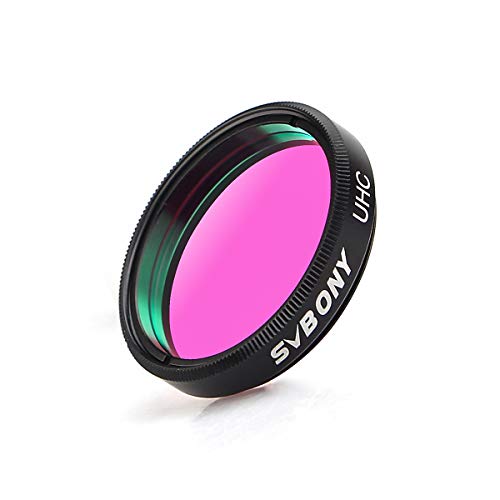 TOP CHOICEBest budget pickSVBONY 1.25" UHC Telescope FilterView on Amazon
- 4
 Best for compact 52mm lensesWalking Way 52mm Natural Night FilterView on Amazon
- 5Best for 67mm lens threadsWalking Way 67mm Natural Night FilterView on Amazon
- 6Best for 72mm lens threadsWalking Way 72mm Natural Night FilterView on Amazon
- 7Best for 77mm large-front lensesWalking Way 77mm Natural Night FilterView on Amazon
Our Top Picks
Quick Comparison
| Product | Best for | Key feature |
|---|---|---|
| HOYA 52mm Starscape Astrophotography Filter | Overall balance of contrast and color | Multi-layer coating, 97%+ light transmission per listing |
| K&F CONCEPT 67mm Nano-X Night Filter | Small kitchens and general city-sky shooting | 28 multi-layer coatings, neutral color claim |
| SVBONY 1.25″ UHC Telescope Filter | Budget eyepiece and small-camera work | 1.25-inch format with aluminum frame |
| Walking Way 52mm Natural Night Filter | Compact 52mm lens threads | Nano-coated optical glass |
| Walking Way 67mm Natural Night Filter | 67mm lens threads | Nano-coated optical glass |
| Walking Way 72mm Natural Night Filter | 72mm lens threads | Nano-coated optical glass |
| Walking Way 77mm Natural Night Filter | 77mm large-front lenses | Nano-coated optical glass |
HOYA 52mm Starscape Astrophotography Filter
HOYA 52mm Starscape Astrophotography Filter – Boosts Star-To-Sky Contrast | Multi-Layer Coating Delivers 97%+ Light Transmission, Cutting Reflections And Flare For Clean, High-Contrast Night Imagery
Best for: Overall balance of contrast and color
This is a fit for photographers who want a long-established brand and a filter designed specifically for star-to-sky contrast on a 52mm thread.
Key specs
- 52mm thread size
- Multi-layer coating
- Listed light transmission of 97% or higher
Pros
- Brand has a long track record in optical filters
- Coating is designed to reduce reflections and flare
- Targets star-to-sky contrast directly
Cons
- Only one thread size is offered in this listing
- A 52mm thread will not fit larger lenses without an adapter
Bottom line: A strong first choice for owners of 52mm lenses who want a proven name and a filter aimed at clean star contrast.
View on AmazonK&F CONCEPT 67mm Nano-X Night Filter
K&F CONCEPT 67mm Clear Natural Night Filter Pollution Reduction | 28 Multi-Layer Coatings Light Pollution Reduction Filter for Night City Sky Star Shots.No Color Cast Nano-X Series FE707
Best for: Small kitchens and general city-sky shooting
Suited to photographers who shoot mostly from urban balconies or backyards and want a filter that stays neutral in color.
Key specs
- 67mm thread size
- 28 multi-layer coatings
- Nano-X series
Pros
- Coating count is high for a filter in this class
- Marketed as having no color cast
- 67mm is a common lens thread size
Cons
- Owners sometimes report flare in strong backlight
- Neutral-color claims still need checking on your own camera
Bottom line: Good for city shooters with 67mm lenses who value color neutrality and a heavy coating stack.
View on AmazonSVBONY 1.25″ UHC Telescope Filter
SVBONY Telescope Filter, 1.25" UHC Filter Improve Contrast for Telescope | Optical Glass Lens, Aluminum Frame, Astrophotography Filter, Light Pollution Filter Nebula Filters, Telescope Accessories
Best for: Budget eyepiece and small-camera work
Aimed at telescope owners who image through eyepiece-format cameras and want a low-cost way to test light pollution filtration.
Key specs
- 1.25-inch barrel format
- Optical glass element in an aluminum frame
- UHC (ultra-high contrast) filter type
Pros
- Fits standard 1.25-inch eyepiece holders
- Aluminum frame is a sturdy build for the price class
- Broad-band UHC design suits nebula viewing
Cons
- 1.25-inch size limits use with larger camera lenses
- UHC filters can dim broadband targets such as galaxies
Bottom line: A budget entry point for telescope imagers who want to experiment with light pollution filtration without committing to a large filter.
View on AmazonWalking Way 52mm Natural Night Filter
Walking Way 52mm Natural Night Filter for Light Pollution Reduction Nano-Coated Optical Glass for Night Sky/Astrophotography/Star Clarity Anti-Light Pollution Filter
Best for: Compact 52mm lens threads
For owners of smaller prime or kit lenses who need a compact natural-night filter and want to keep the setup light.
Key specs
- 52mm thread size
- Nano-coated optical glass
Pros
- Lightweight for smaller lenses
- Nano coating aims to reduce reflections
- Compact thread suits many entry-level lenses
Cons
- Less light-gathering for wide-field work
- Manufacturer detail on transmission is limited in the listing
Bottom line: A practical pick for 52mm lens users who want a simple, compact natural-night filter.
View on AmazonWalking Way 67mm Natural Night Filter
Walking Way 67mm Natural Night Filter for Light Pollution Reduction Nano-Coated Optical Glass for Night Sky/Astrophotography/Star Clarity Anti-Light Pollution Filter
Best for: 67mm lens threads
Fits photographers using mid-range zooms or primes with 67mm threads who want the same nano-coated design as the smaller sizes in this line.
Key specs
- 67mm thread size
- Nano-coated optical glass
Pros
- Common thread size for many lenses
- Consistent design across the Walking Way range
- Nano coating for reduced reflections
Cons
- Detailed transmission specs are not spelled out in the listing
- Owners report that filter size must match the lens exactly
Bottom line: A solid choice for 67mm lens owners who want a matching natural-night filter in a familiar thread size.
View on AmazonWalking Way 72mm Natural Night Filter
Walking Way 72mm Natural Night Filter for Light Pollution Reduction Nano-Coated Optical Glass for Night Sky/Astrophotography/Star Clarity Anti-Light Pollution Filter
Best for: 72mm lens threads
Suited to users with 72mm lenses who want a natural-night filter with the same coating approach as the rest of the line.
Key specs
- 72mm thread size
- Nano-coated optical glass
Pros
- Good match for common 72mm lens threads
- Coating aims to preserve star clarity
- Consistent with sibling sizes in the range
Cons
- Less specific performance data than some competitors
- Larger threads add weight to lightweight lenses
Bottom line: Recommended for 72mm lens users who want a dedicated night filter without changing their existing setup.
View on AmazonWalking Way 77mm Natural Night Filter
Walking Way 77mm Natural Night Filter for Light Pollution Reduction Nano-Coated Optical Glass for Night Sky/Astrophotography/Star Clarity Anti-Light Pollution Filter
Best for: 77mm large-front lenses
For larger telephoto or wide-aperture lenses with 77mm front threads, where a smaller filter would not fit.
Key specs
- 77mm thread size
- Nano-coated optical glass
Pros
- Covers the larger front element of big lenses
- Same coating philosophy as the smaller sizes
- Useful for wide-field night scenes
Cons
- Heavier, which can stress lightweight lens mounts
- Few owners of small lenses will need this size
Bottom line: Best for owners of 77mm lenses who need full coverage and do not want to step down to a smaller filter.
View on AmazonBuying Guide
Filter type and passband
Light pollution filters fall into broad categories: broadband natural-night filters that cut a wide slice of artificial light, and narrowband or UHC designs that pass only specific emission lines. Broadband types suit galaxies and wide scenes, while narrowband types suit emission nebulae but can dim everything else. Check which targets you shoot before choosing.
Good picks for this: HOYA 52mm Starscape Astrophotography Filter, SVBONY 1.25″ UHC Telescope Filter
Thread size and lens fit
The filter thread must match your lens front threads exactly. Measure or check the number printed on the lens barrel. If your lens uses a different size, a step-up or step-down ring can work, but it adds bulk and can cause vignetting on wide lenses.
Good picks for this: Walking Way 67mm Natural Night Filter, Walking Way 77mm Natural Night Filter
Coatings and light transmission
Multi-layer and nano coatings are intended to reduce reflections, ghosting and flare. Manufacturers often specify a percentage of light transmission. Higher transmission means less light loss, but the coating quality matters just as much for controlling glare from nearby street lamps.
Good picks for this: K&F CONCEPT 67mm Nano-X Night Filter, HOYA 52mm Starscape Astrophotography Filter
Color neutrality
Some filters tint the image, which then has to be corrected in editing. Look for designs described as neutral or no color cast, and always shoot test frames with and without the filter to see the shift on your own sensor.
Good picks for this: K&F CONCEPT 67mm Nano-X Night Filter, HOYA 52mm Starscape Astrophotography Filter
Use case: telescope versus camera lens
Eyepiece-format filters such as 1.25-inch units fit telescopes and certain camera adapters. Camera-lens filters use threaded mounts. Choose based on your optical train. Telescope imagers often need a different filter format than DSLR or mirrorless lens users.
Good picks for this: SVBONY 1.25″ UHC Telescope Filter, Walking Way 52mm Natural Night Filter
Build quality and durability
Aluminum frames resist bending better than thin plastic rims, and optical glass resists scratching better than uncoated resin. Handle filters by the edge, keep caps on when not in use and store them in a padded case to protect the coating.
Good picks for this: SVBONY 1.25″ UHC Telescope Filter, Walking Way 72mm Natural Night Filter
Care and cleaning
Use a blower to remove dust, then a microfiber cloth and lens-safe cleaning fluid if needed. Avoid household glass cleaners, which can damage coatings. Dew can form on a filter on humid nights, so a dew heater or lens hood helps keep the glass clear.
Good picks for this: HOYA 52mm Starscape Astrophotography Filter, Walking Way 67mm Natural Night Filter
FAQ
What is a light pollution filter for astrophotography?
It is an optical filter placed in front of a lens or telescope that blocks some of the artificial light from streetlights and skyglow while passing starlight and certain emission wavelengths.
Does a light pollution filter work in a bright city?
It can improve contrast and reduce background glow, but it cannot remove light pollution completely. Results are best with long exposures and dark-sky processing.
Which filter size should I buy?
Match the thread size printed on your lens front. If you use a telescope or eyepiece adapter, choose a 1.25-inch or other format that fits your optical train.
Will a filter change the color of my photos?
Some do. Neutral-color designs reduce this, but you should still take test frames and adjust white balance or color in editing.
Do I still need a dark site?
A filter helps in moderate light pollution, but dark skies give the best results for faint deep-sky targets. Filters are a supplement, not a replacement.
Can I use a light pollution filter with a telescope?
Yes, eyepiece-format or camera-adapter versions are made for telescopes. Confirm the filter fits your focuser or camera connection before buying.
Conclusion
For most camera-lens users, the HOYA 52mm Starscape Astrophotography Filter and the K&F CONCEPT 67mm Nano-X Night Filter are reasonable starting points, depending on your thread size. Telescope owners on a budget may prefer the SVBONY 1.25″ UHC Telescope Filter. The Walking Way range covers 52mm, 67mm, 72mm and 77mm threads, so it is useful if you need a specific size. Match the filter type to your targets, check the thread size first, and test for color shift on your own camera.
For more on related gear, see Camera Filters for Astrophotography: 5 Best Picks Compared in 2026 and Astrophotography Color Camera Filters: What to Use and When (2026). Telescope imagers may also find Top 7 Refractor Telescope Solar Filters Compared for Safe Sun Viewing useful for a different filtering task, and Top 7 Deep Sky Astrophotography Cameras for Serious Imaging in 2026 for matching a camera to your filter setup.
Sources
- Information on light pollution, its effects and how dark-sky-friendly lighting reduces skyglow
- Background on night-sky brightness, airglow and observing conditions (nasa.gov)
- Guidance on protecting natural night skies in national park settings (nps.gov)
Related reading
- Telescope Eyepiece Sun Filter: 6 Best Picks Compared for 2026
- Telescope Eyepiece Solar Filter: 5 Best Picks Compared for Safe Sun Viewing
About Audrey Hayes
Audrey Hayes is part of our editorial team and reviews and edits our telescopes & stargazing guides, checking product details against manufacturer specifications and owner feedback.
About the author
Audrey Hayes writes reviews and buying guides for Astronomy Site.