7 Best Telescope Deep Sky Filters for Visual Viewing (2026)
Compare 7 telescope deep sky filters for nebulae, light pollution and galaxies. See which UHC, CLS and narrowband filters suit your scope and sky.
 By Audrey Hayes
Updated November 22, 2026
 By Audrey Hayes
Updated November 2026
Shopping for a telescope deep sky filter usually starts with one frustrating observation: nebulae that looked promising in a star chart appear faint, washed out or invisible from a light-polluted backyard. A good filter can cut through skyglow and sharpen the contrast of emission nebulae, planetary nebulae and some galaxies, but the right choice depends on your sky, your eyepiece and whether you plan to observe visually or photograph. This list compares seven filters across those criteria, focusing on passband, coating quality, thread size, sky conditions and how clearly each product’s listing describes what it does.
Our top picks at a glance
- 1TOP CHOICEBest overallOPTOLONG 2inch Filter Astronomy Telescope SII-CCD 6.5nm Narrow-Band FilterView on Amazon
- 2
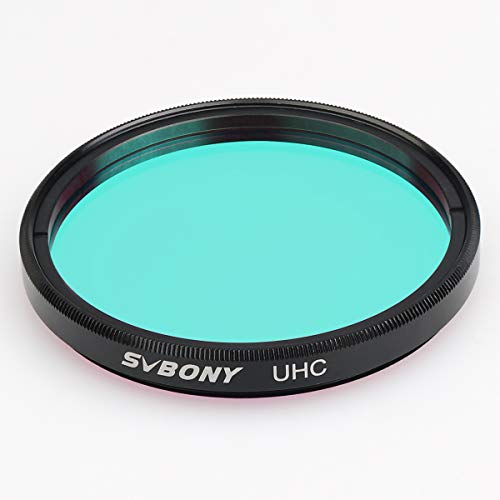 TOP CHOICEBest for broad light pollutionSVBONY 2" UHC Filter, Multi Coating Optical Glass, Telescope FilterView on Amazon
- 3
 TOP CHOICEBest for dual-band nebula workSVBONY SV220 Telescope Filter, 2" 7nm Dual-Band Nebula FilterView on Amazon
- 4
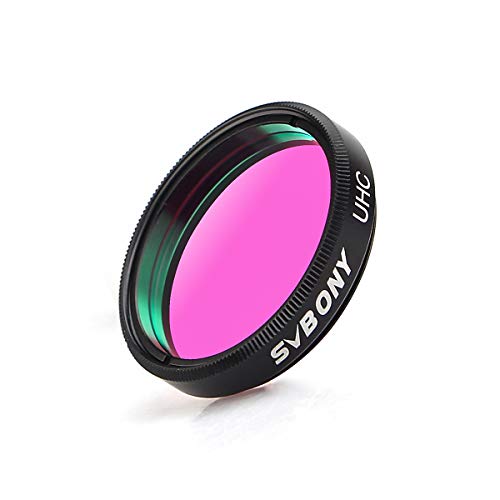 Best budget pickSVBONY Telescope Filter, 1.25" UHC Filter Improve ContrastView on Amazon
- 5
 Best for 1.25-inch eyepieces (H-Alpha)Astromania Telescope Filter Narrowband Hydrogen H-Alpha Nebula Filter 1.25"View on Amazon
- 6
 Best for broadband galaxy and nebula viewingSVBONY CLS Filter, Broadband Telescope Filter, 2 Inch Light Pollution FilterView on Amazon
- 7
 Best multi-coated 2-inch alternativeAlstar Telescope Filter 2" UHC Filter Improve Contrast Nebula Multi CoatingView on Amazon
Our Top Picks
The table below summarizes what each filter is designed to do. Each product section that follows explains who it suits and where its trade-offs lie.
Quick Comparison
| Product | Best for | Key feature |
|---|---|---|
| OPTOLONG 2inch SII-CCD 6.5nm Narrow-Band Filter | Narrowband emission nebulae from suburban skies | 6.5nm sulfur II passband |
| SVBONY 2″ UHC Filter, Multi Coating | General nebula contrast under light pollution | Multi-coated optical glass, 2-inch thread |
| SVBONY SV220 Dual-Band 2″ 7nm | H-alpha and O-III nebula work | Dual-band 7nm passbands |
| SVBONY Telescope Filter 1.25″ UHC | Budget entry into nebula filtering | 1.25-inch format, UHC bandpass |
| Astromania H-Alpha Nebula Filter 1.25″ | H-alpha nebulae with 1.25-inch eyepieces | Narrowband hydrogen H-alpha |
| SVBONY CLS Filter Broadband 2 Inch | Broadband light pollution suppression | Blocks off-band light, passes key nebula wavelengths |
| Alstar Telescope Filter 2″ UHC | Multi-coated UHC on a 2-inch thread | Aluminum frame, multi-coating |
OPTOLONG 2inch Filter Astronomy Telescope SII-CCD 6.5nm Narrow-Band Filter
OPTOLONG 2inch Filter Astronomy Telescope SII-CCD 6.5nm Narrow-Band Filter for Deep Sky
Best for: Narrowband emission nebulae from suburban or urban skies
This filter suits observers who already know which nebulae they want to see and who observe from locations with significant light pollution. The narrow passband isolates sulfur II emission, which is useful for specific targets rather than general sky viewing.
Key specs
- 2-inch format
- 6.5nm narrow-band passband centered on sulfur II emission
- Designed for astronomical imaging and visual use
Pros
- Very narrow passband rejects most skyglow
- Useful for targeted emission nebulae
- 2-inch format suits many larger eyepieces
Cons
- Narrow passband limits which objects respond well
- Not a general-purpose filter for all deep-sky targets
Bottom line: A strong choice for observers who want targeted narrowband work from a light-polluted site and know which objects to chase.
View on AmazonSVBONY 2″ UHC Filter, Multi Coating Optical Glass, Telescope Filter
SVBONY 2" UHC Filter, Multi Coating Optical Glass, Telescope Filter | Improve Image Contrast, Reduce Light Pollution, Telescope Accessories for Deep Sky Objects Astrophotography & Observation
Best for: General nebula contrast under light pollution
This is a practical all-round choice for observers with 2-inch focusers who want one filter for a range of nebulae. UHC filters generally pass the emission lines of many nebulae while blocking much of the broadband glow from streetlights.
Key specs
- 2-inch format
- UHC (ultra-high contrast) bandpass
- Multi-coated optical glass
Pros
- Versatile across many emission nebulae
- Multi-coating helps limit reflections
- 2-inch format fits larger eyepieces
Cons
- Dims galaxies and reflection nebulae noticeably
- Works best with some dark-adapted vision
Bottom line: A sensible first 2-inch filter for observers who mainly chase emission nebulae from suburban skies.
View on AmazonSVBONY SV220 Telescope Filter, 2″ 7nm Dual-Band Nebula Filter
SVBONY SV220 Telescope Filter, 2" 7nm Dual-Band Nebula Filter for Deep Sky | H-Alpha & O-III Narrowband Filter, Reduce Stray Light, for One-Shot Color Camera, Telescope Accessories for Astrophotograph
Best for: H-alpha and O-III nebula work
Dual-band filters pass two narrow emission lines, which can suit observers who want to view both hydrogen and oxygen emission nebulae with one filter. They are often marketed for one-shot color astrophotography as well.
Key specs
- 2-inch format
- 7nm dual-band passbands for H-alpha and O-III
- Designed for visual and one-shot color imaging
Pros
- Covers two key nebula emission lines
- Good match for many emission nebulae
- Useful for one-shot color cameras
Cons
- Narrow passbands dim some targets considerably
- Less useful for galaxies
Bottom line: Best for observers who want H-alpha and O-III coverage and accept that galaxies will look dim through it.
View on AmazonSVBONY Telescope Filter, 1.25″ UHC Filter Improve Contrast
SVBONY Telescope Filter, 1.25" UHC Filter Improve Contrast for Telescope | Optical Glass Lens, Aluminum Frame, Astrophotography Filter, Light Pollution Filter Nebula Filters, Telescope Accessories
Best for: Budget entry into nebula filtering
A 1.25-inch UHC filter is a low-commitment way to test whether a nebula filter helps your sky. It suits observers with 1.25-inch eyepieces and a modest budget.
Key specs
- 1.25-inch format
- UHC bandpass
- Optical glass with aluminum frame
Pros
- Inexpensive way to try nebula filtering
- Fits common 1.25-inch eyepiece barrels
- Aluminum frame is sturdy for its size
Cons
- Smaller format limits field of view with wide eyepieces
- Less effective on galaxies
Bottom line: A good starting point for beginners with 1.25-inch eyepieces who want to test filtering before buying a larger filter.
View on AmazonAstromania Telescope Filter Narrowband Hydrogen H-Alpha Nebula Filter 1.25″
Astromania Telescope Filter Narrowband Hydrogen H-Alpha Nebula Filter 1.25" | Telescope Accessory Light Pollution Filter, Galaxy Deep Sky H-Alpha Nebula Filters, For 1.25" Eyepiece Astronomical Telesc
Best for: H-alpha nebulae with 1.25-inch eyepieces
H-alpha filters isolate hydrogen emission, which is the dominant light from many bright emission nebulae. This 1.25-inch model suits observers targeting hydrogen-rich nebulae with smaller eyepieces.
Key specs
- 1.25-inch format
- Narrowband H-alpha passband
- Designed for light pollution and nebula observation
Pros
- Targets hydrogen emission directly
- Compact 1.25-inch format
- Useful for light-polluted skies
Cons
- Narrow band limits use to hydrogen-emitting objects
- Smaller format restricts field with wide eyepieces
Bottom line: A focused choice for observers mainly interested in H-alpha nebulae through 1.25-inch eyepieces.
View on AmazonSVBONY CLS Filter, Broadband Telescope Filter, 2 Inch Light Pollution Filter
SVBONY CLS Filter, Broadband Telescope Filter,2 Inch Light Pollution Filter | 0.1% Transmission of Off-band,90% Transmission of Key Nebula WavelengthsSuitable for Deep Sky Visual Astronomical Photogra
Best for: Broadband light pollution suppression
CLS-style broadband filters aim to block the off-band light produced by artificial lighting while passing a range of nebula wavelengths. They are a reasonable choice when you want a single filter for mixed targets from a bright site.
Key specs
- 2-inch format
- Broadband design blocking much off-band light
- Intended for visual and photographic use
Pros
- Broader passband than narrowband filters
- Works on a wider range of nebulae
- 2-inch format fits larger eyepieces
Cons
- Less contrast gain than narrowband on the best targets
- Galaxy views may still be dim
Bottom line: A reasonable compromise for mixed targets from light-polluted skies where a broadband approach is preferred.
View on AmazonAlstar Telescope Filter 2″ UHC Filter Improve Contrast Nebula Multi Coating
Alstar Telescope Filter 2" UHC Filter Improve Contrast Nebula Multi Coating | Reduce Light Pollution, Aluminum Frame, Astrophotography Filter, Telescope Accessories for Deep Sky Objects Observation
Best for: Multi-coated UHC on a 2-inch thread
This is another 2-inch UHC option with an aluminum frame, aimed at observers who want a sturdy housing and multi-coated optics for nebula work.
Key specs
- 2-inch format
- UHC bandpass
- Aluminum frame with multi-coating
Pros
- Multi-coating reduces unwanted reflections
- Sturdy aluminum frame
- Suitable for many emission nebulae
Cons
- Dims galaxies and reflection nebulae
- Benefits depend heavily on sky darkness
Bottom line: A solid 2-inch UHC alternative for observers who prioritize a sturdy frame and multi-coated glass.
View on AmazonBuying Guide
Filter type: UHC, narrowband, dual-band or broadband
UHC filters pass a wide set of emission lines and are the usual starting point for nebulae. Narrowband filters isolate a single emission line, giving strong contrast on specific targets but dimming everything else. Dual-band filters pass two lines. Broadband designs block a large share of off-band light while passing more of the spectrum. Match the type to your targets before buying.
Good picks for this: SVBONY 2″ UHC Filter and OPTOLONG 2inch SII-CCD 6.5nm Narrow-Band Filter
Passband width
Passband is the range of wavelengths a filter transmits. A 6.5nm or 7nm passband is narrow and selective. Wider passbands transmit more light but reject less skyglow. Narrow passbands work well for targeted nebulae under bright skies; wide ones suit broader observing. Check the listing’s stated nanometer value.
Good picks for this: SVBONY SV220 Dual-Band 2″ 7nm and SVBONY CLS Broadband Filter
Thread size and eyepiece compatibility
Filters come in 1.25-inch and 2-inch formats. Check your eyepiece barrel and your diagonal before buying. A 1.25-inch filter threaded into a 2-inch eyepiece will not fit well, and larger-format filters give wider fields with wide-angle eyepieces. Many observers use 2-inch filters with larger eyepieces and 1.25-inch for smaller ones.
Good picks for this: SVBONY Telescope Filter 1.25″ UHC and Astromania H-Alpha 1.25″
Sky conditions and light pollution
Filters help most under light-polluted skies, where skyglow washes out faint nebulae. Under truly dark skies, a filter may dim targets more than it helps. If your site is dark, a filter is less likely to improve views of galaxies. Consider your typical observing location before choosing a narrowband or UHC design.
Good picks for this: Alstar Telescope Filter 2″ UHC and SVBONY 2″ UHC Filter
Coatings and optical quality
Multi-coated optics reduce reflections and can improve transmission. Look for descriptions of multi-coating and optical glass in the listing. Coatings matter more than most buyers expect, because stray reflections can reduce contrast in an otherwise good filter.
Good picks for this: SVBONY 2″ UHC Filter and Alstar Telescope Filter 2″ UHC
Target list and observing goals
Decide what you want to see first. Emission nebulae such as the Orion Nebula respond well to UHC and narrowband filters. Galaxies and star clusters often look dimmer through them. If galaxies are your main interest, a broadband approach or no filter may serve you better.
Good picks for this: SVBONY CLS Broadband Filter and Astromania H-Alpha 1.25″
Durability and care
Aluminum frames resist bending better than plastic housings. Keep filter faces clean with a soft brush and lens cleaning solution, and store filters in a case to prevent scratches. Avoid touching the glass with bare fingers, since oils can affect coatings over time.
Good picks for this: Alstar Telescope Filter 2″ UHC and SVBONY Telescope Filter 1.25″ UHC
FAQ
What is a telescope deep sky filter used for?
A telescope deep sky filter blocks unwanted wavelengths, such as those from streetlights, and passes the emission lines of certain nebulae. The result is usually higher contrast on emission nebulae, though galaxies and star clusters may appear dimmer.
Do deep sky filters work on galaxies?
Generally not as well as they work on emission nebulae. Galaxies emit broadband light, and most nebula filters block much of it. Broadband designs or no filter often give better galaxy views.
Should I choose a 1.25-inch or 2-inch filter?
Choose based on your eyepiece barrel size. 2-inch filters give a wider field with larger eyepieces, while 1.25-inch filters suit smaller eyepieces and budget setups. Check your gear before buying.
What is the difference between UHC and narrowband filters?
UHC filters pass a wider set of emission lines and suit many nebulae. Narrowband filters pass a single, very narrow wavelength range and work best on specific targets. Narrowband gives stronger contrast on its target but dims more of the rest of the sky.
Do I need a filter if I observe from a dark site?
Probably not for most targets. Under dark skies, filters can dim views of galaxies and other objects more than they help. A filter is most useful under moderate to heavy light pollution.
Can I use a deep sky filter for astrophotography?
Yes, many are marketed for imaging as well as visual use. Dual-band and broadband filters are often chosen for one-shot color cameras. Check the listing for imaging compatibility and match the filter to your camera setup.
Conclusion
For most observers chasing emission nebulae from suburban skies, a 2-inch UHC filter such as the SVBONY 2″ UHC Filter gives the widest practical use. Narrowband users with a specific target list may prefer the OPTOLONG SII-CCD filter, while those wanting H-alpha and O-III coverage can look at the SVBONY SV220 dual-band. Observers with 1.25-inch eyepieces and a tight budget can start with the SVBONY 1.25″ UHC, and those with mixed targets from bright skies may consider the SVBONY CLS broadband design. Match the filter to your eyepiece, sky and targets, and check each listing’s passband and thread size before buying.
Sources
- Background on nebula emission lines, light pollution effects and how astronomers describe sky brightness (nasa.gov)
- Standard astronomical nomenclature and information on deep-sky object classification
- Guidance on light pollution, sky brightness and the observing conditions that affect filter choice
Related reading
- Deep Sky Telescope Camera Picks: 7 Best Options Compared for 2026
- CCD Camera Telescope Astrophotography: A Beginner's Guide to Deep-Sky Images
- 7 Best Telescopes for Deep Sky Viewing: Best Picks Compared for 2026
- 7 Best Telescopes for Deep Sky Viewing Compared for 2026
- 7 Best Telescopes for Deep Sky Photography of 2026: Picks Compared
- 7 Best Telescope Eyepieces for Deep Sky Objects (2026)
- 6 Best Telescopes for Viewing Deep Sky Objects: Picks Compared
About Audrey Hayes
Audrey Hayes is part of our editorial team and reviews and edits our telescopes & stargazing guides, checking product details against manufacturer specifications and owner feedback.
About the author
Audrey Hayes writes reviews and buying guides for Astronomy Site.