Deep Sky Telescope Camera Picks: 7 Best Options Compared for 2026
Compare 7 deep sky telescope camera options for astrophotography, from smart all-in-one scopes to cooled color and mono sensors. Find the right match for your s
 By Audrey Hayes
Updated November 21, 2026
 By Audrey Hayes
Updated November 2026
Choosing a deep sky telescope camera comes down to what you want to photograph, how much control you need, and how your telescope and computer fit into the picture. Some people want a single device that finds, tracks and stacks targets from a phone. Others want a cooled sensor that suppresses thermal noise on faint nebulae and galaxies. This list compares seven options across those needs. The selection criteria were sensor type and size, cooling, resolution and pixel format, connectivity, whether the unit works with a conventional scope or is a self-contained smart telescope, and the feedback patterns owners commonly report.
Our top picks at a glance
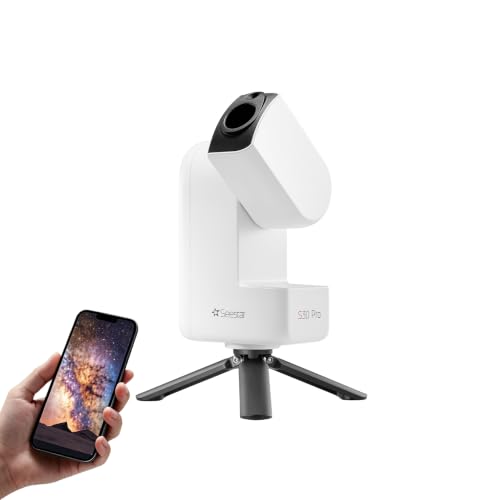
- 1TOP CHOICEBest overallZWO Seestar S30 Pro Smart Telescope, App-Controlled AstrophotographyView on Amazon
- 2
 TOP CHOICEBest for beginners who want all-in-one imagingSeestar S50 Pro Smart Telescope, Aperture 50mm, App-ControlledView on Amazon
- 3
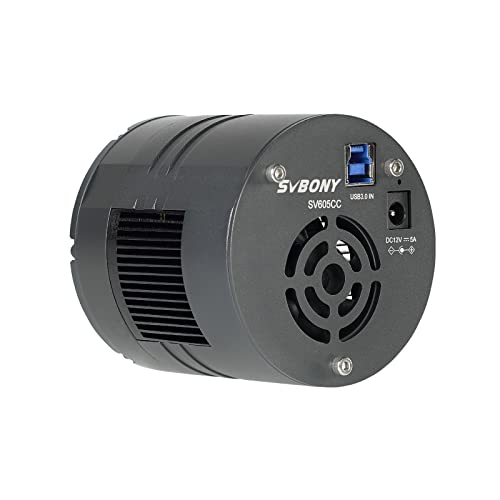 TOP CHOICEBest for cooled color deep-sky workSVBONY SV605CC Cooled Color Astrophotography Camera, 9MP IMX533View on Amazon
- 4
 Best for large-sensor color imagingSVBONY SC571CC Cooled Color Astronomy Camera, IMX571 CMOS APS-C SensorView on Amazon
- 5
 Best for a mid-range cooled sensorSVBONY SV405CC Astrophotography Camera, Cooled Telescope Eyepiece IMX294View on Amazon
- 6
 Best for planetary and lunar crossoverSVBONY SV705C Telescope Camera Eyepiece, IMX585 USB 3.0 Astronomy CameraView on Amazon
- 7
 Best budget pick for wireless EAASVBONY SC311 Upgraded WiFi Telescope Camera, IMX662 Astrophotography CameraView on Amazon
Our Top Picks
Quick Comparison
| Product | Best for | Key feature |
|---|---|---|
| ZWO Seestar S30 Pro Smart Telescope | All-in-one deep-sky imaging | Auto tracking with GoTo and one-tap capture |
| Seestar S50 Pro Smart Telescope | Beginners wanting a 50mm smart scope | 4-element apochromatic lens and EQ mode |
| SVBONY SV605CC Cooled Color Camera | Cooled color deep-sky work | Thermoelectric cooling, USB 3.0 |
| SVBONY SC571CC Cooled Color Camera | Large-sensor color imaging | IMX571 APS-C sensor with front-window heater |
| SVBONY SV405CC Astrophotography Camera | Mid-range cooled color imaging | IMX294 sensor with HCG mode |
| SVBONY SV705C Telescope Camera Eyepiece | Planets, Moon and bright deep-sky objects | IMX585 sensor in a 1.25-inch format |
| SVBONY SC311 Upgraded WiFi Telescope Camera | Wireless EAA and casual viewing | WiFi live view with 30-second exposures |
ZWO Seestar S30 Pro Smart Telescope, App-Controlled Astrophotography
ZWO Seestar S30 Pro Smart Telescope, App-Controlled Astrophotography | 4K Dual Camera, Auto Tracking & GoTo, One-Tap Capture & Processing, Milky Way & Star Trail, Deep Sky & Wide-Field Imaging
Best for: All-in-one deep-sky imaging with minimal setup
This suits someone who wants to go from unboxing to a stacked image of a nebula or galaxy without building a mount, aligning a polar axis or managing a separate camera. It is a self-contained smart telescope that handles finding, tracking and processing through its app.
Key specs:
- Built-in 4K dual camera system
- Automatic tracking and GoTo
- One-tap capture and on-device processing
- Supports Milky Way, star trail and deep-sky targets
Pros:
- Very short learning curve for new imagers
- Handles tracking and stacking automatically
- Works from a phone or tablet
Cons:
- Limited control over individual exposure parameters compared with a dedicated cooled camera
- Ties you to the manufacturer’s app and workflow
Bottom line: Best for people who want reliable deep-sky results with the least friction and are happy trading manual control for convenience.
View on AmazonSeestar S50 Pro Smart Telescope, Aperture 50mm, App-Controlled
Seestar S50 Pro Smart Telescope, Aperture 50mm, App-Controlled | 4K Dual Camera, 4-Element Apochromatic Lens, One-Tap GoTo Auto Tracking, EQ Mode, 128GB, for Deep-Sky Milky Way Star Trail
Best for: Beginners wanting a 50mm smart scope with apochromatic optics
The S50 Pro is aimed at users who want a little more optical capability than a compact smart scope while keeping the same app-driven workflow. It suits imagers moving from wide-field Milky Way shots into brighter deep-sky targets.
Key specs:
- 50mm aperture
- 4-element apochromatic lens
- 4K dual camera system
- One-tap GoTo with auto tracking and EQ mode
- 128GB onboard storage
Pros:
- Apochromatic optics reduce color fringing on bright stars
- EQ mode allows more flexible use
- Onboard storage supports longer sessions
Cons:
- A 50mm aperture gathers less light than larger scopes for faint galaxies
- Still dependent on the app for most functions
Bottom line: A good pick for a beginner who wants smart-scope convenience with somewhat better optics and a path to EQ-style use.
View on AmazonSVBONY SV605CC Cooled Color Astrophotography Camera, 9MP IMX533
SVBONY SV605CC Cooled Color Astrophotography Camera, 9MP IMX533 Eyepiece | Double Layer Semiconductor Refrigeration, USB3.0, 30 ℃ Lower for Deep Sky Astrophotography Panoramic Astronomy &Lucky Imaging
Best for: Cooled color deep-sky work on a conventional telescope
This camera fits an astrophotographer with an existing scope and a laptop who wants a cooled sensor for long exposures of nebulae and star clusters. Cooling reduces thermal noise, which matters most on faint targets.
Key specs:
- 9MP IMX533 sensor
- Double-layer semiconductor cooling, rated up to 30 °C below ambient
- USB 3.0 connection
Pros:
- Cooling helps control noise on long exposures
- Works with standard telescopes and imaging software
- Useful for both deep-sky and planetary work
Cons:
- Requires a computer, mount and software workflow
- Owners often mention that the cooling needs time to stabilize before a session
Bottom line: A solid choice for someone building a dedicated imaging rig who wants cooled color performance without a large budget commitment.
View on AmazonSVBONY SC571CC Cooled Color Astronomy Camera, IMX571 CMOS APS-C Sensor
SVBONY SC571CC Cooled Color Astronomy Camera, IMX571 CMOS APS-C Sensor | Front-Window Glass Heater, Prevent Dew and Condensation, USB 3.0 TypeC, High Resolution Telescope Camera for Astrophotography
Best for: Large-sensor color imaging with dew resistance
The APS-C-class IMX571 sensor gives a wider field of view and more pixels than smaller chips, which suits galaxy mosaics and larger nebulae. It is aimed at imagers with a capable mount and a telescope that can cover the sensor.
Key specs:
- IMX571 CMOS APS-C sensor
- Thermoelectric cooling
- Front-window glass heater to prevent dew
- USB 3.0 Type-C
Pros:
- Large sensor covers more sky per frame
- Front-window heater helps in humid conditions
- Cooled operation suits long deep-sky exposures
Cons:
- Needs a telescope with a full-frame-capable image circle, which adds cost to the setup
- Larger files and processing demands than smaller sensors
Bottom line: Best for an imager who wants a larger field and is ready to match the camera with suitable optics and a sturdy mount.
View on AmazonSVBONY SV405CC Astrophotography Camera, Cooled Telescope Eyepiece IMX294
SVBONY SV405CC Astrophotography Camera, Cooled Telescope Eyepiece IMX294 | High-Sensitivity 4/3" Color Sensor 11.7MP USB 3.0 HCG Mode, Cooling Power Steady, Cooled Camera for Deep Sky Astrophotography
Best for: Mid-range cooled color imaging with a compact footprint
This camera uses a 4/3-inch sensor and is designed to fit a standard eyepiece-style connection, which can simplify setup on some scopes. It suits imagers who want cooling without moving to a large-format sensor.
Key specs:
- IMX294 4/3-inch color sensor
- 11.7MP resolution
- USB 3.0
- HCG mode for high-gain imaging
Pros:
- Good balance of resolution and sensor size for mid-range scopes
- Cooling is designed to stay steady during sessions
- Compact format is easier to manage
Cons:
- Smaller field of view than APS-C-class sensors
- Owners often report needing a careful focus routine to get sharp stars
Bottom line: A practical middle option for someone who wants cooled color imaging and a manageable sensor size.
View on AmazonSVBONY SV705C Telescope Camera Eyepiece, IMX585 USB 3.0 Astronomy Camera
SVBONY SV705C Telescope Camera Eyepiece, IMX585 USB 3.0 Astronomy Camera | "1/1.2” Frame, Astronomy Camera, High Resolution Planetary Camera, for Moon, Saturn, Planets and Deep Sky Astrophotography "
Best for: Planetary, lunar and bright deep-sky imaging
This 1/1.2-inch camera is built for high-resolution views of planets and the Moon, and it also handles brighter deep-sky objects such as the Orion Nebula. It suits someone who splits time between solar system and deep-sky targets.
Key specs:
- IMX585 sensor in a 1/1.2-inch format
- USB 3.0
- 1.25-inch eyepiece-style body
Pros:
- Fine for planetary detail as well as deep-sky targets
- Eyepiece-style body is easy to fit
- Compact and light
Cons:
- Not cooled, so long faint-object exposures pick up more noise
- Best results on brighter deep-sky targets rather than very faint galaxies
Bottom line: Suits a mixed-target observer who wants one camera for planets and brighter nebulae.
View on AmazonSVBONY SC311 Upgraded WiFi Telescope Camera, IMX662 Astrophotography Camera
SVBONY SC311 Upgraded WiFi Telescope Camera,IMX662 Astrophotography Camera | 30S Exposure, 2500mAh 32GB, 1.25" 2.1MP Wireless Telescope Camera, for Moon Planetary Deep Sky Astrophotography & EAA
Best for: Wireless electronically assisted astronomy and casual viewing
This wireless unit suits someone who wants to see a live image on a phone or tablet while observing with family or friends. It also works for short exposures of bright objects and is a low-commitment way to try deep-sky imaging.
Key specs:
- IMX662 sensor
- 1.25-inch format
- WiFi live view
- 30-second maximum exposure
- 2500mAh battery and 32GB storage
Pros:
- Wireless live view is convenient for group observing
- Compact and portable
- Lower commitment for a first deep-sky camera
Cons:
- A 30-second exposure limit restricts faint deep-sky work
- No cooling, so noise rises on longer integrations
Bottom line: A sensible starting point for EAA and casual deep-sky viewing rather than deep, long-exposure imaging.
View on AmazonBuying Guide
Smart telescope versus dedicated camera
A smart telescope bundles optics, tracking and processing, which reduces setup time. A dedicated camera gives you control over gain, exposure and cooling, but you must supply the telescope, mount and software. Decide whether you want simplicity or control before anything else.
Good picks for this: ZWO Seestar S30 Pro Smart Telescope, SVBONY SV605CC Cooled Color Astrophotography Camera
Sensor size and field of view
Larger sensors cover more sky, which helps with galaxy groups and wide nebulae. Check that your telescope’s image circle fully covers the sensor, or you will get vignetting. Smaller sensors suit planetary work and tighter deep-sky framing.
Good picks for this: SVBONY SC571CC Cooled Color Astronomy Camera, SVBONY SV405CC Astrophotography Camera
Cooling and thermal noise
Cooled cameras hold the sensor at a set temperature, which lowers dark current and thermal noise during long exposures. This matters most for faint targets. Uncooled cameras can still work well on brighter objects, but expect more noise on long integrations.
Good picks for this: SVBONY SV605CC Cooled Color Astrophotography Camera, SVBONY SC571CC Cooled Color Astronomy Camera
Color versus monochrome
Color cameras capture the image in one pass, which simplifies workflow. Monochrome cameras with filters can produce higher resolution and better narrowband results but require more time and processing. Choose color if you want straightforward results.
Good picks for this: SVBONY SV405CC Astrophotography Camera, SVBONY SV705C Telescope Camera Eyepiece
Connectivity and software
USB 3.0 is common for dedicated cameras and supports fast frame rates. WiFi models trade bandwidth and control for portability. Confirm that your capture software and computer support the camera before purchase.
Good picks for this: SVBONY SC311 Upgraded WiFi Telescope Camera, Seestar S50 Pro Smart Telescope
Exposure limits and session length
Some cameras limit exposure time, which restricts faint deep-sky work. Check the maximum exposure and whether stacking is handled on device or on a computer. Longer sessions need adequate storage and battery capacity.
Good picks for this: Seestar S50 Pro Smart Telescope, SVBONY SC311 Upgraded WiFi Telescope Camera
Durability, dew and care
Cameras exposed to humid nights can fog or collect condensation. Front-window heaters help. Store electronics in a dry place and keep connectors clean. Follow the manufacturer’s care instructions for cooling systems.
Good picks for this: SVBONY SC571CC Cooled Color Astronomy Camera, ZWO Seestar S30 Pro Smart Telescope We also found 6 Best Deep Sky Astrophotography Telescope Picks for 2026 useful on this point.
FAQ
What is the best deep sky telescope camera for beginners?
Smart telescopes that handle tracking and stacking through an app are generally the easiest starting point. The ZWO Seestar S30 Pro and Seestar S50 Pro are both designed for that workflow.
Do I need a cooled camera for deep-sky imaging?
Not always. Cooling helps most on faint, long exposures because it reduces thermal noise. For brighter targets or shorter exposures, an uncooled camera can produce good results.
Is a larger sensor always better?
A larger sensor covers more sky, but it also requires a telescope with a suitable image circle and a mount that can track accurately. A smaller sensor can be a better match for some setups.
Can I use a deep-sky camera for planetary imaging?
Yes. Several of these cameras, including the SVBONY SV605CC and SV705C, are described as suitable for both planetary and deep-sky work. Planetary imaging typically uses short exposures and high frame rates.
What is the difference between a color and a monochrome camera?
Color cameras record all channels at once and are simpler to use. Monochrome cameras require separate filter exposures, which takes longer but can yield higher detail and better narrowband results.
Do WiFi telescope cameras work for real astrophotography?
They work well for electronically assisted astronomy and short exposures of bright objects. Exposure limits and the absence of cooling mean they are less suited to faint, long-exposure deep-sky imaging.
Conclusion
For an all-in-one experience, the ZWO Seestar S30 Pro and Seestar S50 Pro lead the list. Imagers with an existing telescope who want cooled color performance should look at the SVBONY SV605CC or SC571CC, with the SC571CC suiting larger fields. The SV405CC is a middle option, the SV705C works across planets and bright deep-sky objects, and the SC311 is a low-commitment choice for wireless viewing. Match the camera to your telescope, mount and target list before buying.
Sources
- Background on deep-sky objects, telescope optics and observing basics (nasa.gov)
- Information on astronomy imaging and space-based observation concepts
- Resources from the American Astronomical Society on amateur astronomy and telescope use
Related reading
- CCD Camera Telescope Astrophotography: A Beginner's Guide to Deep-Sky Images
- 7 Best Telescopes for Deep Sky Viewing: Best Picks Compared for 2026
- 7 Best Telescopes for Deep Sky Viewing Compared for 2026
- 7 Best Telescopes for Deep Sky Photography of 2026: Picks Compared
About Audrey Hayes
Audrey Hayes is part of our editorial team and reviews and edits our telescopes & stargazing guides, checking product details against manufacturer specifications and owner feedback.
About the author
Audrey Hayes writes reviews and buying guides for Astronomy Site.