5 Best Deep Sky Telescope Picks for Beginners Compared (2026)
Looking for the best deep sky telescope for faint galaxies and nebulae? We compare five models on aperture, mount, and ease of use to help you choose.
 By Audrey Hayes
Updated November 20, 2026
 By Audrey Hayes
Updated November 2026
The best deep sky telescope for you depends on how much light it gathers, how steady its mount is, and how much setup work you want to do before you can see anything. Deep-sky targets such as galaxies, star clusters, and nebulae are faint, so aperture matters most, while a stable mount and easy navigation decide how often you actually get outside. The five picks below are compared on those points.
Our top picks at a glance
- 1TOP CHOICEBest overallCelestron NexStar 8SE Computerized Telescope – Schmidt-CassegrainView on Amazon
- 2
 TOP CHOICEBest for beginners who want guided setupCelestron StarSense Explorer LT 114AZ Newtonian Smartphone Guided TelescopeView on Amazon
- 3
 TOP CHOICEBest budget-friendly large apertureCelestron AstroMaster 130EQ Telescope for Deep-Sky BeginnersView on Amazon
- 4
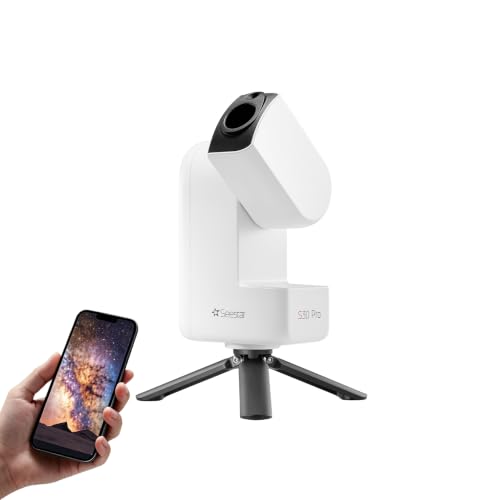 Best for astrophotography without a laptopZWO Seestar S30 Pro Smart Telescope, App-Controlled AstrophotographyView on Amazon
- 5
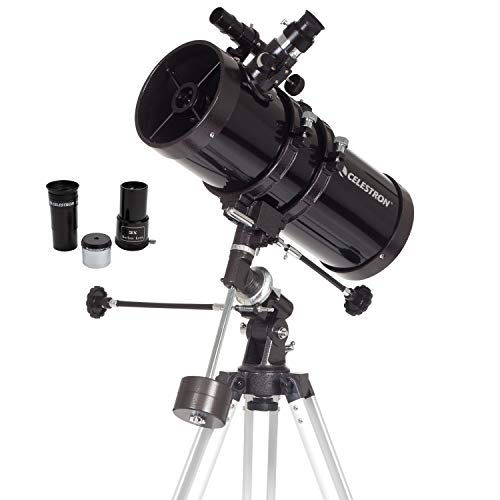 Best for a stable, manual equatorial setupCelestron PowerSeeker 127EQ Reflector Telescope for Home AstronomyView on Amazon
Our Top Picks
Quick Comparison
| Product | Best for | Key feature |
|---|---|---|
| Celestron NexStar 8SE | Serious visual deep-sky observing | 8-inch SCT with GoTo |
| Celestron StarSense Explorer LT 114AZ | Beginners who want guided setup | Smartphone app sky alignment |
| Celestron AstroMaster 130EQ | Large-aperture entry telescope | 130mm optics on equatorial mount |
| ZWO Seestar S30 Pro | Deep-sky photos without a laptop | Auto tracking and one-tap capture |
| Celestron PowerSeeker 127EQ | Simple manual deep-sky viewing | Slow-motion controls on EQ mount |
Celestron NexStar 8SE Computerized Telescope – Schmidt-Cassegrain
Celestron NexStar 8SE Computerized Telescope – Schmidt-Cassegrain | Fully Automated GoTo Mount with SkyAlign, Large 8" SCT Optics, Visual & Astroimaging Ready, Deep-Sky & Planets, 40k+ Objects
Best for: Serious visual deep-sky observing with a built-in object catalog
This is for observers who want the largest aperture here and are willing to spend time learning the GoTo system. Its 8-inch optics gather far more light than smaller refractors, which helps with faint galaxies and nebulae.
Pros
- Large 8-inch aperture gathers substantial light
- Fully automated GoTo mount with a large object catalog
Cons
- Heavier and bulkier to set up than smaller telescopes
Celestron StarSense Explorer LT 114AZ Newtonian Smartphone Guided Telescope
Celestron StarSense Explorer LT 114AZ Newtonian Smartphone Guided Telescope | Smartphone App Sky Navigation, Manual Reflector Telescope, Beginner Deep-Sky Telescope, Bright Celestial Views, Portable
Best for: Beginners who want guided sky navigation
This suits someone who has never aligned a telescope and wants a phone to do the finding. The 114mm Newtonian design is portable enough to carry outside for quick sessions.
Pros
- Smartphone app helps locate deep-sky objects
- Portable design for quick outdoor sessions
Cons
- Relies on a smartphone and app for its guided features
Celestron AstroMaster 130EQ Telescope for Deep-Sky Beginners
Celestron AstroMaster 130EQ Telescope for Deep-Sky Beginners | Large 130mm Optics, Bright Moon & Deep-Sky Views, Perfect First Telescope, German Equatorial Mount with Easy Manual Controls
Best for: Large-aperture entry telescope on a budget
This is a good match for a first telescope that should show more than the usual smaller refractors. The 130mm optics and German equatorial mount give bright views of deep-sky targets once you learn to find them.
Pros
- 130mm aperture is large for the category
- Equatorial mount makes tracking objects easier
Cons
- Manual finding takes practice with star charts
ZWO Seestar S30 Pro Smart Telescope, App-Controlled Astrophotography
ZWO Seestar S30 Pro Smart Telescope, App-Controlled Astrophotography | 4K Dual Camera, Auto Tracking & GoTo, One-Tap Capture & Processing, Milky Way & Star Trail, Deep Sky & Wide-Field Imaging
Best for: Deep-sky astrophotography without a separate laptop
This is for people who want images of nebulae and galaxies rather than eyepiece views. It handles auto tracking and stacking through its app, so it fits casual imagers.
Pros
- Auto tracking and one-tap capture simplify imaging
- Dual camera setup covers wide-field and deep-sky targets
Cons
- Primarily an imaging instrument, so eyepiece viewing is secondary
Celestron PowerSeeker 127EQ Reflector Telescope for Home Astronomy
Celestron PowerSeeker 127EQ Reflector Telescope for Home Astronomy | German Equatorial Mount, Bright Views of the Moon, Planets & Deep Sky, Slow-Motion Controls, Stable Tripod, Easy to Use
Best for: Simple manual deep-sky viewing on a stable mount
This suits an observer who wants a traditional reflector with slow-motion controls and does not mind manually finding targets. The stable tripod and equatorial mount help keep views steady at higher magnifications.
Pros
- Slow-motion controls make fine tracking easier
- Stable tripod supports steady views
Cons
- No GoTo, so you locate objects by hand
Buying Guide
Aperture
Aperture is the diameter of the main optic, and it sets how much light reaches your eye. Larger apertures reveal fainter galaxies and show more detail in nebulae. Owners often report that a 6- to 8-inch instrument makes a clear difference over smaller scopes on faint targets.
Mount type
An equatorial mount tracks objects as Earth rotates, which helps when you want to follow a target. An alt-azimuth mount is simpler to use but needs manual nudging. GoTo mounts automate the search if you want less work at the eyepiece.
Setup and navigation
Smartphone-guided or GoTo systems shorten the time spent finding objects. Manual telescopes reward learning star charts but take longer to get started.
FAQ
What is the best deep sky telescope for a complete beginner?
For most first-time observers, a manual reflector on a sturdy equatorial mount offers the best balance of light-gathering and value. A model like the Celestron AstroMaster 130EQ gives you a larger aperture for faint targets while keeping the controls simple to learn.
Do I need a GoTo telescope to see deep-sky objects?
No, but a GoTo system can save a lot of time finding faint objects that are hard to locate by star-hopping. Beginners who want to spend more time observing and less time searching often find computerized models like the NexStar 8SE worth the extra setup effort.
Is aperture more important than mount quality?
Aperture determines how much light the telescope collects, which directly affects how bright and detailed deep-sky objects look. A stable mount matters just as much, because a wobbly setup makes faint targets frustrating to track and keep centered.
Can a smart telescope replace a traditional eyepiece telescope?
A smart telescope such as the Seestar S30 Pro is designed for app-based imaging and can display deep-sky objects on your phone or tablet. It is a different experience from looking through an eyepiece, so it suits people who want photos and screen-based viewing more than direct visual observing.
Do I need to use a smartphone app to find objects?
Some models, such as the StarSense Explorer LT, use a smartphone app to guide you to targets, which many beginners find very helpful. Others rely on star charts or manual star-hopping, which takes more practice but teaches you the sky more thoroughly.
Where should I observe from for the best deep-sky views?
Dark skies away from city lights produce far better results than urban locations, regardless of which telescope you choose. Checking the moon phase before you go out also helps, since a bright moon washes out many faint targets.
Conclusion
If you want the most hands-on learning and a large, simple reflector, the AstroMaster 130EQ or PowerSeeker 127EQ are sensible starting points. If you prefer automated navigation or want to explore a wide range of objects with less searching, the NexStar 8SE and StarSense Explorer LT suit that approach better.
If your interest leans toward photos and phone-based viewing rather than eyepiece observing, the Seestar S30 Pro is the most direct fit. Match your choice to how you like to observe, and you will get far more out of your first deep-sky sessions.
Related reading
- 7 Best Telescopes for Deep Sky Viewing: Best Picks Compared for 2026
- 7 Best Telescopes for Deep Sky Viewing Compared for 2026
- 7 Best Telescopes for Deep Sky Photography of 2026: Picks Compared
About Audrey Hayes
Audrey Hayes is part of our editorial team and reviews and edits our telescopes & stargazing guides, checking product details against manufacturer specifications and owner feedback.
About the author
Audrey Hayes writes reviews and buying guides for Astronomy Site.