7 Best Stc Light Pollution Filter Picks Compared for Night Sky Viewing
Compare 7 stc light pollution filter options for telescopes and cameras. See which filter fits your sky, your gear and your observing goals.
 By Audrey Hayes
Updated November 24, 2026
 By Audrey Hayes
Updated November 2026
Shopping for an stc light pollution filter can be confusing, because the same label appears on everything from 1.25-inch eyepiece filters to 67mm and 77mm screw-in camera filters. This guide compares seven products across both categories. The selection criteria were filter type (broadband, nebula-enhancing, or natural night), thread and fit, optical coating approach, intended use (visual or photographic), and the patterns owners tend to report about contrast, color cast and sky background. Nothing here comes from personal testing; it is a research-based comparison of specifications, brand reputation and owner feedback.
Our top picks at a glance
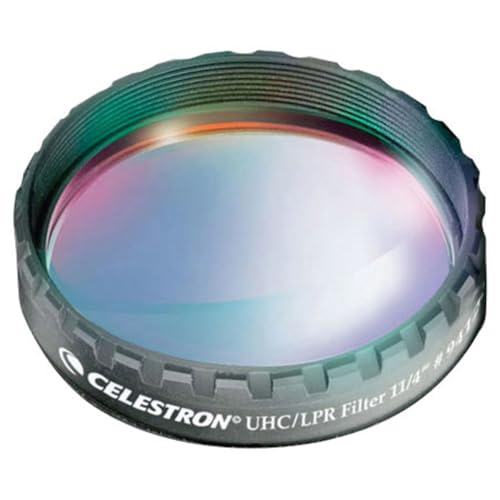
- 1TOP CHOICEBest overallCelestron UHC/LPR Light Pollution Reduction Filter for TelescopesView on Amazon
- 2
 TOP CHOICEBest for camera night shotsK&F CONCEPT 67mm Clear Natural Night Filter Pollution ReductionView on Amazon
- 3
 TOP CHOICEBest for natural star colorWalking Way 67mm Natural Night Filter for Light Pollution ReductionView on Amazon
- 4
 Best for compact telescopesVaonis Light Pollution Filter for Vespera TelescopeView on Amazon
- 5
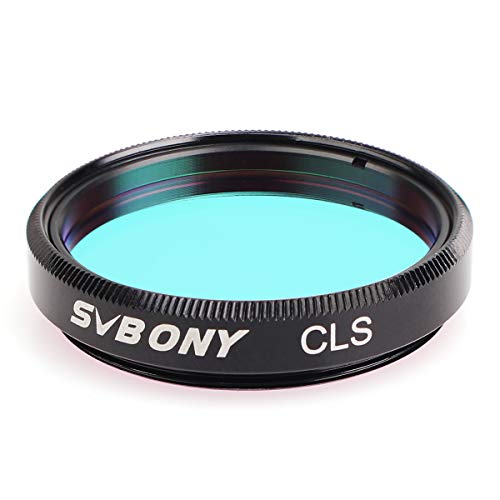 Best budget pickSVBONY Telescope Filters, CLS 1.25" Light Pollution Broadband FilterView on Amazon
- 6
 Best for city viewing with eyepiecesLight Pollution Filter 1.25" for City Viewing Light PollutionView on Amazon
- 7
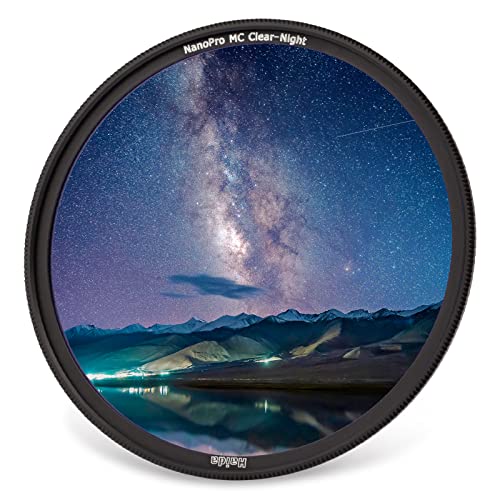 Best for 52mm camera lensesHaida 52MM Clear-Night Filter Light Pollution Source ReductionView on Amazon
Our Top Picks
Quick Comparison
| Product | Best for | Key feature |
|---|---|---|
| Celestron UHC/LPR Light Pollution Reduction Filter for Telescopes | Visual deep-sky observing with 1.25-inch eyepieces | Enhanced nebula contrast with high-transmission coating |
| K&F CONCEPT 67mm Clear Natural Night Filter | Camera night-sky and city star photography | Multi-layer coatings aimed at neutral color |
| Walking Way 67mm Natural Night Filter | Natural star color in astrophotography | Nano-coated optical glass |
| Vaonis Light Pollution Filter for Vespera Telescope | Owners of the Vespera smart telescope | Model-specific fit |
| SVBONY Telescope Filters, CLS 1.25″ | Budget visual use on a 1.25-inch setup | Broadband light pollution suppression |
| Light Pollution Filter 1.25″ for City Viewing | Eyepiece viewing from bright suburbs | Standard 1.25-inch thread, nebula boost |
| Haida 52MM Clear-Night Filter | 52mm lens astrophotography | Clear-night design for sky and star shots |
Celestron UHC/LPR Light Pollution Reduction Filter for Telescopes
Celestron UHC/LPR Light Pollution Reduction Filter for Telescopes – 1.25" | Light Pollution Reduction, Enhanced Nebula Contrast, Darker Sky Background, High Transmission Optical Coating, For Visual Us
Best for: Visual deep-sky observing with a 1.25-inch eyepiece setup from light-polluted sites. For another angle, check out Red Light Filter for Flashlight: 6 Best Picks Compared (2026).
This is a visual filter for people who look through a telescope rather than photograph the sky. It suits observers who want more contrast on emission nebulae and a darker background without moving to a dark site.
Key specs
- 1.25-inch barrel size
- Light pollution reduction (LPR) coating designed for visual use
- Enhanced nebula contrast and darker sky background per manufacturer description
Pros
- Designed specifically for visual astronomy through eyepieces
- Strong reputation for nebula contrast among observers in suburban skies
- Simple drop-in installation on standard 1.25-inch eyepieces
Cons
- Visual-only; not a camera filter
- Galaxies and faint stars may look slightly dimmer than through an unfiltered eyepiece
Bottom line: The most direct choice for a visual observer who wants a proven, general-purpose light pollution filter for nebulae.
View on AmazonK&F CONCEPT 67mm Clear Natural Night Filter Pollution Reduction
K&F CONCEPT 67mm Clear Natural Night Filter Pollution Reduction | 28 Multi-Layer Coatings Light Pollution Reduction Filter for Night City Sky Star Shots.No Color Cast Nano-X Series FE707
Best for: Camera night-sky and city star photography with a 67mm lens thread.
This screw-in filter is aimed at photographers shooting wide-field or city night scenes. It is marketed around reducing light pollution while keeping star color and white balance close to neutral.
Key specs
- 67mm screw-in thread
- Multi-layer coating marketed as reducing light pollution
- Designed for a natural, low-color-cast look
Pros
- Practical for everyday camera lenses in urban settings
- Owners often report more neutral star color than broadband filters
- Clear design that avoids heavy magenta or green casts
Cons
- Requires a 67mm thread; check your lens before buying
- Results still depend on sky brightness and exposure settings
Bottom line: A good fit for photographers who want a natural-looking night filter on a standard 67mm lens.
View on AmazonWalking Way 67mm Natural Night Filter for Light Pollution Reduction
Walking Way 67mm Natural Night Filter for Light Pollution Reduction Nano-Coated Optical Glass for Night Sky/Astrophotography/Star Clarity Anti-Light Pollution Filter
Best for: Natural star color in astrophotography from light-polluted locations.
This filter targets photographers who care most about preserving the real color of stars and the Milky Way while cutting artificial sky glow.
Key specs
- 67mm screw-in thread
- Nano-coated optical glass
- Marketed for night sky, astrophotography and star clarity
Pros
- Nano-coated glass is a common approach for reducing reflections
- Positioned for natural star rendering rather than strong color shifts
- Works with standard 67mm camera lenses
Cons
- Light pollution reduction is moderate in heavily lit cities
- Owner experiences vary with camera sensor and processing
Bottom line: A sensible choice for photographers who prioritize natural star color on a 67mm lens.
View on AmazonVaonis Light Pollution Filter for Vespera Telescope
Vaonis Light Pollution Filter for Vespera Telescope
Best for: Owners of the Vespera smart telescope who want a model-matched light pollution filter.
This accessory is designed for a specific instrument rather than a generic thread. It makes most sense for buyers who already own or are considering the Vespera and want a filter built for that optical train.
Key specs
- Designed as an accessory for the Vaonis Vespera telescope
- Light pollution filter function for city-sky imaging
Pros
- Fit is matched to the Vespera rather than a universal thread
- Simplifies choosing a filter for that instrument
- Targets urban imaging, the core use of the telescope
Cons
- Only useful if you own a compatible Vespera
- Less flexible than a standard-thread filter for other gear
Bottom line: The right pick for Vespera owners; skip it if you use a different telescope or camera.
View on AmazonSVBONY Telescope Filters, CLS 1.25″ Light Pollution Broadband Filter
SVBONY Telescope Filters, CLS 1.25", Light Pollution Broadband Filter | 90% Transmission of Nebula Emission Lines,Reduces Light Pollution ,Suitable for Deep Sky Visual Astronomical Photography
Best for: Budget visual use with a 1.25-inch eyepiece on a light-polluted site.
This broadband CLS-type filter suits beginners who want to test whether a light pollution filter helps before spending more on specialized coatings.
Key specs
- 1.25-inch barrel size
- Broadband light pollution suppression (CLS-type design)
- Marketed for deep-sky visual and astrophotography use
Pros
- Accessible entry point for visual light pollution filtering
- Broad suppression of common urban sodium and mercury lighting
- Drop-in fit on standard 1.25-inch eyepieces
Cons
- Broadband designs can dim some objects and shift color
- Not as specialized for nebulae as a dedicated LPR filter
Bottom line: A practical budget choice for a first light pollution filter used visually.
View on AmazonLight Pollution Filter 1.25″ for City Viewing Light Pollution
Light Pollution Filter 1.25" for City Viewing Light Pollution | Boosts for nebula contrast, blocks artificial light, enhances deep views, standard 1.25 inch thread
Best for: Eyepiece viewing from bright suburbs and city edges.
This filter is positioned for visual observers who view from urban or suburban skies and want stronger nebula contrast without a dedicated observatory.
Key specs
- Standard 1.25-inch thread
- Marketed to block artificial light and boost nebula contrast
Pros
- Standard thread works with most 1.25-inch eyepieces
- Focused on nebula contrast from city locations
- Simple to swap between eyepieces
Cons
- Less established brand history than some competitors
- Owner reports on color and transmission vary, so check return policy
Bottom line: A reasonable option for city observers who mainly use eyepieces.
View on AmazonHaida 52MM Clear-Night Filter Light Pollution Source Reduction
Haida 52MM Clear-Night Filter Light Pollution Source Reduction for Sky/Star
Best for: Astrophotography with 52mm lens threads.
This screw-in clear-night filter suits photographers whose lenses use a 52mm thread and who shoot sky and star scenes from city or suburban locations.
Key specs
- 52mm screw-in thread
- Clear-night design for sky and star photography
Pros
- Haida is a well-known filter brand among photographers
- Covers a thread size not served by every option in this list
- Designed for practical night shooting, not general daylight use
Cons
- Only works on 52mm threads; use step-up rings for other lenses
- Light pollution suppression is less specific than dedicated nebula filters
Bottom line: The logical pick for photographers with a 52mm lens who want a brand-backed night filter.
View on AmazonBuying Guide
Filter type: broadband, nebula-enhancing, or natural night
Broadband filters cut a wide range of artificial light and are the most forgiving across targets. Nebula-enhancing (LPR) filters pass the specific emission lines of nebulae while blocking more of the rest, which usually gives more contrast on those objects but less on galaxies. Natural-night filters aim to keep star color close to neutral for photography.
Good picks for this: Celestron UHC/LPR Light Pollution Reduction Filter for Telescopes, K&F CONCEPT 67mm Clear Natural Night Filter
Thread and barrel size
Visual filters for eyepieces usually use the 1.25-inch barrel, while camera filters use screw-in threads such as 52mm, 67mm or 77mm. Measure your eyepiece barrel or your lens filter thread before ordering. A step-up or step-down ring can bridge a small gap, but it adds bulk and can cause vignetting on wide lenses.
Good picks for this: SVBONY Telescope Filters, CLS 1.25″, Haida 52MM Clear-Night Filter
Compatibility with your instrument
Some filters are designed for a specific telescope rather than a universal thread. Model-matched accessories can simplify fitting but limit flexibility if you change equipment later.
Good picks for this: Vaonis Light Pollution Filter for Vespera Telescope
Visual versus photographic use
A visual filter placed in an eyepiece is optimized for what your eye sees, while a camera filter is judged by sensor output and exposure. A filter that looks good visually may still produce color casts in long exposures, and vice versa.
Good picks for this: Walking Way 67mm Natural Night Filter for Light Pollution Reduction, Light Pollution Filter 1.25″ for City Viewing Light Pollution
Sky brightness and location
A filter helps most under moderate light pollution, such as suburbs. Under very bright skies, even good filters cannot recover faint targets fully. Under dark skies, a broadband filter may cost you more contrast than it gains, so consider removing it.
Good picks for this: Celestron UHC/LPR Light Pollution Reduction Filter for Telescopes, SVBONY Telescope Filters, CLS 1.25″
Coating and optical quality
Multi-layer and nano coatings are common marketing claims. Check whether the listing describes the coating approach and transmission, and read owner feedback about glare, reflections and sharpness. Reflections from uncoated surfaces can reduce contrast more than the filter gains.
Good picks for this: K&F CONCEPT 67mm Clear Natural Night Filter, Walking Way 67mm Natural Night Filter
Care and handling
Keep filter surfaces clean with a blower and a microfiber cloth. Avoid touching the glass and store filters in a case. Scratched or dirty coatings can add glare and reduce contrast over time.
Good picks for this: Haida 52MM Clear-Night Filter, Celestron UHC/LPR Light Pollution Reduction Filter for Telescopes
FAQ
What does an stc light pollution filter actually do?
It blocks some of the wavelengths produced by artificial lighting, such as sodium and mercury vapor lamps, so the sky background is darker. Depending on design, it can improve contrast on nebulae or help camera exposures look more natural.
Can I use a light pollution filter under dark skies?
You can, but it is usually unnecessary and can reduce contrast on some targets. Many observers remove the filter when they reach a truly dark site.
Is a visual filter the same as a camera filter?
No. Visual filters go in an eyepiece barrel and are judged by eye, while camera filters screw onto a lens and are judged by sensor output and exposure settings.
How do I check which thread size I need?
Look for the number printed inside the lens cap or on the front rim of the lens, usually in millimeters. For eyepieces, check the barrel diameter, which is commonly 1.25 inches.
Will a light pollution filter change star colors?
Some do. Broadband and certain coated filters can add a color cast, while natural-night designs are marketed to keep colors closer to neutral. Expect some variation based on sensor and processing.
Can a filter fix a very bright city sky?
It can help but cannot erase heavy light pollution. Faint targets will still be limited, and a filter works best as one part of a plan that includes a darker site and good observing technique.
Conclusion
For visual deep-sky observing from suburbs, the Celestron UHC/LPR filter is the most direct choice among these seven. For camera owners with 67mm lenses who want a natural-looking night filter, the K&F CONCEPT and Walking Way options are the logical starting points. Vespera owners should consider the Vaonis filter first, while budget visual observers may find the SVBONY CLS filter a practical entry point. Match your thread size, shooting style and sky brightness before you buy, and check the return policy if you are unsure.
Sources
- Information on night sky protection, dark skies and the effects of artificial light at night (nps.gov)
- Background on astronomical research and the impact of light pollution on observatories
- Guidance on outdoor lighting, light pollution and how it affects visibility of the night sky
Before you buy: helpful guides
Related reading
- Top 3 Clip in Light Pollution Filters for DSLR and Mirrorless Cameras
- Polarizer Filter Light Pollution vs Narrowband: Which Should You Choose?
- Optolong L Pro Light Pollution Filter (2026): Which Should You Choose?
- Light Pollution Filter Comparison (2026): Which Should You Choose?
About Audrey Hayes
Audrey Hayes is part of our editorial team and reviews and edits our telescopes & stargazing guides, checking product details against manufacturer specifications and owner feedback.
About the author
Audrey Hayes writes reviews and buying guides for Astronomy Site.