Optolong L Pro Light Pollution Broadband Filter: 6 Best Picks Compared
Compare six Optolong L Pro light pollution broadband filter options for telescopes and cameras. See specs, pros, cons and which filter suits your night sky.
 By Audrey Hayes
Updated November 26, 2026
 By Audrey Hayes
Updated November 2026
Shopping for an optolong l pro light pollution broadband filter usually comes down to three questions: what kind of light pollution you’re fighting, what telescope or camera you’re pairing it with, and whether you want a visual filter or one for astrophotography. This guide compares six Optolong-branded and related broadband options so you can match the filter to your setup. The selection criteria were filter type and intended use, thread and barrel size compatibility, reported performance on common deep-sky targets, brand reputation, and patterns in owner feedback. This is a research-based comparison; none of these filters were tested by the author.
Our top picks at a glance
- 1TOP CHOICEBest overallOptolong 2" L-Pro Light Pollution FilterView on Amazon
- 2
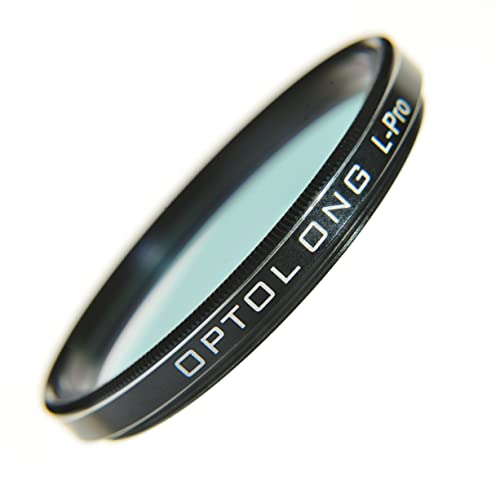 TOP CHOICEBest for 1.25-inch eyepiece setupsOptolong L-Pro 1.25" Mounted Round FilterView on Amazon
- 3
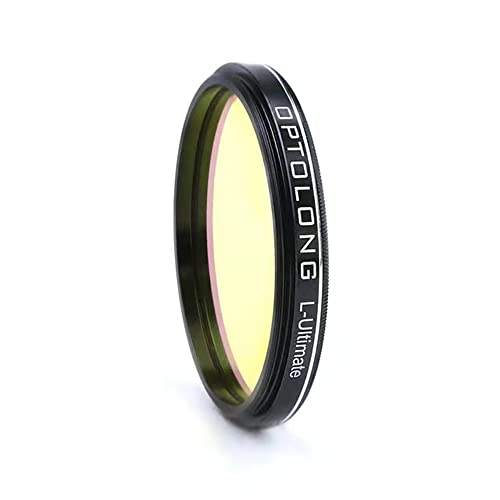 TOP CHOICEBest for dedicated imagingOptolong L-Ultimate 2” Dual Bandpass Light Pollution Reduction Imaging FilterView on Amazon
- 4
 Best budget pickICE LiPo Didymium Filter Broadband Light Pollution Reduction for NightView on Amazon
- 5
 Best for enhanced contrastNew Optolong Filter 2-inch L-Quad Enhance Filer Professional L-Quad Enhance Filter (L-QEF)View on Amazon
- 6
 Best for emission nebulaeOptolong 2" L-Enhance Dual Narrowband Light Pollution Filter (H-Alpha and H-Beta/O-III)View on Amazon
Our Top Picks
Broadband filters like the L-Pro work by passing the wavelengths produced by visual-range sky glow from sodium and mercury street lamps and LED fixtures less freely than the light from deep-sky objects. They are not a cure for a bright city. They work best under suburban or light-polluted skies, and they tend to help more with galaxies and nebulae than with star clusters or the Moon. Here is how the six options compare.
Quick Comparison
| Product | Best for | Key feature |
|---|---|---|
| Optolong 2″ L-Pro Light Pollution Filter | Visual observers and imagers on 2-inch focusers | Broadband light pollution reduction in a 2-inch format |
| Optolong L-Pro 1.25″ Mounted Round Filter | Eyepiece-based visual use with 1.25-inch barrels | Mounted in a 1.25-inch cell |
| Optolong L-Ultimate 2” Dual Bandpass Light Pollution Reduction Imaging Filter | Astrophotographers under moderate light pollution | Dual bandpass design aimed at imaging |
| ICE LiPo Didymium Filter Broadband Light Pollution Reduction for Night Sky/Star Optical Glass (49mm) | Budget-minded observers using 49mm threaded accessories | Optical glass, 49mm thread |
| New Optolong Filter 2-inch L-Quad Enhance Filer Professional L-Quad Enhance Filter (L-QEF) | Observers wanting added contrast on nebulae | Quad-band enhancement design |
| Optolong 2″ L-Enhance Dual Narrowband Light Pollution Filter (H-Alpha and H-Beta/O-III) | Emission nebula work from heavily light-polluted sites | Dual narrowband passes for H-alpha, H-beta and O-III |
Optolong 2″ L-Pro Light Pollution Filter
Optolong 2" L-Pro Light Pollution Filter
Best for: Overall broadband use on a 2-inch focuser
This is the filter most observers start with. It suits anyone who wants one broadband filter that works for both visual and camera use across galaxies, nebulae and star fields under suburban skies.
Key specs
- 2-inch (50.4 mm) format
- Broadband light pollution reduction design
Pros
- Versatile across visual and imaging work
- Well-known brand within the astro filter category
- Good starting point for suburban skies
Cons
- Needs a 2-inch focuser or adapter, which may not fit smaller setups
- Does little for objects outside the emission and broadband range it targets
Bottom line: The safest first pick for most owners with a 2-inch focuser under light-polluted skies.
View on AmazonOptolong L-Pro 1.25″ Mounted Round Filter
Optolong L-Pro 1.25" Mounted Round Filter
Best for: Eyepiece-based visual use with 1.25-inch barrels
Observers with smaller refractors or a 1.25-inch eyepiece-only setup, who want the L-Pro effect without buying a 2-inch accessory, are the intended audience.
Key specs
- 1.25-inch (31.7 mm) mounted round format
- Broadband light pollution design
Pros
- Fits 1.25-inch eyepiece and diagonal setups
- Mounted cell is easy to swap between eyepieces
- Same broadband concept as the 2-inch L-Pro
Cons
- Smaller aperture cell can limit field of view with wide-field eyepieces
- Not suited to camera work on most imaging trains
Bottom line: Choose this if your setup is built around 1.25-inch eyepieces and you want visual light pollution relief.
View on AmazonOptolong L-Ultimate 2” Dual Bandpass Light Pollution Reduction Imaging Filter
Optolong L-Ultimate 2” Dual Bandpass Light Pollution Reduction Imaging Filter
Best for: Astrophotography under moderate light pollution
This filter is aimed at imagers who shoot long exposures from suburban or light-polluted sites and want stronger sky-glow suppression than a visual-first filter provides.
Key specs
- 2-inch format
- Dual bandpass design for imaging
Pros
- Designed with imaging workflows in mind
- Dual bandpass approach targets common nebula emission lines
- 2-inch format fits most dedicated imaging trains
Cons
- Narrower passbands can dim some broadband targets such as galaxies
- Requires careful focus and exposure adjustment
Bottom line: The better match for imagers who mostly shoot emission nebulae and accept a trade-off on broadband targets.
View on AmazonICE LiPo Didymium Filter Broadband Light Pollution Reduction for Night Sky/Star Optical Glass (49mm)
ICE LiPo Didymium Filter Broadband Light Pollution Reduction for Night Sky/Star Optical Glass (49mm)
Best for: Budget-minded observers using 49mm threaded accessories
Owners who already have 49mm threaded accessories, or who want to try a light pollution filter before committing to a 2-inch model, are the target buyers.
Key specs
- 49 mm threaded format
- Optical glass construction
Pros
- Threaded 49 mm mount works with many accessories
- Optical glass element is a common choice in this category
- Suits a low-commitment first filter
Cons
- Less brand history than Optolong models in owner discussions
- May need an adapter to fit a 2-inch or 1.25-inch setup
Bottom line: A sensible budget pick for observers with 49 mm threads who want to test light pollution filtering first.
View on AmazonNew Optolong Filter 2-inch L-Quad Enhance Filer Professional L-Quad Enhance Filter (L-QEF)
New Optolong Filter 2-inch L-Quad Enhance Filer Professional L-Quad Enhance Filter (L-QEF)
Best for: Added contrast on nebulae from moderately light-polluted sites
Visual observers and imagers who find the L-Pro leaves too much glow, and who want stronger contrast on nebulae, are the intended audience.
Key specs
- 2-inch format
- Quad-band enhancement design (L-QEF)
Pros
- Enhancement design aimed at emission-line contrast
- 2-inch format for standard focusers and cameras
- Useful step up in contrast for many nebula targets
Cons
- Color balance can look unnatural on some targets
- Less forgiving on galaxies and star clusters
Bottom line: A good second filter for nebula hunters who already own a broadband L-Pro.
View on AmazonOptolong 2″ L-Enhance Dual Narrowband Light Pollution Filter (H-Alpha and H-Beta/O-III)
Optolong 2" L-Enhance Dual Narrowband Light Pollution Filter (H-Alpha and H-Beta/O-III)
Best for: Emission nebula work from heavily light-polluted sites
Observers and imagers in bright suburbs who mainly want H-alpha, H-beta and O-III nebulae, and who accept that galaxies will be dim or absent, are the target audience.
Key specs
- 2-inch format
- Dual narrowband passes for H-alpha, H-beta and O-III
Pros
- Strong suppression of sky glow on emission nebulae
- Works from sites where broadband filters struggle
- Well suited to long-exposure imaging
Cons
- Poor performance on galaxies and reflection nebulae
- Narrowband design can dim star colors and some targets noticeably
Bottom line: Pick this only if emission nebulae are your priority and you can live with limited results on other deep-sky objects.
View on AmazonBuying Guide
Broadband versus narrowband
Broadband filters pass a wide range of visible light and cut some sky-glow wavelengths, making them versatile across target types. Narrowband filters pass only a few specific emission lines, so they block far more light pollution but also dim most other objects. If you observe mostly galaxies, start with broadband. If you image emission nebulae from a bright site, narrowband can be the better tool.
Good picks for this: Optolong 2″ L-Pro Light Pollution Filter, Optolong 2″ L-Enhance Dual Narrowband Light Pollution Filter (H-Alpha and H-Beta/O-III)
Barrel and thread size
Filters are sold for 1.25-inch, 2-inch and threaded formats such as 49 mm. Measure your focuser or eyepiece barrel before ordering. A 2-inch filter will not thread into a 1.25-inch holder, and adapters add optical path that can affect focus.
Good picks for this: Optolong L-Pro 1.25″ Mounted Round Filter, ICE LiPo Didymium Filter Broadband Light Pollution Reduction for Night Sky/Star Optical Glass (49mm)
Visual or imaging use
Visual observers often prefer broadband filters that keep colors natural and the view bright. Imagers may accept stronger filtering because long exposures stack the signal. Match the filter to how you will use it, not just to the sky you have.
Good picks for this: Optolong L-Ultimate 2” Dual Bandpass Light Pollution Reduction Imaging Filter, New Optolong Filter 2-inch L-Quad Enhance Filer Professional L-Quad Enhance Filter (L-QEF)
Target types
Galaxies and star clusters respond differently from emission nebulae. Broadband filters help a range of objects, while narrowband filters are built for specific nebula emission lines. Decide which targets matter most before choosing.
Good picks for this: Optolong 2″ L-Pro Light Pollution Filter, Optolong 2″ L-Enhance Dual Narrowband Light Pollution Filter (H-Alpha and H-Beta/O-III)
Sky brightness
Under a Bortle 7 or 8 sky, even the best broadband filter will not restore dark-sky contrast. Under suburban skies (roughly Bortle 5 to 6), filters tend to produce the most noticeable improvement. Check your local light pollution level with a tool such as a Bortle scale map before deciding how aggressive a filter you need.
Good picks for this: ICE LiPo Didymium Filter Broadband Light Pollution Reduction for Night Sky/Star Optical Glass (49mm), Optolong L-Ultimate 2” Dual Bandpass Light Pollution Reduction Imaging Filter
Build and optical quality
Look for optical glass elements, clean coatings and a sturdy mounted cell. Cheap cells can flex or shift, and low-grade glass can add haze or color cast. Brand reputation and consistent owner feedback are useful proxies when detailed lab data is not published.
Good picks for this: Optolong 2″ L-Pro Light Pollution Filter, New Optolong Filter 2-inch L-Quad Enhance Filer Professional L-Quad Enhance Filter (L-QEF)
Care and handling
Store filters in a padded case, keep the glass free of fingerprints, and clean only with a blower and a soft microfiber cloth, following the manufacturer’s care instructions. Avoid harsh solvents, which can damage coatings.
Good picks for this: Optolong L-Pro 1.25″ Mounted Round Filter, Optolong 2″ L-Pro Light Pollution Filter
FAQ
What does an optolong l pro light pollution broadband filter actually do?
It reduces some of the artificial sky glow from common lighting, which increases contrast for many deep-sky objects. It does not make a bright city dark, and it does not add detail that is not in the target.
Can I use a broadband filter for astrophotography?
Yes. Broadband filters are commonly used for imaging, especially on galaxies and nebulae under suburban skies. Expect to adjust exposure and white balance, since color and brightness will change.
Will a light pollution filter help with planets or the Moon?
Usually not. Planets and the Moon are bright enough that sky glow is not the limiting factor, and a filter can dim them and alter their colors. Remove the filter for solar system viewing.
Do I need a 2-inch filter or can I use a 1.25-inch one?
It depends on your focuser or eyepiece. Measure your barrel size first. The 1.25-inch model suits eyepiece-only setups, while 2-inch models suit most dedicated imaging trains.
Is a narrowband filter better than a broadband filter?
Not in general. Narrowband filters block more light pollution but work only on emission nebulae. Broadband filters are more versatile across galaxies, nebulae and star fields.
How do I know if a filter is working under my sky?
Compare the view with and without the filter on the same target, at the same magnification and sky conditions. Look for increased contrast in the nebula or galaxy rather than just a darker background.
Do I need to refocus when I add a filter?
Often yes, because the filter adds optical path. Refocus after inserting it, and re-check focus if you change eyepieces or cameras.
Conclusion
For most observers with a 2-inch focuser under suburban skies, the Optolong 2″ L-Pro Light Pollution Filter is the most sensible starting point. Eyepiece-only users with 1.25-inch gear should look at the L-Pro 1.25″ Mounted Round Filter. Dedicated imagers can consider the L-Ultimate for mixed targets or the L-Enhance narrowband model for emission nebulae from bright sites. The ICE LiPo Didymium Filter suits a budget-minded first purchase with 49 mm threads, and the L-QEF adds contrast for nebula hunters who already own a broadband filter. Match the filter to your focuser, your target types and your sky brightness, and you will get the most from it.
Sources
- Guidance on outdoor lighting, sky glow and how light pollution affects astronomical observing
- Background on outdoor lighting types and their spectral characteristics (energy.gov)
- Overview of astronomical imaging and how sky glow affects deep-sky observations (nasa.gov)
Before you buy: helpful guides
Related reading
- Optolong L Pro Light Pollution Filter (2026): Which Should You Choose?
- 5 Best Optolong L-Extreme Light Pollution Filter Options Compared (2026)
- Optolong Light Pollution Filter Compared: 6 Best Picks for 2026
About Audrey Hayes
Audrey Hayes is part of our editorial team and reviews and edits our telescopes & stargazing guides, checking product details against manufacturer specifications and owner feedback.
About the author
Audrey Hayes writes reviews and buying guides for Astronomy Site.