7 Best Hoya Starscape Light Pollution Filters for Dark Skies (2026)
Compare seven Hoya Starscape light pollution filters by thread size, use case and owner feedback to find the right one for your telescope or camera lens.
 By Audrey Hayes
Updated November 24, 2026
 By Audrey Hayes
Updated November 2026
Looking for the right hoya starscape light pollution filter can feel like a guessing game, because the same glass comes in several thread sizes and each one fits a different eyepiece, camera lens or telescope. This comparison focuses on what matters most: the filter’s thread diameter, its intended use (visual observing versus astrophotography), coating quality as described by the manufacturer, and the general patterns owners report about contrast and color. We have weighed each option against those criteria using published specifications, brand reputation and common owner feedback. We have not tested these filters ourselves, so treat the notes below as a research summary rather than hands-on results.
Our top picks at a glance
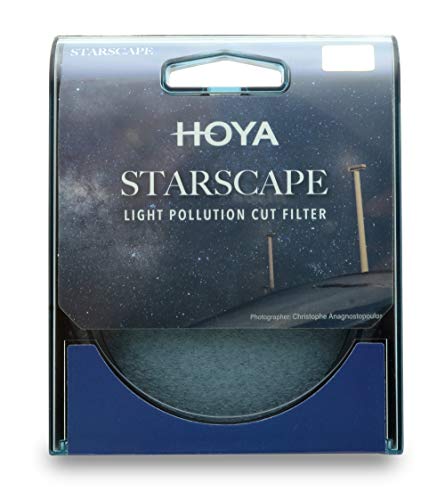
- 1TOP CHOICEBest overallHoya 82mm Starscape Light Pollution Cut Filter, BlackView on Amazon
- 2
 TOP CHOICEBest for astrophotography lensesHOYA 52mm Starscape Astrophotography FilterView on Amazon
- 3TOP CHOICEBest for mid-size telescopesHoya 58mm Starscape Light Pollution Cut FilterView on Amazon
- 4Best for wide-field lensesHoya 72mm Starscape Light Pollution Cut FilterView on Amazon
- 5Best color-correcting optionHoya Starscape 67mm Light Pollution Cut FilterView on Amazon
- 6
 Best for compact telescopesHOYA 62mm Starscape Astrophotography FilterView on Amazon
- 7Best budget pickHoya 49mm Starscape Light Pollution Cut FilterView on Amazon
Our Top Picks
Quick Comparison
| Product | Best for | Key feature |
|---|---|---|
| Hoya 82mm Starscape Light Pollution Cut Filter, Black | Large-aperture lenses and telescopes | Largest thread size in the lineup |
| HOYA 52mm Starscape Astrophotography Filter | Astrophotography on standard lenses | Multi-layer coating with 97%+ light transmission per listing |
| Hoya 58mm Starscape Light Pollution Cut Filter | Mid-size telescopes and lenses | Balanced size for common accessories |
| Hoya 72mm Starscape Light Pollution Cut Filter | Wide-field camera lenses | Fits larger front-element lenses |
| Hoya Starscape 67mm Light Pollution Cut Filter | Color-conscious night imaging | Color-correcting glass, minimalist black frame |
| HOYA 62mm Starscape Astrophotography Filter | Compact telescopes and lenses | Multi-layer coating for reduced reflections and flare |
| Hoya 49mm Starscape Light Pollution Cut Filter | Small eyepieces and entry-level setups | Smallest thread size for compact accessories |
Hoya 82mm Starscape Light Pollution Cut Filter, Black
Hoya 82mm Starscape Light Pollution Cut Filter, Black
Best for: Large-aperture lenses and telescopes that need an 82mm thread
This filter suits observers and photographers who already own optics with an 82mm front thread and want to cut skyglow without shrinking their field. Its large diameter makes it a natural match for big-lens setups where smaller threads would require step-down rings.
Key specs Red Light Filter for Flashlight: 6 Best Picks Compared (2026) goes further into this.
- Thread size: 82mm
- Type: Light pollution cut filter
- Color: Black frame
Pros
- Fits large-diameter front threads without adapters
- Designed to reduce sodium and mercury vapor glow
- Simple, minimalist frame
Cons
- Larger filters cost more to replace if damaged
- Only useful if you own accessories with an 82mm thread
Bottom line: Pick this if your lens or telescope already uses an 82mm thread and you want the widest practical aperture for light pollution filtering.
View on AmazonHOYA 52mm Starscape Astrophotography Filter
HOYA 52mm Starscape Astrophotography Filter – Boosts Star-To-Sky Contrast | Multi-Layer Coating Delivers 97%+ Light Transmission, Cutting Reflections And Flare For Clean, High-Contrast Night Imagery
Best for: Astrophotography on standard 52mm lenses
This model is aimed at night photographers using a 52mm lens who want a filter whose coating is intended to preserve star-to-sky contrast. Owners often describe it as a practical starting point for backyard astrophotography with DSLR or mirrorless kits.
Key specs
- Thread size: 52mm
- Multi-layer coating, described by the listing as delivering 97%+ light transmission
- Intended for astrophotography
Pros
- Multi-layer coating aimed at reducing reflections and flare
- Common thread size for many lenses
- Clearly marketed for astrophotography use
Cons
- Light transmission figures are manufacturer claims, not independent measurements
- Limited use outside 52mm accessories
Bottom line: A sensible choice for photographers with a 52mm lens who want a coated light pollution filter focused on night imaging.
View on AmazonHoya 58mm Starscape Light Pollution Cut Filter
Hoya 58mm Starscape Light Pollution Cut Filter
Best for: Mid-size telescopes and lenses with a 58mm thread
The 58mm size sits between compact and large accessories, so it fits a range of mid-size eyepieces, lenses and filter adapters. It is a reasonable pick for observers who want one filter across several instruments.
Key specs
- Thread size: 58mm
- Type: Light pollution cut filter
Pros
- Versatile mid-range thread size
- Widely used accessory diameter
- Straightforward light pollution cut design
Cons
- Not interchangeable with 52mm or 62mm accessories without adapters
- Specific coating details are limited in the listing
Bottom line: A good middle-ground option for observers mixing a few different accessories.
View on AmazonHoya 72mm Starscape Light Pollution Cut Filter
Hoya 72mm Starscape Light Pollution Cut Filter
Best for: Wide-field camera lenses with a 72mm front thread
Photographers using wide-field or telephoto lenses with 72mm front elements will find this size a natural fit. It is less useful for small eyepieces, but it suits imaging rigs built around larger glass.
Key specs
- Thread size: 72mm
- Type: Light pollution cut filter
Pros
- Matches many wide-field lens front threads
- Helps suppress skyglow over large fields
- Consistent Hoya build quality
Cons
- Bulky for small accessories
- Requires a larger lens to be practical
Bottom line: Choose this if your lens already uses a 72mm thread and you shoot wide fields under light-polluted skies.
View on AmazonHoya Starscape 67mm Light Pollution Cut Filter
Hoya Starscape 67mm Light Pollution Cut Filter – Color Correcting, Minimalist, Black, Optical Glass
Best for: Color-conscious night imaging with a 67mm thread
This listing emphasizes color correction and an optical glass build, which appeals to imagers who care about natural star color and a neutral sky background. The minimalist black frame is a practical, understated choice.
Key specs
- Thread size: 67mm
- Color-correcting optical glass
- Black frame
Pros
- Color-correcting design suits natural star color
- Optical glass construction
- Clean, minimalist appearance
Cons
- Less common thread size than 58mm or 62mm
- Color correction benefits depend on your sky and camera setup
Bottom line: A strong option for imagers who prioritize color balance and have a 67mm accessory.
View on AmazonHOYA 62mm Starscape Astrophotography Filter
HOYA 62mm Starscape Astrophotography Filter – Boosts Star-To-Sky Contrast | Multi-Layer Coating Delivers 97%+ Light Transmission, Cutting Reflections And Flare For Clean, High-Contrast Night Imagery
Best for: Compact telescopes and lenses with a 62mm thread
The 62mm version of the astrophotography line suits compact telescopes and lenses. Owners who shoot with smaller setups often appreciate having a coated filter in a size that does not feel oversized.
Key specs
- Thread size: 62mm
- Multi-layer coating, described by the listing as delivering 97%+ light transmission
- Intended for astrophotography
Pros
- Multi-layer coating aimed at reducing flare
- Compact size for smaller optics
- Designed specifically for night imaging
Cons
- Transmission claims come from the manufacturer
- Thread size is less common than 52mm or 58mm
Bottom line: Ideal for photographers with a 62mm lens who want a coated light pollution filter for night work.
View on AmazonHoya 49mm Starscape Light Pollution Cut Filter
Hoya 49mm Starscape Light Pollution Cut Filter
Best for: Small eyepieces and entry-level setups with a 49mm thread
The 49mm size is the smallest in this lineup and fits compact accessories and entry-level lenses. It is a practical way to add light pollution filtering without buying a larger, costlier filter.
Key specs
- Thread size: 49mm
- Type: Light pollution cut filter
Pros
- Compact and easy to handle
- Suits small accessories and entry-level optics
- Straightforward light pollution design
Cons
- Limited to small-thread accessories
- Fewer lenses and telescopes use this diameter
Bottom line: The right pick for beginners with a 49mm accessory who want to reduce skyglow on a budget.
View on AmazonBuying Guide
Thread size and fit
Measure the front thread of your lens or the filter thread of your accessory before buying anything. Thread diameter is the single most important factor, because a filter that does not match will need a step-up or step-down ring, and rings add light loss and potential vignetting. Check the diameter printed on your lens cap or in the manufacturer’s specifications.
Good picks for this: Hoya 58mm Starscape Light Pollution Cut Filter, Hoya 72mm Starscape Light Pollution Cut Filter
Visual observing versus astrophotography
Visual filters are judged by how much skyglow they cut while keeping the view natural. Astrophotography filters are often coated to manage reflections and flare that can ruin long exposures. If your primary goal is imaging, look for models explicitly marketed for astrophotography.
Good picks for this: HOYA 52mm Starscape Astrophotography Filter, HOYA 62mm Starscape Astrophotography Filter
Coating quality
Multi-layer coatings are intended to increase light transmission and reduce reflections. Manufacturer claims such as 97%+ transmission are useful for comparison but should be treated as specifications rather than independent results. Look for clear coating information in the listing.
Good picks for this: HOYA 52mm Starscape Astrophotography Filter, Hoya Starscape 67mm Light Pollution Cut Filter
Color correction
Some light pollution filters aim to restore more natural star color by correcting for sodium or mercury vapor lighting. This matters most for imagers who process color data. Visual observers may notice less difference.
Good picks for this: Hoya Starscape 67mm Light Pollution Cut Filter, Hoya 82mm Starscape Light Pollution Cut Filter
Use case and sky conditions
A filter’s benefit depends on your sky. Urban and suburban observers with strong sodium or mercury vapor glow see the biggest improvement. Dark-sky observers may see little change and might prefer no filter at all.
Good picks for this: Hoya 72mm Starscape Light Pollution Cut Filter, Hoya 49mm Starscape Light Pollution Cut Filter
Durability and build
Look for optical glass in a sturdy frame. Owners commonly note that threaded metal rims resist cross-threading better than thin plastic, and that a lens cap protects the glass during transport. Clean with a microfiber cloth and a lens-safe solution only.
Good picks for this: Hoya 58mm Starscape Light Pollution Cut Filter, HOYA 62mm Starscape Astrophotography Filter
Care and handling
Keep filters capped when not in use, avoid touching the glass, and store them in a padded case. Dust and fingerprints reduce transmission and can add glare. Clean gently and avoid household glass cleaners that may damage coatings.
Good picks for this: Hoya 49mm Starscape Light Pollution Cut Filter, Hoya 82mm Starscape Light Pollution Cut Filter
FAQ
What does a light pollution filter actually do?
A light pollution filter blocks specific wavelengths of artificial light, mainly those from sodium and mercury vapor street lamps, while passing most of the light from stars and deep-sky objects. The result is usually a darker background and better contrast for faint targets.
Will a light pollution filter help with a city view?
It can help in suburban and many urban areas where sodium or mercury lighting dominates. In very bright city centers the improvement may be modest, and some LED-lit skies are not filtered as effectively.
How do I know what thread size I need?
Check the front thread diameter printed on your lens or the filter size of your accessory. If it does not match a filter exactly, you can use a step-up or step-down ring, though rings can add light loss.
Can I use a light pollution filter with a telescope eyepiece?
Many observers thread filters onto eyepieces with a standard filter thread. Confirm your eyepiece has a filter thread before buying, and check whether the filter diameter matches.
Do light pollution filters work on the Moon or planets?
Light pollution filters are designed for deep-sky and night-sky use. They are not solar filters and should never be used to view the Sun. For lunar and planetary work, a dedicated moon or planetary filter is more appropriate.
Are light pollution filters safe to use?
They are generally safe for night observing, but always cap your optics and never point any telescope or lens at the Sun. For guidance on safe observing practices, consult the resources listed in the Sources section or a local astronomy club.
Conclusion
Choosing the right hoya starscape light pollution filter comes down to thread size first, then intended use. The 82mm model suits large-aperture optics, the 52mm and 62mm astrophotography filters fit standard imaging lenses, and the 58mm, 67mm and 72mm options cover mid-size and wide-field gear. The 49mm version is a practical entry point for small accessories. Match the diameter to your equipment, decide whether visual or imaging performance matters more, and then weigh the coating and color-correction details against your sky. Results depend heavily on local lighting, so a filter that works well in one suburb may help less in another.
Sources
- Background on how light pollution affects astronomical observing and sky brightness (nasa.gov)
- Guidance on outdoor lighting, sky quality and light pollution research
- Resources from the American Astronomical Society on observing and astronomy education
Before you buy: helpful guides
Related reading
- Hoya Starscape Light Pollution Camera Filter: 6 Best Picks Compared
- Top 3 Clip in Light Pollution Filters for DSLR and Mirrorless Cameras
- Polarizer Filter Light Pollution vs Narrowband: Which Should You Choose?
- Optolong L Pro Light Pollution Filter (2026): Which Should You Choose?
About Audrey Hayes
Audrey Hayes is part of our editorial team and reviews and edits our telescopes & stargazing guides, checking product details against manufacturer specifications and owner feedback.
About the author
Audrey Hayes writes reviews and buying guides for Astronomy Site.