5 Best Binoculars for Astronomy UK: Picks Compared for Stargazing (2026)
Comparing five binoculars for astronomy in the UK, with specs, pros and cons, and who each pick suits, so you can choose a pair for stargazing.
 By Audrey Hayes
Updated November 11, 2026
 By Audrey Hayes
Updated November 2026
Looking for binoculars for astronomy UK stargazers can use from a garden, a hilltop or a dark-sky site? The right pair depends on how much light it gathers, how much of the sky it shows at once, how steady it holds in your hands, and whether it is practical to carry on a cold British night. The five picks below are compared on those criteria: magnification and aperture, field of view, weight, suitability for handheld or tripod use, and the kinds of targets each one suits. Nothing here is based on our own lab testing; the comparisons draw on manufacturer specifications, brand reputation and the patterns owners commonly describe.
Our top picks at a glance
- 1TOP CHOICEBest overallCelestron SkyMaster 20×80 Binoculars for Deep-Sky AstronomyView on Amazon
- 2
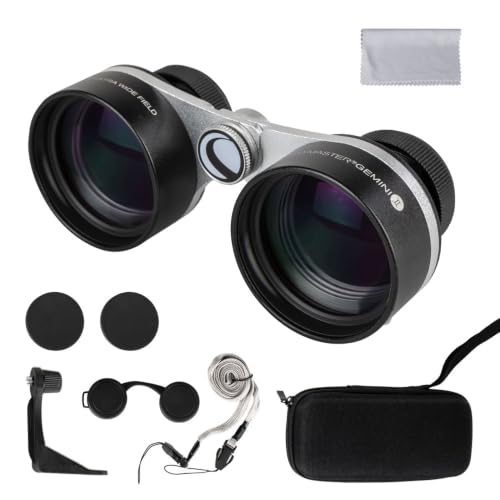 TOP CHOICEBest for wide-field sky sweepsCelestron SkyMaster Gemini 2×40 Ultra-Wide Low-Power Astronomy BinocularView on Amazon
- 3
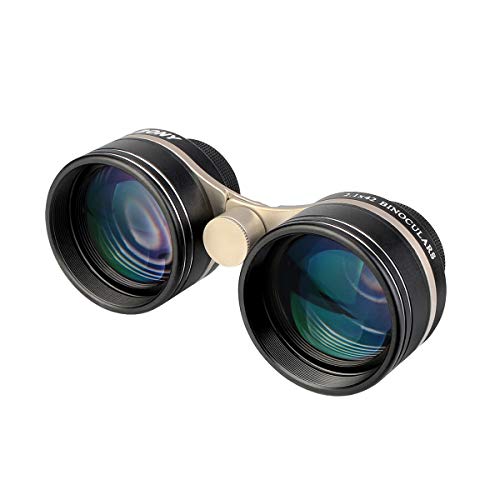 TOP CHOICEBest budget pickSVBONY SV407 Astronomy Binoculars 2.1x42mmView on Amazon
- 4
 Best for learning the skyBinocular Astronomy (The Patrick Moore Practical Astronomy Series)View on Amazon
- 5
 Best observing companion50 Things to See with Binoculars (In Space)View on Amazon
Our Top Picks
Quick Comparison
| Product | Best for | Key feature |
|---|---|---|
| Celestron SkyMaster 20×80 Binoculars | Deep-sky objects and tripod-mounted observing | 80mm objectives and tripod adaptability |
| Celestron SkyMaster Gemini 2×40 | Meteors, comets and whole constellations | 24° field of view |
| SVBONY SV407 2.1x42mm | Budget wide-angle sky viewing | 26° field of view and waterproof rating |
| Binocular Astronomy (Patrick Moore series) | Beginners learning techniques | Structured guidance on binocular observing |
| 50 Things to See with Binoculars | Planned observing sessions | Target list for binocular users |
Celestron SkyMaster 20×80 Binoculars for Deep-Sky Astronomy
Celestron SkyMaster 20×80 Binoculars for Deep-Sky Astronomy – 80mm Aperture | Large 80mm Objectives, Bright Deep-Sky Views, Multi-Coated BaK-4 Optics,Tripod Adaptable, Ultra-Stable Mounting
Best for: Deep-sky observing with a stable mount
This is the pick for observers who want to look at star clusters, nebulae and galaxies and are willing to deal with a heavier instrument. The 80mm objectives gather far more light than a typical handheld pair, which helps faint deep-sky targets stand out against a dark background.
Key specs
- 80mm aperture
- 20x magnification
- Multi-coated BaK-4 prism optics
- Tripod adaptable
Pros
- Bright views of deep-sky objects from a dark site
- Tripod mounting keeps the image steady at high power
- Large objectives resolve more detail than smaller pairs
Cons
- Heavy to hold steady without support
- Narrow field of view makes finding targets slower
Bottom line: Best for observers who plan to mount their binoculars on a tripod and want the most light-gathering power in this list.
View on AmazonCelestron SkyMaster Gemini 2×40 Ultra-Wide Low-Power Astronomy Binocular
Celestron SkyMaster Gemini 2×40 Ultra-Wide Low-Power Astronomy Binocular | Ideal for Meteors and Comets, 24° Field of View to See Whole Constellations, Fully Multi-Coated, Bright Steady Handheld View
Best for: Wide-field sky sweeps, meteors and comets
Low magnification and a wide field make this a sky-sweeping tool rather than a planetary instrument. It is well suited to taking in whole constellations, the Milky Way and the path of meteor showers in a single view.
Key specs
- 2x magnification
- 40mm aperture
- 24° field of view
- Fully multi-coated optics
Pros
- Easy to hold steady handheld
- Shows large areas of sky at once
- Bright, even views at low power
Cons
- Too low in power for planets or lunar detail
- Limited reach for faint deep-sky objects
Bottom line: A good choice for observers who want to explore broad star fields and meteor activity without fiddling with focus or mounts.
View on AmazonSVBONY SV407 Astronomy Binoculars 2.1x42mm
SVBONY SV407 Astronomy Binoculars 2.1x42mm, Wide Angle for Stargazing | for Star and Constellations Viewing, 26° Field of View, FMC Coating, IPX6 Waterproof, Opera Glasses, 2x Low-magnification
Best for: Budget wide-angle sky viewing
This is an entry-level pair aimed at people who want to try binocular astronomy before committing to something larger. The wide field and low magnification suit star patterns and bright clusters.
Key specs
- 2.1x magnification
- 42mm objectives
- 26° field of view
- FMC coating, IPX6 waterproof rating
Pros
- Wide field suits beginners locating constellations
- Light enough for casual handheld use
- Weather-resistant housing for damp UK evenings
Cons
- Limited magnification for detailed targets
- Not suited to faint deep-sky work
Bottom line: Pick this if you want an inexpensive way to start sweeping the sky and learning the main constellations.
View on AmazonBinocular Astronomy (The Patrick Moore Practical Astronomy Series)
Binocular Astronomy (The Patrick Moore Practical Astronomy Series)
Best for: Beginners learning binocular observing technique
This is a book rather than an optical instrument, but it is a useful companion for anyone choosing binoculars for astronomy UK skies. It covers how to use binoculars for the night sky, what to look for and how to structure a session.
Key specs
- Part of the Practical Astronomy series
- Covers observing techniques with binoculars
Pros
- Clear guidance for first-time binocular observers
- Explains what different binocular types show
- Useful alongside any of the binoculars above
Cons
- Does not replace hands-on experience
- Some content may feel basic for experienced observers
Bottom line: Worth reading before or alongside buying any pair, especially if you are new to the sky.
View on Amazon50 Things to See with Binoculars (In Space)
50 Things to See with Binoculars (In Space)
Best for: Planned observing sessions
A target-based guide that gives you specific objects to hunt for. This suits observers who like a checklist and want to make steady progress across the seasons.
Key specs
- Curated list of binocular targets
- Organized for observing sessions
Pros
- Gives concrete targets for each session
- Works with any binocular type
- Helps build observing skill over time
Cons
- Not a substitute for star charts or an app
- Targets are chosen for general audiences, so some may be hard from light-polluted UK towns
Bottom line: A practical choice for anyone who wants a structured list of things to observe with binoculars.
View on AmazonBuying Guide
Aperture and Light Gathering
Aperture, the diameter of the objective lens in millimetres, controls how much light the binoculars collect. Larger apertures show fainter stars and deep-sky objects, but add weight. Many observers find 50mm to 70mm a practical balance for handheld work, while 80mm and above generally need a tripod.
Good picks for this: Celestron SkyMaster 20×80 Binoculars for Deep-Sky Astronomy, SVBONY SV407 Astronomy Binoculars 2.1x42mm
Magnification and Field of View
Higher magnification brings objects closer but narrows the field and magnifies hand shake. Low powers, around 2x to 7x, give wide views of star fields and constellations. Higher powers suit specific targets but are harder to hold steady. Check the field of view in degrees; wider is better for sky sweeping.
Good picks for this: Celestron SkyMaster Gemini 2×40 Ultra-Wide Low-Power Astronomy Binocular, SVBONY SV407 Astronomy Binoculars 2.1x42mm
Weight and Handheld Use
A rule of thumb many observers use is that binoculars above about 1.5 kilograms are hard to hold steady for long periods. If you plan to observe from a garden or hillside without a tripod, favour lighter pairs or check whether the body has a tripod socket for later upgrades.
Good picks for this: Celestron SkyMaster Gemini 2×40 Ultra-Wide Low-Power Astronomy Binocular, SVBONY SV407 Astronomy Binoculars 2.1x42mm
Tripod Compatibility
Large binoculars often benefit from a tripod with an adapter. Look for a standard tripod socket or an adapter bar, and check that the tripod head can handle the weight. A stable mount makes a noticeable difference at higher magnification.
Good picks for this: Celestron SkyMaster 20×80 Binoculars for Deep-Sky Astronomy
Optical Coatings
Multi-coated or fully multi-coated lenses reduce reflections and improve light transmission. Coatings are usually listed in the specifications, and they matter most when observing faint targets from dark skies.
Good picks for this: Celestron SkyMaster Gemini 2×40 Ultra-Wide Low-Power Astronomy Binocular, Celestron SkyMaster 20×80 Binoculars for Deep-Sky Astronomy
Weather Resistance and Care
British evenings are often damp and cold. Waterproof or water-resistant housings, such as an IPX-rated body, help protect the internals from dew and light rain. Keep lens caps on when not in use and store binoculars in a dry place to avoid internal fogging.
Good picks for this: SVBONY SV407 Astronomy Binoculars 2.1x42mm
Learning the Sky
Owning good binoculars is only part of the picture. Reading a guide to binocular observing and working through a target list will help you get more out of any pair, especially in the early months.
Good picks for this: Binocular Astronomy (The Patrick Moore Practical Astronomy Series), 50 Things to See with Binoculars (In Space)
FAQ
What are the best binoculars for astronomy in the UK?
There is no single best pair for everyone. Wide-field low-power models suit constellation sweeps and meteors, while larger 70mm to 80mm models suit deep-sky work from a tripod. Choose based on the targets you want to see and how you plan to hold the binoculars.
What magnification is best for astronomy binoculars?
For general sky viewing, 7x to 10x is a common range that balances brightness and steadiness. For wide sky sweeps, 2x to 3x gives broad fields. Higher powers, such as 15x or 20x, need a tripod to stay steady.
Do I need a tripod for astronomy binoculars?
Not always. Low-power and lighter binoculars can be used handheld, but larger models with high magnification are much easier to use on a tripod. A tripod also reduces fatigue during longer observing sessions.
Are waterproof binoculars worth it for UK stargazing?
Often, yes. UK nights can be damp, and dew can fog optics. Look for a waterproof or water-resistant rating if you expect to observe outdoors in changeable weather.
What can you see with binoculars that you cannot see with the naked eye?
Binoculars reveal many more stars, show the Moon’s craters and mountains in more detail, and bring out brighter star clusters and some galaxies and nebulae as fuzzy patches. The exact list depends on aperture, magnification and sky darkness.
Should I choose binoculars or a telescope for astronomy?
Binoculars are easier to use, wider in field and good for sweeping the sky. Telescopes offer more magnification for planets and detailed deep-sky views. Many observers use both, with binoculars for quick surveys and a telescope for detailed targets.
Conclusion
For deep-sky work with a tripod, the Celestron SkyMaster 20×80 offers the most light-gathering power here. For wide sky sweeps and meteors, the Celestron SkyMaster Gemini 2×40 is the best fit. For a low-cost starting point, the SVBONY SV407 provides a wide field and weather resistance. The two books suit anyone who wants guidance and targets alongside whichever pair they choose.
Sources
- Sky observing resources, sky maps and guides to what is visible in the night sky (nasa.gov)
- Guides to binocular observing and deep-sky objects from an astronomy society
- Advice and resources from a UK amateur astronomy organisation
Related reading
- What Size Binoculars for Astronomy? A Practical Guide
- Telescope vs Binoculars for Astronomy: Which Should You Choose?
- Stabilized Binoculars for Astronomy: 5 Best Picks Compared (2026)
- Orion Resolux 15×70 Waterproof Astronomy Binoculars: A Practical Guide (2026)
- Orion Mini Giant 15×63 Astronomy Binoculars: A Practical Guide (2026)
About Audrey Hayes
Audrey Hayes is part of our editorial team and reviews and edits our telescopes & stargazing guides, checking product details against manufacturer specifications and owner feedback.
About the author
Audrey Hayes writes reviews and buying guides for Astronomy Site.