6 Best 2 Inch Light Pollution Filter Picks Compared for Night Sky Viewing
Comparing 6 top 2 inch light pollution filter options by use case, specs and owner feedback, so you can pick the right one for visual observing or astrophotogra
 By Audrey Hayes
Updated November 26, 2026
 By Audrey Hayes
Updated November 2026
Choosing a 2 inch light pollution filter comes down to one question: what are you trying to see, and from where? A filter that brightens faint nebulae from a suburban backyard may dim the colors you want from a dark rural site, and a narrowband filter can be wasted on galaxies. This guide compares six well-known 2 inch filters across the criteria that matter most: the type of light pollution they target, how they handle contrast and color, how they fit common eyepiece and camera setups, and what owners tend to say about them after real nights under the sky. No product here has been tested by us. The comparisons draw on manufacturer specifications, brand reputation and recurring owner feedback patterns.
Our top picks at a glance
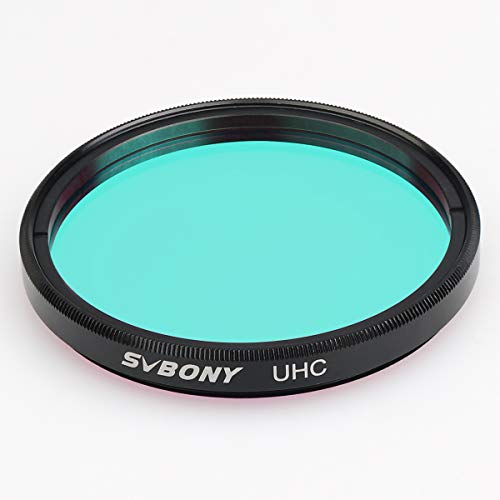
- 1TOP CHOICEBest overallSVBONY 2" UHC FilterView on Amazon
- 2
 TOP CHOICEBest for broadband deep-sky visual workSVBONY CLS FilterView on Amazon
- 3
 TOP CHOICEBest for one-shot color astrophotographySVBONY SV220 Dual-Band Nebula FilterView on Amazon
- 4
 Best for suburban visual observingOptolong 2" L-Pro Light Pollution FilterView on Amazon
- 5
 Best budget pickAstromania 2" UHC Telescope FilterView on Amazon
- 6
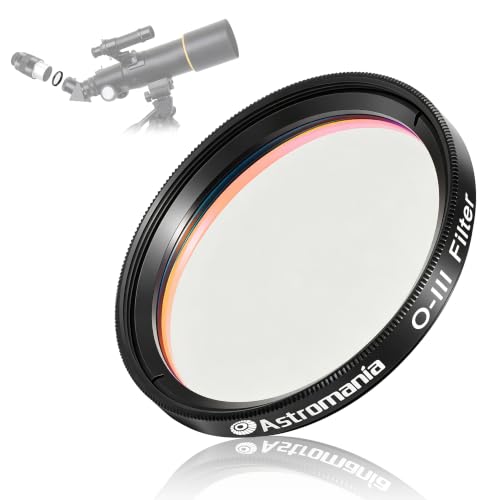 Best for emission nebula targetsAstromania 2" O-III Narrowband FilterView on Amazon
Our Top Picks
Before comparing products, it helps to understand the broad families. Broadband filters such as UHC and CLS pass a wide band of light and block the sodium and mercury emission lines common in city skies. Narrowband filters, including O-III and dual-band H-alpha/O-III designs, pass only very narrow slices of light emitted by specific gases. Narrowband filters offer more contrast on emission nebulae but dim most other targets. The list below is ordered by how well each product fits the selection criteria for a general 2 inch buyer.
Quick Comparison
| Product | Best for | Key feature |
|---|---|---|
| SVBONY 2″ UHC Filter | General visual deep-sky observing | Multi-coated optical glass for improved contrast |
| SVBONY CLS Filter | Broadband deep-sky visual and imaging | Blocks off-band light while passing key nebula wavelengths |
| SVBONY SV220 Dual-Band Nebula Filter | One-shot color astrophotography | 7nm dual-band passband for H-alpha and O-III |
| Optolong 2″ L-Pro Light Pollution Filter | Suburban visual observing | Broad passband with strong sky-glow suppression |
| Astromania 2″ UHC Telescope Filter | Budget-conscious beginners | Optical glass with aluminum frame |
| Astromania 2″ O-III Narrowband Filter | Planetary nebulae and emission targets | Narrow O-III passband for high contrast |
SVBONY 2″ UHC Filter
SVBONY 2" UHC Filter, Multi Coating Optical Glass, Telescope Filter | Improve Image Contrast, Reduce Light Pollution, Telescope Accessories for Deep Sky Objects Astrophotography & Observation
Best for: General visual deep-sky observing from light-polluted sites
This is a broadband ultra-high-contrast design aimed at observers who view nebulae, star clusters and galaxies through a telescope and want a single filter that works across many targets. It suits anyone who wants a versatile first light pollution filter rather than a specialized narrowband tool.
Key specs
- 2 inch barrel size
- Multi-coated optical glass
- Marketed for improved image contrast and light pollution reduction
Pros
- Broad enough for many deep-sky targets
- Multi-coated glass is a common expectation for contrast-sensitive work
- Good starting point for a mixed target list
Cons
- Broadband designs cannot match narrowband contrast on emission nebulae
- Color rendition is less natural than unfiltered views on some objects
Bottom line: A strong default choice for a visual observer who wants one filter for varied deep-sky targets.
View on AmazonSVBONY CLS Filter
SVBONY CLS Filter, Broadband Telescope Filter,2 Inch Light Pollution Filter | 0.1% Transmission of Off-band,90% Transmission of Key Nebula WavelengthsSuitable for Deep Sky Visual Astronomical Photogra
Best for: Broadband deep-sky work where off-band light needs strong suppression
The CLS design is positioned for observers who want to block the sodium and mercury glow of city lighting while keeping key nebula wavelengths. It fits both visual observers and those doing deep-sky imaging with a monochrome or color camera.
Key specs
- 2 inch format
- Listed as passing about 90% of key nebula wavelengths
- Listed as transmitting only about 0.1% of off-band light
Pros
- Strong suppression of off-band light in urban conditions
- Usable for both visual and imaging work
- Clear specification-based performance claims
Cons
- Stronger suppression can dim some galaxy targets
- Works best with well-chosen exposure or eyepiece magnification
Bottom line: Suits observers in heavily light-polluted areas who mainly target nebulae and want a broadband option with aggressive off-band rejection.
View on AmazonSVBONY SV220 Dual-Band Nebula Filter
SVBONY SV220 Telescope Filter, 2" 7nm Dual-Band Nebula Filter for Deep Sky | H-Alpha & O-III Narrowband Filter, Reduce Stray Light, for One-Shot Color Camera, Telescope Accessories for Astrophotograph
Best for: One-shot color astrophotography of emission nebulae
This 7nm dual-band filter passes H-alpha and O-III emission lines and blocks most other light. It is aimed at astrophotographers using one-shot color cameras, and at visual observers who want a narrow dual-band view of emission targets.
Key specs
- 2 inch format
- 7nm dual-band passband
- Targets H-alpha and O-III emission lines
Pros
- High contrast on emission nebulae
- Dual-band design covers two common emission lines
- Well suited to one-shot color camera setups
Cons
- Poor choice for galaxies and star clusters
- Narrow passband makes focus and exposure more demanding
Bottom line: The right pick for emission nebula imaging, but not a general-purpose filter.
View on AmazonOptolong 2″ L-Pro Light Pollution Filter
Optolong 2" L-Pro Light Pollution Filter
Best for: Suburban visual observing and broadband astrophotography
The L-Pro is a broadband filter from a manufacturer known for astrophotography filters. It is aimed at observers in suburban skies who want better sky-glow suppression than a plain filter while keeping a relatively natural view of many deep-sky targets.
Key specs
- 2 inch format
- Broadband light pollution design
Pros
- Versatile across many deep-sky targets
- Brand has a long track record with astrophotographers
- Good for mixed visual and imaging use
Cons
- Less contrast on emission nebulae than narrowband options
- Performance depends on how dark the local sky is
Bottom line: A sensible middle-ground choice for suburban observers who want one broadband filter.
View on AmazonAstromania 2″ UHC Telescope Filter
Astromania Telescope Filter Telescope UHC Filter Improve Contrast Nebula 2" | Light Pollution Filter, Optical Glass Lens, Aluminum Frame, Fit 1.25" Eyepiece, Telescope Accessories Nebula Filter for Or
Best for: Budget-conscious beginners who want a general-purpose light pollution filter
This is a broadband UHC-style filter with an aluminum frame and optical glass. It targets beginners who want to try a light pollution filter before committing to a specialized design.
Key specs
- 2 inch format
- Optical glass lens
- Aluminum frame
- Fits 1.25 inch eyepieces when used with an adapter, as listed
Pros
- Budget-friendly entry point
- Broadband design is forgiving for beginners
- Aluminum frame is durable for regular handling
Cons
- Contrast gains are more modest than premium broadband designs
- Coating and glass quality may not match higher-priced filters
Bottom line: A reasonable first filter for beginners who want to see whether light pollution filtering helps their site.
View on AmazonAstromania 2″ O-III Narrowband Filter
Astromania O-III Filter 2 Inch Telescope Filter Narrowband Nebula Filters | Light Pollution Filter for Astronomy Telescope, Fit 1.25" Eyepiece, Improve Image Contrast, For Orion Swan & Extended Nebula
Best for: Planetary nebulae and other oxygen-emitting targets
An O-III filter passes the doubly ionized oxygen emission line at about 500.7 nm, which is strong in many planetary nebulae and some supernova remnants. Observers who want to focus on those objects from light-polluted sites often choose this type.
Key specs
- 2 inch format
- Narrowband O-III design
- Fits 1.25 inch eyepieces when used with an adapter, as listed
Pros
- Strong contrast on suitable emission targets
- Useful for planetary nebula observing
- Pairs well with a second broadband filter
Cons
- Dims most galaxies and star clusters
- Only useful for a limited set of targets
Bottom line: A specialized add-on for observers who want to specifically target oxygen-emitting nebulae.
View on AmazonBuying Guide
Broadband vs. narrowband design
Broadband filters such as UHC and CLS pass a wide range of wavelengths and suppress the sodium and mercury glow of city lights. They are the most flexible choice for mixed target lists. Narrowband filters pass only a few emission lines, which gives high contrast on specific nebulae but dims most other objects. If you want one filter, start broadband. If you already know you want nebulae, consider narrowband.
Good picks for this: SVBONY 2″ UHC Filter, Optolong 2″ L-Pro Light Pollution Filter
Your sky brightness
The darker your site, the less a filter helps. Suburban skies with moderate sky glow respond well to broadband filters. In heavily light-polluted urban skies, aggressive off-band rejection matters more, and that is where designs like CLS-type filters are often recommended. Under dark rural skies, a filter may not be needed at all, and its contrast loss can be a disadvantage.
Good picks for this: SVBONY CLS Filter, Optolong 2″ L-Pro Light Pollution Filter
Optical quality and coatings
Look for filters described as multi-coated or made from optical glass. Coatings reduce reflections and help maintain contrast. Cheaper filters sometimes use lower-quality glass or coatings that scatter light, which can soften stars and reduce overall clarity. Check the manufacturer’s listed specifications rather than assuming quality from the frame alone.
Good picks for this: SVBONY 2″ UHC Filter, Astromania 2″ UHC Telescope Filter
Barrel size and eyepiece fit
The name “2 inch” refers to the filter barrel that threads into a 2 inch focuser or diagonal. Most 1.25 inch eyepieces will need a 2 inch to 1.25 inch adapter or a diagonal with a 1.25 inch port. Confirm your focuser or diagonal size before buying. Some listings note that the filter fits 1.25 inch eyepieces when used with an adapter, which is a useful detail to check.
Good picks for this: Astromania 2″ UHC Telescope Filter, Astromania 2″ O-III Narrowband Filter
Target list and use case
Make a short list of the objects you most want to see or photograph. Emission nebulae such as the Orion Nebula, the Lagoon Nebula and many planetary nebulae respond well to narrowband designs. Galaxies and star clusters generally do better with broadband filters. A mixed list points to a broadband filter, with a narrowband filter as an optional second tool.
Good picks for this: SVBONY SV220 Dual-Band Nebula Filter, Astromania 2″ O-III Narrowband Filter
Imaging compatibility
If you plan to photograph through the filter, check whether your camera is color or monochrome. One-shot color cameras benefit from dual-band filters that preserve emission-line color. Monochrome cameras work well with narrowband filters used with separate exposures. Keep in mind that filter effects on exposure times can be significant, so plan for longer total integration.
Good picks for this: SVBONY SV220 Dual-Band Nebula Filter, SVBONY CLS Filter
Care and handling
Keep filter glass clean and dry. Use a blower to remove dust before wiping, and use lens-safe cleaning fluid with a soft microfiber cloth. Store filters in a padded case when not in use. Avoid touching the glass surfaces, since oils can degrade coatings over time. Aluminum-framed designs tend to handle regular threading and removal better than thinner housings, according to common owner reports.
Good picks for this: Astromania 2″ UHC Telescope Filter, SVBONY 2″ UHC Filter
FAQ
What does a 2 inch light pollution filter do?
It blocks specific wavelengths of artificial light, mainly the sodium and mercury emission lines from streetlights, while passing wavelengths emitted by many deep-sky objects. The result is typically improved contrast on nebulae and some galaxies from light-polluted sites.
Will a light pollution filter work on galaxies?
Broadband filters can help some galaxies, but galaxies emit broadly and are often dimmed by narrowband filters. Galaxies generally respond best to a broadband design, and results vary with sky darkness and target brightness.
Do I need a 2 inch focuser to use one?
Not necessarily. A 2 inch filter threads into a 2 inch focuser or diagonal. If your setup uses 1.25 inch eyepieces, you may need a 2 inch to 1.25 inch adapter or a 1.25 inch diagonal with the filter placed in front of the eyepiece.
Is a narrowband filter better than a broadband one?
Neither is better in every case. Narrowband filters give higher contrast on specific emission nebulae but dim most other targets. Broadband filters are more flexible and are usually the better first choice for mixed observing.
Can I use a light pollution filter with a camera?
Yes. Many astrophotographers use filters with color and monochrome cameras. One-shot color cameras often pair well with dual-band designs, while monochrome cameras frequently use narrowband filters with separate exposures.
How do I know if a filter is helping?
Compare the view with and without the filter on the same target at the same magnification. Look for improved contrast, a darker background and clearer edges on nebulae. If the target looks dimmer without any gain in contrast, the filter may not suit your sky or target.
Should I use a filter under dark skies?
Usually not. Under truly dark skies, light pollution filters can reduce brightness and color without adding much benefit. Use one only when you can clearly see a benefit at your site.
Conclusion
For most observers starting with a 2 inch light pollution filter, a broadband design makes the most sense. The SVBONY 2″ UHC Filter suits general visual deep-sky work, while the SVBONY CLS Filter is better for heavily light-polluted skies. The Optolong 2″ L-Pro Light Pollution Filter is a balanced choice for suburban observers. For emission nebula imaging with a one-shot color camera, the SVBONY SV220 Dual-Band Nebula Filter fits well. The Astromania O-III filter is a specialized add-on for oxygen-emitting targets, and the Astromania UHC filter is a reasonable budget entry point. Match the filter to your sky and your target list, and check the manufacturer’s specifications before buying.
For related reading, see Light Pollution Filter Comparison (2026): Which Should You Choose?, Polarizer Filter Light Pollution vs Narrowband: Which Should You Choose?, Optolong L Pro Light Pollution Filter (2026): Which Should You Choose?, 7 Best Light Pollution Filters for Astrophotography Picks in 2026, Camera Filters for Astrophotography: 5 Best Picks Compared in 2026 and Astrophotography Color Camera Filters: What to Use and When (2026).
Sources
- Background on astronomical standards, observing conditions and light pollution research from the International Astronomical Union
- Guidance on light pollution, sky glow and outdoor lighting practices from the International Dark-Sky Association
- Information on emission lines such as H-alpha and O-III and the nebulae that emit them (nasa.gov)
Before you buy: helpful guides
About Audrey Hayes
Audrey Hayes is part of our editorial team and reviews and edits our telescopes & stargazing guides, checking product details against manufacturer specifications and owner feedback.
About the author
Audrey Hayes writes reviews and buying guides for Astronomy Site.