7 Best Light Pollution Reduction Filter Picks for Night Sky Viewing
Compare 7 light pollution reduction filter options for telescopes and cameras, with clear specs, pros, cons, and buying advice to match your sky and gear.
 By Audrey Hayes
Updated November 26, 2026
 By Audrey Hayes
Updated November 2026
A light pollution reduction filter is one of the most practical upgrades you can make to a telescope or camera if you observe from a suburban or city backyard. These filters block the sodium, mercury, and LED wavelengths that wash out faint nebulae and galaxies, letting more of the natural glow of the sky stay dark. The picks below were chosen by comparing manufacturer specifications, brand reputation, and the patterns owners commonly report, with attention to thread size, filter type, and whether each model suits visual use or astrophotography.
Our top picks at a glance
- 1TOP CHOICEBest overallK&F CONCEPT 77mm Clear Natural Night Filter Pollution Reduction Nano-X Series FE707View on Amazon
- 2
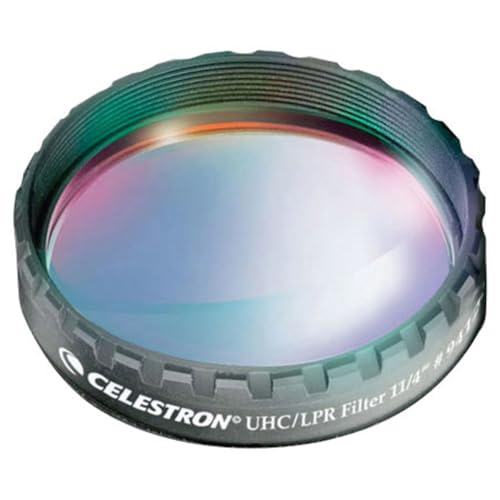 TOP CHOICEBest for visual 1.25" eyepiecesCelestron UHC/LPR Light Pollution Reduction Filter for Telescopes 1.25"View on Amazon
- 3
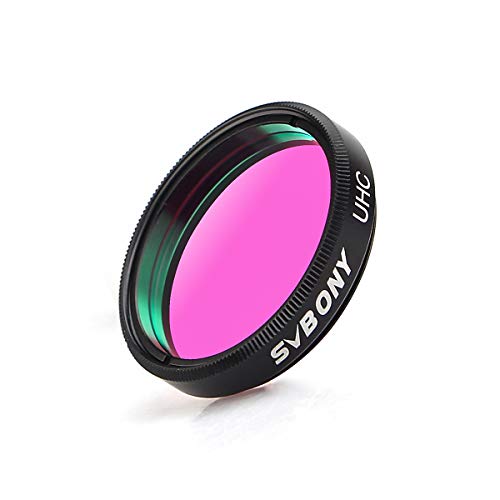 TOP CHOICEBest for budget-minded observersSVBONY Telescope Filter 1.25" UHC Optical Glass Light Pollution FilterView on Amazon
- 4
 Best for compact 58mm setupsK&F CONCEPT 58mm Clear Natural Night Filter Pollution Reduction Nano-X Series FE707View on Amazon
- 5Best for 67mm camera lensesK&F CONCEPT 67mm Clear Natural Night Filter Pollution Reduction Nano-X Series FE707View on Amazon
- 6
 Best for broadband deep-sky imagingICE 77mm LiPo Didymium Filter Broadband Light Pollution Reduction Optical GlassView on Amazon
- 7
 Best for natural star color at 77mmWalking Way 77mm Natural Night Filter Light Pollution Reduction Nano-CoatedView on Amazon
Our Top Picks
Quick Comparison
| Product | Best for | Key feature |
|---|---|---|
| K&F CONCEPT 77mm Clear Natural Night Filter | Best overall | Multi-layer coatings for light pollution reduction with minimal color cast |
| Celestron UHC/LPR Light Pollution Reduction Filter | Visual 1.25″ eyepiece use | Enhanced nebula contrast with a 1.25″ threaded format |
| SVBONY Telescope Filter 1.25″ UHC | Budget-minded visual observers | Optical glass in an aluminum frame |
| K&F CONCEPT 58mm Clear Natural Night Filter | Compact 58mm setups | Multi-layer coatings in a smaller thread size |
| K&F CONCEPT 67mm Clear Natural Night Filter | 67mm camera lenses | Clear natural night design for city sky shots |
| ICE 77mm LiPo Didymium Filter | Broadband deep-sky imaging | Didymium-based broadband light pollution reduction |
| Walking Way 77mm Natural Night Filter | Natural star color at 77mm | Nano-coated optical glass for star clarity |
K&F CONCEPT 77mm Clear Natural Night Filter Pollution Reduction Nano-X Series FE707
K&F CONCEPT 77mm Clear Natural Night Filter Pollution Reduction | 28 Multi-Layer Coatings Light Pollution Reduction Filter for Night City Sky Star Shots.No Color Cast Nano-X Series FE707
Best for: Best overall for 77mm lenses and telescopes
This is a good starting point for photographers and observers who want a broadband filter that suppresses artificial glow without a heavy color shift. It suits people shooting wide-field night skies or city-adjacent star fields with a 77mm thread.
Key specs
- 77mm thread size
- Multi-layer coating design marketed for light pollution reduction
- Clear natural night filter category
Pros
- Designed around reducing sky glow while keeping a natural color balance
- Thread size fits many common 77mm lenses and adapters
- Broadly suited to both night-sky photos and general star shots
Cons
- Broadband designs help less against narrow emission lines than specialized filters
- Only useful if your optics already accept 77mm threads or an adapter
Bottom line: Choose this if you want one versatile 77mm filter for city-adjacent night photography and do not need deep narrowband performance.
View on AmazonCelestron UHC/LPR Light Pollution Reduction Filter for Telescopes 1.25″
Celestron UHC/LPR Light Pollution Reduction Filter for Telescopes – 1.25" | Light Pollution Reduction, Enhanced Nebula Contrast, Darker Sky Background, High Transmission Optical Coating, For Visual Us
Best for: Visual 1.25″ eyepiece use
Visual observers using standard 1.25″ eyepieces will find this format easy to slot in. It targets the nebula contrast problem that light pollution creates when you look through a telescope.
Key specs
- 1.25″ barrel format for eyepiece use
- Light pollution reduction and enhanced nebula contrast coating
- High transmission optical coating described by the manufacturer
Pros
- Standard 1.25″ format fits many eyepiece setups
- Aimed directly at visual nebula contrast
- Well-known brand with a long history in visual accessories
Cons
- Not intended for camera lens use
- Visual gains are most noticeable on emission nebulae, less so on galaxies
Bottom line: A solid pick for visual observers who want a dedicated 1.25″ light pollution filter from an established telescope brand.
View on AmazonSVBONY Telescope Filter 1.25″ UHC Optical Glass Light Pollution Filter
SVBONY Telescope Filter, 1.25" UHC Filter Improve Contrast for Telescope | Optical Glass Lens, Aluminum Frame, Astrophotography Filter, Light Pollution Filter Nebula Filters, Telescope Accessories
Best for: Budget-minded visual observers
This is a practical entry point for beginners who want to see whether a light pollution filter helps from their backyard before spending more. It is aimed at visual use with 1.25″ eyepieces.
Key specs
- 1.25″ format
- Optical glass lens with aluminum frame
- UHC-style filtering for nebula contrast
Pros
- Budget-friendly option for trying a filter
- Aluminum frame is a durable housing choice
- Works with standard 1.25″ eyepieces
Cons
- Broadband UHC designs trade some color balance for contrast
- Not designed for camera lens threads
Bottom line: A sensible first filter for visual observers testing light pollution reduction on a modest budget.
View on AmazonK&F CONCEPT 58mm Clear Natural Night Filter Pollution Reduction Nano-X Series FE707
K&F CONCEPT 58mm Clear Natural Night Filter Pollution Reduction | 28 Multi-Layer Coatings Light Pollution Reduction Filter for Night City Sky Star Shots.No Color Cast Nano-X Series FE707
Best for: Compact 58mm setups
Smaller lenses and some compact telephoto setups use 58mm threads. This model fills that gap for photographers who want the same multi-layer approach in a smaller size.
Key specs
- 58mm thread size
- Multi-layer coatings marketed for light pollution reduction
- Clear natural night design
Pros
- Fits smaller lenses that many 77mm filters cannot
- Designed to limit color cast in night images
- Same product family as the larger K&F sizes for consistency
Cons
- Narrower thread means fewer compatible lenses
- Telescope use requires a 58mm adapter to fit most eyepiece systems
Bottom line: Pick this if your lens takes 58mm filters and you want a natural-color light pollution filter for night photography.
View on AmazonK&F CONCEPT 67mm Clear Natural Night Filter Pollution Reduction Nano-X Series FE707
K&F CONCEPT 67mm Clear Natural Night Filter Pollution Reduction | 28 Multi-Layer Coatings Light Pollution Reduction Filter for Night City Sky Star Shots.No Color Cast Nano-X Series FE707
Best for: 67mm camera lenses
Many mid-range camera lenses use 67mm threads. This size suits photographers who want a light pollution filter that matches a common lens diameter without stepping up or down with adapters.
Key specs
- 67mm thread size
- Multi-layer coating design for light pollution reduction
- Clear natural night filter category
Pros
- Matches a widely used lens thread size
- Aimed at keeping night skies looking natural
- Consistent with the rest of the K&F night filter line
Cons
- Not a narrowband filter, so strong emission-line gains are limited
- Telescope use needs an adapter that many owners find extra work
Bottom line: A practical choice for 67mm camera lenses shooting star fields from light-polluted locations.
View on AmazonICE 77mm LiPo Didymium Filter Broadband Light Pollution Reduction Optical Glass
ICE 77mm LiPo Didymium Filter Broadband Light Pollution Reduction for Night Sky/Star Optical Glass
Best for: Broadband deep-sky imaging
Imagers who shoot galaxies and wide nebulae from suburban skies often look for a broadband filter that cuts sodium and mercury glow while keeping more of the target signal. This model is built around that goal.
Key specs
- 77mm thread size
- Didymium-based broadband light pollution reduction design
- Optical glass construction
Pros
- Broadband approach suits a range of targets
- Optical glass is a standard choice for imaging filters
- 77mm thread fits many imaging lenses
Cons
- Didymium designs can shift color balance, requiring white-balance adjustment
- Less effective than narrowband filters on strong LED-heavy skies
Bottom line: Best for imagers who want a broadband filter for galaxies and nebulae from moderately light-polluted sites.
View on AmazonWalking Way 77mm Natural Night Filter Light Pollution Reduction Nano-Coated
Walking Way 77mm Natural Night Filter for Light Pollution Reduction Nano-Coated Optical Glass for Night Sky/Astrophotography/Star Clarity Anti-Light Pollution Filter
Best for: Natural star color at 77mm
Some observers want to keep stars looking white or neutral in their photos while still reducing sky glow. This nano-coated 77mm option is aimed at that balance.
Key specs
- 77mm thread size
- Nano-coated optical glass
- Designed for light pollution reduction in night sky and astrophotography use
Pros
- Positioned for natural star color
- Nano coating is marketed for clarity
- 77mm size suits many lenses
Cons
- Less brand history than some established optics makers
- Broadband filtering does not match narrowband results from strong city glow
Bottom line: A reasonable option for photographers who prioritize neutral star color at 77mm over maximum light suppression.
View on AmazonBuying Guide
Filter Type: Broadband vs. Narrowband
Broadband filters such as UHC and clear natural night designs reduce a range of artificial wavelengths while passing more of the sky’s natural light. Narrowband filters block almost everything except specific emission lines, which can be stronger on nebulae but dim galaxies and stars. Choose broadband for mixed targets and narrowband for emission nebulae from heavily polluted skies.
Good picks for this: Celestron UHC/LPR Light Pollution Reduction Filter, K&F CONCEPT 77mm Clear Natural Night Filter
Thread Size and Fit
Check the thread diameter on your lens or eyepiece adapter before buying. Common camera sizes include 58mm, 67mm, and 77mm, while visual telescope eyepieces typically use 1.25″ barrels. Using a step-up or step-down adapter can work, but each added piece can introduce vignetting on wide lenses.
Good picks for this: K&F CONCEPT 58mm Clear Natural Night Filter, K&F CONCEPT 67mm Clear Natural Night Filter
Visual Use vs. Astrophotography
Visual observers mainly need a filter that improves contrast through an eyepiece. Astrophotographers care about color balance, transmission, and how the filter behaves over long exposures. A filter that looks good visually may need white-balance correction in imaging.
Good picks for this: SVBONY Telescope Filter 1.25″ UHC, ICE 77mm LiPo Didymium Filter
Coating Quality and Color Cast
Multi-layer and nano coatings are intended to reduce reflections and limit color shifts. Owners frequently mention color cast as the main tradeoff with cheaper filters, so look for explicit language about natural color or minimal cast in the listing.
Good picks for this: Walking Way 77mm Natural Night Filter, K&F CONCEPT 77mm Clear Natural Night Filter
Optical Glass and Frame Construction
Optical glass resists scratching better than many plastic alternatives and maintains flatness for sharper images. Aluminum frames are generally more durable than thin plastic rings, which matters if you swap filters frequently in the field.
Good picks for this: SVBONY Telescope Filter 1.25″ UHC, ICE 77mm LiPo Didymium Filter
Your Sky Brightness
A filter helps most when sky glow is moderate to strong, such as suburban or small-town skies. Under dark rural skies, a filter may dim targets more than it helps. Before buying, check a light pollution map and note your typical limiting magnitude.
Good picks for this: K&F CONCEPT 77mm Clear Natural Night Filter, Celestron UHC/LPR Light Pollution Reduction Filter
Care and Handling
Clean coated filters with a blower and a microfiber cloth, avoiding harsh solvents. Store them in a padded case, and keep caps on when not in use to protect the coating. Dust and fingerprints on a light pollution filter reduce contrast just as they do on a lens.
Good picks for this: Walking Way 77mm Natural Night Filter, K&F CONCEPT 67mm Clear Natural Night Filter
FAQ
What does a light pollution reduction filter actually do?
It blocks specific wavelengths of artificial light, mostly from sodium and mercury streetlights and some LED sources, while passing more of the natural light from nebulae, galaxies, and stars. The result is usually a darker background and better contrast.
Will a light pollution filter work on a galaxy?
Broadband filters can improve galaxy contrast from suburban skies, though gains are usually smaller than on emission nebulae. Narrowband filters generally do not help galaxies much because galaxies emit broad light.
Do I need a different filter for visual use and astrophotography?
Often yes. Visual filters are usually sized for 1.25″ eyepieces, while camera filters use lens thread sizes. Color balance matters more for imaging, so some imaging filters need post-processing correction.
How do I know which thread size I need?
Look at the front of your lens for a number followed by “mm,” or check the filter thread specification in your manual. For eyepieces, the standard is 1.25″ or 2″ barrel diameter.
Can a light pollution filter make stars look dimmer?
Yes, filters block some light, so faint stars may appear dimmer. The tradeoff is usually a darker sky background that makes faint objects easier to pick out against it.
Does a filter replace a dark site?
No. A filter improves contrast from a bright site but cannot match the depth of a truly dark sky. For serious deep-sky work, travel to darker locations when possible.
Are there health or safety concerns with these filters?
Light pollution filters are passive glass or coated optics and are generally safe to use. Never point any telescope or camera at the sun without a proper solar filter, and consult a qualified professional if you have questions about eye safety during observing.
Conclusion
For most backyard observers, a light pollution reduction filter is worth trying once you know your sky brightness and gear size. The K&F CONCEPT 77mm Clear Natural Night Filter is a versatile general choice for 77mm lenses. Visual observers with 1.25″ eyepieces should look at the Celestron UHC/LPR or the SVBONY UHC as a budget starting point. Imagers with 58mm or 67mm lenses will find the K&F sizes fit those threads directly. Match the filter to your thread size, your sky, and whether you observe visually or photograph the night sky.
Sources
- Background on outdoor lighting efficiency and how artificial light affects nighttime environments (energy.gov)
- Overview of astronomy observing conditions and how light pollution affects skywatching (nasa.gov)
- Resources from the American Astronomical Society on dark skies and observing practice
Before you buy: helpful guides
Related reading
- Celestron Light Pollution Reduction Filter: 7 Best Picks Compared for 2026
- Top 7 Light Pollution Filters for Phone Compared for Night Sky Photos
- Top 6 Night Sky Light Pollution Filter Picks for Clearer Stars (2026)
- Top 5 Lee Light Pollution Filter Picks Compared for Night Sky Viewing
About Audrey Hayes
Audrey Hayes is part of our editorial team and reviews and edits our telescopes & stargazing guides, checking product details against manufacturer specifications and owner feedback.
About the author
Audrey Hayes writes reviews and buying guides for Astronomy Site.