Top 5 Lee Light Pollution Filter Picks Compared for Night Sky Viewing
Compare five light pollution filters, including Lee light pollution filter alternatives, by specs, fit and night-sky use to find the right one.
 By Audrey Hayes
Updated November 25, 2026
 By Audrey Hayes
Updated November 2026
A lee light pollution filter is a popular choice for stargazers and astrophotographers who live near towns, suburbs or stadiums and want darker, higher-contrast views of the night sky. The search usually comes down to a few questions: will the filter fit my lens or eyepiece thread, does it block the right wavelengths, and does it suit visual observing or camera work? The five filters below were chosen by checking manufacturer specifications, brand reputation and the patterns owners tend to describe in their feedback. No product was physically tested for this guide.
Our top picks at a glance
- 1TOP CHOICEBest overallK&F CONCEPT 58mm Clear Natural Night Filter Pollution ReductionView on Amazon
- 2
 TOP CHOICEBest for large-format setupsICE LiPo Didymium Filter Broadband Light Pollution Reduction (100x100mm)View on Amazon
- 3
 TOP CHOICEBest for 77mm lensesICE 77mm LiPo Didymium Filter Broadband Light Pollution ReductionView on Amazon
- 4
 Best budget pickWalking Way 58mm Natural Night Filter for Light Pollution ReductionView on Amazon
- 5
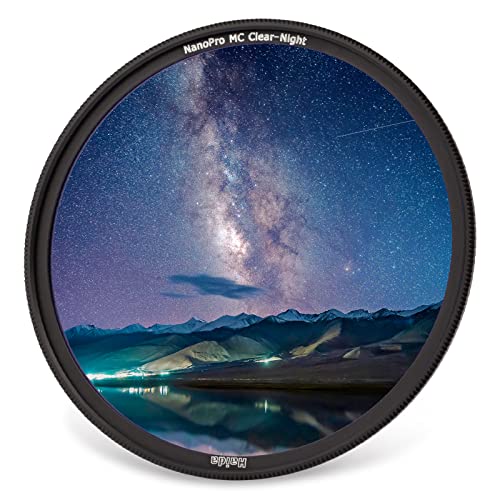 Best for wide-field night photosHaida 77MM Clear-Night Filter Light Pollution Source ReductionView on Amazon
Our Top Picks
Quick Comparison
| Product | Best for | Key feature |
|---|---|---|
| K&F CONCEPT 58mm Clear Natural Night Filter | General night photography on a 58mm thread | Multi-layer coatings aimed at reducing light pollution with minimal color cast |
| ICE LiPo Didymium Filter (100x100mm) | Square-format and large-format filter holders | 100x100mm glass for square filter systems |
| ICE 77mm LiPo Didymium Filter | 77mm lenses and wide-field astrophotography | Broadband light pollution reduction on 77mm optical glass |
| Walking Way 58mm Natural Night Filter | Shoppers wanting a lower-cost 58mm option | Nano-coated optical glass for star clarity |
| Haida 77MM Clear-Night Filter | Wide-angle sky shots on 77mm lenses | Clear-night design aimed at reducing sky glow sources |
K&F CONCEPT 58mm Clear Natural Night Filter Pollution Reduction
K&F CONCEPT 58mm Clear Natural Night Filter Pollution Reduction | 28 Multi-Layer Coatings Light Pollution Reduction Filter for Night City Sky Star Shots.No Color Cast Nano-X Series FE707
Best for: General night photography on a 58mm thread
This filter suits photographers with a 58mm lens who shoot city skies, star trails or Milky Way frames from suburban locations. Its name emphasizes a natural night color balance, which matters if you plan to edit colors afterward.
Key specs
- Thread size: 58mm (as listed)
- Multi-layer coating design, as described in the listing
- Marketed for light pollution reduction and star clarity
Pros
- Matches a common lens size
- Coating is described as limiting color cast
- Suited to general night-sky photography
Cons
- Only useful if your lens uses 58mm threads
- Light pollution reduction is partial, so heavily lit sites will still show glow
Bottom line: A solid choice for photographers with a 58mm lens who want a natural-looking night sky without buying a larger filter.
View on AmazonICE LiPo Didymium Filter Broadband Light Pollution Reduction (100x100mm)
ICE LiPo Didymium Filter Broadband Light Pollution Reduction for Night Sky/Star Optical Glass (100x100mm)
Best for: Square-format and large-format filter holders
This is a 100x100mm filter intended for square filter systems. It fits users who already own a square holder and want a broadband light pollution filter that covers a wide field.
Key specs
- Size: 100x100mm
- Optical glass construction, as described in the listing
- Broadband light pollution reduction design
Pros
- Large glass area suits square holder systems
- Broadband design targets common urban lighting
- Optical glass is typically preferred for sharper images
Cons
- Requires a compatible 100x100mm holder, which adds cost and setup
- Not usable on standard screw-in lenses
Bottom line: Best for users already committed to a square filter system who need full-frame coverage.
View on AmazonICE 77mm LiPo Didymium Filter Broadband Light Pollution Reduction
ICE 77mm LiPo Didymium Filter Broadband Light Pollution Reduction for Night Sky/Star Optical Glass
Best for: 77mm lenses and wide-field astrophotography
Photographers with 77mm lens threads who shoot wide-field night skies will find this a direct fit. It is the same family as the 100x100mm ICE filter, offered in a screw-in size.
Key specs
- Thread size: 77mm (as listed)
- Broadband light pollution reduction design
- Optical glass, as described in the listing
Pros
- Screw-in fit for 77mm lenses, with no holder needed
- Broadband design for typical sodium and LED street lighting
- Same product line as the square option, for consistency
Cons
- Only fits 77mm threads; adapter rings add bulk
- Filters of this type reduce, but do not eliminate, skyglow
Bottom line: A practical pick for 77mm lens owners who want a screw-in broadband filter for wide-field night work.
View on AmazonWalking Way 58mm Natural Night Filter for Light Pollution Reduction
Walking Way 58mm Natural Night Filter for Light Pollution Reduction Nano-Coated Optical Glass for Night Sky/Astrophotography/Star Clarity Anti-Light Pollution Filter
Best for: Shoppers wanting a lower-cost 58mm option
This 58mm filter targets beginners who want to see whether a light pollution filter improves their night images before committing to a premium model. Its nano-coated glass is the main selling point in the listing.
Key specs
- Thread size: 58mm (as listed)
- Nano-coated optical glass
- Designed for night sky and astrophotography use
Pros
- Budget-friendly entry point for a 58mm lens
- Nano coating is described as improving star clarity
- Simple screw-in installation
Cons
- Brand-specific performance data is limited compared with established filter makers
- Only suits 58mm threads
Bottom line: A reasonable first light pollution filter for a 58mm lens if you want to experiment on a budget.
View on AmazonHaida 77MM Clear-Night Filter Light Pollution Source Reduction
Haida 77MM Clear-Night Filter Light Pollution Source Reduction for Sky/Star
Best for: Wide-angle sky shots on 77mm lenses
Haida is a well-known filter manufacturer, and this 77mm clear-night model is aimed at wide-angle night photography. It suits photographers who want a recognized brand and a 77mm screw-in fit.
Key specs
- Thread size: 77mm (as listed)
- Clear-night design focused on light pollution sources
- Manufactured by Haida, a long-established filter brand
Pros
- Brand reputation for filter manufacturing
- Screw-in fit for common 77mm lenses
- Designed with wide-angle sky work in mind
Cons
- Only fits 77mm threads
- Like all broadband filters, it cannot remove skyglow entirely
Bottom line: A dependable 77mm choice for photographers who value a known brand for wide-angle night sky images.
View on AmazonBuying Guide
Filter type and what it blocks
Light pollution filters are generally broadband, meaning they reduce a wide band of artificial light, or narrowband, which passes only specific emission lines. Broadband filters are more forgiving for color photography, while narrowband filters tend to be used with monochrome cameras. Read the listing to confirm the filter type before buying.
Good picks for this: K&F CONCEPT 58mm Clear Natural Night Filter; ICE 77mm LiPo Didymium Filter
Thread size and fit
Measure the filter thread on your lens front element or the adapter you plan to use. Common sizes include 58mm and 77mm. A mismatched size requires a step-up or step-down ring, which can add vignetting at wide angles.
Good picks for this: Walking Way 58mm Natural Night Filter; Haida 77MM Clear-Night Filter
Square versus screw-in formats
Square filters need a holder and adapter ring but can cover wider fields and are easy to swap. Screw-in filters are simpler and lighter but limited to one thread size. Choose the format that matches your existing gear.
Good picks for this: ICE LiPo Didymium Filter (100x100mm); ICE 77mm LiPo Didymium Filter
Optical glass quality and coatings
Look for optical glass and multi-layer or nano coatings in the listing. Coatings help limit reflections and color shifts, which matters for sharp star images. Cheaper resin or unspecified glass can soften details.
Good picks for this: K&F CONCEPT 58mm Clear Natural Night Filter; Walking Way 58mm Natural Night Filter
Color cast and natural sky tones
Some filters tint images, which can be corrected in editing. Filters described as natural or no-color-cast are generally easier to work with for daytime-matched color balance or quick processing.
Good picks for this: K&F CONCEPT 58mm Clear Natural Night Filter; Haida 77MM Clear-Night Filter
Use case: visual versus camera
Visual observers often use eyepiece-mounted filters, while astrophotographers mount filters on lenses or telescopes. A lens filter will not help a visual observer, so confirm the mounting method before you buy.
Good picks for this: Haida 77MM Clear-Night Filter; ICE 77mm LiPo Didymium Filter
Care and durability
Keep filters clean with a microfiber cloth and blower, and store them in a case. Coatings can be scratched by abrasive cleaning, so avoid rough wipes. Owners often report that protective caps and cases extend filter life.
Good picks for this: ICE LiPo Didymium Filter (100x100mm); Walking Way 58mm Natural Night Filter
FAQ
Does a light pollution filter remove all skyglow?
No. A filter reduces specific wavelengths of artificial light, which improves contrast, but it cannot remove all skyglow. Dark sites still produce the best results.
Can I use a lee light pollution filter on a telescope eyepiece?
Lens filters are designed for camera threads, not eyepieces. Visual observers should look for eyepiece or filter-drawer options built for telescope use.
What is the difference between broadband and narrowband filters?
Broadband filters reduce a wide range of artificial light and suit color imaging. Narrowband filters pass narrow emission lines and are usually paired with monochrome cameras.
Will a light pollution filter work with a smartphone?
Smartphone lenses are very small and often need specialized adapters. Most listed filters are sized for DSLR or mirrorless lenses, so check compatibility carefully.
How do I choose the right thread size?
Check the filter thread marking on your lens front element. Match it exactly or use a step-up ring, keeping in mind that large step-ups can cause vignetting.
Do light pollution filters affect exposure?
Yes. Filters block some light, so you may need longer exposures or higher ISO. Test your settings on a clear night before a long session.
Do I need a tracking mount to use these filters?
Not always, but longer exposures show star movement without tracking. A tracking mount is helpful for deep-sky work with long focal lengths.
Conclusion
The best lee light pollution filter alternative depends on your gear. The K&F CONCEPT 58mm model suits general 58mm night photography with a natural color approach. The ICE 77mm and Haida 77MM options fit wide-angle work on 77mm lenses, with the Haida offering a well-known brand name. The ICE 100x100mm filter is for owners already using square holders, and the Walking Way 58mm is a reasonable budget entry point. Match thread size and mounting method first, then weigh coating quality and color behavior.
Sources
- Background on outdoor lighting, energy use and how artificial light affects nighttime environments (energy.gov)
- Night sky protection, dark-sky programs and how light pollution affects park skies (nps.gov)
- International Astronomical Union resources on light pollution and observatory site protection
Before you buy: helpful guides
Related reading
- Top 3 Clip in Light Pollution Filters for DSLR and Mirrorless Cameras
- Polarizer Filter Light Pollution vs Narrowband: Which Should You Choose?
- Optolong Light Pollution Filter Compared: 6 Best Picks for 2026
About Audrey Hayes
Audrey Hayes is part of our editorial team and reviews and edits our telescopes & stargazing guides, checking product details against manufacturer specifications and owner feedback.
About the author
Audrey Hayes writes reviews and buying guides for Astronomy Site.