7 Best Orion Light Pollution Filter Picks Compared for 2026
Compare 7 orion light pollution filter options for visual observing. See which filters suit small city skies, nebulae, and budget needs before you buy.
 By Audrey Hayes
Updated November 26, 2026
 By Audrey Hayes
Updated November 2026
Anyone who points a telescope from a city backyard or a suburban driveway knows the problem: the sky looks washed out, faint nebulae vanish, and the Milky Way never shows up. An orion light pollution filter is one of the most direct fixes for that, because it blocks the specific wavelengths produced by sodium and mercury street lamps and LED fixtures while passing the emission lines that nebulae give off. The picks below were selected on specifications, brand reputation, and patterns in owner feedback, with attention to thread size, filter type, and the kind of sky each one is meant to handle.
Our top picks at a glance
- 1TOP CHOICEBest overallAstromania Telescope Filter 1.25 Inch UHC Filter Improve Contrast NebulaView on Amazon
- 2
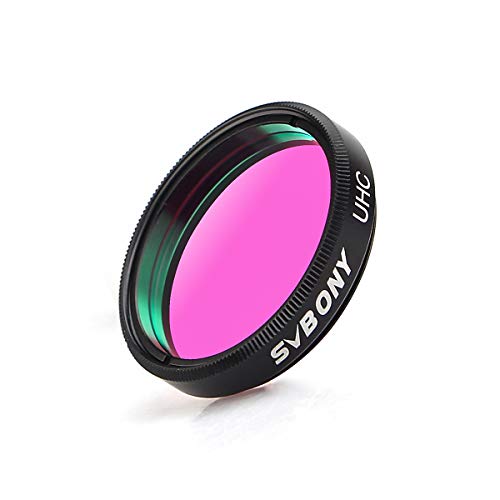 TOP CHOICEBest for nebula contrast on 1.25-inch eyepiecesSVBONY Telescope Filter, 1.25" UHC Filter Improve Contrast for TelescopeView on Amazon
- 3
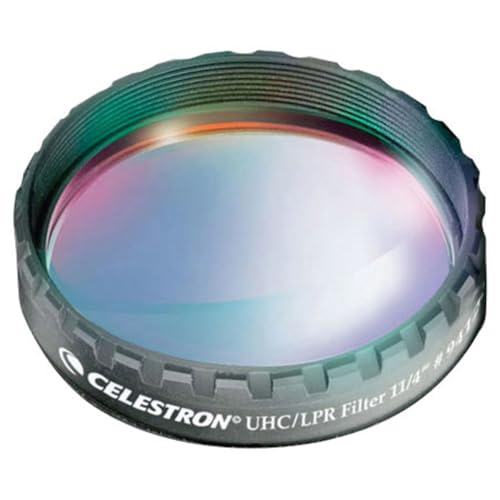 TOP CHOICEBest for a well-known broadband optionCelestron UHC/LPR Light Pollution Reduction Filter for Telescopes – 1.25"View on Amazon
- 4
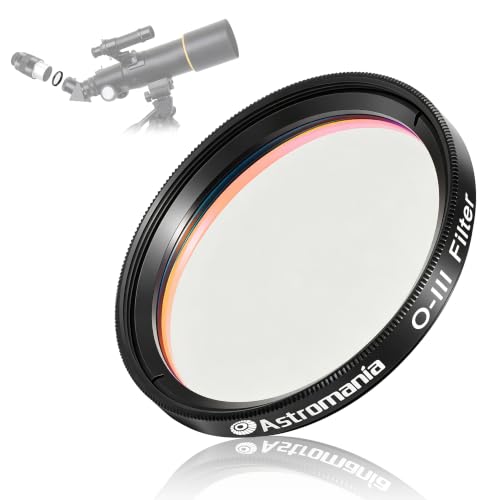 Best for narrowband emission nebulaeAstromania O-III Filter 2 Inch Telescope Filter Narrowband Nebula FiltersView on Amazon
- 5
 Best budget pickICE 1.25" LiPo Didymium Optical Glass Filter for Telescope Broadband LView on Amazon
- 6
 Best for camera and large-format useWalking Way 72mm Natural Night Filter for Light Pollution ReductionView on Amazon
- 7
 Best for DSLR and mirrorless lensesK&F CONCEPT 67mm Clear Natural Night Filter Pollution ReductionView on Amazon
Our Top Picks
Quick Comparison
| Product | Best for | Key feature |
|---|---|---|
| Astromania Telescope Filter 1.25 Inch UHC | General visual use from light-polluted suburbs | Broadband UHC-style glass in a 1.25-inch cell |
| SVBONY Telescope Filter 1.25″ UHC | Nebula contrast with 1.25-inch eyepieces | Aluminum frame with optical glass lens |
| Celestron UHC/LPR Light Pollution Reduction Filter | Buyers who want a widely known broadband filter | Light pollution reduction coating for darker background |
| Astromania O-III Filter 2 Inch | Narrowband targets such as the Veil and Swan Nebula | Oxygen-III passband for emission nebulae |
| ICE 1.25″ LiPo Didymium Optical Glass Filter | Budget-minded observers in moderate light pollution | Didymium-based broadband reduction |
| Walking Way 72mm Natural Night Filter | Camera lenses and wide-field night photography | 72mm thread with nano-coated optical glass |
| K&F CONCEPT 67mm Clear Natural Night Filter | DSLR and mirrorless city night shots | Multi-layer coatings for neutral color balance |
Astromania Telescope Filter 1.25 Inch UHC Filter Improve Contrast Nebula
Astromania Telescope Filter 1.25 Inch UHC Filter Improve Contrast Nebula | Light Pollution Filter, Optical Glass Lens, Aluminum Frame, Fit 1.25" Eyepiece, Telescope Accessories Nebula Filter for Orion
Best for: General visual use from light-polluted suburbs
This is a sensible first filter for someone with a 1.25-inch eyepiece who observes from a backyard lit by street lamps. UHC-type filters are designed to pass the emission lines of many nebulae while cutting broad portions of the spectrum that carry skyglow.
Key specs We also found Red Light Filter for Flashlight: 6 Best Picks Compared (2026) useful on this point.
- 1.25-inch barrel to fit standard 1.25-inch eyepieces
- Optical glass lens in an aluminum frame
- UHC (ultra high contrast) broadband design
Pros
- Simple threading into the eyepiece barrel
- Helpful on emission nebulae such as Orion and the Lagoon
- Sits at a low entry point for a first light pollution filter
Cons
- Galaxies show less improvement than nebulae
- Broadband filters can slightly dim the overall view
Bottom line: A good default choice for a beginner with a 1.25-inch eyepiece who mostly wants brighter nebulae from a city yard.
View on AmazonSVBONY Telescope Filter, 1.25″ UHC Filter Improve Contrast for Telescope
SVBONY Telescope Filter, 1.25" UHC Filter Improve Contrast for Telescope | Optical Glass Lens, Aluminum Frame, Astrophotography Filter, Light Pollution Filter Nebula Filters, Telescope Accessories
Best for: Nebula contrast with 1.25-inch eyepieces
Observers who want a UHC-style filter with an aluminum frame and optical glass element, primarily for visual nebula work on a 1.25-inch focuser, will find this a straightforward option.
Key specs
- 1.25-inch format for standard eyepiece barrels
- Optical glass lens with aluminum frame
- Broadband UHC-type passband
Pros
- Metal frame resists the knocks of frequent handling
- Clear improvement on bright emission nebulae
- Easy to swap between eyepieces
Cons
- Not a substitute for a dark site on faint galaxies
- Color balance can look slightly cool on some scenes
Bottom line: A solid pick for buyers who want a UHC filter with a sturdy housing and mainly observe nebulae.
View on AmazonCelestron UHC/LPR Light Pollution Reduction Filter for Telescopes – 1.25″
Celestron UHC/LPR Light Pollution Reduction Filter for Telescopes – 1.25" | Light Pollution Reduction, Enhanced Nebula Contrast, Darker Sky Background, High Transmission Optical Coating, For Visual Us
Best for: Buyers who want a widely known broadband filter
Celestron is a long-established telescope maker, and this filter is a common reference point for light pollution reduction in visual astronomy. It suits observers who want a dependable name and a clear description of what it does.
Key specs
- 1.25-inch format
- Light pollution reduction and UHC-type passband
- Coated for high transmission
Pros
- Brand familiarity and broad owner experience
- Coating aimed at a darker sky background
- Good general-purpose choice for many observing sites
Cons
- Broadband action trades some brightness on galaxies
- Works best on emission-rich targets rather than stars
Bottom line: A reliable mainstream choice for someone who values a known brand and wants a filter that handles most suburban skies.
View on AmazonAstromania O-III Filter 2 Inch Telescope Filter Narrowband Nebula Filters
Astromania O-III Filter 2 Inch Telescope Filter Narrowband Nebula Filters | Light Pollution Filter for Astronomy Telescope, Fit 1.25" Eyepiece, Improve Image Contrast, For Orion Swan & Extended Nebula
Best for: Narrowband targets such as the Veil and Swan Nebula
An O-III filter passes the oxygen-III emission line, which is strong in planetary nebulae and several supernova remnants. It is a specialized tool, most useful once you already know which targets you are chasing.
Key specs
- 2-inch format
- Narrowband oxygen-III passband
- Designed for emission nebulae
Pros
- Strong contrast on suitable emission targets
- Works well under heavy light pollution for those objects
- Larger barrel suits 2-inch eyepieces
Cons
- Useless on galaxies and most star fields
- Requires a 2-inch focuser or adapter
Bottom line: Best for an observer with a 2-inch setup who has a clear list of narrowband targets and wants a dedicated tool for them.
View on AmazonICE 1.25″ LiPo Didymium Optical Glass Filter for Telescope Broadband Light Pollution Reduction
ICE 1.25" LiPo Didymium Optical Glass Filter for Telescope Broadband Light Pollution Reduction for Night Sky/Star
Best for: Budget-minded observers in moderate light pollution
A didymium-based filter offers a lower-cost route into broadband light pollution reduction. Expectations should match the design: it helps with a moderate glow, not a bright city core.
Key specs
- 1.25-inch format
- Optical glass element
- Broadband light pollution reduction
Pros
- Accessible way to test whether a filter helps your sky
- Straightforward installation in a 1.25-inch barrel
- Useful on bright nebulae under suburban skies
Cons
- Less dramatic results under severe city glow
- Owner accounts vary more on faint targets
Bottom line: A sensible starting point for someone unsure whether a filter is worth the investment, provided the sky is only moderately bright.
View on AmazonWalking Way 72mm Natural Night Filter for Light Pollution Reduction
Walking Way 72mm Natural Night Filter for Light Pollution Reduction Nano-Coated Optical Glass for Night Sky/Astrophotography/Star Clarity Anti-Light Pollution Filter
Best for: Camera lenses and wide-field night photography
This 72mm screw-in filter is aimed at camera lenses rather than telescope eyepieces. It suits photographers who shoot the night sky and city skyline with a standard lens.
Key specs
- 72mm filter thread
- Nano-coated optical glass
- Designed for night sky and astrophotography use
Pros
- Fits a common lens thread size
- Coating aimed at cutting artificial light color casts
- Suitable for wide-field city night shots
Cons
- Not usable on a telescope eyepiece
- Needs a lens with a matching 72mm thread
Bottom line: Best for photographers with a 72mm lens who want a light pollution filter specifically for night sky images.
View on AmazonK&F CONCEPT 67mm Clear Natural Night Filter Pollution Reduction
K&F CONCEPT 67mm Clear Natural Night Filter Pollution Reduction | 28 Multi-Layer Coatings Light Pollution Reduction Filter for Night City Sky Star Shots.No Color Cast Nano-X Series FE707
Best for: DSLR and mirrorless city night shots
K&F CONCEPT is known for camera accessories, and this 67mm natural night filter targets photographers who need to keep color neutral while reducing sodium and LED glow in city night photography.
Key specs
- 67mm filter thread
- Multi-layer coatings
- Clear natural night design
Pros
- Multi-layer coating is aimed at neutral color balance
- Common 67mm thread fits many lenses
- Well suited to city skyline and star shots
Cons
- Not designed for telescope eyepieces
- Results depend heavily on exposure and sky brightness
Bottom line: A practical pick for photographers with a 67mm lens who shoot the night sky from a city.
View on AmazonBuying Guide
Filter type: broadband, UHC, or narrowband
Broadband and UHC filters cut a wide band of wavelengths and help with a range of targets, including many nebulae. Narrowband filters such as O-III pass only specific emission lines, so they are dramatic on certain nebulae and useless on galaxies. Choose the type that matches the targets you actually observe.
Good picks for this: Astromania Telescope Filter 1.25 Inch UHC Filter; Astromania O-III Filter 2 Inch
Barrel size and eyepiece compatibility
Telescope filters are commonly made for 1.25-inch or 2-inch barrels. Measure your eyepiece or focuser before buying, because a 2-inch filter will not thread into a 1.25-inch eyepiece without an adapter.
Good picks for this: SVBONY 1.25″ UHC Filter; Celestron UHC/LPR Light Pollution Reduction Filter
Thread size for camera lenses
Camera filters are sized by the lens thread diameter, usually printed on the front of the lens as a symbol followed by a number in millimeters. A 72mm filter will not fit a 67mm lens. Check the number before you order.
Good picks for this: Walking Way 72mm Natural Night Filter; K&F CONCEPT 67mm Clear Natural Night Filter
Optical quality and coatings
Look for optical glass and multi-layer or nano coatings that the manufacturer describes as reducing reflections and color casts. Coatings affect transmission, so a coated filter usually shows a slightly brighter and more neutral image than an uncoated one.
Good picks for this: Celestron UHC/LPR Light Pollution Reduction Filter; K&F CONCEPT 67mm Clear Natural Night Filter
Your sky and what you observe
A filter helps most under moderate light pollution. In a bright urban core, no filter will recover a dark-sky view. Observers who mostly look at galaxies should set expectations accordingly, since most broadband filters trade some brightness on those targets.
Good picks for this: ICE 1.25″ LiPo Didymium Optical Glass Filter; Astromania Telescope Filter 1.25 Inch UHC Filter
Build quality and durability
Aluminum frames resist dents better than thin plastic rims, and a sealed or well-fitted cell keeps dust off the glass. Handle filters by the edge and store them in a case to avoid scratches on the optical surface.
Good picks for this: SVBONY 1.25″ UHC Filter; Walking Way 72mm Natural Night Filter
Care and cleaning
Use a soft brush or a blower to remove dust, then a lens-safe cleaning cloth for fingerprints. Avoid household cleaners, which can damage coatings. Keep caps on when not in use.
Good picks for this: Astromania O-III Filter 2 Inch; K&F CONCEPT 67mm Clear Natural Night Filter
FAQ
What does an orion light pollution filter actually do?
It blocks specific wavelengths produced by artificial lighting, such as sodium and mercury lamps, while passing many of the emission lines from nebulae. The result is higher contrast on certain targets, though it does not remove the glow entirely.
Will a light pollution filter help with galaxies?
Usually only a little. Broadband filters reduce background glow, which can help faint galaxies stand out a bit, but they also dim the galaxy itself. Narrowband filters are generally not useful on galaxies.
Which filter size do I need for a telescope?
Check the barrel diameter of your eyepiece or focuser. Most telescope filters are 1.25-inch or 2-inch. A 1.25-inch filter will not fit a 2-inch eyepiece without an adapter.
Can I use a telescope filter on a camera lens?
No. Telescope filters thread into eyepiece barrels, while camera filters screw onto lens threads measured in millimeters. Use a filter made for your lens thread size.
Does a light pollution filter work from a bright city?
It can improve contrast on some nebulae, but in a severely light-polluted city the sky will still look bright. Drive to a darker site when possible for the best results.
Do I need a narrowband filter for my first telescope?
Probably not. A broadband or UHC filter is more versatile for a beginner who observes a mix of targets. Add a narrowband filter later if you focus on emission nebulae.
How should I store and clean my filter?
Keep it in a padded case and clean it gently with a blower and a lens-safe cloth. Avoid harsh chemicals and touching the glass surface.
Conclusion
For most observers with a 1.25-inch eyepiece and a suburban sky, a broadband UHC-style filter is the most useful starting point, and the Astromania and SVBONY 1.25-inch options are reasonable first choices. The Celestron filter suits buyers who want a long-established brand. Narrowband O-III suits observers with a 2-inch setup who target specific emission nebulae. For camera users, pick the Walking Way 72mm or K&F CONCEPT 67mm based on your lens thread. The ICE didymium filter is worth considering for a budget-minded test. Match the filter to your barrel size, your sky, and your targets, and results will follow.
Sources
- Background on light pollution sources, measurement, and how artificial lighting affects the night sky
- Guidance on astronomical emission lines and how nebulae are observed across wavelengths (nasa.gov)
- Standards and recommendations from the International Astronomical Union on protecting dark skies
Before you buy: helpful guides
- Lumicon Light Pollution Filter: How It Works and Where It Helps
- Light Pollution Gel Filter: How It Works and How to Use One (2026)
- Light Pollution Filter 1.25 Inch: A Practical Guide (2026)
- Idas D2 Light Pollution Suppression Filter: Setup and Buying Guide
- Gskyer 70mm Astronomical Refractor Telescope: Setup and First-Light Guide
Related reading
- Top 7 Light Pollution Filters for Phone Compared for Night Sky Photos
- Top 6 Night Sky Light Pollution Filter Picks for Clearer Stars (2026)
- Top 5 Lee Light Pollution Filter Picks Compared for Night Sky Viewing
About Audrey Hayes
Audrey Hayes is part of our editorial team and reviews and edits our telescopes & stargazing guides, checking product details against manufacturer specifications and owner feedback.
About the author
Audrey Hayes writes reviews and buying guides for Astronomy Site.