7 Best 48mm Light Pollution Filter Picks for Night Sky Viewing
Compare 7 best 48mm light pollution filter options for night sky viewing and astrophotography, with specs, pros, cons, and who each one suits.
 By Audrey Hayes
Updated November 25, 2026
 By Audrey Hayes
Updated November 2026
A 48mm light pollution filter is a practical choice for anyone whose eyepiece or camera lens uses that thread size and who wants darker, higher-contrast views of deep-sky objects from a light-polluted yard or city. The right filter depends on how bright your sky is, whether you observe visually or photograph, and whether you need a broadband blocker or a narrower band that targets specific sodium and mercury lamp emissions. The picks below were chosen by reviewing manufacturer specifications, brand reputation, and recurring owner feedback patterns, with attention to thread compatibility, coating type, and color neutrality.
Our top picks at a glance
- 1TOP CHOICEBest overallWalking Way 49mm Natural Night FilterView on Amazon
- 2
 TOP CHOICEBest budget pickK&F Concept 58mm Clear Natural Night FilterView on Amazon
- 3TOP CHOICEBest for larger eyepiecesWalking Way 58mm Natural Night FilterView on Amazon
- 4
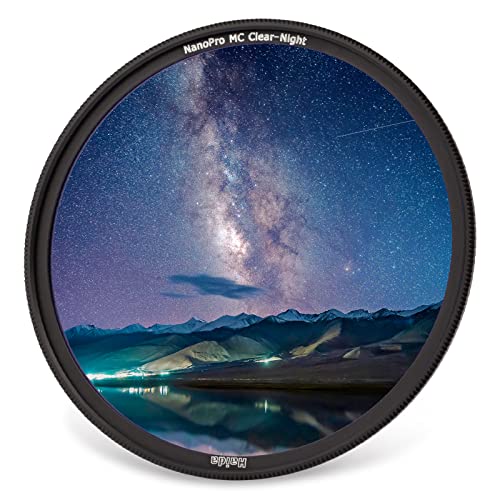 Best for compact setupsHaida 52MM Clear-Night FilterView on Amazon
- 5
 Best for emission-line viewingICE 77mm LiPo Didymium FilterView on Amazon
- 6
 Best for sodium lamp glowOptical Glass Yellow Light Pollution Filter (48mm)View on Amazon
- 7
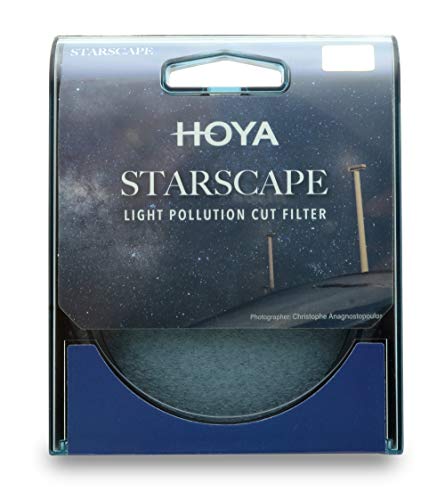 Best for a well-known nameHoya 49mm Starscape Light Pollution Cut FilterView on Amazon
Our Top Picks
Quick Comparison
| Product | Best for | Key feature |
|---|---|---|
| Walking Way 49mm Natural Night Filter | Overall use in suburban skies | Nano-coated optical glass for natural color |
| K&F Concept 58mm Clear Natural Night Filter | Budget-minded observers and photographers | Multi-layer coatings for reduced reflections |
| Walking Way 58mm Natural Night Filter | Larger-diameter accessories | Same nano-coated glass in a 58mm format |
| Haida 52MM Clear-Night Filter | Compact setups and frequent swapping | Targets light pollution sources for sky and star views |
| ICE 77mm LiPo Didymium Filter | Nebula work from heavily lit locations | Broadband light pollution reduction with didymium element |
| Optical Glass Yellow Light Pollution Filter (48mm) | Sodium-lamp-heavy neighborhoods | Specifically designed to cut yellow light |
| Hoya 49mm Starscape Light Pollution Cut Filter | Buyers who prefer an established optics brand | Light pollution cut design from a long-running filter maker |
Walking Way 49mm Natural Night Filter
Walking Way 49mm Natural Night Filter for Light Pollution Reduction Nano-Coated Optical Glass for Night Sky/Astrophotography/Star Clarity Anti-Light Pollution Filter
Best for: Overall use in suburban skies
This is a sensible starting point for observers and astrophotographers who want a general-purpose light pollution filter in a common 48–49mm thread range. It suits people whose sky glow is moderate, from suburbs to the edges of small towns, and who want to keep star color close to natural.
Key specs
- Thread size: 49mm (listing name)
- Nano-coated optical glass construction (listing name)
- Designed for night sky, astrophotography, and star clarity (listing name)
Pros
- Nano-coated glass is positioned as a way to reduce reflections and flare
- Designed for both visual and imaging use
- Intended to keep color rendition closer to natural than heavily tinted filters
Cons
- At 49mm, it may need a step-up or step-down ring for some 48mm accessories
- Broadband filters can dim faint nebulae in very dark skies
Bottom line: A good first choice for suburban observers who want one filter that handles general sky glow without a strong color cast.
View on AmazonK&F Concept 58mm Clear Natural Night Filter
K&F CONCEPT 58mm Clear Natural Night Filter Pollution Reduction | 28 Multi-Layer Coatings Light Pollution Reduction Filter for Night City Sky Star Shots.No Color Cast Nano-X Series FE707
Best for: Budget-minded observers and photographers
This filter is aimed at buyers who want a multi-layer coated night filter without paying for a premium brand name. It fits people who are experimenting with light pollution reduction and may not yet know which thread size or bandwidth they will need long term.
Key specs
- Thread size: 58mm (listing name; a 48mm setup will require a step-down ring)
- Multi-layer coatings described in the listing (28 layers stated)
- Marketed as a clear natural night filter for city sky and star shots
Pros
- Multi-layer coatings are marketed to reduce ghosting and color cast
- Described as having no significant color cast
- Accessible entry point for trying light pollution filtering
Cons
- The 58mm thread is not a direct match for 48mm accessories
- Owner experiences with coating durability vary, so handle with care
Bottom line: Pick this if you want to test light pollution filtering on a budget and can use a step-down ring.
View on AmazonWalking Way 58mm Natural Night Filter
Walking Way 58mm Natural Night Filter for Light Pollution Reduction Nano-Coated Optical Glass for Night Sky/Astrophotography/Star Clarity Anti-Light Pollution Filter
Best for: Larger-diameter accessories
This is the same design family as the 49mm model, offered in 58mm for users whose eyepieces, adapters, or camera lenses use that size. It suits observers who have already standardized on 58mm gear.
Key specs
- Thread size: 58mm (listing name)
- Nano-coated optical glass (listing name)
- Intended for night sky and astrophotography use (listing name)
Pros
- Matches common 58mm accessory threads without adapters
- Shares the nano-coated design of its 49mm sibling
- Suitable for both visual and imaging workflows
Cons
- Not interchangeable with 48mm or 52mm accessories without rings
- Broadband action is less selective than a narrowband filter
Bottom line: The right size for anyone whose kit is built around 58mm threads.
View on AmazonHaida 52MM Clear-Night Filter
Haida 52MM Clear-Night Filter Light Pollution Source Reduction for Sky/Star
Best for: Compact setups and frequent swapping
Haida is a well-known name in photographic filters, and this 52mm clear-night model suits people who already own 52mm gear or want a compact filter for travel. It is useful for star and sky photography where light pollution is the main issue.
Key specs
- Thread size: 52mm (listing name)
- Designed to reduce light pollution sources for sky and star photography (listing name)
- Clear-night design, meaning minimal visible color tint
Pros
- Established photographic filter brand
- Compact diameter suits travel kits
- Clear-night design aims for neutral color
Cons
- 52mm does not match 48mm threads without a ring
- Primarily framed around photography rather than visual eyepiece use
Bottom line: A solid pick for photographers with 52mm lenses who want a recognized brand.
View on AmazonICE 77mm LiPo Didymium Filter
ICE 77mm LiPo Didymium Filter Broadband Light Pollution Reduction for Night Sky/Star Optical Glass
Best for: Nebula work from heavily lit locations
This is a larger-diameter filter that combines a broadband light pollution element with a didymium component. It is aimed at observers and imagers under heavy sky glow who want to improve nebula contrast, and who are prepared to accept some color shift in return.
Key specs
- Thread size: 77mm (listing name; adapters needed for smaller threads)
- LiPo and didymium filter type (listing name)
- Broadband light pollution reduction on optical glass (listing name)
Pros
- Didymium element can help separate some emission lines from background glow
- Designed for heavy light pollution conditions
- Optical glass construction suitable for demanding use
Cons
- 77mm threads require step-down rings for 48mm accessories
- Color shift is more noticeable than in clear-night filters
Bottom line: Best for observers in bright cities who want stronger suppression and can work with a larger filter.
View on AmazonOptical Glass Yellow Light Pollution Filter (48mm)
Filter Optical Glass for Removing The Yellow Light Pollution(48mm)
Best for: Sodium-lamp-heavy neighborhoods
This 48mm filter is designed specifically to cut yellow light, which is the signature of older sodium street lamps. It suits observers whose sky glow is dominated by orange-yellow light rather than white LED glare.
Key specs
- Thread size: 48mm (listing name)
- Optical glass construction (listing name)
- Designed to remove yellow light pollution (listing name)
Pros
- Thread size matches the 48mm category directly
- Targeted approach to sodium lamp glow
- Optical glass construction
Cons
- Less effective against modern white LED lighting
- Yellow-cutting filters can shift the color of some objects noticeably
Bottom line: Choose this if your local lighting is mostly sodium and you need a 48mm thread.
View on AmazonHoya 49mm Starscape Light Pollution Cut Filter
Hoya 49mm Starscape Light Pollution Cut Filter
Best for: Buyers who prefer an established optics brand
Hoya has a long history in optical and photographic filters, and the Starscape line is aimed at night sky work. This model suits buyers who value brand reputation and consistent manufacturing standards.
Key specs
- Thread size: 49mm (listing name)
- Light pollution cut design for starscape photography (listing name)
Pros
- Recognized brand with a long track record in filters
- Designed with starscape and night sky use in mind
- Close to the 48mm category for easy fitting with a ring
Cons
- 49mm thread still requires a ring for exact 48mm fit
- Owners sometimes note that broadband filters reduce faint detail under dark skies
Bottom line: A dependable choice for buyers who prioritize brand history and a straightforward light pollution cut.
View on AmazonBuying Guide
Thread size and fit
Check the filter thread diameter before anything else. A 48mm filter threads directly onto 48mm accessories, while 49mm and 52mm models need a step-down ring. Measure the thread on your eyepiece or lens, not the outer barrel, because some accessories list an inner diameter that differs slightly from the nominal size.
Good picks for this: Optical Glass Yellow Light Pollution Filter (48mm), Walking Way 49mm Natural Night Filter
Broadband versus narrowband behavior
Broadband light pollution filters reduce a wide range of artificial light, which helps in general suburban skies. Narrowband filters pass only specific emission lines and are generally better suited to nebula imaging from very bright sites. Choose broadband if you want one filter for many targets, and check the filter’s design intent in the listing.
Good picks for this: Walking Way 58mm Natural Night Filter, ICE 77mm LiPo Didymium Filter
Color neutrality
Some filters add a visible tint to stars and nebulae. Clear-night designs aim to minimize color cast, while yellow-cutting filters intentionally shift color. If you care about accurate star color for photos or visual impressions, prioritize filters described as natural or clear.
Good picks for this: K&F Concept 58mm Clear Natural Night Filter, Haida 52MM Clear-Night Filter
Coatings and glass quality
Multi-layer and nano coatings are intended to reduce reflections, ghosting, and flare. Optical glass construction generally matters more than marketing terms, so look for specific coating descriptions and glass type. Coatings can be scratched by careless cleaning, so treat them as delicate.
Good picks for this: Walking Way 49mm Natural Night Filter, Hoya 49mm Starscape Light Pollution Cut Filter
Type of light pollution
Sodium street lamps emit mostly yellow-orange light, while LED lighting is broader and whiter. A yellow-cutting filter helps with sodium glow but can do less against LEDs. Identify the dominant light source around your site before buying, since this determines which filter type will help most.
Good picks for this: Optical Glass Yellow Light Pollution Filter (48mm), ICE 77mm LiPo Didymium Filter
Use case: visual or imaging
Visual observers and imagers have different needs. Visual use benefits from filters that preserve brightness and contrast, while imaging can tolerate longer exposures and may benefit from stronger suppression. Consider whether you will mount the filter on an eyepiece, a camera lens, or both.
Good picks for this: Walking Way 49mm Natural Night Filter, Haida 52MM Clear-Night Filter
Care and handling
Store filters in a padded case, keep caps on when not in use, and clean only with a blower, soft brush, and optical cleaning solution on a microfiber cloth. Avoid touching the glass surface. Coated filters are more vulnerable to abrasion than uncoated ones, so gentle handling extends their useful life.
Good picks for this: Hoya 49mm Starscape Light Pollution Cut Filter, K&F Concept 58mm Clear Natural Night Filter
FAQ
Can I use a 48mm light pollution filter on a telescope eyepiece?
Yes, if the eyepiece or accessory has a 48mm thread. Many eyepiece filters thread directly into the barrel. Confirm the thread on your specific eyepiece before buying, because some models use slightly different dimensions.
What is the difference between a light pollution filter and a moon filter?
Moon filters reduce overall brightness to make the lunar surface more comfortable to view. Light pollution filters target artificial light wavelengths to improve contrast for faint objects. They serve different purposes and are not interchangeable.
Do light pollution filters work on LED street lights?
Broadband filters can reduce LED glare to some degree, but yellow-cutting filters are generally less effective against white LEDs. Results depend on the LED color temperature and the filter design, so check the filter’s intended light sources.
Will a light pollution filter make stars look a different color?
Some filters do add a visible tint. Clear or natural night filters are designed to minimize color shift, while yellow-cutting and didymium filters change color more noticeably. If star color accuracy matters to you, choose a filter described as natural or clear.
Do I need a step-down ring for a 48mm filter?
Only if your accessory uses a different thread size. A 48mm filter fits 48mm accessories directly. For 49mm, 52mm, 58mm, or 77mm filters, you will need a step-up or step-down ring that matches both diameters.
How do I clean a coated light pollution filter?
Remove dust with a blower or soft brush first. Then apply a small amount of optical cleaning fluid to a microfiber cloth and wipe gently in circles from the center outward. Avoid paper towels and household cleaners, which can damage coatings.
Conclusion
For most suburban observers with a 48mm setup, the Optical Glass Yellow Light Pollution Filter (48mm) is the most direct thread match, especially where sodium lighting dominates. The Walking Way 49mm Natural Night Filter is a sensible general-purpose option if a small ring is acceptable. Budget buyers may consider the K&F Concept 58mm model, while photographers with 52mm gear may prefer the Haida option. Observers in brighter cities who can handle a larger filter and some color shift might look at the ICE 77mm LiPo Didymium Filter. Buyers who prioritize brand history may favor the Hoya 49mm Starscape. Match the filter to your light source, thread size, and whether you observe visually or photograph.
For deeper comparisons, see Light Pollution Filter Comparison (2026): Which Should You Choose? and Polarizer Filter Light Pollution vs Narrowband: Which Should You Choose?. Photographers may also find 5 Best Camera Light Pollution Filters for Night Sky Shots (2026) useful, and buyers with 77mm gear can review 6 Best 77mm Light Pollution Filter Picks Compared for Night Sky Viewing. For a broader list, see 7 Best Light Pollution Filters for Astrophotography Picks in 2026.
Sources
- Information on light pollution sources, sky glow, and lighting types that affect observing
- Background on night sky brightness and the effects of artificial light on astronomy (nasa.gov)
- Standards and measurement context for optical and light-spectrum properties (nist.gov)
Before you buy: helpful guides
About Audrey Hayes
Audrey Hayes is part of our editorial team and reviews and edits our telescopes & stargazing guides, checking product details against manufacturer specifications and owner feedback.
About the author
Audrey Hayes writes reviews and buying guides for Astronomy Site.