Optolong Light Pollution Filter Compared: 6 Best Picks for 2026
Compare six Optolong light pollution filters by use case, specs and trade-offs, from broadband L-Pro to narrowband L-Extreme, to pick the right one for your sco
 By Audrey Hayes
Updated November 24, 2026
 By Audrey Hayes
Updated November 2026
Choosing an optolong light pollution filter comes down to three things: what kind of sky you observe under, whether you care most about visual contrast or astrophotography, and how much your telescope or camera can take in terms of filter size and optical path. This list looks at six Optolong models, from a general broadband filter for visual use to a narrowband filter built for emission nebulae. The selection criteria are specifications stated by the manufacturer, the reputation of the brand for this filter line, and patterns that owners tend to describe in their feedback, such as mounting fit, color cast and how well a filter works under bright suburban skies. None of these were tested by the writer; treat the picks as a research-based shortlist.
Our top picks at a glance
- 1TOP CHOICEBest overallOptolong 2" L-Pro Light Pollution FilterView on Amazon
- 2
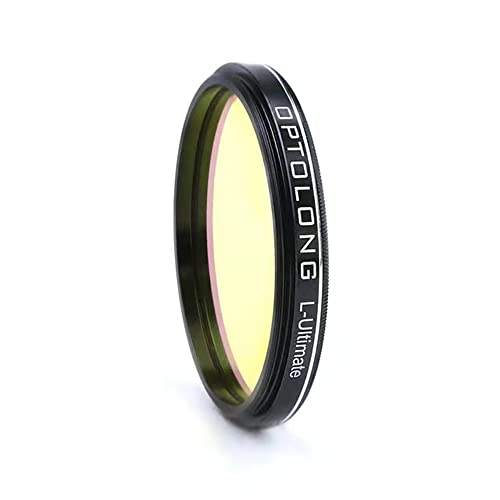 TOP CHOICEBest for imaging under suburban skiesOptolong L-Ultimate 2” Dual Bandpass Light Pollution Reduction Imaging FilterView on Amazon
- 3
 TOP CHOICEBest for visual nebula contrastOptolong Ultra High Contrast UHC Light Pollution Reduction Filter – 2"View on Amazon
- 4
 Best for dual narrowband imagingOptolong 2" L-Enhance Dual Narrowband Light Pollution Filter (H-Alpha and H-Beta/O-III)View on Amazon
- 5
 Best for multi-band color imagingNew Optolong Filter 2-inch L-Quad Enhance Filer Professional L-Quad Enhance Filter (L-QEF)View on Amazon
- 6
 Best for narrowband emission targetsOptolong L-Extreme 7nm Dual Narrowband Filter (H-Alpha and O-III) (2")View on Amazon
Our Top Picks
Quick Comparison
| Product | Best for | Key feature |
|---|---|---|
| Optolong 2″ L-Pro Light Pollution Filter | General broadband use | Broad light pollution suppression for visual and imaging work |
| Optolong L-Ultimate 2” Dual Bandpass Light Pollution Reduction Imaging Filter | Imaging under suburban skies | Dual bandpass design for targeted light blocking |
| Optolong Ultra High Contrast UHC Light Pollution Reduction Filter – 2″ | Visual nebula contrast | UHC passband tuned for emission nebulae |
| Optolong 2″ L-Enhance Dual Narrowband Light Pollution Filter | Dual narrowband imaging | H-Alpha and H-Beta/O-III transmission |
| New Optolong Filter 2-inch L-Quad Enhance Filer Professional L-Quad Enhance Filter (L-QEF) | Multi-band color imaging | Four-band passbands for broader color coverage |
| Optolong L-Extreme 7nm Dual Narrowband Filter (H-Alpha and O-III) (2″) | Narrowband emission targets | Narrow 7nm passbands for H-Alpha and O-III |
Optolong 2″ L-Pro Light Pollution Filter
Optolong 2" L-Pro Light Pollution Filter
Best for: General broadband use under moderate light pollution
This is the most flexible option in the lineup and the one most beginners start with. It suits observers who want one filter for both visual sessions and basic deep-sky imaging, and who live in towns or suburbs where sodium and mixed white lighting wash out faint galaxies and nebulae.
Key specs
- 2-inch filter threads, designed for standard 2-inch eyepiece and imaging train use
- Broadband light pollution suppression across the visible range
Pros
- Versatile for both visual and camera use
- Broad compatibility with common 2-inch accessories
- Widely discussed by owners as a sensible first light pollution filter
Cons
- Broadband designs trade some contrast on certain emission targets compared with narrowband filters
- Can shift color balance, which may need correction in processing
Bottom line: The safest starting point for an observer who wants one filter that does many jobs.
View on AmazonOptolong L-Ultimate 2” Dual Bandpass Light Pollution Reduction Imaging Filter
Optolong L-Ultimate 2” Dual Bandpass Light Pollution Reduction Imaging Filter
Best for: Imaging under suburban skies
Aimed at astrophotographers who shoot in moderately to heavily light-polluted areas and want stronger rejection of artificial light while keeping a reasonable share of nebula signal.
Key specs
- Dual bandpass design, 2-inch format
- Intended for camera use on refractors and reflectors
Pros
- Targets the wavelengths most associated with artificial lighting
- Useful for longer exposures where sky glow builds quickly
- Good fit for mixed-target imaging sessions
Cons
- Dual bandpass designs can produce noticeable color shifts that require calibration frames
- Less suited to purely visual use on faint objects
Bottom line: A strong pick for imagers who need more light rejection than a basic broadband filter provides.
View on AmazonOptolong Ultra High Contrast UHC Light Pollution Reduction Filter – 2″
Optolong Ultra High Contrast UHC Light Pollution Reduction Filter – 2"
Best for: Visual nebula contrast
Visual observers hunting emission nebulae, such as the Veil or North America Nebula, often use UHC-type passbands because they transmit the specific emission lines of ionized gas while blocking much of the continuum and sky glow.
Key specs
- UHC passband designed for emission nebulae
- 2-inch format for eyepiece use
Pros
- Noticeable contrast gain on emission nebulae from suburban sites
- Simple to use at the eyepiece with no camera required
- Widely recommended in observing communities for nebula work
Cons
- Dims galaxies and star clusters, which is a poor trade-off for those targets
- Works best on emission objects, so it has a narrower use range
Bottom line: The right choice for visual observers who mainly chase nebulae and want the most contrast on those targets.
View on AmazonOptolong 2″ L-Enhance Dual Narrowband Light Pollution Filter (H-Alpha and H-Beta/O-III)
Optolong 2" L-Enhance Dual Narrowband Light Pollution Filter (H-Alpha and H-Beta/O-III)
Best for: Dual narrowband imaging
Designed for imagers who want to capture hydrogen-alpha and oxygen-III signal from emission nebulae and who accept that narrowband work changes the final color palette.
Key specs
- Dual narrowband passbands covering H-Alpha and H-Beta/O-III
- 2-inch format for camera use
Pros
- Captures key emission lines that broadband filters partly block
- Good balance between light rejection and signal retention
- Suits narrowband palette processing workflows
Cons
- Not designed for galaxies or reflection nebulae
- Requires longer total exposure than broadband filters for comparable brightness
Bottom line: A good middle ground for imagers who want narrowband-style data without going to the narrowest passbands.
View on AmazonNew Optolong Filter 2-inch L-Quad Enhance Filer Professional L-Quad Enhance Filter (L-QEF)
New Optolong Filter 2-inch L-Quad Enhance Filer Professional L-Quad Enhance Filter (L-QEF)
Best for: Multi-band color imaging
Intended for imagers who want broader color coverage than a narrowband filter gives while still gaining light pollution rejection from a filter-based solution.
Key specs
- Quad-band passband design, 2-inch format
- Intended for camera use
Pros
- Wider color coverage than narrowband-only filters
- Useful for a range of emission and reflection targets
- Practical for imagers who shoot both color and emission-line data
Cons
- Multi-band designs can be harder to color-balance in processing
- Less light rejection than a dedicated narrowband filter on very polluted skies
Bottom line: Best for imagers who want a compromise between color fidelity and light pollution control.
View on AmazonOptolong L-Extreme 7nm Dual Narrowband Filter (H-Alpha and O-III) (2″)
Optolong L-Extreme 7nm Dual Narrowband Filter (H-Alpha and O-III) (2")
Best for: Narrowband emission targets
For imagers who focus on emission nebulae, especially from heavily light-polluted sites, where the 7nm passbands reject most of the surrounding sky glow.
Key specs
- 7nm dual narrowband passbands for H-Alpha and O-III
- 2-inch format for camera use
Pros
- Very strong light pollution rejection on emission targets
- Narrow passbands produce high-contrast emission data
- Well suited to narrowband palette imaging
Cons
- Blocks nearly everything except emission lines, so it is unsuitable for galaxies and stars
- Requires longer exposures and careful focus due to the narrow bandwidth
Bottom line: The most specialized pick here, best for dedicated emission-nebula imagers under heavy light pollution.
View on AmazonBuying Guide
Broadband vs. narrowband
Broadband filters pass a wide slice of the visible spectrum and suit mixed targets. Narrowband filters pass only specific emission lines, which gives strong light rejection but limits them to emission nebulae. Decide what you mostly observe before buying.
Good picks for this: Optolong 2″ L-Pro Light Pollution Filter, Optolong L-Extreme 7nm Dual Narrowband Filter (H-Alpha and O-III) (2″)
Visual or imaging use
Visual filters need to work at the eyepiece, where color shifts are less important and contrast matters most. Imaging filters must also match your camera sensor and tolerate long exposures, where color balance affects processing.
Good picks for this: Optolong Ultra High Contrast UHC Light Pollution Reduction Filter – 2″, Optolong L-Ultimate 2” Dual Bandpass Light Pollution Reduction Imaging Filter
Filter size and thread format
All six models here are 2-inch format. Confirm your focuser, diagonal or camera adapter accepts 2-inch filters, and check whether your setup needs a T-ring or adapter before ordering.
Good picks for this: Optolong 2″ L-Pro Light Pollution Filter, New Optolong Filter 2-inch L-Quad Enhance Filer Professional L-Quad Enhance Filter (L-QEF)
Light pollution level of your site
Moderate suburban skies often respond well to a broadband filter. Heavier urban light, especially from sodium lamps, may call for dual or narrowband designs. Match the filter’s rejection strength to how bright your sky background actually is.
Good picks for this: Optolong L-Ultimate 2” Dual Bandpass Light Pollution Reduction Imaging Filter, Optolong L-Extreme 7nm Dual Narrowband Filter (H-Alpha and O-III) (2″)
Target types
Galaxies and star clusters are not well served by narrowband or UHC filters, which dim them substantially. Emission and planetary nebulae respond strongly to these filters. If your list is mixed, a broadband or quad-band design is usually more practical.
Good picks for this: Optolong 2″ L-Enhance Dual Narrowband Light Pollution Filter (H-Alpha and H-Beta/O-III), New Optolong Filter 2-inch L-Quad Enhance Filer Professional L-Quad Enhance Filter (L-QEF)
Color balance and processing
Multi-band and narrowband filters change the color of your data, and many imagers handle this with calibration frames and palette choices during processing. Expect to spend time learning your processing software if you move to these designs.
Good picks for this: New Optolong Filter 2-inch L-Quad Enhance Filer Professional L-Quad Enhance Filter (L-QEF), Optolong L-Ultimate 2” Dual Bandpass Light Pollution Reduction Imaging Filter
Care and handling
Keep the filter capped when not in use, clean the glass with a microfiber cloth and a suitable lens cleaner, and avoid touching the optical surfaces. Store in a dry place to limit dew and dust accumulation on the coatings.
Good picks for this: Optolong 2″ L-Pro Light Pollution Filter, Optolong Ultra High Contrast UHC Light Pollution Reduction Filter – 2″
FAQ
What is an optolong light pollution filter used for?
It reduces the effect of artificial light on your view or image by blocking wavelengths that sky glow emits most strongly, which makes faint deep-sky objects easier to see or image from urban and suburban sites.
Is a broadband or narrowband filter better?
Neither is universally better. Broadband filters suit mixed targets and moderate skies. Narrowband filters give stronger rejection but only work well on emission nebulae.
Can I use these filters for galaxies?
Broadband filters such as the L-Pro can be used on galaxies. Narrowband and UHC designs generally dim galaxies too much to be useful for those targets.
Do I need a camera to benefit from these filters?
No. UHC and broadband designs can be used at the eyepiece. Narrowband and dual bandpass filters are generally more valuable for camera work, although visual use is possible on bright emission objects.
Will these filters fit my telescope?
All six models are 2-inch format. Check that your focuser, diagonal or camera adapter takes 2-inch filters, and confirm whether an adapter or T-ring is needed for your camera.
Do light pollution filters affect star color?
Yes. Most filters shift color balance, and narrowband designs change star color considerably. Calibration frames and careful processing can correct much of this in astrophotography.
How long should I expose with a narrowband filter?
Narrowband filters pass less light, so exposures are typically longer than with broadband filters. Exact times depend on your camera, optics, sky conditions and target brightness, and are best tested on your own setup.
Conclusion
For most observers, the Optolong 2″ L-Pro Light Pollution Filter is the most practical starting point because it covers both visual and basic imaging use. Visual observers focused on emission nebulae should look at the Optolong Ultra High Contrast UHC Light Pollution Reduction Filter. Imagers under suburban skies may prefer the Optolong L-Ultimate 2” Dual Bandpass Light Pollution Reduction Imaging Filter, while those wanting broader color with some rejection should consider the L-Quad Enhance Filter. Dedicated emission-nebula imagers under heavy light pollution will find the Optolong L-Extreme 7nm and the L-Enhance Dual Narrowband Filter the most targeted options.
Sources
- Background on light pollution, sky brightness and how artificial light affects astronomical observation (nasa.gov)
- Guidance on light pollution, dark-sky sites and how local lighting affects night-sky viewing
- Professional astronomy resources on observing conditions and the effects of light pollution on research
Before you buy: helpful guides
Related reading
About Audrey Hayes
Audrey Hayes is part of our editorial team and reviews and edits our telescopes & stargazing guides, checking product details against manufacturer specifications and owner feedback.
About the author
Audrey Hayes writes reviews and buying guides for Astronomy Site.