Tasco StarGuide Computerized 60mm Refractor Telescope: 5 Best Picks Compared
Comparing the Tasco StarGuide computerized 60mm refractor telescope against four alternatives, with pros, cons and who each one suits best for beginners.
 By Claire Whitaker
Updated November 22, 2026
 By Claire Whitaker
Updated November 2026
Choosing a tasco starguide computerized 60mm refractor telescope, or one of its close relatives, comes down to a few practical questions: how much help the mount gives you finding objects, how much aperture you actually get, and whether the setup is manageable for a beginner. We compared the listings on those points, along with brand reputation and the patterns owners tend to report, and we grouped the picks by the need each one fits best.
Our top picks at a glance
- 1TOP CHOICEBest overallTasco Spacestation 600 x 50mm Refractor TelescopeView on Amazon
- 2
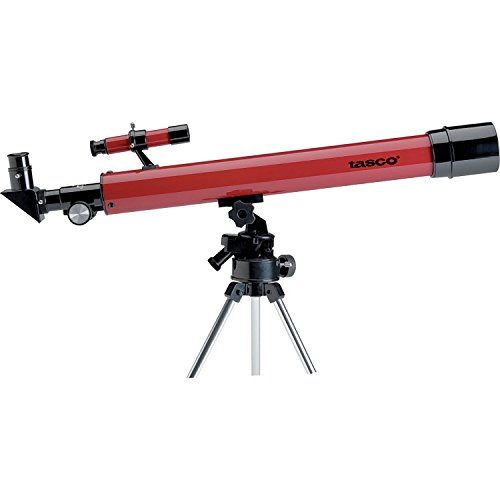 TOP CHOICEBest for simple beginner setupTasco Refractor Telescope (Novice)View on Amazon
- 3
 TOP CHOICEBest for moon and planet viewingCelestron PowerSeeker 60AZView on Amazon
- 4
 Best for a longer focal lengthTasco Spacestation 70x800mm Refractor AZView on Amazon
- 5
 Best for smartphone-guided learningCelestron StarSense Explorer LT 80AZView on Amazon
Our Top Picks
Quick Comparison
| Product | Best for | Key feature |
|---|---|---|
| Tasco Spacestation 600 x 50mm Refractor Telescope | Overall beginner use | Computerized-style Spacestation mount |
| Tasco Refractor Telescope (Novice) | Simple beginner setup | Straightforward alt-azimuth design |
| Celestron PowerSeeker 60AZ | Moon and planet viewing | 60mm objective with manual controls |
| Tasco Spacestation 70x800mm Refractor AZ | Longer focal length views | 800mm focal length, red dot finder |
| Celestron StarSense Explorer LT 80AZ | Smartphone-guided learning | App-based sky navigation |
Tasco Spacestation 600 x 50mm Refractor Telescope
Tasco Spacestation 600 x 50mm Refractor Telescope, Astronomy Telescope for Adults and Beginners, Black
Best for: Overall beginner use
This is a good starting point for adults and younger astronomers who want a Tasco-style refractor with an electronic guidance approach and a simple tripod setup.
Pros
- Compact enough to set up quickly on a backyard patio
- Familiar Tasco optics for first-time observers
Cons
- A 50mm aperture gathers less light than a 60mm model
Tasco Refractor Telescope (Novice)
Tasco Refractor Telescope (Novice)
Best for: Simple beginner setup
Suited to someone who wants the fewest steps between opening the box and the first look at the Moon. You may also like 5 Best 80mm Refractor Telescopes: Top Picks Compared for 2026.
Pros
- Minimal assembly and few parts to track
- Easy to aim using the included finder
Cons
- Limited magnification range for deep-sky targets
Celestron PowerSeeker 60AZ
Celestron PowerSeeker 60AZ Refractor Telescope for Moon & Planet Viewing | Larger 60mm Objective Lens, Bright Lunar & Planetary Views, Manual Alt-Azimuth Controls, Adjustable Tripod, Easy to Use
Best for: Moon and planet viewing
A good fit for observers whose main targets are the Moon, Jupiter and Saturn, and who are comfortable using manual alt-azimuth controls. Worth reading next: Tasco 600 X 50 Refractor Telescope Review: Is It Worth It?.
Pros
- 60mm objective gives bright lunar and planetary views
- Adjustable tripod and manual controls are easy to learn
Cons
- No automated object finding, so you will star-hop by hand
Tasco Spacestation 70x800mm Refractor AZ
TASCO Spacestation 70x800mm Refractor AZ with Variable LED Red Dot Finderscope Telescope, Black, one Size (49070800)
Best for: Longer focal length views
Works well for someone who wants a longer focal length and a red dot finderscope to line up targets quickly.
Pros
- 800mm focal length supports higher magnification
- Variable LED red dot finder helps with aiming
Cons
- Longer tube can feel less stable on a light tripod
Celestron StarSense Explorer LT 80AZ
Celestron StarSense Explorer LT 80AZ Smartphone Guided Refractor Telescope | Smartphone App Sky Navigation, Lightweight Manual Refractor Telescope, Perfect First Telescope, Great for Kids & Families
Best for: Smartphone-guided learning
Aimed at families and first-time observers who would rather learn the sky with an app than memorize star charts.
Pros
- Smartphone app helps identify what you are looking at
- 80mm objective collects more light than a 60mm model
Cons
- Relies on a phone and app, which adds a setup step
Buying Guide
Mount type
Alt-azimuth mounts move up-down and left-right and are the simplest to learn. Computerized or guided mounts can locate objects for you but add batteries and a calibration step.
Aperture
A 60mm objective is a modest light-gatherer, which is why it favors the Moon and bright planets. Larger apertures like 80mm show more detail on the same targets.
Focal length and magnification
Focal length sets the magnification you can reach with a given eyepiece. A longer tube gives higher power, but high power on a small scope quickly shows the limits of atmospheric steadiness.
Finder and aiming aids
A red dot finder makes it much faster to center an object than a small optical finder. Check whether the finder is included and whether it is adjustable.
Good picks for this: Tasco Spacestation 70x800mm Refractor AZ and Celestron StarSense Explorer LT 80AZ
FAQ
Is a 60mm refractor good for beginners?
Yes, for the Moon, bright planets and a few star clusters. Expect limited views of faint deep-sky objects such as galaxies and nebulae.
Do I need a computerized mount?
Not necessarily. Manual alt-azimuth mounts teach you the sky, while computerized mounts help you find objects faster but depend on batteries and alignment.
Related reading
- Tasco 60mm Refractor Telescope: 5 Best Picks Compared for 2026
- Tasco Spacestation Refractor Telescope Review: Is It Worth It?
- Tasco Spacestation 700x60mm Refractor Telescope: Setup and Use Guide
- Tasco Spacestation 60x700mm Refractor Telescope: 5 Best Picks Compared
- Tasco Refractor Telescope Manual: Setup Steps and Key Settings
About Claire Whitaker
Claire Whitaker is part of our editorial team and reviews and edits our telescopes & stargazing guides, checking product details against manufacturer specifications and owner feedback.
About the author
Claire Whitaker writes reviews and buying guides for Astronomy Site.