6 Best Light Pollution Filters for Binoculars Picks Compared (2026)
Compare 6 light pollution filters for binoculars, with specs, pros, cons and who each one suits, so you can pick a filter that sharpens faint deep-sky views.
 By Audrey Hayes
Updated November 25, 2026
 By Audrey Hayes
Updated November 2026
Shopping for a light pollution filter for binoculars can be confusing, because most filters are sold for telescope eyepieces or camera lenses, and binoculars use a different optical path. This list focuses on filters that thread onto or clip in front of common binocular and adapter setups, and it compares them on the criteria that matter most for observers under suburban or urban skies: how well they suppress sodium and mercury vapor glow, how much light they pass to keep stars bright, whether the coating is multi-layer for better contrast, how easily the filter mounts and stays put, and how well the frame suits everyday handling. Read the picks below, then match one to your sky and your binocular size.
Our top picks at a glance
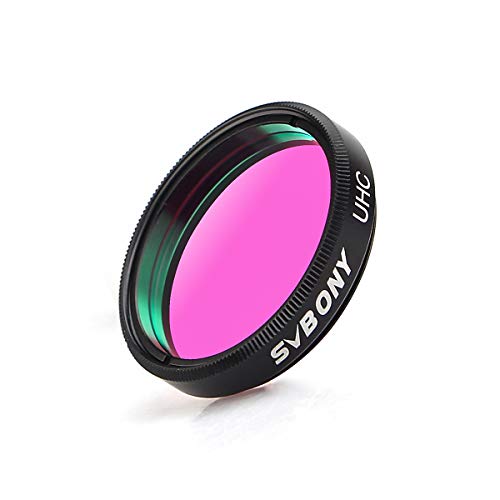
- 1TOP CHOICEBest overallSVBONY Telescope Filter, 1.25" UHC Filter Improve Contrast for TelescopeView on Amazon
- 2
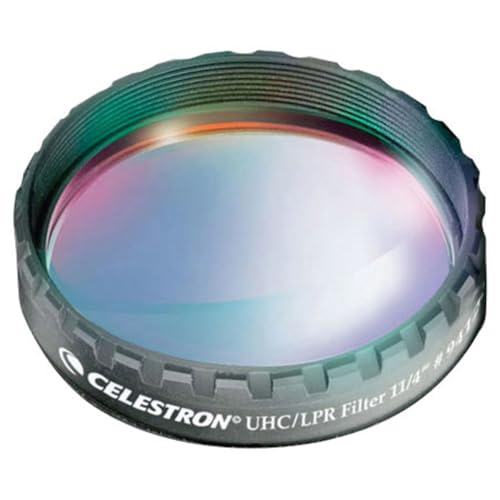 TOP CHOICEBest for nebula contrastCelestron UHC/LPR Light Pollution Reduction Filter for Telescopes – 1.25"View on Amazon
- 3
 TOP CHOICEBest for city viewingLight Pollution Filter 1.25" for City Viewing Light PollutionView on Amazon
- 4
 Best for larger objectivesK&F CONCEPT 67mm Clear Natural Night Filter Pollution ReductionView on Amazon
- 5
 Best for star clarityWalking Way 67mm Natural Night Filter for Light Pollution ReductionView on Amazon
- 6Best budget pickK&F CONCEPT 58mm Clear Natural Night Filter Pollution ReductionView on Amazon
Our Top Picks
Quick Comparison
| Product | Best for | Key feature |
|---|---|---|
| SVBONY Telescope Filter 1.25″ UHC | General light pollution viewing | UHC broadband coating, aluminum frame |
| Celestron UHC/LPR Light Pollution Reduction Filter 1.25″ | Nebula contrast | High transmission optical coating |
| Light Pollution Filter 1.25″ for City Viewing | City and suburban skies | Standard 1.25 inch thread |
| K&F CONCEPT 67mm Clear Natural Night Filter | Larger objectives and adapters | 28 multi-layer coatings, no color cast |
| Walking Way 67mm Natural Night Filter | Star clarity | Nano-coated optical glass |
| K&F CONCEPT 58mm Clear Natural Night Filter | Budget-conscious observers | 28 multi-layer coatings, compact 58mm size |
SVBONY Telescope Filter, 1.25″ UHC Filter Improve Contrast for Telescope
SVBONY Telescope Filter, 1.25" UHC Filter Improve Contrast for Telescope | Optical Glass Lens, Aluminum Frame, Astrophotography Filter, Light Pollution Filter Nebula Filters, Telescope Accessories
Best for: General light pollution viewing
This is a good first filter for observers who want broad suppression of artificial glow without a complicated setup. It suits people using a 1.25-inch eyepiece path or an adapter that accepts that thread size, and it works well for the common goal of brightening nebulae and open clusters under a suburban sky.
Key specs
- 1.25-inch filter thread
- UHC (ultra-high contrast) broadband coating
- Optical glass lens with aluminum frame
Pros
- Broad suppression of common street lighting
- Simple screw-in installation
- Aluminum frame feels sturdy in the hand
Cons
- Dims faint stars somewhat under very dark skies
- Only useful with 1.25-inch compatible setups
Bottom line: A sensible default for suburban observers who want one filter that handles most sky glow.
View on AmazonCelestron UHC/LPR Light Pollution Reduction Filter for Telescopes – 1.25″
Celestron UHC/LPR Light Pollution Reduction Filter for Telescopes – 1.25" | Light Pollution Reduction, Enhanced Nebula Contrast, Darker Sky Background, High Transmission Optical Coating, For Visual Us
Best for: Nebula contrast
This filter is aimed at observers who care most about nebula visibility under light-polluted skies. Its LPR design targets the specific emission lines of sodium and mercury lamps, which makes it a common choice for emission nebulae and planetary nebulae from city outskirts.
Key specs
- 1.25-inch thread
- UHC/LPR light pollution reduction design
- High transmission optical coating
Pros
- Strong nebula contrast boost
- Well-known brand with consistent quality
- Coating aimed at visual use
Cons
- Less useful for broadband galaxies than for nebulae
- Requires a 1.25-inch compatible setup
Bottom line: Best suited to observers chasing emission nebulae from light-polluted sites.
View on AmazonLight Pollution Filter 1.25″ for City Viewing Light Pollution
Light Pollution Filter 1.25" for City Viewing Light Pollution | Boosts for nebula contrast, blocks artificial light, enhances deep views, standard 1.25 inch thread
Best for: City and suburban skies
Designed for the bright-sky problem most urban observers face, this filter blocks a portion of artificial light while keeping the sky background darker. It fits people who mainly observe from town and want a straightforward, standard-thread accessory.
Key specs
- 1.25-inch standard thread
- Designed to block artificial light and boost nebula contrast
Pros
- Targets city glow directly
- Standard thread fits common eyepiece setups
- Simple to swap in and out
Cons
- Limited spec detail in the listing for independent comparison
- Less refined than premium multi-layer coatings
Bottom line: A practical choice for city observers who want a filter aimed squarely at urban glow.
View on AmazonK&F CONCEPT 67mm Clear Natural Night Filter Pollution Reduction
K&F CONCEPT 67mm Clear Natural Night Filter Pollution Reduction | 28 Multi-Layer Coatings Light Pollution Reduction Filter for Night City Sky Star Shots.No Color Cast Nano-X Series FE707
Best for: Larger objectives and adapters
This 67mm filter is for observers who use a larger front-mounted setup and want a neutral-looking view. The multi-layer coating is intended to reduce artificial light without a strong color cast, which many owners prefer for planetary and star-field observing.
Key specs
- 67mm filter diameter
- 28 multi-layer coatings
- Designed for natural night sky color rendering
Pros
- Multi-layer coating for contrast
- Neutral view with minimal color cast
- Large diameter suits bigger optics
Cons
- Requires an adapter that accepts 67mm threads
- Larger size is less convenient for small binoculars
Bottom line: The right pick for observers with 67mm-compatible optics who want neutral color.
View on AmazonWalking Way 67mm Natural Night Filter for Light Pollution Reduction
Walking Way 67mm Natural Night Filter for Light Pollution Reduction Nano-Coated Optical Glass for Night Sky/Astrophotography/Star Clarity Anti-Light Pollution Filter
Best for: Star clarity
This 67mm filter uses nano-coated optical glass and targets star clarity under light-polluted skies. It suits observers who mostly look at bright stars, double stars and star fields, where pinpoint sharpness matters more than maximum nebula boost.
Key specs
- 67mm filter diameter
- Nano-coated optical glass
- Natural night sky color design
Pros
- Nano coating aimed at star sharpness
- Natural color rendering
- Large diameter fits bigger front-end setups
Cons
- Needs a 67mm adapter path
- Less specific nebula targeting than dedicated UHC designs
Bottom line: Best for observers who prioritize star clarity over maximum nebula contrast.
View on AmazonK&F CONCEPT 58mm Clear Natural Night Filter Pollution Reduction
K&F CONCEPT 58mm Clear Natural Night Filter Pollution Reduction | 28 Multi-Layer Coatings Light Pollution Reduction Filter for Night City Sky Star Shots.No Color Cast Nano-X Series FE707
Best for: Budget-conscious observers
This 58mm version of the K&F design fits observers who want the same multi-layer approach in a smaller diameter. It works for smaller front-end setups and is a sensible entry point for people testing whether a light pollution filter suits their sky.
Key specs
- 58mm filter diameter
- 28 multi-layer coatings
- Natural night color design
Pros
- Multi-layer coating in a compact size
- Neutral color rendering
- Good starting point for a first filter
Cons
- Needs a 58mm-compatible adapter
- Less suited to very large front ends
Bottom line: A budget-friendly first step for observers whose optics accept 58mm threads.
View on AmazonBuying Guide
Filter type: UHC, LPR and broadband designs
Ultra-high contrast (UHC) and light pollution reduction (LPR) filters target the emission lines of common artificial lights, which helps emission nebulae stand out. Broadband designs suppress a wider slice of the spectrum and are often used for galaxies and general sky. Match the filter type to what you most want to see.
Good picks for this: SVBONY Telescope Filter 1.25″ UHC, Celestron UHC/LPR Light Pollution Reduction Filter 1.25″
Thread size and adapter compatibility
Check the filter thread before buying. 1.25-inch filters screw into standard eyepiece paths, while 58mm and 67mm filters need a matching adapter or front-mounted holder. Measure your existing thread diameter and confirm the adapter accepts it. Mismatched threads are the most common reason a filter sits unused.
Good picks for this: Light Pollution Filter 1.25″ for City Viewing, K&F CONCEPT 58mm Clear Natural Night Filter
Coating quality and light transmission
Multi-layer coatings are designed to balance light suppression with transmission. Manufacturers often describe high transmission coatings as a way to keep stars bright while reducing glow. Look for multi-layer or nano coatings if you want the best trade between darkness and brightness.
Good picks for this: K&F CONCEPT 67mm Clear Natural Night Filter, Walking Way 67mm Natural Night Filter
Color rendering and neutrality
Some filters tint the view, which can make the sky look green or magenta. Filters described as natural night or no color cast aim to keep the sky neutral. If you observe planets or star colors, a neutral filter helps you judge color accurately.
Good picks for this: K&F CONCEPT 67mm Clear Natural Night Filter, K&F CONCEPT 58mm Clear Natural Night Filter
Sky conditions and target type
Filter choice depends on your sky. Under heavy city glow, a UHC or LPR design usually helps nebulae most. Under suburban skies, a broadband natural night filter can be enough. Consider your typical targets: emission nebulae favor UHC designs, while star fields and clusters favor clarity-focused designs.
Good picks for this: Celestron UHC/LPR Light Pollution Reduction Filter 1.25″, Walking Way 67mm Natural Night Filter
Frame construction and durability
A metal frame protects the glass edges and resists flexing when you thread or unthread the filter. Aluminum frames are common on quality accessories. Filters with a solid frame are easier to handle in cold weather, when gloved fingers and stiff threads make a flimsy mount frustrating.
Good picks for this: SVBONY Telescope Filter 1.25″ UHC, Walking Way 67mm Natural Night Filter
Care and cleaning
Coated optical glass should be cleaned gently. Use a blower to remove dust, then a soft lens brush or microfiber cloth with a small amount of lens cleaning solution if needed. Avoid household cleaners and rough cloths, which can wear coatings over time. Store filters in a case to prevent scratches.
Good picks for this: Celestron UHC/LPR Light Pollution Reduction Filter 1.25″, K&F CONCEPT 58mm Clear Natural Night Filter
FAQ
Do light pollution filters work with binoculars?
Most light pollution filters are made for telescope eyepieces or camera lenses. Binoculars usually need a filter that threads onto an adapter or a front-mounted holder. Filters designed for 1.25-inch or 67mm threads can be used with compatible adapters, but you will need to confirm the thread size of your binoculars or adapter first.
Will a filter make stars dimmer?
Yes, to a degree. Light pollution filters block some light across specific wavelengths, which can slightly dim faint stars. Higher-transmission coatings reduce this loss. The trade-off is usually worth it under bright skies, where the filter raises the contrast of nebulae and clusters.
What is the difference between UHC and broadband filters?
UHC filters are designed to pass the emission lines of nebulae while blocking much of the artificial light spectrum. Broadband filters suppress a wider range of wavelengths and are often preferred for galaxies and general sky brightness. Both help under light-polluted skies, but they excel at different targets.
Can I use a light pollution filter in a dark-sky site?
You can, but you may see less benefit. Under truly dark skies, filters reduce faint-star brightness without much gain in sky darkness. Many observers keep a filter for suburban trips and remove it when observing from a dark site.
How do I know which thread size I need?
Measure the diameter of your binocular adapter or eyepiece path, or check the manufacturer’s specifications. Common sizes for filters include 1.25 inches, 58mm and 67mm. Confirm the thread before ordering, since mismatched sizes are the most common compatibility issue.
Are multi-layer coatings better than single-layer coatings?
Multi-layer coatings are generally designed to improve light transmission and suppress unwanted wavelengths more precisely than single-layer designs. Manufacturers often describe them as offering better contrast and color neutrality. Choose the coating type that suits your sky and targets.
Should I consult a professional about filter use?
For general observing, the filter guidance above is enough. Never point any optics at the sun without a proper solar filter, and if you have questions about eye safety or using optics with vision conditions, consult an eye-care professional or an experienced astronomy club.
Conclusion
For most suburban binocular observers, the SVBONY Telescope Filter 1.25″ UHC is a dependable starting point. Nebula hunters under heavy city glow should look at the Celestron UHC/LPR Light Pollution Reduction Filter 1.25″. Observers who want a filter aimed directly at urban sky glow can consider the Light Pollution Filter 1.25″ for City Viewing. For larger front-end setups that accept 67mm threads, the K&F CONCEPT 67mm and Walking Way 67mm designs suit neutral color and star clarity. The K&F CONCEPT 58mm is the practical choice when your optics take that size. Match the thread size first, then choose the coating type that fits your targets.
Sources
- Information on light pollution, its sources and how artificial lighting affects night skies
- Background on the night sky, astronomical observing and how atmospheric conditions affect visibility (nasa.gov)
- Guidance on outdoor lighting design and how lamp types affect light spill (energy.gov)
Before you buy: helpful guides
Related reading
- Top 3 Clip in Light Pollution Filters for DSLR and Mirrorless Cameras
- Polarizer Filter Light Pollution vs Narrowband: Which Should You Choose?
- Optolong Light Pollution Filter Compared: 6 Best Picks for 2026
About Audrey Hayes
Audrey Hayes is part of our editorial team and reviews and edits our telescopes & stargazing guides, checking product details against manufacturer specifications and owner feedback.
About the author
Audrey Hayes writes reviews and buying guides for Astronomy Site.