Top 6 Entry Level Cameras for Astrophotography Picks Compared (2026)
Compare six entry level camera for astrophotography options, from app-controlled smart telescopes to cooled and planetary cameras, with specs, pros, cons and bu
 By Colin Foster
Updated November 10, 2026
 By Colin Foster
Updated November 2026
Choosing an entry level camera for astrophotography means balancing sensor sensitivity, cooling, software and how much you want to do by hand. This list compares six options that span a range of approaches: an all-in-one smart telescope, color planetary cameras, a cooled deep-sky camera and a guide camera. Each pick was assessed against published specifications, brand reputation, and the patterns that appear in owner feedback, with the emphasis on how much setup each one demands and what kind of targets it suits.
Our top picks at a glance
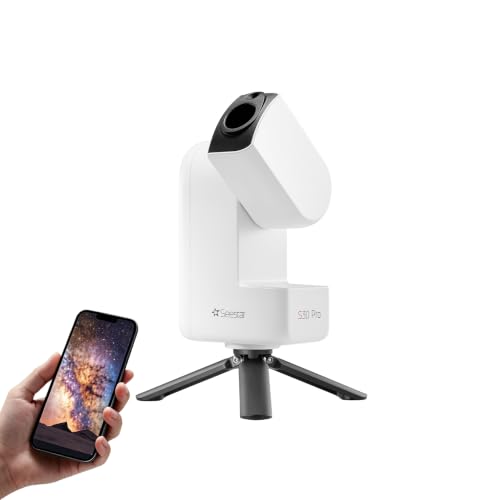
- 1TOP CHOICEBest overallZWO Seestar S30 Pro Smart Telescope, App-Controlled AstrophotographyView on Amazon
- 2
 TOP CHOICEBest for planetary imagingSVBONY SV305C Astrophotography Camera, 2.1MP IMX662 Color Telescope CameraView on Amazon
- 3
 TOP CHOICEBest for deep-sky on a budgetSVBONY SV405CC Astrophotography Camera, Cooled Telescope Eyepiece IMX294View on Amazon
- 4
 Best for portable travelDWARFLAB Dwarf 3 Smart Telescope, App-Controlled Astrophotography CameraView on Amazon
- 5
 Best for autoguidingSVBONY SV905C Guide Camera Telescope Eyepiece, 1.23MP CMOS SensorView on Amazon
- 6
 Best for high-resolution planets and moonSVBONY SV705C Telescope Camera Eyepiece, IMX585 USB 3.0 Astronomy CameraView on Amazon
Our Top Picks
| Product | Best for | Key feature |
|---|---|---|
| ZWO Seestar S30 Pro Smart Telescope | Beginners who want one-tap capture | 4K dual camera with auto tracking and GoTo |
| SVBONY SV305C Astrophotography Camera | Planetary and moon imaging | 2.1MP IMX662 color sensor with UV/IR cut glass |
| SVBONY SV405CC Astrophotography Camera | Deep-sky imaging on a tighter budget | Cooled IMX294 sensor with USB 3.0 |
| DWARFLAB Dwarf 3 Smart Telescope | Portable and travel use | Roughly 3 lb body with built-in processing |
| SVBONY SV905C Guide Camera Telescope Eyepiece | Autoguiding a mount | ST4 guide interface on a 1.23MP CMOS sensor |
| SVBONY SV705C Telescope Camera Eyepiece | High-resolution planetary work | IMX585 sensor in a 1/1.2″ frame |
ZWO Seestar S30 Pro Smart Telescope, App-Controlled Astrophotography
ZWO Seestar S30 Pro Smart Telescope, App-Controlled Astrophotography | 4K Dual Camera, Auto Tracking & GoTo, One-Tap Capture & Processing, Milky Way & Star Trail, Deep Sky & Wide-Field Imaging
Best for: Beginners who want one-tap capture
This is a complete smart telescope rather than a bare camera, aimed at people who want to go from unboxing to a processed image without learning a full acquisition chain. It suits anyone whose main interest is wide-field and deep-sky targets like nebulae and the Milky Way, and who would rather spend time looking at results than building a mount and laptop setup.
Key specs
- 4K dual camera system
- Automatic tracking and GoTo pointing
- One-tap capture with on-device processing
- Designed for Milky Way, star trail, deep-sky and wide-field imaging
Pros
- Minimal setup for a first session
- Automatic tracking reduces star trailing
- Processing happens in the app, so no separate stacking software is needed
Cons
- Limited control for users who want to tune every exposure
- Results depend on the app’s processing, which some experienced imagers prefer to replace
Bottom line: The right choice for someone who wants fast, good-looking results and is willing to trade manual control for convenience.
View on AmazonSVBONY SV305C Astrophotography Camera, 2.1MP IMX662 Color Telescope Camera
SVBONY SV305C Astrophotography Camera, 2.1MP IMX662 Color Telescope Camera | USB 2.0, with UV IR Cut Glass, 1.25" Entry-Level Electronic Telescope Eyepiece, for Planetary Moon Astrophotography & EAA
Best for: Planetary and moon imaging
This is a small USB camera that threads into a 1.25-inch eyepiece position, built for planetary work where short exposures and many frames are stacked. It fits a beginner who already owns a telescope and wants to capture the Moon, Jupiter or Saturn, and who is comfortable with a laptop and free stacking software.
Key specs
- 2.1MP IMX662 color sensor
- USB 2.0 connection
- 1.25-inch barrel with UV/IR cut glass
Pros
- Compact and simple to attach to an existing telescope
- UV/IR cut glass helps color balance on bright targets
- Low cost of entry for planetary imaging
Cons
- USB 2.0 limits frame rate compared with USB 3.0 models
- Not suited to long deep-sky exposures without a cooled sensor
Bottom line: A sensible first camera for planetary work for anyone who already has a telescope and mount.
View on AmazonSVBONY SV405CC Astrophotography Camera, Cooled Telescope Eyepiece IMX294
SVBONY SV405CC Astrophotography Camera, Cooled Telescope Eyepiece IMX294 | High-Sensitivity 4/3" Color Sensor 11.7MP USB 3.0 HCG Mode, Cooling Power Steady, Cooled Camera for Deep Sky Astrophotography
Best for: Deep-sky imaging on a tighter budget
A cooled color camera with a large 4/3-inch sensor, aimed at users who want to shoot faint nebulae and galaxies. It suits someone with a steady equatorial or tracking mount who is ready to learn dark frames, gain settings and stacking.
Key specs
- IMX294 sensor in a 4/3-inch format
- USB 3.0 interface
- Thermoelectric cooling to reduce thermal noise
Pros
- Cooling reduces amp glow and sensor noise on long exposures
- Large sensor gives a wide field of view at common focal lengths
- USB 3.0 supports fast frame downloads
Cons
- Needs a stable power supply and a mount that can track accurately
- Cooling adds setup steps and power draw in the field
Bottom line: Best for a beginner who has a solid mount and wants a cooled sensor for deep-sky targets.
View on AmazonDWARFLAB Dwarf 3 Smart Telescope, App-Controlled Astrophotography Camera
DWARFLAB Dwarf 3 Smart Telescope, App-Controlled Astrophotography Camera | Portable 3lb Design, 4K Auto-Tracking, AZ/EQ Modes, Built-in Processing, Astronomy Shooting, Wildlife and Panorama Imaging
Best for: Portable and travel use
A lightweight, self-contained smart telescope that can be carried to dark-sky sites in a bag. It suits a traveling observer who wants wildlife, panorama and astronomy shooting from one device without carrying a full rig.
Key specs
- Body weight stated at about 3 lb
- 4K auto-tracking
- AZ and EQ mounting modes
- Built-in image processing
Pros
- Very portable compared with a conventional telescope setup
- Supports both alt-azimuth and equatorial modes
- Handles non-astronomy subjects in addition to the night sky
Cons
- Small aperture limits faint deep-sky detail
- Battery and app dependence can be a constraint in remote locations
Bottom line: A good fit for a traveler who values portability and multi-purpose use over maximum deep-sky depth.
View on AmazonSVBONY SV905C Guide Camera Telescope Eyepiece, 1.23MP CMOS Sensor
SVBONY SV905C Guide Camera Telescope Eyepiece, 1.23MP CMOS Sensor, 1.25Inch | USB 2.0, ST4 Guide Interface, Astrophotography Camera, with AR-Coated, for Autoguiding or Planetary Imaging, Astrophotogra
Best for: Autoguiding a mount
A small monochrome-style guide camera that tracks a guide star and sends correction pulses to the mount. It suits someone who already has an imaging camera and wants to improve tracking for longer exposures.
Key specs
- 1.23MP CMOS sensor
- USB 2.0 interface
- ST4 guide port compatibility
- 1.25-inch barrel
Pros
- Inexpensive way to add autoguiding
- Works with standard ST4-equipped mounts
- Compact enough to ride on a guide scope
Cons
- Requires guiding software and a calibrated setup
- Guiding accuracy is only as good as the mount and polar alignment
Bottom line: Worth adding for anyone whose long exposures show star elongation, provided they are ready to learn guiding.
View on AmazonSVBONY SV705C Telescope Camera Eyepiece, IMX585 USB 3.0 Astronomy Camera
SVBONY SV705C Telescope Camera Eyepiece, IMX585 USB 3.0 Astronomy Camera | "1/1.2” Frame, Astronomy Camera, High Resolution Planetary Camera, for Moon, Saturn, Planets and Deep Sky Astrophotography "
Best for: High-resolution planetary work
A higher-resolution color camera built around the IMX585 sensor, aimed at planetary and lunar detail. It suits a beginner who has moved past casual viewing and wants sharp images of the Moon and planets.
Key specs
- IMX585 sensor in a 1/1.2-inch frame
- USB 3.0 interface
- Designed for planetary and deep-sky use
Pros
- High resolution suits fine lunar and planetary detail
- USB 3.0 supports rapid frame rates
- Works with common free stacking software
Cons
- Small sensor area limits its use for wide deep-sky fields
- Higher resolution means more data to store and process
Bottom line: A strong choice for planetary imagers who want more detail than a 2MP camera provides.
View on AmazonBuying Guide
Sensor type and size
Sensor size determines field of view and how much light each pixel collects. Larger sensors cover more sky at a given focal length, while smaller sensors favor planets and the Moon. Color sensors are convenient for quick results; monochrome sensors can gather more detail per exposure but require filters.
Good picks for this: SVBONY SV405CC Astrophotography Camera, SVBONY SV705C Telescope Camera Eyepiece
Cooling
Cooled sensors reduce thermal noise, which matters on exposures of a minute or longer. For short planetary captures, cooling is rarely needed. Check whether the camera needs a separate power source for its cooler, since that affects field use.
Good picks for this: SVBONY SV405CC Astrophotography Camera
Interface and frame rate
USB 2.0 is adequate for slow capture, while USB 3.0 handles higher frame rates needed for planetary video stacking. Confirm your laptop has a USB 3.0 port before choosing a USB 3.0 camera, and use a good cable for stable transfer.
Good picks for this: SVBONY SV705C Telescope Camera Eyepiece, SVBONY SV305C Astrophotography Camera
Telescope and mount compatibility
Most standalone cameras here thread into a 1.25-inch eyepiece position, so check your focuser and whether you have a diagonal or adapter. Mount accuracy limits exposure length, so a tracking mount is essential for deep-sky work.
Good picks for this: SVBONY SV905C Guide Camera Telescope Eyepiece, SVBONY SV305C Astrophotography Camera
All-in-one versus modular setups
Smart telescopes bundle optics, tracking and processing, which shortens the learning curve. Modular cameras give you control and upgrade paths but require more knowledge of acquisition and stacking. Decide which trade-off matches your patience.
Good picks for this: ZWO Seestar S30 Pro Smart Telescope, DWARFLAB Dwarf 3 Smart Telescope
Portability and power
If you observe from remote sites, weight and battery life matter. Count your gear as one bag and plan for a power source for a full session, including cooling if applicable.
Good picks for this: DWARFLAB Dwarf 3 Smart Telescope
Software and processing
Plan on free stacking tools for planetary and deep-sky frames, or rely on an app’s built-in processing. Either way, budget time to learn dark and flat frames, which improve results more than most hardware upgrades.
Good picks for this: ZWO Seestar S30 Pro Smart Telescope, SVBONY SV405CC Astrophotography Camera
FAQ
What is the best entry level camera for astrophotography?
There is no single answer. A smart telescope suits beginners who want fast results, a color planetary camera suits Moon and planet imaging, and a cooled camera suits deep-sky work on a good mount.
Do I need a cooled camera to start?
No. Planetary and lunar imaging uses short exposures where cooling makes little difference. Cooling becomes useful for longer deep-sky exposures.
Can I use any of these with my existing telescope?
The standalone cameras fit a 1.25-inch eyepiece position. Confirm your telescope’s focuser and whether you need a diagonal or adapter before buying.
Do I need a guide camera?
If your mount cannot track accurately for the length of your exposures, autoguiding helps. Many beginners start without it and add one after noticing star trailing.
Is a smart telescope better than a separate camera?
It depends on your goals. Smart telescopes simplify capture and processing but offer less control than a modular setup with a dedicated camera and mount.
What software do I need?
Free stacking and capture programs are common for planetary and deep-sky imaging. Smart telescopes handle processing inside their own apps.
Conclusion
For a complete beginner who wants results quickly, the ZWO Seestar S30 Pro Smart Telescope is the most self-contained option. For planetary and lunar work, the SVBONY SV305C and SV705C suit different levels of detail and budget. For deep-sky imaging on a solid mount, the cooled SVBONY SV405CC is the strongest of the group, and the SV905C guide camera adds tracking accuracy to any setup. The DWARFLAB Dwarf 3 fits travelers who value portability above all.
Sources
- Background on planetary and lunar observing targets and how they appear through telescopes (nasa.gov)
- Resources from the American Astronomical Society on amateur observing and astronomy education
- Introductory guidance on telescopes, observing and night sky photography
Related reading
- iPhone Camera Settings for Astrophotography: A Step-by-Step Guide
- iPhone Camera App for Astrophotography: Settings, Steps and Setup Tips
- iPhone 13 Camera Astrophotography: Step-by-Step Guide to Night Sky Shots
About Colin Foster
Colin Foster is part of our editorial team and reviews and edits our telescopes & stargazing guides, checking product details against manufacturer specifications and owner feedback.
About the author
Colin Foster writes reviews and buying guides for Astronomy Site.