Celestron Cgx Computerized German Equatorial Mount (2026): Pros, Cons & Verdict
Thinking about the celestron cgx computerized german equatorial mount? See its specs, GoTo tracking, payload limits and who it suits before you buy.
 By Colin Foster
Updated November 23, 2026
 By Colin Foster
Updated November 2026
The celestron cgx computerized german equatorial mount is a mid-to-heavy duty GoTo mount aimed at observers who want to carry a larger optical tube than a basic alt-azimuth mount can handle, and who also want the stable tracking that a German equatorial design provides for long exposures or high-power visual work. It suits people with a serious refractor or a larger Schmidt-Cassegrain who plan to set up in one place and observe or image for hours. It is a poor fit for anyone who needs a lightweight, quick-to-transport rig, or for beginners who only want to look at the Moon and bright planets with a small scope.
Celestron CGX Computerized German Equatorial Mount & Tripod, 55lb Payload | Telescope Mount with 55 lb Payload Capacity, Precision GoTo Performance, Belt-Drive Tracking System, Heavy-Duty Tripod
Product Overview
The CGX is sold as a complete package: a computerized German equatorial mount head, a tripod, and a 55 lb payload rating listed in the product title. Celestron positions it as a step up from its smaller equatorial mounts, with a belt-drive tracking system and a GoTo handset that can slew the telescope to objects in a computerized catalog. The mount is built for observers who already own, or plan to buy, an optical tube in the medium to large range and want a single platform that handles both visual and photographic work.
A German equatorial mount differs from an alt-azimuth design in one important way. Its polar axis is tilted to point at the celestial pole, so the telescope tracks the sky along a single axis to compensate for Earth’s rotation. That makes it far easier to follow a deep-sky object for minutes at a time without field rotation, which is why imagers have historically favored this style. For visual users, the same geometry means you can track a planetary or lunar target at high magnification without constant manual nudging. If you want a plain-language explanation of the geometry, the site’s guide What Is an Equatorial Telescope Mount? How It Works and Why It Matters covers it in more detail.
The GoTo system is the main reason many buyers consider this model. Once the mount is polar aligned and the handset is given a few alignment stars, it can point the telescope at catalog objects and track them. The accuracy of that pointing depends heavily on how well the mount was set up, which is one reason the setup routine matters as much as the hardware itself.
Key Features & Specifications
The table below lists only the specifications that are clearly stated in the product name or are well documented for this model family. Confirm any figure against the current manufacturer documentation before you buy, since specifications and bundled accessories can change between production runs.
| Feature | What It Means for You |
|---|---|
| Payload capacity: 55 lb | Rated for a fairly large optical tube plus accessories. Stay well under the rating if you want good tracking and low vibration. |
| Mount type: computerized German equatorial | Polar axis tracks the sky along one axis, which suits long exposures and smooth visual tracking. |
| GoTo capability | Handset-driven pointing to catalog objects after alignment. |
| Belt-drive tracking system | Transfers motor drive through belts rather than direct gearing, which owners often describe as quieter in operation. Belt systems can show some backlash, so it is worth checking after setup. |
| Heavy-duty tripod included | A sturdier base than lightweight included tripods, important for stability at higher payloads. |
| Form factor | Heavy and not designed for frequent transport; best suited to a permanent or semi-permanent observing spot. |
For readers comparing this mount with its siblings, the site’s roundup of Celestron Equatorial Mount Telescope: 6 Best Picks Compared for 2026 puts the CGX in context with other Celestron options.
Pros & Cons
Pros
- The 55 lb payload rating gives room for mid-to-large optical tubes that smaller mounts cannot carry steadily.
- German equatorial geometry allows single-axis tracking, which is well suited to imaging and high-power planetary viewing.
- GoTo pointing saves considerable time finding faint deep-sky objects once the alignment is good.
- The heavy-duty tripod is a meaningful step up in stability over basic included tripods.
- Belt-drive tracking is often reported by owners as quieter than some gear-driven alternatives.
Cons
- The setup is heavier and more involved than an alt-azimuth mount, and it takes practice to polar align well.
- Weight makes it difficult to move between observing sites on a regular basis.
- GoTo accuracy depends on careful alignment; a sloppy setup can leave targets off-center in the eyepiece.
- Beginners buying a small telescope will likely be paying for capacity they never use.
- Belt-driven systems may need occasional adjustment or maintenance as they age.
Performance Analysis
On paper, the CGX earns its reputation through its payload rating and its tracking design. A German equatorial mount with a generous capacity is less likely to suffer from the vibration and drift that plague overloaded mounts, and that matters most when you are imaging. Long exposures demand that the mount track smoothly for minutes at a time, and the single-axis design helps here. Owners of comparable German mounts commonly note that the tracking quality depends more on polar alignment accuracy and balance than on the mount’s headline rating, so budgeting time for those steps pays off.
Visual performance follows a similar pattern. At high magnification, a planetary target drifts quickly in a poorly tracked scope, and a well-aligned German mount keeps Jupiter or Saturn centered with far less correction than an alt-azimuth mount requires. The GoTo function adds convenience for deep-sky hunting, though its accuracy degrades if the polar alignment is rough or if the balance is off. Owner feedback across German GoTo mounts often points to balance as an overlooked factor: an imperfectly balanced tube strains the drive and reduces tracking precision.
Portability and setup time are the trade-offs. The tripod and head are heavy, and a full setup involves leveling, polar alignment, balancing, and alignment of the GoTo handset. Expect the first few sessions to take considerably longer than later ones. Owner reports also suggest that the belt-drive system is generally quiet, which is appreciated during quiet evening observing, though it should be inspected periodically for slack or wear.
Who Should Buy This Product?
The CGX makes the most sense for an observer who already has, or intends to buy, a medium-to-large optical tube and wants a stable, GoTo-enabled platform that can handle either visual observing or astrophotography. It is especially suited to imagers who plan to take guided long exposures from one spot, and to visual observers who spend time on high-magnification planetary work. Anyone who expects to set up at a dark-sky site a few hours away each weekend should think carefully about the weight and setup time before committing.
It is less suitable for beginners who only own a small refractor or a compact reflector, because the mount’s capacity will sit mostly unused and the setup routine may feel out of proportion to the telescope. Those buyers usually get better value from a lighter mount. Readers who want a lighter, more portable alternative should review the site’s guide to 5 Best Manual German Equatorial Mount Options for Beginners (2026), which covers simpler options.
Buying Guide
Before buying any German equatorial mount, match its payload rating to your optical tube and accessories, then keep the total well below the stated capacity. Add together the tube, the eyepieces, a camera if you image, and any finder or guide scope. Many experienced observers recommend staying comfortably under the rated limit so the mount tracks smoothly and vibrations settle quickly.
Think about where you will observe. A permanent pier or a dedicated backyard setup can tolerate a heavy mount, while a mount that goes into a car every weekend should be lighter. Check whether your observing site has a clear view of the celestial pole, because a German mount must be polar aligned, and an obstructed pole view complicates the process. The article on German Equatorial Mount Comparison (2026): Which Should You Choose? walks through these trade-offs in more depth.
You may also want to compare this model directly with other well-known options. The following alternatives are worth a look, depending on your priorities:
- Celestron CGX-L Heavy-Duty German EQ Mount with counterweights, a step up for users who need a higher capacity and included counterweights for heavier loads.

Celestron CGX-L Heavy-Duty German EQ Mount & Counterweights, 75 lb Payload | 75 lb Payload Capacity, Precision GoTo German Equatorial Mount, Built for Advanced Astrophotography, Includes Counterweight
- Celestron CGX 9.25″ EdgeHD Flat-Field Telescope with computerized EQ mount, a complete package for observers who want a matched optical tube and mount in one purchase.
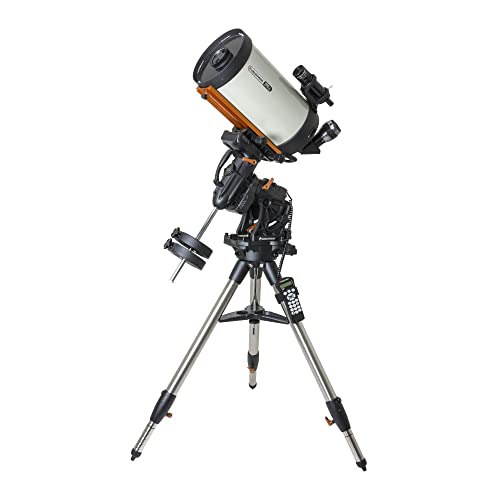
Celestron CGX 9.25" EdgeHD Flat-Field Telescope & Computerized EQ Mount | Enhanced Contrast, Flat-Field Performance, Ideal for Deep-Sky Imaging, GoTo German Equatorial Mount, Versatile Focal Ratios
If you are still weighing budget mounts against premium designs, the roundup at Top 5 Goto German Equatorial Mount Picks for Every Observer gives a broader view of the field.
FAQ
Is the celestron cgx computerized german equatorial mount good for beginners?
It can be, but only if the beginner already owns a telescope in the mount’s payload range. The setup is more involved than a simple alt-azimuth mount, so new users should expect a learning curve around polar alignment and GoTo alignment.
What does the 55 lb payload rating mean in practice?
It is the maximum combined weight the manufacturer rates the mount to carry. For steady tracking, most experienced users keep the total load well below that figure, accounting for the tube, eyepieces, cameras and accessories.
Do I need to polar align a German equatorial mount?
For accurate tracking, yes. Polar alignment points the mount’s axis at the celestial pole, and the closer the alignment, the better the tracking and GoTo pointing will be over an observing session.
Can this mount be used for astrophotography?
Its German equatorial design is well suited to imaging, since single-axis tracking helps during long exposures. Successful imaging also depends on balance, polar alignment, and sometimes autoguiding equipment, which are separate from the mount itself.
How heavy is the setup, and is it easy to transport?
The mount and tripod are heavy and bulky, so the CGX is best kept at a fixed observing location. Owners who move their equipment often tend to find the weight a real constraint.
Does the belt-drive system require maintenance?
Belt systems should be checked periodically for slack, wear and proper tension. Owners commonly recommend inspecting the belts as part of routine maintenance rather than waiting for a tracking problem to appear.
Should I buy a telescope with this mount or the mount alone?
If you already own a suitable optical tube, the mount alone may be enough. If you are starting from scratch, a bundle with a matched tube can simplify compatibility, provided the combined weight stays within the rated payload.
Final Verdict
The celestron cgx computerized german equatorial mount is a solid choice for observers who already have a mid-to-large optical tube and want stable, GoTo-assisted tracking for both visual and imaging work. Its 55 lb payload rating, German equatorial geometry and heavy-duty tripod give it room to grow with your gear. The trade-offs are weight, setup time and the need to master polar alignment. If you plan to observe from one reliable location and value stable tracking, it deserves a place on your shortlist. If you need something light and portable, look at the lighter alternatives described above instead. View on Amazon
About Colin Foster
Colin Foster is part of our editorial team and reviews and edits our telescopes & stargazing guides, checking product details against manufacturer specifications and owner feedback.
About the author
Colin Foster writes reviews and buying guides for Astronomy Site.