5 Best Monochrome Astrophotography Cameras for Deep-Sky Imaging (2026)
Compare the best monochrome astrophotography camera options for deep-sky imaging, from cooled sensors to all-in-one guide setups, with pros, cons and buying tip
 By Colin Foster
Updated November 22, 2026
 By Colin Foster
Updated November 2026
The best monochrome astrophotography camera for you depends on your telescope, your imaging targets and how much of the work you want the camera to handle. Monochrome sensors have no color filter array, so every pixel records full resolution and sensitivity, which matters when you are stacking faint nebulae through narrowband or LRGB filters. The picks below were chosen by comparing manufacturer specifications, brand reputation and common owner feedback on sensor size, cooling, interface and included accessories.
Our top picks at a glance
- 1TOP CHOICEBest overallZWO ASI294MM-Pro 11.7 Megapixel USB3.0 Monochrome Astronomy CameraView on Amazon
- 2
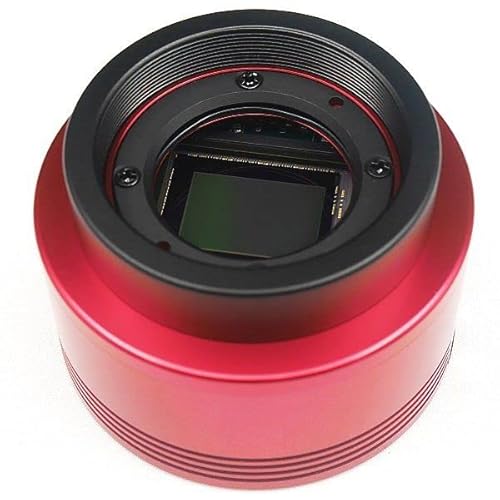 TOP CHOICEBest for budget-minded imagersZWO ASI294MM 11.7 Megapixel USB3.0 Monochrome Astronomy CameraView on Amazon
- 3
 TOP CHOICEBest for small scopes and guidingZWO ASI174MM-MINI 2.1 MP CMOS Monochrome Astronomy CameraView on Amazon
- 4
 Best for all-in-one setupsZWO ASI585MM AIR Cooled Monochrome Astronomy Camera w/Built-in Guide CameraView on Amazon
- 5
 Best for color-capable cooled imagingSVBONY SV405CC Astrophotography Camera, Cooled IMX294 Color SensorView on Amazon
Our Top Picks
Quick Comparison
| Product | Best for | Key feature |
|---|---|---|
| ZWO ASI294MM-Pro | Deep-sky imaging with a cooled sensor | Large 4/3-inch monochrome sensor |
| ZWO ASI294MM | Budget-minded deep-sky work | Same sensor, simpler configuration |
| ZWO ASI174MM-MINI | Small scopes and guide duty | Compact body, USB 2.0 |
| ZWO ASI585MM AIR | All-in-one setups with a laptop or ASIAir | Built-in guide camera |
| SVBONY SV405CC | Cooled imaging with color capability | IMX294 sensor, HCG mode |
ZWO ASI294MM-Pro 11.7 Megapixel USB3.0 Monochrome Astronomy Camera
ZWO ASI294MM-Pro 11.7 Megapixel USB3.0 Monochrome Astronomy Camera for Astrophotography
Best for: Deep-sky imaging with a cooled monochrome sensor
This model suits imagers who want a large sensor and active cooling for long exposures on galaxies and nebulae. Manufacturers specify USB 3.0 data transfer and a 4/3-inch format.
Pros
- Large sensor area for wide fields at common focal lengths
- USB 3.0 transfer keeps frame downloads quick
Cons
- Needs a stable power source and a cooling-aware setup
ZWO ASI294MM 11.7 Megapixel USB3.0 Monochrome Astronomy Camera
ZWO ASI294MM 11.7 Megapixel USB3.0 Monochrome Astronomy Camera for Astrophotography
Best for: Budget-minded deep-sky imaging
This listing shares the same sensor family as the Pro model and suits imagers who want the same core imaging performance with a simpler configuration. Owners often report that it pairs well with narrowband filter sets.
Pros
- Same 11.7 MP monochrome sensor family
- Straightforward setup for first deep-sky projects
Cons
- Fewer bundled extras than higher-end kits
ZWO ASI174MM-MINI 2.1 MP CMOS Monochrome Astronomy Camera
ZWO ASI174MM-MINI 2.1 MP CMOS Monochrome Astronomy Camera with USB 2.0# ASI174MM-MINI
Best for: Small scopes and guide duty
This compact camera fits anglers of small refractors and guide scopes who need a light, low-profile body. Its lower resolution suits planetary work and autoguiding more than wide deep-sky fields.
Pros
- Small body that balances well on lightweight scopes
- Well suited to guiding and planetary imaging
Cons
- USB 2.0 transfer is slower for large frame sets
ZWO ASI585MM AIR Cooled Monochrome Astronomy Camera w/Built-in Guide Camera
ZWO ASI585MM AIR Cooled Monochrome Astronomy Camera w/Built-in Guide Camera & ASIAir with Power Supply
Best for: All-in-one setups with a laptop or ASIAir
This kit bundles a cooled monochrome camera with a built-in guide camera and power supply, which appeals to imagers who want fewer cables and less setup. It is aimed at people already running a controller or dedicated capture computer.
Pros
- Built-in guide camera reduces extra hardware
- Includes power supply for a ready-to-run kit
Cons
- Works best with an ASIAir or similar controller, which adds to the overall setup
SVBONY SV405CC Astrophotography Camera, Cooled IMX294 Color Sensor
SVBONY SV405CC Astrophotography Camera, Cooled Telescope Eyepiece IMX294 | High-Sensitivity 4/3" Color Sensor 11.7MP USB 3.0 HCG Mode, Cooling Power Steady, Cooled Camera for Deep Sky Astrophotography
Best for: Cooled imaging with color capability
This model is included for imagers who want a cooled camera with a color option and an HCG mode for high-gain work. Note that it is a color camera, so choose it only if you specifically want that workflow over a monochrome sensor.
Pros
- Cooled IMX294 sensor for deep-sky exposures
- HCG mode is useful for high-gain imaging
Cons
- Color sensor is not a true monochrome option
Buying Guide
Sensor size and pixel scale
Match the sensor to your telescope’s focal length so each pixel samples the sky at a useful scale. Larger sensors cover more sky, while small sensors suit guiding and planetary work. You may also like 6 Best Color Astrophotography Cameras for Deep-Sky Imaging (2026).
Cooling
Cooled sensors reduce thermal noise during long exposures. Uncooled cameras can still work for bright targets and short subs.
Interface and transfer speed
USB 3.0 handles large frame sets more comfortably than USB 2.0. Check that your computer and cable support the interface you choose.
FAQ
Do I need a monochrome camera for deep-sky imaging?
You do not strictly need one, but a monochrome camera is the standard choice for serious deep-sky work. Because it has no color filter array, every pixel records full resolution and light sensitivity, and you can shoot through narrowband or LRGB filter sets to build color images from separate exposures.
Is cooling really necessary for astrophotography?
Cooling reduces thermal noise, which becomes a real problem during long exposures. A cooled camera holds a steady sensor temperature, which makes dark frame calibration more consistent across a night and across sessions. Uncooled cameras can still work well for planetary imaging and short-exposure guiding.
What is the difference between a guide camera and an imaging camera?
An imaging camera records the actual target, while a guide camera tracks a star to correct small tracking errors from your mount during long exposures. Some cameras include a built-in guide sensor, which can simplify setup and reduce the number of cables and components you need to manage.
Can I use a monochrome camera with a regular telescope?
Yes, as long as the camera’s sensor size and pixel scale suit your telescope’s focal length and your mount’s tracking accuracy. You will also need a filter wheel or individual filters if you plan to shoot color images, and a computer or dedicated controller to run the capture software.
How do I choose between a larger sensor and a smaller one?
Larger sensors cover a wider field of view, which suits big targets like wide nebulae and galaxies, but they also require more imaging circle from your optics. Smaller sensors give a tighter field and are often better for small targets, planets, or telescopes with longer focal lengths. Matching the sensor to your scope matters more than chasing the largest chip.
Do I need a color camera if I want color images?
Not necessarily. Many astrophotographers prefer monochrome cameras with filters because the result is sharper and more sensitive, and the color is assembled in processing. A color camera is simpler to use and can be a good starting point if you want quick results without managing filters.
Conclusion
If you want the most capable setup for deep-sky imaging and plan to use narrowband or LRGB filters, the higher-resolution cooled monochrome models are the strongest fit. They suit imagers who are willing to invest in a complete rig and want flexibility for years of projects.
For beginners, budget-minded buyers or anyone who wants a simpler path to color images, a smaller or color-sensor option is a practical starting point. Choose based on your telescope’s focal length, your mount’s accuracy and the kind of targets you most want to photograph.
Related reading
- Zwo Asi178mm Monochrome Cmos Astrophotography Camera: Setup and Use Guide (2026)
- Zwo Asi120mm-s Monochrome Cmos Astrophotography Camera: Setup and Use Guide
- What Is the Best Nikon Camera Lens for Astrophotography? Top Picks
- Top 7 Deep Sky Astrophotography Cameras for Serious Imaging in 2026
- Top 6 Entry Level Cameras for Astrophotography Picks Compared (2026)
About Colin Foster
Colin Foster is part of our editorial team and reviews and edits our telescopes & stargazing guides, checking product details against manufacturer specifications and owner feedback.
About the author
Colin Foster writes reviews and buying guides for Astronomy Site.