4 Best APS-C Cameras for Astrophotography Compared (2026)
Looking for the best APS-C camera for astrophotography? We compare four options for deep-sky and wide-field imaging, with specs, pros, cons, and who each one su
 By Colin Foster
Updated November 10, 2026
 By Colin Foster
Updated November 2026
Choosing the best APS-C camera for astrophotography comes down to a few practical questions: does the sensor capture faint nebulae without excessive noise, can you run it on a telescope or only on a tripod, and does the camera stay cool and dew-free through a long night? This guide compares four APS-C options that cover the main ways people image the night sky, from dedicated cooled astronomy cameras to a beginner-friendly DSLR kit. The selection criteria were sensor size and type, cooling, telescope compatibility, software support, and the patterns that owners tend to report after extended use.
Our top picks at a glance
- 1TOP CHOICEBest overallSVBONY SC571CC Cooled Color Astronomy CameraView on Amazon
- 2
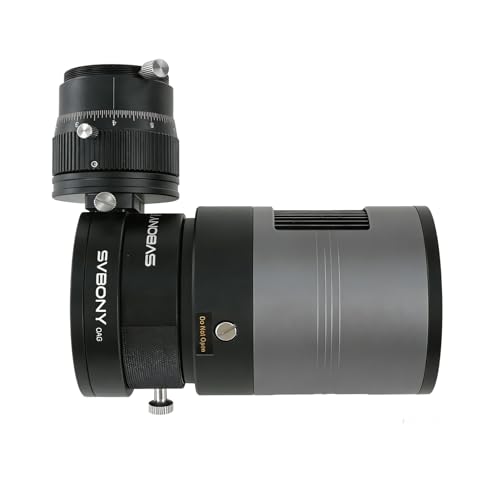 Best for a full deep-sky setupSVBONY Deep-Sky Master SC571CC Camera and SV238 OAGView on Amazon
- 3
 Best for beginners on a budgetCanon EOS Rebel T7 DSLR Camera Double Zoom Lens KitView on Amazon
- 4
 Best complete telescope kitSVBONY SC571CC and SV555 Astrophotography KitView on Amazon
Our Top Picks
Quick Comparison
| Product | Best for | Key feature |
|---|---|---|
| SVBONY SC571CC Cooled Color Astronomy Camera | Cooled deep-sky imaging with a single camera | Front-window glass heater against dew |
| SVBONY Deep-Sky Master SC571CC Camera and SV238 OAG | Guided long-exposure deep-sky work | Off-axis guider with M48 filter drawer |
| Canon EOS Rebel T7 DSLR Camera Double Zoom Lens Kit | Beginners learning wide-field night photography | Two-lens kit with Wi-Fi and Full HD video |
| SVBONY SC571CC and SV555 Astrophotography Kit | Buyers who want camera, telescope, and accessories in one package | 54mm Petzval APO telescope paired with the cooled camera |
SVBONY SC571CC Cooled Color Astronomy Camera
SVBONY SC571CC Cooled Color Astronomy Camera, IMX571 CMOS APS-C Sensor | Front-Window Glass Heater, Prevent Dew and Condensation, USB 3.0 TypeC, High Resolution Telescope Camera for Astrophotography
Best for: Cooled deep-sky imaging with a single camera
This suits imagers who already own a telescope and want a dedicated, cooled APS-C astronomy camera rather than a general-purpose DSLR. It is built around the Sony IMX571 CMOS sensor, a commonly used APS-C chip in astronomy cameras.
Key specs
- IMX571 CMOS APS-C sensor
- Cooled sensor for reduced thermal noise
- Front-window glass heater to prevent dew and condensation
- USB 3.0 Type-C connection
Pros
- Cooling helps keep noise down during long exposures.
- The window heater addresses one of the most common field problems, dew on the glass.
- USB 3.0 supports fast frame transfer for stacking workflows.
Cons
- Requires a computer and capture software, which adds setup time.
- Needs a telescope or lens with a suitable image circle and back focus.
Bottom line: A strong choice for imagers who want cooled performance and already have optics. Beginners without a telescope may want a simpler kit.
View on AmazonSVBONY Deep-Sky Master SC571CC Camera and SV238 OAG
SVBONY Deep-Sky Master SC571CC Camera and SV238 OAG with M48 Filter Drawer | IMX571 APS-C Cooled Astronomy Camera, SV238 Off-Axis Guider with M48 Filter Drawer, Dual Helical Focuser for Astrophotograp
Best for: Guided long-exposure deep-sky work
This bundle suits imagers who plan to guide their mount during long exposures and want a camera paired with an off-axis guider. The guider lets a guide camera read a star from the same light path as the imaging camera, which is useful when fine tracking matters.
Key specs
- IMX571 APS-C cooled astronomy camera
- SV238 Off-Axis Guider with M48 filter drawer
- Dual helical focuser support
Pros
- The off-axis guider removes the need for a separate guide scope in many setups.
- The M48 filter drawer lets you add narrowband or light-pollution filters without extra adapters.
- Pairs a cooled sensor with a guiding solution in one purchase.
Cons
- Off-axis guiding has a learning curve, and setup takes patience.
- Adds components that need to be aligned and balanced on your mount.
Bottom line: Best for imagers committed to guided deep-sky imaging. If you are new to astrophotography, start with a simpler setup and add the guider later.
View on AmazonCanon EOS Rebel T7 DSLR Camera Double Zoom Lens Kit
Canon EOS Rebel T7 DSLR Camera Double Zoom Lens Kit | EF-S 18-55mm & EF 75-300mm Lenses, 24.1 Megapixel CMOS (APS-C) Sensor, Full HD Videos, Wi-Fi, Beginner Photographers
Best for: Beginners learning wide-field night photography
This is a general-purpose APS-C DSLR rather than a dedicated astronomy camera. It suits people who want to photograph the Milky Way, star trails, and night landscapes on a tripod with a standard lens, without needing a telescope.
Key specs
- 24.1 megapixel APS-C CMOS sensor
- EF-S 18-55mm and EF 75-300mm lenses included
- Full HD video and Wi-Fi
Pros
- Two lenses cover wide and moderate telephoto framing for night scenes.
- Canon’s EF lens mount offers a wide range of lenses for later upgrades.
- Simple controls suit people new to manual exposure.
Cons
- The sensor is not cooled, so long exposures can show more thermal noise.
- The kit zoom lenses are not especially fast, which limits how much light they gather.
Bottom line: A practical entry point for wide-field Milky Way and landscape work. Deep-sky imagers will eventually want a cooled camera and a faster lens.
View on AmazonSVBONY SC571CC and SV555 Astrophotography Kit
SVBONY SC571CC and SV555 Astrophotography Kit with SV241 Pro and SV238 | IMX571 CMOS APS-C Telescope Camera with 54mm Petzval APO Telescope, with SV241 Pro Power Box and SV238 Off-Axis Guider
Best for: Buyers who want camera, telescope, and accessories in one package
This kit is aimed at people who would rather buy a matched set than assemble optics, power, and guiding components separately. It combines the cooled IMX571 camera with a 54mm Petzval APO telescope, a power box, and an off-axis guider.
Key specs
- IMX571 CMOS APS-C telescope camera
- 54mm Petzval APO telescope
- SV241 Pro power box and SV238 Off-Axis Guider
Pros
- Components are sold as a set, which reduces compatibility guesswork.
- The power box centralizes power for the camera and accessories.
- A petzval-style APO telescope is a common choice for wide-field deep-sky work.
Cons
- A fixed package offers less flexibility if you already own some equipment.
- You still need a sturdy mount and a computer for capture and processing.
Bottom line: Suits imagers building a complete system from scratch. Owners with existing optics may prefer the camera-only options.
View on AmazonBuying Guide
Sensor Type and Size
APS-C sensors are larger than micro four-thirds but smaller than full frame, and they offer a useful balance of light gathering, field of view, and cost of optics. For deep-sky work, look for a sensor with low read noise and good quantum efficiency. Many astronomy cameras use the Sony IMX571, which is widely used in this category.
Good picks for this: SVBONY SC571CC Cooled Color Astronomy Camera, Canon EOS Rebel T7 DSLR Camera Double Zoom Lens Kit
Cooling
Sensor cooling reduces thermal noise, which becomes more visible in long exposures of faint targets. Cooled astronomy cameras typically offer this feature, while most DSLRs do not. If you plan exposures of several minutes, cooling is worth prioritizing.
Good picks for this: SVBONY SC571CC Cooled Color Astronomy Camera, SVBONY Deep-Sky Master SC571CC Camera and SV238 OAG
Dew Control
Dew forms on optics when the temperature drops to the dew point, and it can ruin a night of imaging. Look for a built-in window heater or plan to use external dew straps. A heated front window is a practical feature for humid nights.
Good picks for this: SVBONY SC571CC Cooled Color Astronomy Camera, SVBONY SC571CC and SV555 Astrophotography Kit
Telescope or Lens Compatibility
Check the camera’s sensor size and the telescope’s image circle. A camera for deep-sky work needs an optical train that covers the full sensor without vignetting. Confirm the back focus distance and thread standard before buying, since adapters can add light loss and flexure.
Good picks for this: SVBONY Deep-Sky Master SC571CC Camera and SV238 OAG, Canon EOS Rebel T7 DSLR Camera Double Zoom Lens Kit
Guiding and Tracking
Long exposures require accurate tracking. An off-axis guider or a separate guide camera lets you correct small drifts while imaging. Guiding is not strictly required for short wide-field shots, but it becomes important as focal length and exposure time increase.
Good picks for this: SVBONY Deep-Sky Master SC571CC Camera and SV238 OAG, SVBONY SC571CC and SV555 Astrophotography Kit
Software and Connectivity
Dedicated astronomy cameras usually connect by USB and rely on capture software and stacking tools. DSLRs use their own menus and tethering options. Check that the software you plan to use supports your camera and that your computer has the right ports.
Good picks for this: SVBONY SC571CC Cooled Color Astronomy Camera, Canon EOS Rebel T7 DSLR Camera Double Zoom Lens Kit
Durability and Care
Astronomy gear spends time outdoors in cold, damp conditions. Keep connectors dry, allow the camera to warm gradually before bringing it indoors, and store it with desiccant if you live in a humid area. Cooled cameras should be powered down carefully to avoid condensation on the sensor.
Good picks for this: SVBONY SC571CC and SV555 Astrophotography Kit, Canon EOS Rebel T7 DSLR Camera Double Zoom Lens Kit
FAQ
Is an APS-C camera good enough for astrophotography?
Yes. APS-C sensors are widely used for deep-sky and wide-field imaging because they offer a practical balance of sensitivity, field of view, and optics cost. Their performance depends heavily on cooling, exposure time, and tracking.
Do I need a cooled camera?
A cooled camera is helpful for long exposures of faint deep-sky objects because it reduces thermal noise. For short wide-field Milky Way shots on a tripod, an uncooled DSLR is often sufficient.
Can I use a regular DSLR for astrophotography?
Yes, especially for wide-angle night sky photography with standard lenses. Many beginners start this way. Deep-sky imaging through a telescope usually benefits from a dedicated astronomy camera.
What lens focal length works best for the Milky Way?
Wide lenses, often in the 14mm to 35mm range on an APS-C body, are commonly used to capture the Milky Way in a single frame. The right choice depends on the framing you want and the tracking you have available.
Do I need an off-axis guider?
Not always. Many imagers use separate guide scopes or guide cameras. An off-axis guider is a convenient option for combining guiding with imaging through one light path, but it adds setup complexity.
How do I prevent dew on my camera?
Use a camera with a heated front window, or add external dew heater straps to the telescope and camera. Monitoring humidity and dew point helps you decide when heating is needed.
Conclusion
For a dedicated deep-sky setup, the SVBONY SC571CC Cooled Color Astronomy Camera is a focused choice that covers cooling and dew control in one package. Imagers who want guided long-exposure capability should consider the Deep-Sky Master bundle with the SV238 guider. Beginners who want to shoot the Milky Way on a tripod will find the Canon EOS Rebel T7 kit the most accessible starting point. Buyers who prefer a complete system can look at the SVBONY SC571CC and SV555 kit. Each option fits a different level of experience and equipment.
Sources
- Background on night sky observing, light pollution, and deep-sky targets (nasa.gov)
- Guidance on dark-sky viewing and protecting night skies at national parks (nps.gov)
- Resources on astronomy education and amateur astronomy practice
Related reading
- 4 Best APS-C Astrophotography Cameras for Deep-Sky Imaging (2026)
- What Is the Best Nikon Camera Lens for Astrophotography? Top Picks
- Top 7 Deep Sky Astrophotography Cameras for Serious Imaging in 2026
About Colin Foster
Colin Foster is part of our editorial team and reviews and edits our telescopes & stargazing guides, checking product details against manufacturer specifications and owner feedback.
About the author
Colin Foster writes reviews and buying guides for Astronomy Site.