7 Best Astrophotography Cameras for Telescope Picks Compared (2026)
Compare 7 astrophotography camera for telescope options, from planetary eyepiece cameras to smart telescopes, with specs, pros and cons to help you choose.
 By Colin Foster
Updated November 10, 2026
 By Colin Foster
Updated November 2026
Choosing an astrophotography camera for telescope use comes down to what you want to photograph and how much setup you are willing to do. Planetary imaging, deep-sky stacking, and quick night-sky shots each favor different sensors, interfaces, and mounts. The picks below are grouped by how well they match common goals: sensor size, frame rate, connection type, and whether the camera is a standalone unit or part of an all-in-one smart telescope. Each product is drawn from manufacturer specifications and the patterns owners commonly report, not from any hands-on testing on our end.
Our top picks at a glance
- 1TOP CHOICEBest overallSVBONY SV305C Pro Telescope CameraView on Amazon
- 2
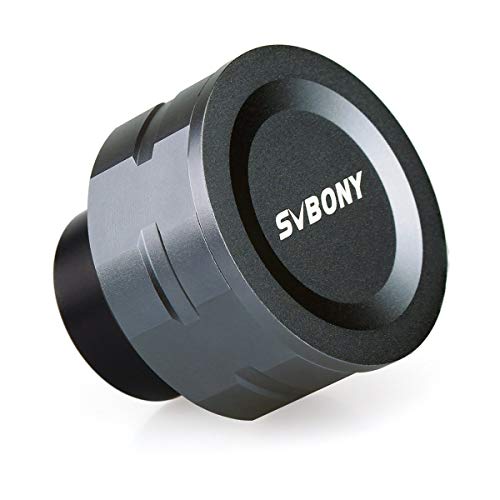 TOP CHOICEBest for beginners on a budgetSVBONY SV105 Telescope CameraView on Amazon
- 3
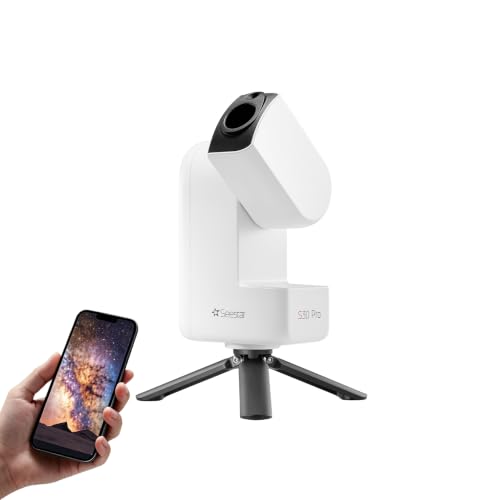 TOP CHOICEBest for hands-off wide-field shotsZWO Seestar S30 Pro Smart TelescopeView on Amazon
- 4
 Best for color planetary imagingSVBONY SV305C Astrophotography CameraView on Amazon
- 5
 Best for high-resolution large sensorsSVBONY SV705C Telescope Camera EyepieceView on Amazon
- 6
 Best for portable all-in-one useDWARFLAB Dwarf 3 Smart TelescopeView on Amazon
- 7
 Best for families and casual viewersSmart Telescope High Powered Refracting Telescope with 4K CameraView on Amazon
Our Top Picks
| Product | Best for | Key feature |
|---|---|---|
| SVBONY SV305C Pro Telescope Camera | Planetary and guiding work | USB 3.0 with 2MP IMX662 sensor |
| SVBONY SV105 Telescope Camera | Beginners on a budget | 1.25-inch eyepiece-style body |
| ZWO Seestar S30 Pro Smart Telescope | Hands-off wide-field shots | Auto tracking and GoTo |
| SVBONY SV305C Astrophotography Camera | Color planetary imaging | UV/IR cut glass filter |
| SVBONY SV705C Telescope Camera Eyepiece | High-resolution planetary and deep sky | 1/1.2-inch IMX585 sensor, USB 3.0 |
| DWARFLAB Dwarf 3 Smart Telescope | Portable all-in-one imaging | 4K auto-tracking, AZ/EQ modes |
| Smart Telescope High Powered Refracting Telescope | Families and casual viewers | Built-in 4K camera |
SVBONY SV305C Pro Telescope Camera
SVBONY SV305C Pro Telescope Camera, USB 3.0 High-Speed, 2MP IMX662 Sensor | 128MB DDR Buffer, 1.25" CMOS Astrophotography Planetary Camera, ST4 Guiding Interface Guide Camera, for Astrophotography
Best for: Planetary and guiding work with a standalone computer
This camera suits imagers who already own a telescope and want a fast, dedicated planetary or guide camera. The USB 3.0 link is the main reason to consider it over older USB 2.0 models.
Key specs
- 2MP IMX662 sensor
- USB 3.0 high-speed interface
- 128MB DDR buffer
- 1.25-inch barrel format
- ST4 guiding port
Pros
- Fast readout over USB 3.0 for short planetary videos
- Onboard buffer helps reduce dropped frames
- ST4 port allows direct autoguiding setups
Cons
- Requires a computer and capture software, which adds setup time
- Small sensor limits field of view for deep-sky targets
Bottom line: A strong choice for planetary imagers and anyone who needs a guide camera. Less suited to those who want a fully hands-off experience.
View on AmazonSVBONY SV105 Telescope Camera
SVBONY SV105 Telescope Camera, 1.25" IMX307 CMOS Color Eyepiece Camera | Plug and play, M28.5×0.6 Thread, USB 2.0 Electronic Telescope Eyepiece for Telescope, Suitable for Astrophotography Beginners
Best for: Beginners on a budget who want to try imaging through an existing eyepiece holder
The SV105 uses a 1.25-inch format that fits standard eyepiece holders, making it an accessible first step. It is aimed at lunar and planetary views rather than long deep-sky exposures.
Key specs
- 1.25-inch eyepiece-style body
- M28.5×0.6 thread
- USB 2.0 connection
- Plug-and-play setup
Pros
- Simple plug-and-play setup with common software
- Fits standard eyepiece holders on most scopes
- Low barrier to entry for first-time imagers
Cons
- USB 2.0 limits frame rate compared with newer interfaces
- Not designed for long-exposure deep-sky stacking
Bottom line: Good for beginners testing the waters with planets and the Moon. Those planning deep-sky work should look at a larger sensor.
View on AmazonZWO Seestar S30 Pro Smart Telescope
ZWO Seestar S30 Pro Smart Telescope, App-Controlled Astrophotography | 4K Dual Camera, Auto Tracking & GoTo, One-Tap Capture & Processing, Milky Way & Star Trail, Deep Sky & Wide-Field Imaging
Best for: Hands-off wide-field shots controlled from a phone
This smart telescope bundles optics, camera, mount, and processing into one app-controlled unit. It suits people who want Milky Way and deep-sky results without polar alignment or manual stacking.
Key specs
- 4K dual camera system
- Auto tracking and GoTo
- One-tap capture and processing
- Milky Way and star trail modes
Pros
- Minimal setup, controlled from a phone app
- Built-in auto tracking for deep-sky targets
- Processes images on the device, saving editing time
Cons
- Less control over exposure and processing than a dedicated camera setup
- Locked into the manufacturer’s app and ecosystem
Bottom line: A strong fit for beginners and casual imagers who value convenience. Advanced users wanting full manual control will likely prefer a separate camera.
View on AmazonSVBONY SV305C Astrophotography Camera
SVBONY SV305C Astrophotography Camera, 2.1MP IMX662 Color Telescope Camera | USB 2.0, with UV IR Cut Glass, 1.25" Entry-Level Electronic Telescope Eyepiece, for Planetary Moon Astrophotography & EAA
Best for: Color planetary imaging and entry-level electronically assisted astronomy
This model adds a UV/IR cut filter and a 2.1MP color sensor, which helps with accurate color rendering on planets. It also works for electronically assisted astronomy (EAA) viewing on a screen.
Key specs
- 2.1MP IMX662 color sensor
- UV/IR cut glass
- USB 2.0 connection
- 1.25-inch format
Pros
- UV/IR cut filter improves color accuracy on planets
- Useful for EAA viewing on a laptop or tablet
- Compact 1.25-inch body fits standard holders
Cons
- USB 2.0 limits frame rate for high-speed video
- Small sensor is not ideal for wide deep-sky fields
Bottom line: A good match for users focused on color planetary views and EAA. Those chasing faint galaxies should look at a larger sensor.
View on AmazonSVBONY SV705C Telescope Camera Eyepiece
SVBONY SV705C Telescope Camera Eyepiece, IMX585 USB 3.0 Astronomy Camera | "1/1.2” Frame, Astronomy Camera, High Resolution Planetary Camera, for Moon, Saturn, Planets and Deep Sky Astrophotography "
Best for: High-resolution planetary imaging and deep-sky work with a larger sensor
The SV705C uses a 1/1.2-inch IMX585 sensor, a noticeable step up in size from the small-format models above. It suits imagers who want more detail on planets and a wider field for deep-sky targets.
Key specs
- 1/1.2-inch IMX585 sensor
- USB 3.0 interface
- High-resolution planetary and deep-sky use
Pros
- Larger sensor gives wider field and more detail
- USB 3.0 supports faster frame rates
- Versatile for both planets and deep sky
Cons
- Larger sensor may need a focal reducer or longer focal length to fill the frame
- Requires computer-based capture software
Bottom line: A solid pick for imagers ready to move beyond small sensors. Beginners may find the setup more involved.
View on AmazonDWARFLAB Dwarf 3 Smart Telescope
DWARFLAB Dwarf 3 Smart Telescope, App-Controlled Astrophotography Camera | Portable 3lb Design, 4K Auto-Tracking, AZ/EQ Modes, Built-in Processing, Astronomy Shooting, Wildlife and Panorama Imaging
Best for: Portable all-in-one imaging for travel and outreach
The Dwarf 3 combines a telescope, camera, and processing into a lightweight unit that can be carried in a bag. It fits travelers, school outreach, and anyone who wants quick sessions without a heavy mount.
Key specs
- Lightweight portable design
- 4K auto-tracking
- AZ and EQ mounting modes
- Built-in processing
Pros
- Portable enough for travel and field sessions
- Auto-tracking reduces the need for manual polar alignment
- Built-in processing simplifies the workflow
Cons
- Small aperture limits faint deep-sky detail compared with larger telescopes
- Dependent on the manufacturer’s app and built-in software
Bottom line: Ideal for portable, quick-setup imaging. Serious deep-sky imagers will want more aperture and control.
View on AmazonSmart Telescope High Powered Refracting Telescope with 4K Camera
Smart Telescope High Powered, Refracting Telescope, Digital Electronic Telescopes with 4K Astronomy Refractor Telescopes Camera for Adults & Kids & Beginners
Best for: Families, kids, and casual viewers who want simple night-sky views
This refractor-style smart telescope bundles a 4K camera with an accessible interface. It is aimed at beginners and younger stargazers rather than advanced imaging.
Key specs
- Refracting optical design
- Built-in 4K camera
- Suitable for adults, kids, and beginners
Pros
- Easy to use for children and first-time users
- Built-in camera removes the need for separate equipment
- Good for casual shared viewing
Cons
- Limited manual control compared with dedicated astrophotography gear
- Specific optical and sensor specs are not always clearly documented
Bottom line: Best for families and beginners who want an easy, all-in-one setup. Not designed for advanced deep-sky imaging.
View on AmazonBuying Guide
Sensor size and type
Sensor size controls field of view and how much of a planet or deep-sky object fits in the frame. Small sensors suit planets and the Moon, while larger sensors help with galaxies and nebulae. CMOS sensors dominate current astrophotography cameras because they offer fast readout and low noise at modest prices.
Good picks for this: SVBONY SV705C Telescope Camera Eyepiece, SVBONY SV305C Pro Telescope Camera
Interface and frame rate
USB 3.0 supports faster frame rates than USB 2.0, which matters for planetary video capture and lucky imaging. USB 2.0 models still work well for slower, single-frame or EAA use, but they can limit high-speed capture.
Good picks for this: SVBONY SV305C Pro Telescope Camera, SVBONY SV705C Telescope Camera Eyepiece
Telescope compatibility and fit
Check the barrel size first. Most 1.25-inch cameras fit standard eyepiece holders, while 2-inch or adapter-based setups need a compatible focuser. Also confirm your telescope’s focal length and back focus, since they determine the image scale and whether the camera can reach focus.
Good picks for this: SVBONY SV105 Telescope Camera, SVBONY SV305C Astrophotography Camera
Standalone camera versus all-in-one smart telescope
A standalone camera gives you full control over exposure, gain, and processing, but it requires a telescope, mount, and computer. Smart telescopes integrate optics, mount, and software, trading flexibility for convenience. Decide which trade-off matches how much setup time you want.
Good picks for this: ZWO Seestar S30 Pro Smart Telescope, DWARFLAB Dwarf 3 Smart Telescope
Portability and weight
If you observe from a backyard, weight matters less. If you travel or set up at dark sites, a lightweight unit that fits in a bag can make the difference between going out and staying home. Check the total weight of the telescope, mount, and camera together.
Good picks for this: DWARFLAB Dwarf 3 Smart Telescope, ZWO Seestar S30 Pro Smart Telescope
Software and processing workflow
Standalone cameras usually require capture and stacking software on a computer. Smart telescopes handle capture and stacking through an app. Consider whether you want to learn a processing workflow or prefer one-tap results.
Good picks for this: SVBONY SV305C Astrophotography Camera, Smart Telescope High Powered Refracting Telescope with 4K Camera
Build quality and durability
Look for solid metal bodies, secure thread connections, and clearly specified filter and window options. Cold nights and frequent setup and teardown stress connectors, so a well-built housing matters for longevity. Manufacturer specifications are the best starting point for durability claims.
Good picks for this: SVBONY SV305C Pro Telescope Camera, SVBONY SV705C Telescope Camera Eyepiece
FAQ
What is the best astrophotography camera for telescope beginners?
Beginners often start with a 1.25-inch planetary camera such as the SVBONY SV105 or an all-in-one smart telescope if they want minimal setup. The right choice depends on whether you want to learn manual capture or prefer app-controlled results.
Do I need a cooled camera for astrophotography?
Cooled cameras reduce thermal noise, which helps during long deep-sky exposures. Planetary and short-exposure work usually does not require cooling, so many imagers start with uncooled CMOS cameras.
Can I use a regular camera for astrophotography with a telescope?
Yes. Many people use DSLR or mirrorless cameras through a telescope with a T-ring adapter. Dedicated astronomy cameras are usually more sensitive and faster for planetary video, but standard cameras work for wide-field and lunar shots.
What is the difference between a planetary camera and a deep-sky camera?
Planetary cameras use small sensors and high frame rates to capture fine detail on bright objects. Deep-sky cameras use larger sensors and longer exposures or stacking to capture faint galaxies and nebulae.
Does USB 3.0 matter for astrophotography?
USB 3.0 allows higher data transfer speeds, which helps with high-frame-rate planetary video. For slower deep-sky or EAA work, USB 2.0 is often sufficient.
Do smart telescopes produce real astrophotography?
Smart telescopes capture and stack multiple exposures automatically, producing images that show real detail in the sky. They offer less manual control than a dedicated camera setup, so results depend on the app’s processing and your site conditions.
How important is light pollution for astrophotography?
Light pollution reduces contrast and limits faint deep-sky detail. Dark sites help most for galaxies and nebulae, while planetary and lunar imaging are less affected. A light pollution filter can also help from suburban locations.
Conclusion
For most people starting out, an entry-level planetary camera or a smart telescope offers the easiest path into astrophotography. The SVBONY SV305C Pro Telescope Camera suits planetary and guiding work with a computer, while the ZWO Seestar S30 Pro Smart Telescope and DWARFLAB Dwarf 3 Smart Telescope suit hands-off and portable imaging. Imagers aiming for higher-resolution planets or a wider deep-sky field should look at the SVBONY SV705C. Match the sensor, interface, and workflow to the targets you care about most.
Sources
- Background on telescope optics, planetary observing, and night-sky targets (nasa.gov)
- Resources on astronomy education, observing practice, and amateur astronomy
- Guidance on imaging techniques and astronomy hobby resources
Related reading
- Camera Apps for Astrophotography: 6 Best Picks for Smart Telescopes (2026)
- 7 Best Cameras for Astrophotography with Telescope: Picks Compared (2026)
- iPhone Camera Settings for Astrophotography: A Step-by-Step Guide
About Colin Foster
Colin Foster is part of our editorial team and reviews and edits our telescopes & stargazing guides, checking product details against manufacturer specifications and owner feedback.
About the author
Colin Foster writes reviews and buying guides for Astronomy Site.