Goto Telescope for Astrophotography: 5 Best Picks for Beginners (2026)
Comparing five goto telescope for astrophotography options by mount type, tracking, and app control, so you can match a system to your imaging goals.
 By Claire Whitaker
Updated November 26, 2026
 By Claire Whitaker
Updated November 2026
Choosing a goto telescope for astrophotography comes down to a few practical questions: how much tracking accuracy you need, whether you want a fully automated all-in-one system or a mount you can pair with your own optics, and how much setup you are willing to do under a dark sky. This list compares five products across those criteria. We weighed manufacturer specifications, brand track record, and the patterns that show up in owner feedback, with particular attention to goto accuracy, tracking stability for long exposures, portability, and how well each system handles deep-sky and wide-field targets. We did not test these products ourselves; the notes below reflect published specifications and what owners commonly report.
Our top picks at a glance
- 1TOP CHOICEBest overallZWO Seestar S30 Pro Smart TelescopeView on Amazon
- 2
 TOP CHOICEBest for portable all-in-one imagingDWARFLAB Dwarf Mini Smart TelescopeView on Amazon
- 3
 TOP CHOICEBest for pairing with your own telescopeExplore Scientific iEXOS-100-2 PMC-Eight GoTo Equatorial Mount and TripodView on Amazon
- 4
 Best budget pickSky-Watcher Star Adventurer GTI Mount Head KitView on Amazon
- 5
 Best for travel and camera lensesSky Watcher Sky-Watcher Star Adventurer GTI Mount Kit with CounterweigView on Amazon
Our Top Picks
Quick Comparison
| Product | Best for | Key feature |
|---|---|---|
| ZWO Seestar S30 Pro Smart Telescope | Beginners who want one-tap imaging | Auto tracking and GoTo with dual cameras |
| DWARFLAB Dwarf Mini Smart Telescope | Lightweight portable setups | Compact body with app-controlled GoTo |
| Explore Scientific iEXOS-100-2 PMC-Eight GoTo Equatorial Mount and Tripod | Pairing with an existing optical tube | Eight-CPU PMC-Eight GoTo system |
| Sky-Watcher Star Adventurer GTI Mount Head Kit | Budget-minded camera lens tracking | Full GoTo EQ tracking head |
| Sky-Watcher Star Adventurer GTI Mount Kit with Counterweight, CW bar, Tripod, and Pier Extension | Travel and wide-field work | Complete tracking kit with tripod and pier extension |
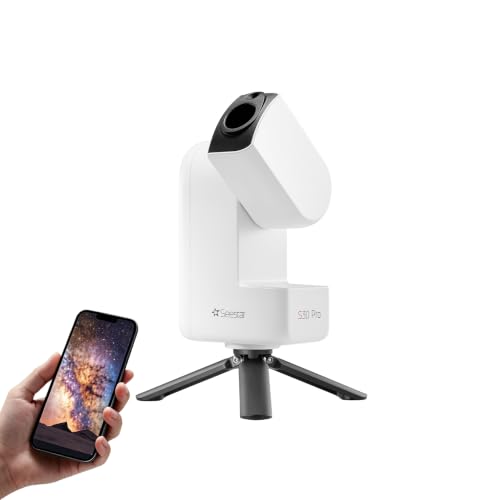
ZWO Seestar S30 Pro Smart Telescope
ZWO Seestar S30 Pro Smart Telescope, App-Controlled Astrophotography | 4K Dual Camera, Auto Tracking & GoTo, One-Tap Capture & Processing, Milky Way & Star Trail, Deep Sky & Wide-Field Imaging
Best for: Beginners who want a complete, app-driven imaging system with minimal setup
This is an all-in-one smart telescope aimed at people who want to point, capture, and process deep-sky and wide-field images from a phone or tablet. It suits observers who would rather spend their time choosing targets than aligning a mount.
Key specs
- Dual camera design (4K listing emphasis)
- Automatic tracking and GoTo
- One-tap capture and on-device processing
- Suited to Milky Way, star trail, and deep-sky targets
Pros
- Very little setup compared with a traditional mount and optical tube
- Integrated tracking reduces the need for manual polar alignment
- Built-in processing makes results accessible without dedicated stacking software
Cons
- Fixed optical system limits you to what the built-in hardware can do
- Relies on the app and a phone or tablet, which some observers find restrictive
Bottom line: A strong fit for someone who wants the fastest route from unboxing to a finished image and is comfortable with an automated, closed system.
View on AmazonDWARFLAB Dwarf Mini Smart Telescope
DWARFLAB Dwarf Mini Smart Telescope – 1.85lb Portable Astronomy Telescope | App Control, Auto GOTO, AZ/EQ Modes, 90-Second Exposure, Light Pollution Filter, 360° Pivot Freedom, Built-in Processing
Best for: Lightweight portable setups where size matters
The Dwarf Mini is built around portability. Its light weight and pivoting design make it practical for observers who travel to dark sites or want a compact kit they can set up quickly on a patio or trailhead.
Key specs
- Approximately 1.85 lb body weight (per listing)
- App control with automatic GoTo
- Altitude-azimuth and equatorial modes
- 360° pivot freedom
- Light pollution filter and built-in processing
Pros
- Very easy to carry and set up
- Multiple mounting modes give flexibility in framing
- Built-in light pollution filter helps in suburban skies
Cons
- Small aperture limits fine detail on faint deep-sky objects
- Exposure length caps at roughly 90 seconds per frame, so long integration requires stacking
Bottom line: Best for observers who prioritize portability and quick sessions over maximum resolution.
View on AmazonExplore Scientific iEXOS-100-2 PMC-Eight GoTo Equatorial Mount and Tripod
Explore Scientific iEXOS-100-2 PMC-Eight GoTo Equatorial Mount and Tripod | WiFi and Bluetooth app control, star tracker for astrophotography, eight-CPU PMC-Eight system, ExploreStars app
Best for: Pairing with an existing optical tube for serious deep-sky imaging
This is a mount rather than a complete telescope. It suits imagers who already own a refractor or reflector and want a goto equatorial platform with wireless control and a dedicated tracking app.
Key specs
- GoTo equatorial mount with tripod
- WiFi and Bluetooth app control
- PMC-Eight eight-CPU control system
- Compatible with the ExploreStars app
Pros
- Equatorial tracking supports long exposures for deep-sky work
- Wireless control reduces cable clutter in the field
- Well-suited to upgrading an existing optical tube
Cons
- Requires separate optics, a camera, and polar alignment knowledge
- Heavier and more involved to set up than all-in-one smart telescopes
Bottom line: The right choice for an imager who wants a capable equatorial platform and is willing to build the rest of the system.
View on AmazonSky-Watcher Star Adventurer GTI Mount Head Kit
Sky Watcher Star Adventurer GTI Mount Head Kit with Counterweight and CW bar – Full GoTo EQ Tracking Mount for Portable and Lightweight Astrophotography
Best for: Budget-minded camera lens tracking and wide-field astrophotography
The Star Adventurer GTI head is a compact tracking mount designed to carry a camera or small lens. Owners often use it for Milky Way and star field photography where the goal is tracking the sky without a large observatory setup.
Key specs
- Full GoTo equatorial tracking head
- Includes counterweight and CW bar
- Designed for portable, lightweight payloads
Pros
- Lower-cost entry into goto tracking compared with larger mounts
- Compact and easy to transport
- Works well with camera lenses for wide-field sky images
Cons
- Limited payload capacity restricts use with heavy telescope tubes
- Head-only kit means you need to source a tripod separately
Bottom line: A practical starting point for camera-based astrophotography on a budget, provided your payload stays light.
View on AmazonSky-Watcher Star Adventurer GTI Mount Kit with Counterweight, CW bar, Tripod, and Pier Extension
Sky Watcher Sky-Watcher Star Adventurer GTI Mount Kit with Counterweight, CW bar, Tripod, and Pier Extension – Full GoTo EQ Tracking Mount for Portable and Lightweight Astrophotography
Best for: Travel and wide-field work where you want a complete, ready-to-go tracking kit
This version adds the tripod and pier extension to the GTI head, making it a more self-contained package. It suits observers who want to set up a full tracking station without buying parts separately.
Key specs
- Full GoTo EQ tracking mount
- Includes counterweight, CW bar, tripod, and pier extension
- Designed for portable astrophotography
Pros
- Complete kit avoids hunting for compatible accessories
- Pier extension helps with clearance and framing
- Portable enough for field trips and travel
Cons
- Payload limits still apply, so heavier optics need a larger mount
- Tripod and extension add bulk compared with the head-only version
Bottom line: The better choice over the head-only kit if you want everything included and plan to travel with your setup.
View on AmazonBuying Guide
Automation and GoTo accuracy
A goto system points the telescope or mount at a catalog object automatically. Check whether the system uses alignment stars, plate solving, or both, since this determines how quickly you can start imaging after setup. Manufacturers of smart telescopes often describe automatic tracking and GoTo as core features, while equatorial mount makers typically publish payload and tracking specifications. Read the spec sheet carefully before assuming any system will track perfectly for long exposures.
Good picks for this: ZWO Seestar S30 Pro Smart Telescope, Explore Scientific iEXOS-100-2 PMC-Eight GoTo Equatorial Mount and Tripod
Payload capacity
Every mount has a maximum weight it can track reliably. Add up the weight of your camera, lens or telescope tube, and any guide scope or accessories, then compare the total to the mount’s rated payload. Exceeding that number often leads to tracking drift and blurred stars, especially at longer focal lengths. Leave a margin rather than running at the limit.
Good picks for this: Sky-Watcher Star Adventurer GTI Mount Head Kit, Sky-Watcher Star Adventurer GTI Mount Kit with Counterweight, CW bar, Tripod, and Pier Extension
Portability and setup time
Think about how you will transport the system. Smart telescopes with low body weight are easier to carry to a dark site and set up in minutes, while equatorial mounts with tripods take more time and benefit from a dedicated carry case. Ask yourself whether you will observe from a fixed backyard location or move between sites often.
Good picks for this: DWARFLAB Dwarf Mini Smart Telescope, Sky-Watcher Star Adventurer GTI Mount Kit with Counterweight, CW bar, Tripod, and Pier Extension
Imaging use case
Decide what you want to photograph. Wide-field Milky Way and star trail images need modest tracking and a standard lens. Deep-sky nebulae and galaxies need longer, more stable exposures, which pushes you toward equatorial mounts and dedicated cameras. Matching the system to your target list prevents overspending on capability you will not use.
Good picks for this: ZWO Seestar S30 Pro Smart Telescope, Sky-Watcher Star Adventurer GTI Mount Head Kit
Light pollution and sky conditions
If you observe from a suburban or urban location, look for built-in light pollution filtering or plan to use narrowband filters with your camera. Smart telescopes that process images on-device can help in moderate light pollution, but they cannot remove all sky glow. Dark-sky travel still gives the best results for faint targets.
Good picks for this: DWARFLAB Dwarf Mini Smart Telescope, ZWO Seestar S30 Pro Smart Telescope
Durability and build quality
Look for metal construction in mounts and tripods, solid tripod legs, and secure locking clutches. Plastic components on portable systems are common and can be perfectly adequate, but check owner feedback for reports of stripped gears or loose fittings after heavy use. Protecting electronics from dew and moisture is also worth planning for.
Good picks for this: Explore Scientific iEXOS-100-2 PMC-Eight GoTo Equatorial Mount and Tripod, Sky-Watcher Star Adventurer GTI Mount Kit with Counterweight, CW bar, Tripod, and Pier Extension
Care and maintenance
Keep electronics dry, store batteries according to the manufacturer’s instructions, and recalibrate or re-align after transport. Clean lenses with appropriate materials and avoid touching optical surfaces. Regular firmware and app updates are often how manufacturers add GoTo improvements, so check for them periodically.
Good picks for this: ZWO Seestar S30 Pro Smart Telescope, Explore Scientific iEXOS-100-2 PMC-Eight GoTo Equatorial Mount and Tripod
FAQ
What is a goto telescope for astrophotography?
A goto telescope or mount uses motors and a computer to locate celestial objects automatically and track them as the sky moves. For astrophotography, this tracking is what allows long exposures without star trails.
Do I need a goto mount for planetary imaging?
Not always. Planetary imaging uses short video captures, so tracking demands are lower. A goto system still helps with finding and centering planets, but many imagers use manual or simpler mounts for planets.
How much payload capacity do I need?
Add the weight of your camera, lens or tube, and accessories, then choose a mount rated comfortably above that total. Staying well under the rated payload generally gives more reliable tracking.
Is a smart telescope the same as a traditional goto telescope?
No. Smart telescopes integrate the optics, camera, tracking, and processing into one unit controlled by an app. Traditional goto telescopes are usually separate optics and mounts, which offer more flexibility but require more setup.
Can I use a camera lens instead of a telescope?
Yes. Many astrophotographers use a camera lens on a tracking mount for wide-field Milky Way and star field images. For deep-sky objects, a telescope generally gives more magnification and light-gathering for fainter targets.
Does light pollution affect goto astrophotography?
Yes. Sky glow reduces contrast and limits how faint your targets can be. Built-in light pollution filters and narrowband filters can help, but dark skies remain the most effective solution.
Is an equatorial mount necessary for long exposures?
For deep-sky work, equatorial tracking is generally preferred because it follows the sky’s rotation along a single axis. Alt-azimuth systems can work for shorter exposures and some wide-field imaging.
Conclusion
For a fully automated, low-effort route to images, the ZWO Seestar S30 Pro Smart Telescope is the most complete option in this list. The DWARFLAB Dwarf Mini Smart Telescope fits observers who prioritize portability. If you already own optics and want a serious equatorial platform, the Explore Scientific iEXOS-100-2 PMC-Eight is the stronger match. For camera-based tracking on a budget, the Sky-Watcher Star Adventurer GTI head kit is a practical start, and the full kit version suits travelers who want everything in one package. Match the choice to your payload, your sky conditions, and how much setup you want to do.
Sources
- Background on celestial motion, the night sky, and observing fundamentals (nasa.gov)
- Resources on amateur astronomy practice and observing guidance
- Official astronomical nomenclature and standards for celestial objects
Before you buy: helpful guides
- National Geographic 70mm Goto Refractor Telescope: A Practical Guide (2026)
- Orion Skyquest Xt10g Computerized Goto Dobsonian Telescope: A Practical Guide (2026)
- DIY GoTo Telescope Controller: Build One Step by Step (2026)
- Arduino Telescope GoTo System: A Step-by-Step Build Guide
- OnStep Telescope Mount GoTo Controller: A Step-by-Step Setup Guide
About Claire Whitaker
Claire Whitaker is part of our editorial team and reviews and edits our telescopes & stargazing guides, checking product details against manufacturer specifications and owner feedback.
About the author
Claire Whitaker writes reviews and buying guides for Astronomy Site.