6 Best Astronomy Light Pollution Filter Picks Compared for Night Sky Viewing
Compare six astronomy light pollution filters by use case, specs and owner feedback patterns to find the right UHC or O-III filter for your telescope and sky.
 By Audrey Hayes
Updated November 25, 2026
 By Audrey Hayes
Updated November 2026
An astronomy light pollution filter is one of the most practical upgrades a backyard observer can make, especially if your sky glows orange from nearby streetlights or suburban sprawl. These filters block the specific wavelengths of artificial light that wash out faint nebulae and galaxies, letting more contrast reach your eye or camera. This guide compares six real filters from the most common product families, sorted by how well each fits a particular observing situation. Our selection criteria were specifications, brand reputation, and patterns in owner feedback, not hands-on lab testing.
Our top picks at a glance
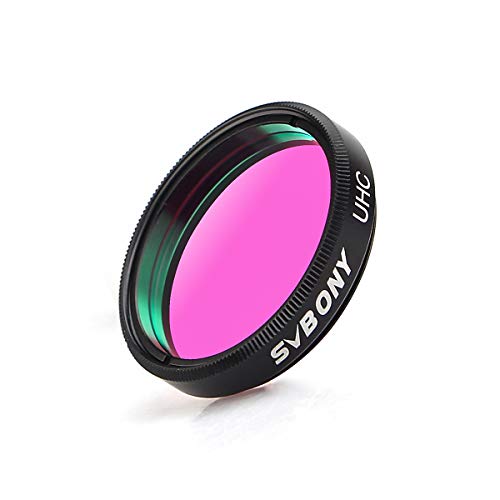
- 1TOP CHOICEBest overallSVBONY Telescope Filter 1.25" UHC Filter Improve Contrast for TelescopeView on Amazon
- 2
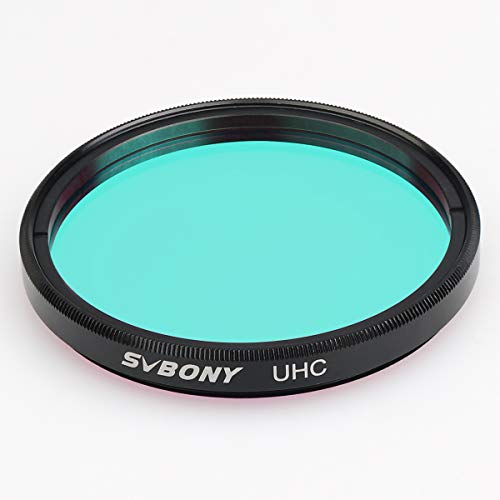 TOP CHOICEBest for 2-inch focusersSVBONY 2" UHC Filter Multi Coating Optical Glass Telescope FilterView on Amazon
- 3
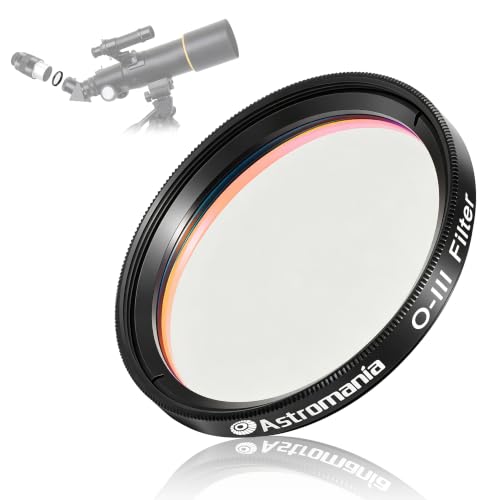 TOP CHOICEBest for emission nebulaeAstromania O-III Filter 2 Inch Telescope Filter Narrowband Nebula FiltersView on Amazon
- 4
 Best for camera imagingWalking Way 67mm Natural Night Filter for Light Pollution ReductionView on Amazon
- 5
 Best budget pickSVBONY SV115 O-III Filter 1.25" Telescope Filter NarrowbandView on Amazon
- 6
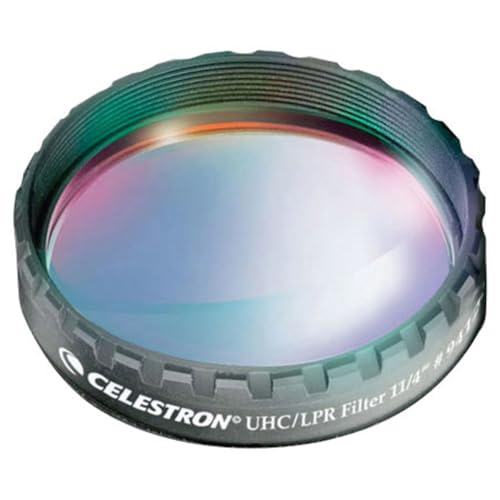 Best for a known brandCelestron UHC/LPR Light Pollution Reduction Filter for Telescopes 1.25"View on Amazon
Our Top Picks
Quick Comparison
| Product | Best for | Key feature |
|---|---|---|
| SVBONY Telescope Filter 1.25″ UHC | General light pollution, most sky targets | Broadband UHC coating in an aluminum frame |
| SVBONY 2″ UHC Filter | Large-barrel eyepieces and wide fields | 2-inch format with multi-coated optical glass |
| Astromania O-III Filter 2 Inch | Emission nebulae from suburban skies | Narrowband O-III passband for oxygen emission |
| Walking Way 67mm Natural Night Filter | Camera lens astrophotography | 67mm thread with nano-coated optical glass |
| SVBONY SV115 O-III Filter 1.25″ | Budget-conscious nebula observers | Narrowband O-III with a stated 90% peak transmittance |
| Celestron UHC/LPR Filter 1.25″ | Buyers who prefer an established optics brand | UHC/LPR broadband reduction with high transmission coating |
SVBONY Telescope Filter 1.25″ UHC Filter Improve Contrast for Telescope
SVBONY Telescope Filter, 1.25" UHC Filter Improve Contrast for Telescope | Optical Glass Lens, Aluminum Frame, Astrophotography Filter, Light Pollution Filter Nebula Filters, Telescope Accessories
Best for: General light pollution reduction across a wide range of sky targets.
This is a broadband UHC filter for beginners and intermediate observers who view from a suburban or edge-of-town location. It suits anyone who wants one filter that helps with multiple object types rather than a narrow specialty.
Key specs
- 1.25-inch barrel format
- Optical glass element in an aluminum frame
- UHC (ultra-high contrast) broadband design
Pros
- Fits the most common eyepiece size, so it works with many starter telescopes
- Broadband design helps across galaxies, clusters and some nebulae
- Aluminum frame is a sturdier mount than thin cardboard-style rings
Cons
- Broadband filters dim stars and galaxies somewhat, so they are less effective under very dark skies
- Does not isolate emission lines as sharply as narrowband filters
Bottom line: A sensible first filter for a suburban observer who wants broad help without committing to a narrowband specialty.
View on AmazonSVBONY 2″ UHC Filter Multi Coating Optical Glass Telescope Filter
SVBONY 2" UHC Filter, Multi Coating Optical Glass, Telescope Filter | Improve Image Contrast, Reduce Light Pollution, Telescope Accessories for Deep Sky Objects Astrophotography & Observation
Best for: Observers with 2-inch focusers and wide-field eyepieces.
Choose this if your telescope accepts 2-inch eyepieces and you want the full field of a wide-angle view without vignetting. It is aimed at deep-sky observers who spend time on large, diffuse targets.
Key specs
- 2-inch barrel format
- Multi-coated optical glass
- UHC broadband design
Pros
- 2-inch size preserves field of view in wide-angle eyepieces
- Multi-coating is intended to reduce reflections and boost transmission
- Good match for deep-sky targets viewed at low magnification
Cons
- Useless with 1.25-inch-only setups without an adapter
- Larger and heavier than 1.25-inch options
Bottom line: The right choice for 2-inch focuser owners who observe large deep-sky objects from light-polluted sites.
View on AmazonAstromania O-III Filter 2 Inch Telescope Filter Narrowband Nebula Filters
Astromania O-III Filter 2 Inch Telescope Filter Narrowband Nebula Filters | Light Pollution Filter for Astronomy Telescope, Fit 1.25" Eyepiece, Improve Image Contrast, For Orion Swan & Extended Nebula
Best for: Emission nebulae such as the Veil and planetary nebulae from light-polluted skies.
This narrowband O-III filter targets the oxygen emission line that many planetary and emission nebulae radiate. It suits observers who already know their targets and want maximum contrast on specific objects rather than general sky brightening. You may also like 7 Best Stc Light Pollution Filter Picks Compared for Night Sky Viewing.
Key specs
- 2-inch barrel format
- Narrowband O-III passband
Pros
- Strong contrast gain on oxygen-emitting nebulae
- Blocks much of the broadband sky glow that washes out emission objects
- 2-inch format suits wide-field nebula views
Cons
- Narrowband filters do little for galaxies and star clusters
- Can make stars look dimmer and reduces overall brightness
Bottom line: A targeted choice for nebula hunters who accept a narrow scope in exchange for dramatic contrast on emission objects.
View on AmazonWalking Way 67mm Natural Night Filter for Light Pollution Reduction
Walking Way 67mm Natural Night Filter for Light Pollution Reduction Nano-Coated Optical Glass for Night Sky/Astrophotography/Star Clarity Anti-Light Pollution Filter
Best for: Camera lens night sky photography from light-polluted locations.
This 67mm screw-in filter is designed for DSLR and mirrorless lenses rather than telescope eyepieces. It is aimed at astrophotographers who shoot wide-field star and sky images from town or suburban yards.
Key specs
- 67mm filter thread
- Nano-coated optical glass
Pros
- Screws directly onto a 67mm lens, avoiding adapter rings
- Nano coating is intended to limit reflections and flare
- Suits wide-field sky shots rather than eyepiece viewing
Cons
- Only useful if your lens thread is exactly 67mm, or you use a step-up ring
- Not designed for visual telescope observing
Bottom line: Pick this if your goal is camera imaging and you already own a lens with a 67mm front thread.
View on AmazonSVBONY SV115 O-III Filter 1.25″ Telescope Filter Narrowband
SVBONY SV115 O-III Filter 1.25" Telescope Filter Narrowband | 90% Peak Transmittance,Increases Contrast, Not brightness ,Optical Glass,Cuts Light Pollution Filter for Astronomy Telescope
Best for: Budget-minded observers who want a narrowband O-III filter for nebulae.
This is a 1.25-inch narrowband O-III option for observers testing whether narrowband filtering suits their style before buying a premium model. It is a reasonable entry point for planetary and emission nebula hunting.
Key specs
- 1.25-inch barrel format
- Narrowband O-III passband
- Manufacturer states 90% peak transmittance
Pros
- Narrowband design targets oxygen emission for nebula contrast
- 1.25-inch size fits most standard eyepiece setups
- High stated peak transmittance helps limit light loss
Cons
- Narrow scope: little help on galaxies or star clusters
- Contrast gains are limited to emission-line objects
Bottom line: A low-commitment way to try narrowband nebula viewing before investing in a larger or more specialized filter.
View on AmazonCelestron UHC/LPR Light Pollution Reduction Filter for Telescopes 1.25″
Celestron UHC/LPR Light Pollution Reduction Filter for Telescopes – 1.25" | Light Pollution Reduction, Enhanced Nebula Contrast, Darker Sky Background, High Transmission Optical Coating, For Visual Us
Best for: Observers who prefer a filter from an established optics maker.
Celestron is a long-established telescope brand, and this UHC/LPR filter is a broadband option for general light pollution reduction. It fits buyers who value brand familiarity and a predictable product line.
Key specs
- 1.25-inch barrel format
- UHC/LPR broadband reduction design
- High transmission optical coating
Pros
- Brand with a wide accessory ecosystem and support resources
- Broadband design helps across multiple object types
- Coating is described for high transmission and darker background
Cons
- Broadband gains are modest compared with narrowband filters on nebulae
- Smaller 1.25-inch format limits field with wide-angle eyepieces
Bottom line: A dependable general-purpose choice for buyers who want a known brand for a 1.25-inch light pollution filter.
View on AmazonBuying Guide
Broadband (UHC) vs. Narrowband (O-III) Design
Broadband filters such as UHC pass a wide slice of the visible spectrum while blocking the strongest sodium and mercury lamp emissions. They work across galaxies, clusters and many nebulae. Narrowband filters like O-III pass only a thin band around 500 nm, which is where oxygen emission nebulae glow. They produce larger contrast gains on those objects but do little for other targets. Match the design to what you observe most.
Good picks for this: SVBONY Telescope Filter 1.25″ UHC; Astromania O-III Filter 2 Inch
Barrel Size: 1.25-Inch vs. 2-Inch
Check your focuser and eyepiece barrel size before buying. Most starter telescopes use 1.25-inch eyepieces, while larger scopes and wide-field eyepieces often use 2-inch barrels. A 2-inch filter gives a wider usable field, but it will not thread onto a 1.25-inch eyepiece without an adapter.
Good picks for this: SVBONY 2″ UHC Filter; Celestron UHC/LPR Light Pollution Reduction Filter 1.25″
Camera Thread Size for Astrophotography
Camera filters screw onto the front of a lens and are measured by thread diameter, such as 67mm, 77mm or 82mm. Measure the lens barrel or check the number stamped near the front. If your size is slightly off, a step-up or step-down ring can bridge the gap, though it adds bulk.
Good picks for this: Walking Way 67mm Natural Night Filter
Optical Coating and Glass Quality
Multi-coated or nano-coated optical glass reduces reflections and helps preserve transmission. Manufacturers often specify peak transmittance percentages; higher numbers mean less light lost to the filter itself. Stated coating details are worth comparing, but treat them as manufacturer claims rather than independent measurements.
Good picks for this: SVBONY 2″ UHC Filter; SVBONY SV115 O-III Filter 1.25″
Sky Darkness and Target Mix
Under a bright suburban sky, a broadband filter may give a visible improvement on galaxies and nebulae. Under darker rural skies, the gain from broadband filters shrinks and may even dim targets. Narrowband filters remain useful on emission nebulae regardless of sky darkness, because they target specific wavelengths.
Good picks for this: Astromania O-III Filter 2 Inch; SVBONY Telescope Filter 1.25″ UHC
Build Quality and Durability
Filter frames made of aluminum resist bending better than thin plastic or card-style mounts, and they hold their alignment in the eyepiece. Keep filters capped when not in use, avoid touching the glass, and clean with a soft brush and lens-safe air blower. Store them in a padded case.
Good picks for this: SVBONY Telescope Filter 1.25″ UHC; Celestron UHC/LPR Light Pollution Reduction Filter 1.25″
Matching a Filter to Your Telescope and Eyepieces
A filter is only useful if it fits your optical train. Confirm barrel size, whether the filter threads onto your eyepiece or sits in a filter cell, and whether your telescope focuses far enough to accommodate the added thickness. A filter that gives sharp contrast in one setup may give little benefit in another, so check that the filter suits both your eyepiece and your typical targets.
Good picks for this: Celestron UHC/LPR Light Pollution Reduction Filter 1.25″; SVBONY SV115 O-III Filter 1.25″
FAQ
What does an astronomy light pollution filter actually do?
It blocks specific wavelengths of artificial light, mainly from sodium and mercury street lamps, while passing the light from celestial objects. This increases contrast on faint targets, making them easier to see under urban or suburban skies. It cannot remove light pollution entirely or make the sky dark.
Should I choose a UHC or O-III filter?
Choose UHC for general viewing across galaxies, clusters and some nebulae. Choose O-III if your main targets are emission nebulae, such as the Veil or planetary nebulae. Many observers own both and swap them depending on the night’s target list.
Will a light pollution filter work on the Moon or planets?
Light pollution filters are designed for deep-sky objects. They generally do little for the Moon or bright planets, which are already bright enough that sky glow is not the limiting factor. Some observers use a separate color or polarizing filter for planetary detail instead.
Do I need a filter if I live in a dark rural area?
Probably not for most targets. Under dark skies, broadband filters can dim faint objects and reduce overall brightness. An O-III filter may still help on emission nebulae even in dark conditions, but the benefit is smaller than in a city.
Can I use a light pollution filter for astrophotography?
Yes. Camera-lens filters, such as the 67mm option in this list, are designed for wide-field sky photography. Check that the filter thread matches your lens, and expect longer exposures or more processing to compensate for the light lost in the filter.
Do filters work with every telescope?
Most work with standard eyepieces, but fit depends on barrel size and focuser travel. A 2-inch filter needs a 2-inch eyepiece or adapter, and some setups have too little focus range once a filter is added. Check your telescope’s specifications before buying.
How should I clean and store a filter?
Use a soft brush or air blower first, then a microfiber cloth and a lens-safe cleaning solution if needed. Avoid touching the glass with fingers, and keep filters in a padded case or capped to prevent scratches. Consult the manufacturer’s care instructions for coating-specific guidance.
Conclusion
For a general first filter from a suburban site, the SVBONY 1.25-inch UHC is a practical starting point. Observers with 2-inch focusers should look at the SVBONY 2-inch UHC, while emission-nebula hunters will get the most from the Astromania O-III 2-inch or the SVBONY SV115 O-III if they want a lower-commitment narrowband filter. The Celestron UHC/LPR suits buyers who prefer an established brand, and the Walking Way 67mm is the choice for camera lenses. Match the filter to your barrel size, your dominant targets and your sky darkness, and the right filter will be a clear improvement.
Sources
- Guidance on outdoor lighting and how light pollution affects night sky visibility
- Background on emission nebulae, oxygen spectral lines and astronomical observing (nasa.gov)
- Information on night sky protection and dark-sky conditions in parks and natural areas (nps.gov)
Before you buy: helpful guides
Related reading
- Top 3 Clip in Light Pollution Filters for DSLR and Mirrorless Cameras
- Polarizer Filter Light Pollution vs Narrowband: Which Should You Choose?
About Audrey Hayes
Audrey Hayes is part of our editorial team and reviews and edits our telescopes & stargazing guides, checking product details against manufacturer specifications and owner feedback.
About the author
Audrey Hayes writes reviews and buying guides for Astronomy Site.