7 Best Vespera Light Pollution Filter Options Compared (2026)
Compare the 7 best Vespera light pollution filter options for city and suburban stargazing. Specs, pros, cons and who each filter suits best.
 By Audrey Hayes
Updated November 25, 2026
 By Audrey Hayes
Updated November 2026
Shopping for a vespera light pollution filter comes down to three questions: which filter type matches the way you observe, whether it fits the Vespera’s optical train, and how much sky glow it can realistically cut at your site. This guide compares seven filters that people commonly pair with Vaonis Vespera-class smart telescopes and with other small scopes used under city or suburban skies. Selection was based on published specifications, brand reputation, and patterns in owner feedback, with attention to filter bandwidth, coating quality, mounting method, and whether a filter targets emission nebulae or broadband glow. None of these products were tested by the author.
Our top picks at a glance
- 1TOP CHOICEBest overallVaonis Light Pollution Filter for Vespera TelescopeView on Amazon
- 2
 TOP CHOICEBest for nebula huntingVaonis Dual Band Filter for Vespera Telescope, w/Light PollutionView on Amazon
- 3
 TOP CHOICEBest for broadband sky glowWalking Way 67mm Natural Night Filter for Light Pollution ReductionView on Amazon
- 4
 Best for general 72mm useK&F CONCEPT 72mm Natural Night Filter Light Pollution Filter FE707View on Amazon
- 5
 Best for camera vlogging rigsK&F CONCEPT Magnetic Light Pollution Reduction Filter For OSMO Pocket 4P FD173View on Amazon
- 6
 Best budget pickK&F CONCEPT 58mm Clear Natural Night Filter Pollution Reduction FE707View on Amazon
- 7
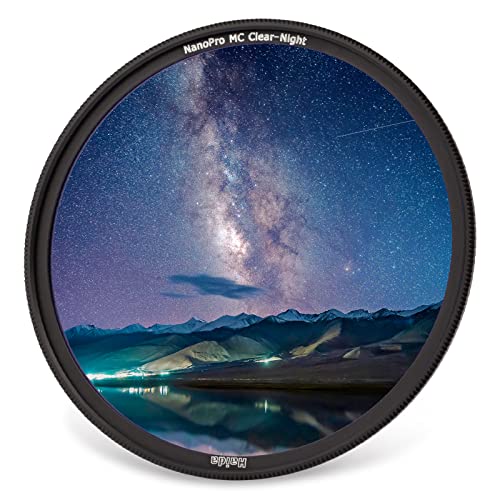 Best for 52mm threadsHaida 52MM Clear-Night Filter Light Pollution Source Reduction for Sky/StarView on Amazon
Our Top Picks
Quick Comparison
| Product | Best for | Key feature |
|---|---|---|
| Vaonis Light Pollution Filter for Vespera Telescope | Overall Vespera use under moderate light pollution | Purpose-matched to the Vespera optical path |
| Vaonis Dual Band Filter for Vespera Telescope | Nebulae and globular clusters from bright sites | O-III and H-alpha dual bandpass |
| Walking Way 67mm Natural Night Filter | Broadband glow reduction on a 67mm thread | Nano-coated optical glass |
| K&F CONCEPT 72mm Natural Night Filter FE707 | Adapter-based use on 72mm threads | Multi-coated HD optical glass |
| K&F CONCEPT Magnetic Light Pollution Reduction Filter FD173 | Action-camera and handheld setups | Magnetic base, multi-layer coating |
| K&F CONCEPT 58mm Clear Natural Night Filter FE707 | Budget-conscious buyers on 58mm threads | 28 multi-layer coatings |
| Haida 52MM Clear-Night Filter | Small-aperture 52mm setups | Clear-night light pollution source reduction |
Vaonis Light Pollution Filter for Vespera Telescope
Vaonis Light Pollution Filter for Vespera Telescope
Best for: Overall Vespera use under moderate light pollution
This is the filter most owners of a Vespera-class telescope would look at first, since it is designed for the instrument’s own optical train. It suits people who want a plug-in solution without adapter stacking and who observe from suburban skies rather than inner-city cores.
Key specs
- Designed specifically for the Vespera telescope
- Targets broadband urban sky glow
Pros
- Matched to the telescope rather than a generic thread size
- Simple installation with no adapter rings to track
- Helps keep faint targets more visible in moderate sky glow
Cons
- Brand-specific, so it will not transfer to other telescopes
- Gains are limited under heavy sky glow
Bottom line: The safest default for a Vespera owner who wants a dedicated filter for suburban observing.
View on AmazonVaonis Dual Band Filter for Vespera Telescope, w/Light Pollution
Vaonis Dual Band Filter for Vespera Telescope, w/Light Pollution | Dual Band Filter with O-III and H-alpha for nebulae, globular clusters and light pollution reduction
Best for: Nebulae and globular clusters from bright sites
A dual-band design targets the specific emission lines that many nebulae radiate, which can give more contrast than a broadband filter on those objects. It fits observers who mainly chase emission nebulae and planetary nebulae.
Key specs
- Dual bandpass for O-III and H-alpha emission lines
- Designed for Vespera-class use
Pros
- Boosts contrast on many emission nebulae
- Handles light pollution reduction and emission-line work in one filter
- Well suited to nebulae and globular clusters
Cons
- Dims galaxies and star fields more than broadband filters do
- Less useful for lunar and planetary viewing
Bottom line: Pick this if your observing list is dominated by nebulae rather than galaxies.
View on AmazonWalking Way 67mm Natural Night Filter for Light Pollution Reduction
Walking Way 67mm Natural Night Filter for Light Pollution Reduction Nano-Coated Optical Glass for Night Sky/Astrophotography/Star Clarity Anti-Light Pollution Filter
Best for: Broadband glow reduction on a 67mm thread
This 67mm filter suits observers who already own accessories in that thread size or who use a 67mm-to-telescope adapter. It is aimed at general sky glow reduction and star clarity rather than narrow emission lines.
Key specs
- 67mm filter thread
- Nano-coated optical glass
Pros
- Standard thread size for easy adapter use
- Nano coating aimed at reducing reflections
- Useful for broadband star and sky work
Cons
- Requires an adapter for many telescope setups
- Broadband action gives less boost on faint nebulae
Bottom line: A reasonable broadband choice for owners who already have 67mm accessories.
View on AmazonK&F CONCEPT 72mm Natural Night Filter Light Pollution Filter FE707
K&F CONCEPT 72mm Natural Night Filter Light Pollution Filter | Multi-Coated HD Optical Glass Anti-glare, for City Night Photography Sky Star Astrophotography Nano-X Series FE707
Best for: Adapter-based use on 72mm threads
A 72mm filter fits photographers and visual observers who already use 72mm lenses or adapters. Its multi-coated optical glass is the main selling point for those who want a general-purpose broadband filter.
Key specs
- 72mm thread
- Multi-coated HD optical glass
Pros
- Common 72mm size with wide accessory support
- Multi-coating aimed at reducing glare
- Works for both camera and visual adapter setups
Cons
- Adapter stacking can add vignetting
- Broadband only, so narrowband gains are not available
Bottom line: A versatile choice for owners who already have 72mm gear.
View on AmazonK&F CONCEPT Magnetic Light Pollution Reduction Filter For OSMO Pocket 4P FD173
K&F CONCEPT Magnetic Light Pollution Reduction Filter For OSMO Pocket 4P | Magnetic Base, LP Filter, Multi-Layer Coating, High Definition, Anti-Reflective & Waterproof, Ideal for Vlogging FD173
Best for: Action-camera and handheld setups
This magnetic filter is built for a handheld gimbal camera rather than a telescope. It suits night sky video makers who want a quick-swap filter on a small camera body.
Key specs
- Magnetic base for the OSMO Pocket 4P
- Multi-layer coating, anti-reflective and waterproof
Pros
- Magnetic mounting is quick to swap
- Multi-layer coating aimed at reducing reflections
- Useful for casual night sky video
Cons
- Only fits the listed camera model
- Not intended for telescope eyepiece or thread-based optics
Bottom line: Choose this only if your night sky work is done with a compatible handheld camera.
View on AmazonK&F CONCEPT 58mm Clear Natural Night Filter Pollution Reduction FE707
K&F CONCEPT 58mm Clear Natural Night Filter Pollution Reduction | 28 Multi-Layer Coatings Light Pollution Reduction Filter for Night City Sky Star Shots.No Color Cast Nano-X Series FE707
Best for: Budget-conscious buyers on 58mm threads
A 58mm filter is a sensible pick for people whose existing lenses or adapters use that thread. The 28-layer coating description is the main draw for buyers who want a lot of coating layers without a premium price tier.
Key specs
- 58mm thread
- Listed with 28 multi-layer coatings
Pros
- Lower-cost entry point for a light pollution filter
- Clear, neutral color for night use
- Fits common 58mm accessories
Cons
- Smaller thread limits use on larger optics
- Broadband only, so emission-line gains are absent
Bottom line: A practical budget pick for owners with 58mm gear who want a broadband filter.
View on AmazonHaida 52MM Clear-Night Filter Light Pollution Source Reduction for Sky/Star
Haida 52MM Clear-Night Filter Light Pollution Source Reduction for Sky/Star
Best for: Small-aperture 52mm setups
Haida is a well-known filter maker, and this 52mm clear-night model suits people with 52mm thread optics or camera lenses. It is aimed at sky and star work rather than narrowband viewing.
Key specs
- 52mm thread
- Clear-night design for light pollution source reduction
Pros
- Reputable brand in photographic filters
- Clear design aimed at star-field work
- Good fit for compact lenses and small scopes
Cons
- 52mm size is limited for larger optics
- Broadband only, with modest gains under heavy glow
Bottom line: A solid option for small 52mm optics used under moderate light pollution.
View on AmazonBuying Guide
Filter type: broadband versus narrowband
Broadband filters cut a wide slice of the spectrum, mostly the sodium and mercury emission lines from city lighting, and they leave galaxies and star fields comparatively bright. Narrowband filters such as O-III and H-alpha pass only the emission lines that many nebulae radiate, which can dramatically boost contrast on those objects while dimming everything else. Match the filter type to your target list before you buy.
Good picks for this: Vaonis Dual Band Filter for Vespera Telescope, Walking Way 67mm Natural Night Filter
Thread size and mounting
Measure the thread diameter on your telescope or lens before ordering. A filter that is one size too large will not thread on, and a smaller filter needs a step-up ring, which can add vignetting. Confirm the thread (for example 52mm, 58mm, 67mm, or 72mm) and whether your optic requires an adapter.
Good picks for this: K&F CONCEPT 58mm Clear Natural Night Filter FE707, Haida 52MM Clear-Night Filter
Purpose-matched design
A filter designed for a specific telescope or camera generally fits its optical path better than a generic threaded filter. Purpose-built models reduce adapter stacking and are easier to set up, though they limit you to one instrument.
Good picks for this: Vaonis Light Pollution Filter for Vespera Telescope, K&F CONCEPT Magnetic Light Pollution Reduction Filter FD173
Coating quality
Multi-layer and nano coatings are intended to reduce reflections and ghosting, which matters most when a bright source sits near the field. Manufacturers often list coating counts or types; treat those numbers as marketing specifications unless independent measurements are available, and look for clean, neutral color in the product description.
Good picks for this: K&F CONCEPT 72mm Natural Night Filter FE707, Walking Way 67mm Natural Night Filter
Light pollution severity at your site
Filters help most under moderate sky glow and least under heavy urban glow, where the background is already very bright. If you observe from the center of a large city, expect smaller gains than from a suburban backyard, and consider a dark-sky trip for deep-sky work.
Good picks for this: Vaonis Light Pollution Filter for Vespera Telescope, Vaonis Dual Band Filter for Vespera Telescope
Durability and handling
Optical glass scratches easily, so store filters in a padded case and clean them only with proper lens-cleaning fluid and a microfiber cloth. Waterproof or sealed designs, as some listings describe, help in damp conditions, but no filter should be left exposed to dew or rain for long.
Good picks for this: K&F CONCEPT Magnetic Light Pollution Reduction Filter FD173, Haida 52MM Clear-Night Filter
Use case: visual versus camera
Visual observers and astrophotographers have different needs. Visual work benefits from filters that improve contrast at the eyepiece, while camera work also weighs color balance and how the filter behaves across long exposures. Choose a filter that matches the way you actually observe.
Good picks for this: K&F CONCEPT 72mm Natural Night Filter FE707, Vaonis Dual Band Filter for Vespera Telescope
FAQ
Does a light pollution filter work on a Vespera?
Filters can improve contrast on many deep-sky targets under moderate light pollution, but gains depend on your site’s sky brightness and the type of target. Purpose-matched filters are generally easier to install than generic threaded models.
What is the difference between a broadband and a narrowband filter?
Broadband filters cut a wide band of city light, while narrowband filters pass only specific emission lines, such as O-III and H-alpha. Narrowband filters usually help most with emission nebulae and dim less on galaxies.
Will a light pollution filter dim galaxies?
Broadband filters can dim some galaxies slightly, and narrowband filters dim them more because galaxies emit broadly. For galaxy work, a broadband filter is usually the better compromise.
Can I use a light pollution filter with a camera?
Yes, filters in this category are sold for camera lenses and for telescopes, and many photographers use them for night sky images. Check that the thread size matches your lens or adapter.
Do I need an adapter ring?
If the filter thread differs from your telescope or lens thread, you will need a step-up or step-down ring. Adapters can add vignetting, so confirm sizes before buying.
How much improvement should I expect?
Improvement varies with sky brightness, target type, and filter design. Expect the most noticeable gains under moderate light pollution and on nebulae; the least under heavy urban glow.
Conclusion
For a Vespera owner who wants a purpose-matched filter, the Vaonis Light Pollution Filter is the most direct choice, while the Vaonis Dual Band Filter suits observers who mainly chase emission nebulae. Buyers with 52mm, 58mm, 67mm, or 72mm accessories can choose a general-purpose broadband filter from the K&F CONCEPT, Walking Way, or Haida lines based on thread size and budget. The magnetic K&F CONCEPT FD173 fits only handheld camera work. Match your filter type to your targets and your local sky brightness.
Sources
- Background on light pollution, sky glow, and how urban lighting affects astronomical observing
- Information on nebula emission lines and the astronomy of deep-sky objects (nasa.gov)
- Resources from the American Astronomical Society on observing and amateur astronomy
Before you buy: helpful guides
Related reading
- Top 3 Clip in Light Pollution Filters for DSLR and Mirrorless Cameras
- Polarizer Filter Light Pollution vs Narrowband: Which Should You Choose?
- Optolong Light Pollution Filter Compared: 6 Best Picks for 2026
About Audrey Hayes
Audrey Hayes is part of our editorial team and reviews and edits our telescopes & stargazing guides, checking product details against manufacturer specifications and owner feedback.
About the author
Audrey Hayes writes reviews and buying guides for Astronomy Site.