Hoya Starscape Light Pollution Camera Filter: 6 Best Picks Compared
Compare six Hoya Starscape light pollution camera filters by thread size, use case and owner feedback to find the right fit for your lens and night sky shots.
 By Audrey Hayes
Updated November 24, 2026
 By Audrey Hayes
Updated November 2026
Choosing a hoya starscape light pollution camera filter comes down to three things: the thread size of your lens, how much city glow surrounds your observing site, and whether you want a filter that suits your camera body and lens setup. This guide compares six Hoya Starscape models across those criteria. Our selection method is research-based, drawing on published specifications, the brand’s reputation in astrophotography circles and recurring patterns in owner feedback. We have not tested these filters ourselves, so treat each pick as a starting point and confirm the thread size before you buy.
Our top picks at a glance
- 1TOP CHOICEBest overallHoya 58mm Starscape Light Pollution Cut FilterView on Amazon
- 2TOP CHOICEBest for wide-angle lensesHoya 82mm Starscape Light Pollution Cut Filter, BlackView on Amazon
- 3TOP CHOICEBest for color-correcting needsHoya Starscape 67mm Light Pollution Cut FilterView on Amazon
- 4
 Best for high-contrast coatingHOYA 52mm Starscape Astrophotography FilterView on Amazon
- 5Best for large telephoto lensesHoya 72mm Starscape Light Pollution Cut FilterView on Amazon
- 6Best budget pickHoya 49mm Starscape Light Pollution Cut FilterView on Amazon
Our Top Picks
Quick Comparison
| Product | Best for | Key feature |
|---|---|---|
| Hoya 82mm Starscape Light Pollution Cut Filter, Black | Large-diameter wide-angle lenses | 82mm thread for big front elements |
| HOYA 52mm Starscape Astrophotography Filter | Contrast-focused night imaging | Multi-layer coating for high light transmission |
| Hoya Starscape 67mm Light Pollution Cut Filter | Color-balanced night sky shots | Color-correcting optical glass |
| Hoya 58mm Starscape Light Pollution Cut Filter | Mid-size lenses, general use | Common thread size for kit lenses |
| Hoya 72mm Starscape Light Pollution Cut Filter | Telephoto and zoom lenses | 72mm thread for longer lenses |
| Hoya 49mm Starscape Light Pollution Cut Filter | Small-thread compact lenses | Compact 49mm fit |
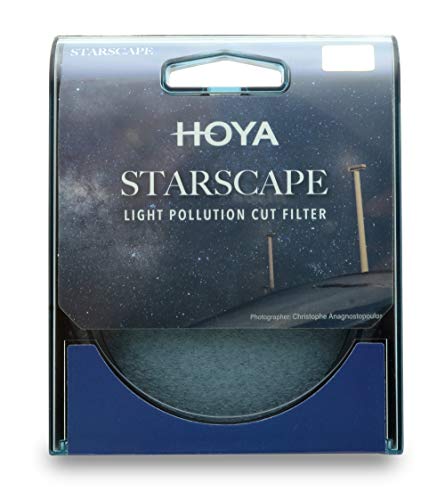
Hoya 58mm Starscape Light Pollution Cut Filter
Hoya 58mm Starscape Light Pollution Cut Filter
Best for: General-purpose night sky photography on mid-size lenses
This is the filter most photographers with a standard zoom or prime lens are likely to need. The 58mm thread is among the more common sizes, which makes it easier to match to existing lens hardware and to step-up or step-down rings.
Key specs:
- Thread size: 58mm
- Designed to cut light pollution wavelengths from artificial lighting
Pros:
- Common thread size with wide lens compatibility
- Straightforward choice for a first light pollution filter
- Owners often report noticeable reduction in sky glow in suburban settings
Cons:
- Not designed for very wide lenses that need a larger thread
- Filter performance depends heavily on how dark your site already is
Bottom line: A sensible default for photographers who want one filter that fits a typical lens and suits suburban night sky work.
View on AmazonHoya 82mm Starscape Light Pollution Cut Filter, Black
Hoya 82mm Starscape Light Pollution Cut Filter, Black
Best for: Large-diameter wide-angle lenses
Photographers using wide-angle lenses with large front elements will need the 82mm thread. This size is typical of higher-end wide and fast lenses that many night photographers use for Milky Way work.
Key specs:
- Thread size: 82mm
- Black frame finish
Pros:
- Fits large-diameter wide-angle optics
- Same Starscape light pollution profile as the smaller sizes
- Useful for lenses that cannot accept a stepped-down filter cleanly
Cons:
- Larger filters are heavier and bulkier to carry
- Fewer lenses use this thread, so the size is less versatile
Bottom line: Pick this if your wide lens specifically calls for 82mm and you do most of your work under the Milky Way.
View on AmazonHoya Starscape 67mm Light Pollution Cut Filter
Hoya Starscape 67mm Light Pollution Cut Filter – Color Correcting, Minimalist, Black, Optical Glass
Best for: Color-balanced night sky shots
The listing describes this model as color correcting, which matters if you want natural-looking tones in your sky and foreground. It suits photographers who plan to edit lightly and want a cleaner starting point.
Key specs:
- Thread size: 67mm
- Optical glass construction
- Minimalist black finish
Pros:
- Described as color correcting for more neutral results
- Optical glass build
- Mid-size thread with good lens coverage
Cons:
- Color correction still benefits from proper white balance
- Not the most common size, so check your lens before buying
Bottom line: A good fit for photographers who want color-balanced results and already know their lens takes 67mm.
View on AmazonHOYA 52mm Starscape Astrophotography Filter
HOYA 52mm Starscape Astrophotography Filter – Boosts Star-To-Sky Contrast | Multi-Layer Coating Delivers 97%+ Light Transmission, Cutting Reflections And Flare For Clean, High-Contrast Night Imagery
Best for: Contrast-focused night imaging
The listing emphasizes a multi-layer coating and high light transmission, aimed at reducing reflections and flare. Photographers who prioritize clean star contrast will find this model’s stated design goals relevant.
Key specs:
- Thread size: 52mm
- Multi-layer coating stated to deliver high light transmission
Pros:
- Coating designed to limit reflections and flare
- Stated high light transmission supports exposure
- Targets star-to-sky contrast directly
Cons:
- 52mm is a smaller thread that many modern lenses do not use
- Owner results vary with lens quality and stray light sources
Bottom line: Choose this for a compact or older lens with a 52mm thread and a priority on contrast.
View on AmazonHoya 72mm Starscape Light Pollution Cut Filter
Hoya 72mm Starscape Light Pollution Cut Filter
Best for: Telephoto and zoom lenses
The 72mm thread is common on longer zooms and many portrait-length lenses. If your lens uses this size, you avoid stacking step-up rings that can introduce vignetting.
Key specs:
- Thread size: 72mm
- Starscape light pollution profile
Pros:
- Direct fit for many telephoto and zoom lenses
- Avoids step-up ring vignetting
- Good balance of size and availability
Cons:
- Heavier than smaller sizes on compact setups
- Only useful if your lens thread matches
Bottom line: A strong pick for telephoto users whose lens takes 72mm filters natively.
View on AmazonHoya 49mm Starscape Light Pollution Cut Filter
Hoya 49mm Starscape Light Pollution Cut Filter
Best for: Small-thread compact lenses
Compact cameras and some small-body lenses use 49mm threads. This filter is the most practical option for those setups, and it is generally the lightest of the group.
Key specs:
- Thread size: 49mm
- Light pollution cut profile
Pros:
- Lightweight and compact
- Fits small-thread lenses directly
- Lower-cost entry point within the Starscape line
Cons:
- Too small for most full-frame wide-angle lenses
- Limited use outside compact lens setups
Bottom line: The right choice if your compact lens uses a 49mm thread and portability matters more than coverage.
View on AmazonBuying Guide
Thread size and lens fit
Check the filter thread printed on your lens barrel or in the manufacturer’s specifications before buying. Step-up rings can work with a larger filter on a smaller lens, but they add bulk and can cause vignetting at wide focal lengths.
Good picks for this: Hoya 58mm Starscape Light Pollution Cut Filter, Hoya 72mm Starscape Light Pollution Cut Filter
Light pollution severity at your site
Filters help most in areas with moderate to heavy sky glow. Under truly dark skies, the benefit is smaller, so the filter may be less important than a good tripod or a wider aperture.
Good picks for this: Hoya 58mm Starscape Light Pollution Cut Filter, Hoya 67mm Starscape Light Pollution Cut Filter
Color balance and white balance
Light pollution filters alter the color of the sky by blocking certain wavelengths. Color-correcting designs can give more neutral results, but you should still set white balance manually and shoot raw for the most control.
Good picks for this: Hoya Starscape 67mm Light Pollution Cut Filter
Coating and contrast
Multi-layer coatings reduce reflections and flare, which can matter when bright stars or a nearby light source sit near the frame. Look for stated light transmission figures and coating descriptions in the listing.
Good picks for this: HOYA 52mm Starscape Astrophotography Filter
Weight and portability
Larger filters add weight to the front of your lens and can stress lightweight tripods or gimbal heads. If you travel to dark sites on foot, a smaller thread may be easier to carry.
Good picks for this: Hoya 49mm Starscape Light Pollution Cut Filter, Hoya 58mm Starscape Light Pollution Cut Filter
Durability and handling
Optical glass filters resist scratching better than resin options, but they can still chip if dropped. Use a lens cap and store filters in a padded case, and clean them only with a blower and a microfiber cloth.
Good picks for this: Hoya 82mm Starscape Light Pollution Cut Filter, Black, Hoya 72mm Starscape Light Pollution Cut Filter
Care and cleaning
Dust and dew both affect night images. Keep the filter clean, and consider a dew heater if you shoot in humid conditions for long sessions.
Good picks for this: HOYA 52mm Starscape Astrophotography Filter, Hoya 67mm Starscape Light Pollution Cut Filter
FAQ
What does a Hoya Starscape light pollution filter do?
It is designed to block certain wavelengths of artificial light, mainly from sodium and mercury street lamps, so that the glow from the sky is reduced relative to starlight and the Milky Way.
Do I need a light pollution filter if I shoot under dark skies?
Probably not. The benefit is largest in suburban and urban sky conditions. Under very dark skies, a faster lens or a better sensor is usually a bigger improvement.
How do I know my lens thread size?
The filter thread size is usually printed on the front of the lens barrel, often with a small symbol. You can also check the manufacturer’s specification page for the exact model.
Can I stack a filter on a wide-angle lens?
Stacking adds reflections and can cause vignetting. For wide-angle astrophotography, a single filter in the correct thread size is generally the cleaner choice.
Will a light pollution filter change star color?
It can shift the overall color balance of the image. Many photographers adjust white balance in post-processing to achieve the look they want.
How should I clean a camera filter safely?
Use a blower to remove loose dust, then a microfiber cloth with a small amount of lens cleaning solution if needed. Avoid household cleaners and rough fabrics that can scratch the coating.
Conclusion
For most photographers, the Hoya 58mm Starscape Light Pollution Cut Filter is the most practical starting point because the thread size fits many lenses. Users with wide-angle optics should look at the 82mm model, while telephoto users may prefer the 72mm. The 67mm model suits those who want color-balanced results, and the 52mm model fits older compact lenses where contrast is the priority. The 49mm filter is the choice for small-thread compact setups. Confirm your lens thread before purchase, and match the filter to the sky conditions where you actually shoot.
Sources
- Background on light pollution, sky brightness and how artificial lighting affects astronomical observing (nasa.gov)
- Guidance on outdoor lighting, sky glow and dark-sky observing practices
- Information on natural darkness and night sky conditions in national park settings (nps.gov)
Related reading on this site:
If you are comparing filter options more broadly, see Camera Filters for Astrophotography: 5 Best Picks Compared in 2026 for a wider look at filter types. For guidance on choosing a color option, Astrophotography Color Camera Filters: What to Use and When (2026) explains when each type makes sense. If you shoot with a phone, Smartphone Camera Settings for Astrophotography: A Step-by-Step Guide covers the basics, and Telescope vs Camera Lens for Astrophotography: A Practical Guide (2026) helps you decide which setup suits your goals. For a deeper look at lens options, see What Is the Best Nikon Camera Lens for Astrophotography? Top Picks. Finally, Top 5 Astrophotography Camera Buying Guide Picks for Night Sky Imaging (2026) offers a broader buying framework.
Before you buy: helpful guides
About Audrey Hayes
Audrey Hayes is part of our editorial team and reviews and edits our telescopes & stargazing guides, checking product details against manufacturer specifications and owner feedback.
About the author
Audrey Hayes writes reviews and buying guides for Astronomy Site.