Celestron CGX German Equatorial Mount Review: Who Is It For?
Reviewing the celestron cgx german equatorial mount: payload, GoTo tracking, tripod, pros and cons, and who should buy it or skip it for 2026.
 By Colin Foster
Updated November 23, 2026
 By Colin Foster
Updated November 2026
The celestron cgx german equatorial mount is a computerized, GoTo-capable mount aimed at observers who carry a fairly heavy optical tube and want to image or observe deep-sky objects for long periods. It suits intermediate amateurs with a payload of several dozen pounds, people upgrading from a tracking-less alt-azimuth setup, and imagers who need stable, long-exposure tracking. It is a poor fit for casual beginners with a small refractor who only look at the Moon and planets, anyone who wants a portable mount to carry to dark sites on foot, or buyers who need a lightweight travel rig. Read on for the specs, the trade-offs, and where it sits among its Celestron siblings.
Celestron CGX Computerized German Equatorial Mount & Tripod, 55lb Payload | Telescope Mount with 55 lb Payload Capacity, Precision GoTo Performance, Belt-Drive Tracking System, Heavy-Duty Tripod
Product Overview
The Celestron CGX Computerized German Equatorial Mount & Tripod is sold as a complete package: the mount head, a heavy-duty tripod, and the hand controller needed to run its GoTo system. Its design follows the German equatorial layout, in which the telescope sits on one side of a polar axis and a counterweight balances it on the other. That arrangement lets the mount track the sky along a single axis, which is what makes long exposures and smooth planetary or deep-sky tracking possible.
Celestron positions the CGX as a step up from its earlier CG-series mounts. The listing emphasizes a 55-pound payload rating, precision GoTo pointing, and a belt-drive tracking system. Those three claims define the mount’s identity: it is built to carry more weight than a typical intermediate mount, to find objects automatically, and to hold a steady track with less motor-related vibration than gear-driven designs that many owners associate with older models.
Within Celestron’s lineup, the CGX sits alongside the CGX-L and the larger CGX-series mounts for bigger optics. It is also part of a broader family of German equatorial mounts that competes with products from Meade, Orion, and Sky-Watcher. Its appeal lies in pairing a sizable payload rating with a fully computerized control system and a tripod that is meant to handle the mount’s weight without flexing badly.
It is worth stating plainly what the package does not include. Depending on the bundle you find, you may still need to buy an optical tube, eyepieces, a dew shield, a counterweight set beyond what ships, and a polar alignment aid. Check the listing contents before assuming the kit is complete for your setup.
Key Features & Specifications
The table below lists the characteristics the product name and standard manufacturer descriptions state for this model. Where a figure is not confirmed in the listing, it is omitted rather than estimated.
| Feature | What the listing states | What it means for you |
|---|---|---|
| Mount type | Computerized German equatorial | Tracks the sky on one axis; requires polar alignment for best results |
| Payload capacity | 55 lb | Room for heavier refractors, larger Newtonians, and imaging rigs with cameras attached |
| Control system | Precision GoTo | Slews to catalogued objects using the hand controller |
| Tracking drive | Belt-drive | Designed to reduce the periodic gear error common in some worm-gear mounts |
| Tripod | Heavy-duty | Intended to support the full payload with reduced wobble compared with lightweight legs |
| Intended use | Visual and astrophotography | Suits both eyepiece observing and guided or unguided imaging |
Two points deserve extra attention. First, the 55-pound figure is a payload rating, which is the combined weight of the optical tube, accessories, and counterweights the mount can carry. Real-world stability depends on balance and wind as well, so treat the rating as an upper bound rather than a target. Second, the belt-drive and GoTo features are the main differences from the older CG-series manual designs, and they change how you set up and maintain the mount.
Pros & Cons
Pros
- A 55 lb payload rating accommodates a wide range of refractors and reflectors that lighter mounts cannot carry safely.
- Computerized GoTo lets you find faint deep-sky objects without spending a long session star-hopping.
- The belt-drive tracking system is designed to produce smoother tracking than many gear-driven mounts in the same class.
- The heavy-duty tripod is intended to keep the optical system steady, which matters for both visual viewing and imaging.
- Works for visual observers and astrophotographers, so you do not need to replace the mount when your interests change.
Cons
- The complete package is heavy, which makes transport to remote dark sites a real effort for one person.
- Good results depend on careful polar alignment, a step that takes practice and can frustrate newcomers.
- Setup involves more parts and more time than a simple alt-azimuth mount, so plan on a learning curve.
- Accessories such as the optical tube, eyepieces, and polar alignment tools are usually purchased separately.
- Owners who want a truly portable, travel-friendly rig may find it too large for that purpose.
Performance Analysis
Performance on a German equatorial mount comes down to three things: how well it holds a payload, how accurately it points, and how steadily it tracks. The CGX’s specifications address all three, and owner discussions tend to focus on the same areas.
On payload, the 55-pound rating gives a useful margin for many common setups. A 6- to 8-inch refractor with a camera and a guide scope is comfortably within reach, while larger reflectors require the same balance discipline that every German mount demands. Owners generally report that a well-balanced payload produces the best tracking, and that an unbalanced one causes drift and extra strain on the drive. Counterweight placement is worth experimenting with before your first real session.
GoTo accuracy depends on a good initial alignment, typically a two- or three-star alignment followed by sky-model refinement. Users commonly report that objects land close enough to center in a low-power eyepiece once alignment is set correctly, and that poor alignment is the most frequent cause of missed targets. Plan on doing alignment in a clear, dark area with a level tripod.
Tracking is where the belt-drive design is meant to shine. Belt drives are generally understood to reduce the periodic error associated with worm gears, so long exposures can show fewer star trails caused by mechanical irregularity. Even so, tracking quality still depends on polar alignment accuracy. Without a careful alignment, drift accumulates regardless of drive quality, so imagers should budget time for alignment before each session.
Stability is the last factor. The heavy-duty tripod is designed to limit flex, and owners often note that the legs and head feel solid once the mount is fully extended and locked. Wind is the main enemy: even a sturdy mount can vibrate in gusty conditions, so shelter the setup where possible and allow the optics to reach ambient temperature before observing or imaging.
Who Should Buy This Product?
This mount suits several specific kinds of observers. Intermediate amateurs who have outgrown a tabletop or simple alt-azimuth mount will find the GoTo system a real time-saver for deep-sky work. Imagers who plan to use a camera, a guide scope, and a medium-sized refractor will appreciate the payload margin and the belt-drive tracking. Observers who expect to add larger optics later may also value the headroom the rating provides.
It is less suitable for several groups. Complete beginners with a small, light telescope may find the mount overbuilt and the setup steps unnecessarily complicated. Anyone who plans to hike to dark sites or fly with their gear will struggle with the weight and bulk. And if your observing is limited to planets and the Moon, a simpler mount will meet your needs at lower complexity. Consider whether you will actually use GoTo and tracking before committing to a computerized German mount.
Buying Guide
Before buying any German equatorial mount, match its payload rating to your full setup, not just the telescope. Add the optical tube, eyepieces, camera, guide scope, finder, and any dew control equipment, then compare the total against the rating. Leave a comfortable margin, because the stated payload is a maximum and balance affects real performance.
Next, decide how you will use the mount. For visual observing with occasional deep-sky targets, a GoTo mount is convenient but not essential. For long-exposure imaging, tracking accuracy and polar alignment support matter more. Check whether the tripod height, pier options, and latitude range suit your observing site, and whether a polar scope or alignment routine is included.
Finally, weigh portability against capability. Heavier mounts give stability and payload headroom, but they demand a vehicle, a second person for lifting, or a permanent setup. If you need to transport gear often, a lighter option may serve you better even if it carries less.
Several well-known alternatives are worth comparing. The Celestron CGX 9.25″ EdgeHD Flat-Field Telescope & Computerized EQ Mount is a complete system pairing a larger optical tube with a computerized mount, which suits buyers who want an integrated rig for deep-sky imaging:
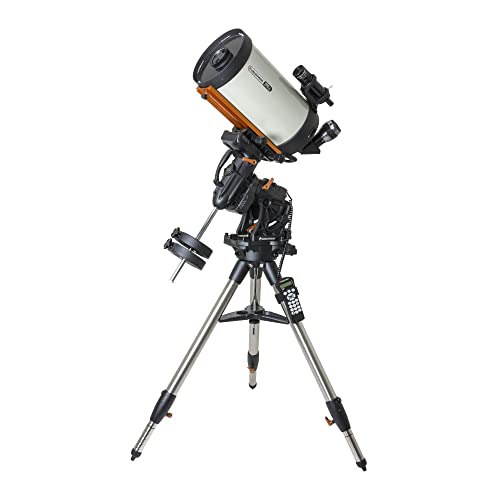
Celestron CGX 9.25" EdgeHD Flat-Field Telescope & Computerized EQ Mount | Enhanced Contrast, Flat-Field Performance, Ideal for Deep-Sky Imaging, GoTo German Equatorial Mount, Versatile Focal Ratios
View on Amazon. The Celestron CG-4 Manual German Equatorial Mount with Steel Tripod is a manual option with slow-motion controls and an adjustable latitude range, a good choice for observers who prefer hands-on control and plan to add a motor drive later:

Celestron CG-4 Manual German Equatorial Mount with Steel Tripod | Smooth Manual Tracking, Precision Slow-Motion Controls, Heavy-Duty Steel Tripod, Adjustable Latitude, Accepts Motor Drive
View on Amazon. For a broader look at the category, you may also want to read German Equatorial Mount Comparison (2026): Which Should You Choose? and 5 Best Celestron CGX Equatorial Mounts for Beginners and Imagers.
If you are new to equatorial mounts in general, What Is an Equatorial Telescope Mount? How It Works and Why It Matters explains the core concepts before you compare models. Buyers considering used equipment should also review Used Celestron Equatorial Mount: 4 Best Picks for Buyers in 2026 to understand what to inspect.
FAQ
What is the payload capacity of the Celestron CGX German equatorial mount?
The listing specifies a 55 lb payload capacity. Treat that as the maximum combined weight of the optical tube, accessories, and counterweights, and aim to stay below it with a comfortable margin for balance and wind.
Does the CGX include a tripod?
Yes, the product is sold as a mount and tripod package with a heavy-duty tripod. Check the specific bundle contents before buying, since optical tubes and eyepieces are usually separate purchases.
Is the CGX suitable for astrophotography?
It can be, provided the payload is balanced, polar alignment is careful, and guiding is set up if your exposures are long. The belt-drive tracking system is designed to support imaging, but tracking quality still depends on alignment.
Do I need to polar align the mount?
For accurate GoTo pointing and good tracking, yes. Polar alignment aligns the mount’s right ascension axis with the celestial pole, and skipping it leads to drift and missed targets.
Is the CGX difficult to set up for a beginner?
It has a learning curve. Leveling the tripod, balancing the payload, aligning the mount, and running a GoTo alignment all take practice. Many owners report that setup gets faster after a few sessions.
Can I use the CGX for visual observing only?
Yes. The mount works for visual observing, and GoTo helps you find deep-sky targets. However, if you only observe the Moon and planets, a simpler and lighter mount may be more practical.
How does the belt-drive system differ from a gear-driven mount?
Belt drives are generally understood to produce smoother motion with less periodic error than many worm-gear systems. This can help with long exposures, but the benefit depends on accurate polar alignment and balance.
Should I consult a professional before buying?
For most observers, reading manufacturer documentation and talking with experienced astronomy club members is enough. If you plan to mount heavy equipment permanently on a roof or pier, consult a qualified installer or structural professional for safety.
Final Verdict
The celestron cgx german equatorial mount is a capable choice for intermediate observers and imagers who need a generous payload rating, computerized GoTo, and a belt-drive tracking system on a sturdy tripod. Its strengths are real, but so are its demands: weight, setup complexity, and the need for careful polar alignment. Buy it if your optical tube is heavy, you plan to image or observe deep-sky objects regularly, and you can accept a bulkier rig. Skip it if you need something portable, your observing is limited to the Moon and planets, or you want a simple setup with minimal learning.
View on AmazonRelated reading
- Celestron German Equatorial Mount: 5 Best Picks Compared in 2026
- When Was the German Equatorial Mount Invented? History and Origins
- Top 5 Goto German Equatorial Mount Picks for Every Observer
- Meade German Equatorial Mount: Setup Steps and What to Know (2026)
About Colin Foster
Colin Foster is part of our editorial team and reviews and edits our telescopes & stargazing guides, checking product details against manufacturer specifications and owner feedback.
About the author
Colin Foster writes reviews and buying guides for Astronomy Site.