Celestron German Equatorial Mount: 5 Best Picks Compared in 2026
Comparing the best Celestron German equatorial mount options for beginners and imagers. See specs, pros, cons and which model fits your observing goals.
 By Colin Foster
Updated November 22, 2026
 By Colin Foster
Updated November 2026
Shopping for a celestron german equatorial mount means balancing three things: how much weight it can carry, how well it tracks the sky, and how much setup effort you are willing to accept. A German equatorial mount (GEM) is built around a polar axis that you align with the celestial pole, so once it is set up, a single axis can follow the stars as Earth turns. This list weighs each Celestron option on payload capacity, tracking method, control style, and fit for visual or imaging work. The selection draws on published specifications, brand reputation, and recurring patterns in owner feedback rather than any hands-on testing.
Our top picks at a glance
- 1TOP CHOICEBest overallCelestron Advanced VX Computerized German Equatorial MountView on Amazon
- 2
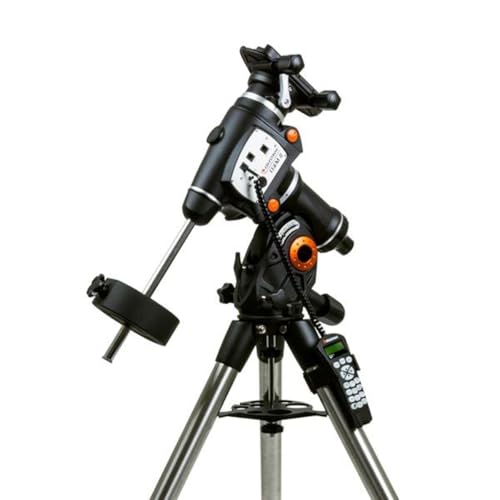 TOP CHOICEBest for heavier imaging rigsCelestron CGEM II Computerized Equatorial Mount & TripodView on Amazon
- 3
 TOP CHOICEBest for manual observingCelestron CG-4 Manual German Equatorial Mount with Steel TripodView on Amazon
- 4
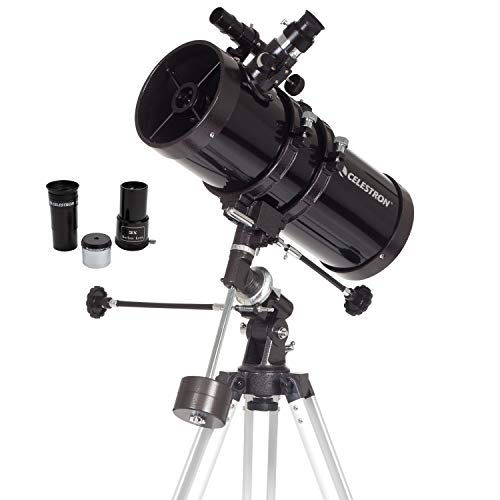 Best for a complete beginner kitCelestron PowerSeeker 127EQ Reflector Telescope for Home AstronomyView on Amazon
- 5
 Best budget pickCelestron AstroMaster 130EQ Telescope for Deep-Sky BeginnersView on Amazon
Our Top Picks
| Product | Best for | Key feature |
|---|---|---|
| Celestron Advanced VX Computerized German Equatorial Mount | Beginners moving into GoTo and imaging | GoTo tracking with NexStar+ hand control, 30 lb payload |
| Celestron CGEM II Computerized Equatorial Mount & Tripod | Heavier telescopes and serious astrophotography | Belt-driven gears, All-Star polar alignment, 40 lb payload |
| Celestron CG-4 Manual German Equatorial Mount with Steel Tripod | Visual observers who want full manual control | Smooth manual tracking with slow-motion controls |
| Celestron PowerSeeker 127EQ Reflector Telescope for Home Astronomy | First-time buyers wanting an all-in-one setup | 127 mm reflector on a German equatorial mount |
| Celestron AstroMaster 130EQ Telescope for Deep-Sky Beginners | Budget-minded beginners who want bigger aperture | 130 mm optics on an equatorial mount |
Celestron Advanced VX Computerized German Equatorial Mount
Celestron Advanced VX Computerized German Equatorial Mount – 30lb Payload | Ideal Beginner EQ Setup, Precision GoTo Tracking, NexStar+ Hand Control, Perfect for Imaging or Advanced Visual Astronomy
Best for: Beginners who want computerized GoTo tracking and the option to add a camera later. We also found Top 5 Equatorial Mount Solar Tracker Picks Compared for 2026 useful on this point.
This is a mid-range mount for observers who expect to grow into deep-sky imaging but want a manageable learning curve now. It suits people who will carry a moderately sized refractor or reflector and want the mount to find objects automatically.
Key specs
- Payload capacity listed at 30 lb
- Computerized GoTo with NexStar+ hand control
- German equatorial design with polar alignment
Pros
- Precision GoTo tracking for finding deep-sky objects quickly
- Scales well from visual use to basic astrophotography
- Widely documented setup procedures across beginner resources
Cons
- Setup and polar alignment take practice before they feel routine
- Payload limit rules out very heavy optical tubes
Bottom line: A strong pick for beginners who want computerized tracking without jumping to the heaviest mounts.
View on AmazonCelestron CGEM II Computerized Equatorial Mount & Tripod
Celestron CGEM II Computerized Equatorial Mount & Tripod – 40lb Payload | Belt-Driven Gears, All-Star Polar Alignment, 40,000+ Object Database, NexStar+ Hand Control, Precision GoTo Performance
Best for: Heavier telescopes and observers who plan longer exposures for astrophotography.
The CGEM II is aimed at users with larger optics or camera setups who need extra payload headroom. Owners often report that its belt-driven gearing and automated polar alignment make it a practical step up from entry-level mounts.
Key specs
- Payload capacity listed at 40 lb
- Belt-driven gears
- All-Star polar alignment and NexStar+ hand control
Pros
- Higher payload than the Advanced VX
- Automated polar alignment reduces setup frustration
- Large built-in object database for GoTo use
Cons
- Heavier and bulkier to transport than manual mounts
- More features than a casual visual observer may use
Bottom line: Best for observers whose optics or imaging gear outgrow the lighter mounts on this list.
View on AmazonCelestron CG-4 Manual German Equatorial Mount with Steel Tripod
Celestron CG-4 Manual German Equatorial Mount with Steel Tripod | Smooth Manual Tracking, Precision Slow-Motion Controls, Heavy-Duty Steel Tripod, Adjustable Latitude, Accepts Motor Drive
Best for: Visual observers who prefer hands-on control over computerized tracking.
The CG-4 is a manual equatorial mount for people who like to learn the sky by star-hopping and who want to keep the setup simple. It also accepts a motor drive if you decide to add one later.
Key specs
- Steel tripod with adjustable latitude
- Slow-motion controls on both axes
- Accepts a motor drive accessory
Pros
- Smooth manual tracking once polar aligned
- No computer or hand control required to operate
- Upgrade path to motor drive tracking
Cons
- You must locate every object manually
- Less suited to astrophotography without added accessories
Bottom line: A good fit for visual astronomers who enjoy finding objects themselves.
View on AmazonCelestron PowerSeeker 127EQ Reflector Telescope for Home Astronomy
Celestron PowerSeeker 127EQ Reflector Telescope for Home Astronomy | German Equatorial Mount, Bright Views of the Moon, Planets & Deep Sky, Slow-Motion Controls, Stable Tripod, Easy to Use
Best for: First-time buyers who want a telescope and mount in one package. For another angle, check out Orion SkyView Pro Equatorial Mount Alternatives: 5 Best Picks Compared (2026).
This is a complete starter setup built around a 127 mm reflector on a German equatorial mount. It targets families and new hobbyists who want the lunar and planetary views that a modest aperture delivers well.
Key specs
- 127 mm reflector optical tube
- German equatorial mount with slow-motion controls
- Stable tripod for home use
Pros
- Everything needed to start observing in one box
- Bright views of the Moon and bright planets
- Straightforward manual controls for new users
Cons
- Limited payload and tracking for imaging
- Faint deep-sky objects remain challenging without dark skies
Bottom line: The most convenient starting point for someone who wants a complete kit and modest expectations for faint objects.
View on AmazonCelestron AstroMaster 130EQ Telescope for Deep-Sky Beginners
Celestron AstroMaster 130EQ Telescope for Deep-Sky Beginners | Large 130mm Optics, Bright Moon & Deep-Sky Views, Perfect First Telescope, German Equatorial Mount with Easy Manual Controls
Best for: Budget-minded beginners who want more light-gathering than a small refractor offers.
The AstroMaster 130EQ pairs a 130 mm optical tube with an equatorial mount, giving beginners a bit more aperture for deep-sky viewing. It suits people who plan mostly visual sessions from a reasonably dark location.
Key specs
- 130 mm aperture
- German equatorial mount with manual controls
Pros
- Larger aperture than many entry-level kits
- Easy manual controls for learning the sky
- Good for bright deep-sky targets like clusters and the Moon
Cons
- Manual tracking requires regular nudging during long views
- Not designed for astrophotography
Bottom line: A sensible budget choice for beginners who want more aperture and are happy observing manually.
View on AmazonBuying Guide
Payload capacity
Payload is the total weight the mount can carry safely, including the optical tube, eyepieces, cameras and counterweights. Manufacturers specify these limits, and staying well under them makes tracking more accurate. Add a margin for accessories you plan to buy later. A related read: Top 5 Goto German Equatorial Mount Picks for Every Observer.
Good picks for this: Celestron CGEM II Computerized Equatorial Mount & Tripod, Celestron Advanced VX Computerized German Equatorial Mount
Tracking method: manual, motor drive or GoTo
Manual mounts need you to nudge the telescope to keep objects centered. Motor-driven and computerized mounts follow the sky automatically, and GoTo models also point to catalog objects. Decide whether you prefer learning star positions or having the mount do the finding.
Good picks for this: Celestron CG-4 Manual German Equatorial Mount with Steel Tripod, Celestron Advanced VX Computerized German Equatorial Mount
Polar alignment
A German equatorial mount must be aligned to the celestial pole for accurate tracking. Some Celestron models offer automated alignment routines, while manual setups rely on a polar scope. Check how much time you are willing to spend before each session.
Good picks for this: Celestron CGEM II Computerized Equatorial Mount & Tripod, Celestron AstroMaster 130EQ Telescope for Deep-Sky Beginners
Tripod stability and build
A solid tripod reduces vibration, which matters more at high magnification. Steel tripods are generally heavier and steadier than lighter alternatives. Look at leg locks, the spreader tray and how the mount attaches to the head.
Good picks for this: Celestron CG-4 Manual German Equatorial Mount with Steel Tripod, Celestron PowerSeeker 127EQ Reflector Telescope for Home Astronomy
Your observing goal
Visual observing of planets, the Moon and bright clusters needs less payload and less tracking precision than astrophotography. Matching the mount to your main activity prevents overspending on features you will not use or buying a mount too weak for your camera.
Good picks for this: Celestron PowerSeeker 127EQ Reflector Telescope for Home Astronomy, Celestron AstroMaster 130EQ Telescope for Deep-Sky Beginners
Control and electronics
Computerized mounts rely on a hand control and power source, so check the power requirements and whether the hand control supports the features you want. Manual mounts have no electronics to troubleshoot, which some owners appreciate.
Good picks for this: Celestron Advanced VX Computerized German Equatorial Mount, Celestron CGEM II Computerized Equatorial Mount & Tripod
Care and maintenance
Keep the mount dry, store it covered, and check that bolts and locks stay snug. Gears and bearings benefit from occasional inspection. Follow the manufacturer’s guidance on lubrication and storage to extend the life of the mount.
Good picks for this: Celestron CG-4 Manual German Equatorial Mount with Steel Tripod, Celestron CGEM II Computerized Equatorial Mount & Tripod
FAQ
What is a German equatorial mount?
A German equatorial mount has a polar axis aligned with the celestial pole and a declination axis that holds the telescope. Once aligned, the polar axis can follow the stars as Earth rotates, which makes tracking objects easier than with an alt-azimuth mount.
Do I need to polar align a Celestron German equatorial mount?
For accurate tracking, yes. Computerized models offer automated alignment routines, while manual models use a polar scope or star-based method. Alignment becomes faster with practice.
Can I use a German equatorial mount for astrophotography?
Yes, but tracking accuracy and payload matter. Higher-capacity computerized mounts are generally better suited to imaging than manual or lightweight models. Check the payload limit against your full camera and optics weight.
Is a manual or computerized mount better for beginners?
It depends on your goals. Manual mounts teach you the sky and cost less in electronics, while computerized mounts help you find objects quickly. Many beginners start manual and move to GoTo later.
What payload do I need?
Add the weight of your telescope, eyepieces, camera and any accessories, then leave headroom below the listed payload. Manufacturers’ stated capacities are the best reference point.
Can I add a motor drive to a manual mount?
Some manual Celestron German equatorial mounts accept motor drive accessories, which can automate tracking. Confirm compatibility for your specific model before buying.
Conclusion
For most beginners who want computerized help, the Celestron Advanced VX Computerized German Equatorial Mount is a balanced choice. Observers with heavier optics or imaging gear should look at the CGEM II for its higher payload. Visual observers who enjoy manual control will find the CG-4 suited to learning the sky, while the PowerSeeker 127EQ and AstroMaster 130EQ offer lower-cost ways to start with a complete telescope.
Sources
- Background on Earth's rotation and the celestial sphere, useful for understanding why equatorial tracking works (nasa.gov)
- Resources from the American Astronomical Society on observing practice and telescope basics
- Beginner guidance on telescope types, mounts and observing techniques
Related reading
- When Was the German Equatorial Mount Invented? History and Origins
- German Equatorial Mount Comparison (2026): Which Should You Choose?
- Equatorial Mount Celestron Telescope Price: What Drives It and What You Get
- Celestron CG 3 Equatorial Mount: 5 Best Picks Compared for Observers (2026)
About Colin Foster
Colin Foster is part of our editorial team and reviews and edits our telescopes & stargazing guides, checking product details against manufacturer specifications and owner feedback.
About the author
Colin Foster writes reviews and buying guides for Astronomy Site.