7 Best Cameras for Astrophotography with Telescope: Picks Compared (2026)
Find the best camera for astrophotography with telescope. We compare 7 planetary, deep-sky and smart-telescope options by sensor, use case and fit.
 By Ava Thornton
Updated November 2026
Choosing the best camera for astrophotography with telescope comes down to one question: what do you want to photograph? A planetary camera that pulls detail from Jupiter’s cloud bands is built differently from a color sensor meant for wide Milky Way frames, and a guide camera has a job that is neither. This list compares seven options on sensor type, frame rate, interface, fit with common telescope setups, and how well each matches a specific observing goal. Every pick below was evaluated from manufacturer specifications, brand reputation and patterns in owner feedback. None of this is based on our own bench testing.
Our top picks at a glance
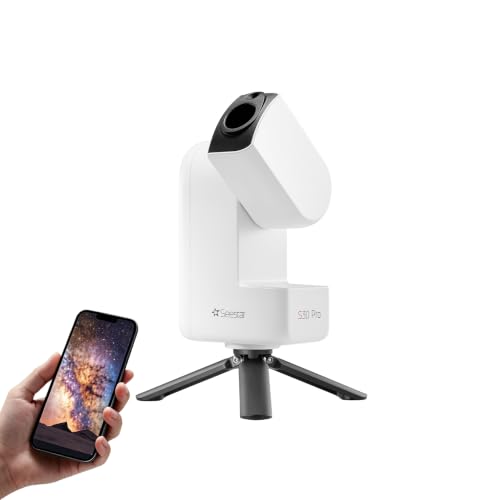
- 1TOP CHOICEBest overallZWO Seestar S30 Pro Smart Telescope, App-Controlled AstrophotographyView on Amazon
- 2
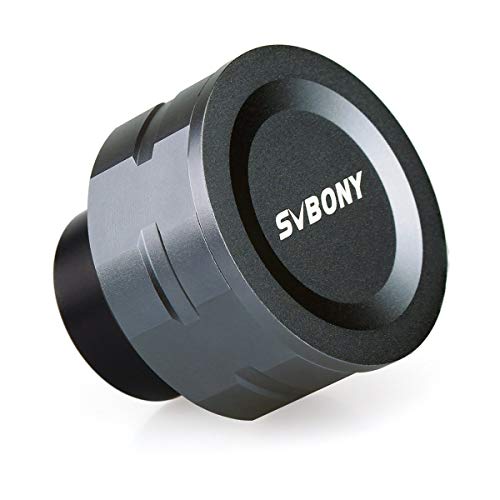 TOP CHOICEBest for beginners on a budgetSVBONY SV105 Telescope Camera, 1.25" IMX307 CMOS Color Eyepiece CameraView on Amazon
- 3
 TOP CHOICEBest for portable, all-in-one imagingDWARFLAB Dwarf 3 Smart Telescope, App-Controlled Astrophotography CameraView on Amazon
- 4
 Best for planetary and EAA workSVBONY SV305C Astrophotography Camera, 2.1MP IMX662 Color Telescope CameraView on Amazon
- 5
 Best for wide-field 4K sensor imagesSVBONY SV205 Telescope Camera, 1.25" 7.05MP IMX415 Astrophotography CameraView on Amazon
- 6
 Best for fast USB 3.0 planetary captureSVBONY SV305C Pro Telescope Camera, USB 3.0 High-Speed, 2MP IMX662 SensorView on Amazon
- 7
 Best dedicated guide cameraSVBONY SV905C Guide Camera Telescope Eyepiece, 1.23MP CMOS SensorView on Amazon
Our Top Picks
Quick Comparison
| Product | Best for | Key feature |
|---|---|---|
| ZWO Seestar S30 Pro Smart Telescope | Automated deep-sky and Milky Way imaging | 4K dual camera with auto tracking and GoTo |
| SVBONY SV105 Telescope Camera | Beginners attaching a camera to an eyepiece tube | Plug-and-play 1.25″ CMOS color eyepiece camera |
| DWARFLAB Dwarf 3 Smart Telescope | Portable setups and travel | Lightweight body with 4K auto tracking |
| SVBONY SV305C Astrophotography Camera | Planetary imaging and electronically assisted astronomy | IMX662 color sensor with UV/IR cut glass |
| SVBONY SV205 Telescope Camera | Wider-field color framing | 7.05MP IMX415 sensor at 15 FPS |
| SVBONY SV305C Pro Telescope Camera | High-speed planetary capture | USB 3.0 with 128MB DDR buffer |
| SVBONY SV905C Guide Camera Telescope Eyepiece | Autoguiding and planetary work | ST4 guide port with AR-coated window |
ZWO Seestar S30 Pro Smart Telescope, App-Controlled Astrophotography
ZWO Seestar S30 Pro Smart Telescope, App-Controlled Astrophotography | 4K Dual Camera, Auto Tracking & GoTo, One-Tap Capture & Processing, Milky Way & Star Trail, Deep Sky & Wide-Field Imaging
Best for: Automated deep-sky and Milky Way imaging
This suits someone who wants a finished image without building a full mount-and-camera rig. It is aimed at observers who prefer working from a phone app to hand-tuning settings.
Key specs
- 4K dual camera design, per the listing
- Auto tracking and GoTo
- One-tap capture and on-device processing
- Milky Way, star trail and deep-sky modes
Pros
- Minimal setup for beginners
- Automated tracking keeps targets framed through a session
- Built-in processing reduces post-capture work
Cons
- Less control for advanced users who want custom stacking
- Locked into its own app workflow
Bottom line: A strong first pick if you want the most image output with the least setup. Advanced imagers will likely outgrow it.
View on AmazonSVBONY SV105 Telescope Camera, 1.25″ IMX307 CMOS Color Eyepiece Camera
SVBONY SV105 Telescope Camera, 1.25" IMX307 CMOS Color Eyepiece Camera | Plug and play, M28.5×0.6 Thread, USB 2.0 Electronic Telescope Eyepiece for Telescope, Suitable for Astrophotography Beginners
Best for: Beginners attaching a camera to an eyepiece tube
Owners often describe this as the simplest way to try astrophotography through an existing telescope. It drops into a 1.25-inch focuser and connects over USB, which keeps the learning curve short.
Key specs
- 1.25-inch barrel format
- IMX307 CMOS color sensor
- USB 2.0 connection
- M28.5×0.6 thread for accessories
Pros
- Plug-and-play setup suited to newcomers
- Inexpensive way to test whether you enjoy imaging
- Works with a wide range of 1.25-inch focusers
Cons
- Lower resolution than newer sensors
- USB 2.0 limits high frame-rate capture
Bottom line: Best for someone who wants to start cheaply and learn the basics before investing further.
View on AmazonDWARFLAB Dwarf 3 Smart Telescope, App-Controlled Astrophotography Camera
DWARFLAB Dwarf 3 Smart Telescope, App-Controlled Astrophotography Camera | Portable 3lb Design, 4K Auto-Tracking, AZ/EQ Modes, Built-in Processing, Astronomy Shooting, Wildlife and Panorama Imaging
Best for: Portable setups and travel
The lightweight body makes this a fit for observers who carry gear to dark sites or who want something that packs into a small bag. It supports both alt-azimuth and equatorial modes.
Key specs
- Roughly 3 lb body, per the listing
- 4K auto tracking
- AZ and EQ mounting modes
- Built-in processing for astronomy, wildlife and panorama shooting
Pros
- Easy to transport
- Covers more subject types than a pure astronomy camera
- Both AZ and EQ modes add flexibility
Cons
- Small body limits aperture and accessory options
- App-dependent workflow
Bottom line: Good for travelers and casual observers who value portability over maximum image control.
View on AmazonSVBONY SV305C Astrophotography Camera, 2.1MP IMX662 Color Telescope Camera
SVBONY SV305C Astrophotography Camera, 2.1MP IMX662 Color Telescope Camera | USB 2.0, with UV IR Cut Glass, 1.25" Entry-Level Electronic Telescope Eyepiece, for Planetary Moon Astrophotography & EAA
Best for: Planetary imaging and electronically assisted astronomy
This is a color planetary camera for observers who want to capture Moon and planet detail or use live-stacking for faint objects. The UV/IR cut glass helps control unwanted light in the image.
Key specs
- 2.1MP IMX662 sensor
- USB 2.0 interface
- UV/IR cut glass included
- 1.25-inch entry-level format
Pros
- Good match for lunar and planetary targets
- Supports electronically assisted astronomy workflows
- Compact 1.25-inch body
Cons
- USB 2.0 caps frame rate compared with USB 3.0 models
- Small sensor is not ideal for wide-field framing
Bottom line: A solid choice for planetary work and live EAA sessions on a standard telescope.
View on AmazonSVBONY SV205 Telescope Camera, 1.25″ 7.05MP IMX415 Astrophotography Camera
SVBONY SV205 Telescope Camera,1.25" 7.05MP IMX415 Astrophotography Camera | USB3.0, 15FPS Per Second at 3264*2160 Resolution,Electronic Telescope Eyepiece, Suitable for Astrophotography Beginners
Best for: Wider-field color framing
With a 7.05MP sensor, this model covers more sky per frame than the smaller-resolution options here. It suits observers working with focal lengths that let the sensor show larger objects like nebulae and star fields.
Key specs
- 7.05MP IMX415 sensor
- Listed output of 15 FPS at 3264 x 2160
- USB 3.0 interface
- 1.25-inch electronic eyepiece format
Pros
- Higher resolution than many entry cameras
- USB 3.0 supports faster readout
- Good for framing larger targets
Cons
- Large pixel count means larger files and more processing time
- Small 1.25-inch sensor size still limits field of view
Bottom line: A good step up for observers who want more resolution for deep-sky framing on a budget.
View on AmazonSVBONY SV305C Pro Telescope Camera, USB 3.0 High-Speed, 2MP IMX662 Sensor
SVBONY SV305C Pro Telescope Camera, USB 3.0 High-Speed, 2MP IMX662 Sensor | 128MB DDR Buffer, 1.25" CMOS Astrophotography Planetary Camera, ST4 Guiding Interface Guide Camera, for Astrophotography
Best for: High-speed planetary capture
The Pro version pairs the IMX662 sensor with USB 3.0 and a memory buffer, which matters when you are recording fast video for lucky imaging. It also includes an ST4 port for guiding.
Key specs
- 2MP IMX662 sensor
- USB 3.0 high-speed interface
- 128MB DDR buffer
- ST4 guide interface
Pros
- Faster data transfer than USB 2.0 models
- Buffer helps sustain high-speed capture
- ST4 port adds guiding options
Cons
- Requires a USB 3.0 port and compatible computer for full speed
- Costs more in attention to setup than basic eyepiece cameras
Bottom line: Best for planetary imagers who need speed and are comfortable with a computer-based workflow.
View on AmazonSVBONY SV905C Guide Camera Telescope Eyepiece, 1.23MP CMOS Sensor
SVBONY SV905C Guide Camera Telescope Eyepiece, 1.23MP CMOS Sensor, 1.25Inch | USB 2.0, ST4 Guide Interface, Astrophotography Camera, with AR-Coated, for Autoguiding or Planetary Imaging, Astrophotogra
Best for: Autoguiding and planetary work
This camera is designed to track guide stars so a mount can keep a long exposure steady. Some observers also use it for planetary capture, though its sensor is better suited to guiding than to color imaging.
Key specs
- 1.23MP CMOS sensor
- 1.25-inch format
- USB 2.0 interface
- ST4 guide interface and AR-coated window
Pros
- Useful for autoguiding long exposures
- Compact and lightweight
- AR coating helps reduce reflections
Cons
- Low resolution limits imaging use
- Not a primary imaging camera for most targets
Bottom line: Pick this if your goal is accurate guiding for long exposures rather than a main imaging sensor.
View on AmazonBuying Guide
Sensor type and size
Color sensors capture the full palette of a target in a single exposure, which suits wide-field and general sky photos. Monochrome sensors often deliver finer detail for filtered deep-sky work. Sensor size determines field of view: a small sensor on a long focal length shows a tiny patch of sky, while a larger sensor on a shorter focal length frames more of a nebula or star cluster.
Good picks for this: SVBONY SV205 Telescope Camera, ZWO Seestar S30 Pro Smart Telescope
Frame rate and interface
For planetary and lunar video, frame rate matters because it lets you capture enough good frames for stacking. USB 3.0 generally moves data faster than USB 2.0, and a memory buffer helps prevent dropped frames during high-speed capture. Check your laptop or mini-PC for USB 3.0 ports before buying.
Good picks for this: SVBONY SV305C Pro Telescope Camera, SVBONY SV305C Astrophotography Camera
Compatibility with your telescope
Most eyepiece-style cameras use a 1.25-inch barrel that slides into a standard focuser. Verify that your telescope accepts 1.25-inch accessories, and check whether you need a T-thread adapter for camera-to-telescope connection. Mismatched focal lengths can leave the image too small or too dim to be useful.
Good picks for this: SVBONY SV105 Telescope Camera, SVBONY SV905C Guide Camera Telescope Eyepiece
Use case: planetary, deep-sky or wide-field
Planetary cameras prioritize high frame rates and small sensors. Deep-sky cameras trade speed for sensitivity and longer exposures. Wide-field framing benefits from larger sensors and a shorter focal length. Decide your main target before you buy so you don’t pay for features you won’t use.
Good picks for this: ZWO Seestar S30 Pro Smart Telescope, DWARFLAB Dwarf 3 Smart Telescope
Guiding support
Long exposures need accurate mount tracking. An ST4 guide port or a dedicated guide camera lets you correct small drift automatically. If you plan to image deep-sky targets with long exposures, confirm that your mount and camera share a guiding connection.
Good picks for this: SVBONY SV905C Guide Camera Telescope Eyepiece, SVBONY SV305C Pro Telescope Camera
Portability and build
Weight and size affect how often you actually set up. A compact body is easier to carry to a dark site and less likely to strain a light telescope. Check whether the camera needs its own power, a computer or a phone app, since each adds equipment to your kit.
Good picks for this: DWARFLAB Dwarf 3 Smart Telescope, ZWO Seestar S30 Pro Smart Telescope
Software and processing workflow
Some cameras are designed for app-based capture with built-in stacking. Others expect you to use third-party capture and stacking software on a computer. Decide whether you want an automated workflow or manual control, then choose a camera whose software matches that preference.
Good picks for this: ZWO Seestar S30 Pro Smart Telescope, SVBONY SV105 Telescope Camera
FAQ
What is the best camera for astrophotography with telescope for beginners?
Owners often recommend simple eyepiece-style cameras or all-in-one smart telescopes for beginners because they need little setup. The right pick depends on whether you want to learn manual control or prefer automated results.
Do I need a color camera or a monochrome camera?
Color cameras are easier for general sky imaging and quick sessions. Monochrome cameras are often used with filters for detailed deep-sky work, but they require more time and processing.
Is USB 3.0 necessary for planetary imaging?
USB 3.0 is helpful when you need high frame rates for video capture, since it moves data faster than USB 2.0. Lunar and planetary imagers who record many frames per session benefit most from it.
Can I use a regular camera instead of an astronomy camera?
Yes, many people use DSLR or mirrorless cameras with telescopes, often through a T-ring adapter. Dedicated astronomy cameras usually offer cooled sensors or lower noise, so the trade-off is cost and complexity versus image quality.
Do I need a guide camera for long exposures?
For exposures longer than a few seconds, a guide camera or ST4-compatible setup helps correct tracking drift. Without guiding, stars can streak and images can blur.
What focal length do I need?
Focal length determines how much of the sky the camera sees. Longer focal lengths magnify small targets like planets, while shorter focal lengths suit nebulae and star fields. Calculate the field of view for your setup before buying a sensor.
Will these cameras work with any telescope?
Most 1.25-inch cameras fit telescopes with a standard focuser, but confirm the connection type and whether an adapter is needed. Some smart telescopes are self-contained and do not need a separate telescope.
Conclusion
For most observers starting out, the best camera for astrophotography with telescope is one that matches your target and your workflow. The ZWO Seestar S30 Pro Smart Telescope suits people who want automated results, while the SVBONY SV105 Telescope Camera is a simple entry point. Planetary imagers should look at the SVBONY SV305C Pro Telescope Camera for USB 3.0 speed, and those focused on guiding will find the SVBONY SV905C Guide Camera Telescope Eyepiece useful. Use the buying guide above to match a sensor, interface and focal length to your telescope before you buy.
Sources
- Background on planetary observing, telescope optics and the night sky (nasa.gov)
- General guidance on night photography and dark-sky observing
- Resources from the American Astronomical Society on astronomy education and observing
Related reading
- Zwo Camera for Astrophotography: 8 Best Picks Compared (2026)
- What Is the Best Nikon Camera Lens for Astrophotography? Top Picks
- Top 7 Deep Sky Astrophotography Cameras for Serious Imaging in 2026
- Point and Shoot Camera for Astrophotography: 7 Best Picks Compared (2026)
- Mirrorless Camera for Astrophotography: 6 Best Picks Compared (2026)

About Ava Thornton
Ava focuses on practical advice for telescopes & stargazing: what matters before you buy, what to skip, and how to get more out of what you already own.
About the author
Ava Thornton writes reviews and buying guides for Astronomy Site.