Celestron PowerSeeker 80EQ Refractor Telescope Review: Who Is It For?
Celestron PowerSeeker 80EQ refractor telescope review: features, pros and cons, alternatives, and who should buy it for Moon and planet viewing.
 By Claire Whitaker
Updated November 16, 2026
 By Claire Whitaker
Updated November 2026
The celestron powerseeker 80eq refractor telescope suits beginners who want bright, sharp views of the Moon, planets and bright star clusters, and who plan to observe from a fixed spot with a tripod. It is a good match for families and first-time observers with a modest interest in tracking objects across the sky. It is a weaker choice for anyone chasing faint galaxies or nebulae, or for those who expect to carry a scope to dark-sky sites often.
Celestron PowerSeeker 80EQ Refractor Telescope for Moon & Planet Viewing | Large 80mm Refractor, Bright Views of the Best Celestial Objects, Smooth Equatorial Tracking, Stable Tripod, Easy to Use
Product Overview
The PowerSeeker 80EQ is an 80mm refractor built on an equatorial mount, a design that lets you follow celestial objects with a single axis as Earth turns. It is aimed at lunar and planetary observing, where a larger aperture and steady tracking make a visible difference over smaller starter scopes. It is sold as a complete package with a tripod and basic eyepieces, so it works out of the box.
Key Features
- 80mm objective lens for a large light-gathering area compared with 50mm and 70mm starter refractors
- Equatorial mount with smooth tracking to follow objects across the sky
- Stable tripod for steady viewing at the eyepiece
- Designed for bright views of the Moon, planets and the brightest deep-sky objects
- Marketed as easy to set up and use for beginners
Pros & Cons
Pros
- The 80mm aperture gives brighter, more detailed lunar and planetary views than smaller refractors
- The equatorial mount makes it easier to keep a target centered once you learn the polar alignment basics
- The tripod and mount feel stable enough for comfortable eyepiece viewing
Cons
- Equatorial mounts take more time to learn than simple altazimuth mounts, which can frustrate absolute beginners
- Its aperture is modest, so faint deep-sky objects will look dim and small
Who Should Buy This Product?
Buy this scope if you want a step up from a basic starter refractor and plan to observe mainly the Moon, planets and bright star clusters from home or a nearby dark spot. Skip it if you want a grab-and-go scope for frequent travel, or if deep-sky photography and faint nebulae are your main goals. Owners often report that learning polar alignment is the main hurdle, so budget a few evenings to practice.
Alternatives
For a lighter, more portable option, the Celestron PowerSeeker 70EQ is a smaller refractor on a similar mount that trades some light-gathering for easier carrying:

Celestron PowerSeeker 70EQ Refractor Telescope for Family Stargazing | Lightweight Refractor, Crisp Moon & Planet Views, Grab and Go, Smooth Equatorial Tracking, Easy to Set Up & Use
For more aperture and deep-sky reach, the Celestron PowerSeeker 127EQ is a reflector on a German equatorial mount that gathers considerably more light than the 80EQ:
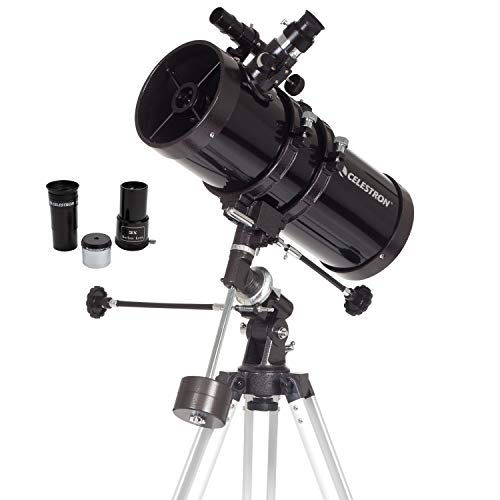
Celestron PowerSeeker 127EQ Reflector Telescope for Home Astronomy | German Equatorial Mount, Bright Views of the Moon, Planets & Deep Sky, Slow-Motion Controls, Stable Tripod, Easy to Use
FAQ
Is the PowerSeeker 80EQ good for beginners?
It can be, as long as you are willing to learn the basics of equatorial mounting. The bright lunar and planetary views are rewarding, but the mount takes some practice before tracking feels effortless.
Can the PowerSeeker 80EQ show galaxies and nebulae?
Only the brightest examples, and they will appear small and faint. An 80mm refractor is better suited to the Moon, planets, double stars and open clusters than to dim deep-sky targets viewed from a light-polluted yard.
Does the PowerSeeker 80EQ work for astrophotography?
Basic smartphone or simple camera shots of the Moon are possible, but the scope is not designed for dedicated astrophotography. Serious imaging usually requires a more stable, motorized setup and a camera built for long exposures.
Final Verdict
The celestron powerseeker 80eq refractor telescope is a sensible choice for beginners who want crisp lunar and planetary views and are willing to learn equatorial tracking. It is not the right tool for faint deep-sky hunting or frequent travel. If it fits your goals, you can check current availability here: View on Amazon.
Related reading
- Celestron PowerSeeker 50 Refractor Telescope: 6 Best Picks Compared (2026)
- Celestron Starsense Explorer Lt 70az Refractor Telescope: A Practical Guide (2026)
- Celestron StarSense Explorer 102mm Refractor Telescope: Setup and What It Shows
- Celestron Omni XLT 120mm Refractor Telescope: What It Shows and How to Use It
- Celestron Omni XLT 102mm AZ Refractor Telescope: 3 Best Picks Compared (2026)
- Celestron Omni XLT 102 Refractor Telescope: What You'll See and How to Start
About Claire Whitaker
Claire Whitaker is part of our editorial team and reviews and edits our telescopes & stargazing guides, checking product details against manufacturer specifications and owner feedback.
About the author
Claire Whitaker writes reviews and buying guides for Astronomy Site.