Svbony SV225 Alt-Azimuth Mount Review: Pros and Cons
Svbony SV225 alt-azimuth mount review: specs, pros and cons, who it suits, and how it compares to its alternatives before you buy a small telescope mount.
 By Colin Mercer
Updated November 2026
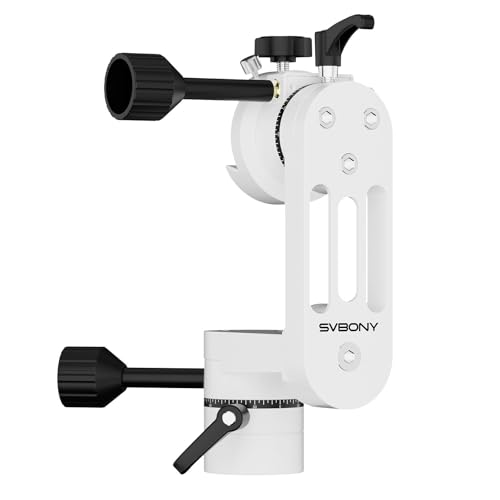
The Svbony SV225 alt-azimuth mount is a compact, lightweight mount aimed at beginners who want a simple way to point a small telescope or spotting scope at planets, the Moon and bright deep-sky objects. The listing describes a 5 kg load capacity, a CNC hollow structure, and a design meant to reduce the empty travel that frustrates many budget mounts. It suits people with a light refractor or a small Newtonian who value portability and quick setup. It is a poor fit for anyone carrying a heavy optical tube, planning long-exposure astrophotography, or expecting motor tracking and GoTo pointing out of the box.
SVBONY SV225 Mini Alt-Azimuth Mount, Adjustable Telescope Alt-Azimuth Mount | Load-Bearing 5kg, No Empty Travel, CNC Hollow Structure, Lightweight Portable Altazimuth, for Astronomy Beginners
Product Overview
The SV225 is a manual altitude-azimuth mount, sometimes sold as a mini or portable version of the SV225 family. An alt-azimuth design moves the telescope up and down (altitude) and side to side (azimuth), which is the most intuitive motion for a beginner. You simply aim the scope at a target and nudge it along two axes. If you want to understand the underlying geometry before choosing, our guide Alt Azimuth Telescope Mount: How It Works and Who Should Use One explains how these mounts behave on different objects.
The product is positioned for visual observing rather than imaging. Its appeal is that it is small enough to carry out to a backyard, a park, or a campsite without a second trip to the car, and its load rating is meant for a modest tube rather than a large observatory-class instrument. Manufacturers generally describe this class of mount as suitable for beginner refractors and small spotting scopes, and that is the framing to keep in mind throughout this review.
Key Features & Specifications
The table below lists only the specifications named in the product listing or that are standard for this model line. Where a figure is not confirmed, it is omitted rather than estimated.
| Feature | What the listing states | What it means for you |
|---|---|---|
| Mount type | Adjustable alt-azimuth (altitude and azimuth motion) | Intuitive manual pointing for visual observing |
| Load capacity | 5 kg (about 11 lb) | Enough for a small refractor; not for heavy tubes or large accessories |
| Construction | CNC hollow structure | Lower weight while keeping the frame rigid |
| Travel behavior | Designed to limit empty travel | Less dead motion before the scope responds when you nudge it |
| Portability | Lightweight, compact mini design | Easy to carry and set up outdoors |
| Intended users | Astronomy beginners | A straightforward entry point into manual pointing |
Because the listing is brief, buyers should check the current product page for mounting thread size, tripod compatibility, and whether a tripod is included. Svbony sells a separate matching tripod, and our overview of Celestron Alt Azimuth Mount Review: Features and Performance shows what a typical tripod and adapter setup looks like for comparable mounts.
Pros & Cons
Pros
- Light and compact, which makes it practical for travel and short observing sessions.
- Alt-azimuth motion is easy to understand, so new observers can find objects without learning polar alignment.
- The 5 kg rating covers a range of small refractors and spotting scopes.
- CNC hollow construction is meant to balance weight and rigidity.
- Design focus on reducing empty travel helps fine adjustments feel more responsive.
- No polar alignment or motor setup required for visual use.
Cons
- Manual operation only in this listing; there is no motorized tracking or GoTo pointing.
- The 5 kg capacity leaves little margin for heavier tubes, cameras, or added accessories.
- Small mounts can shake in wind, and any manual mount will require re-centering on fast-moving targets.
- Field rotation during longer observing sessions can make high-power planetary work more frustrating.
- Astrophotography with this mount is limited to short, untracked exposures at best.
Performance Analysis
Performance for a mount like this depends on three things: the weight of the telescope it carries, how stable the tripod is, and how you handle the controls. Based on the specifications and on common patterns in owner feedback for small alt-azimuth mounts, owners tend to report that the SV225 works best with a light refractor or spotting scope in the 2 to 4 kg range, placed on a sturdy tripod with the legs fully spread and locked.
For visual observing of the Moon and bright planets, a manual alt-azimuth mount is usually adequate. You will need to make small, steady corrections every few minutes as the sky moves. At moderate magnification, the target drifts slowly enough that this is manageable. At high magnification, drift becomes quicker and the job of keeping an object centered takes more attention. Owners commonly describe this as a trade-off inherent to alt-azimuth design, not a defect of this specific model.
Reduced empty travel is one of the listing’s stated strengths. In practice, backlash in cheap gears is a frequent source of frustration, because a small nudge produces no motion followed by a sudden jump. Mounts marketed with lower dead travel generally feel more precise when making fine corrections. Still, any mechanical mount has some play, and the feel will vary with how well it is assembled and how the locks are tightened.
For astrophotography, the SV225 is not designed for long exposures. Without a motor drive, stars trail within seconds to a minute at typical focal lengths. Short exposures of the Moon or planets with a smartphone or lightweight camera may be possible, but serious deep-sky imaging calls for a tracking mount. If that is your goal, see Camera Mount for Astrophotography: 6 Best Picks for Star Tracking (2026) for a better-suited category.
Who Should Buy This Product?
This mount fits a few specific buyers well. A beginner with a small refractor who wants to observe the Moon, Jupiter, Saturn, and a handful of bright double stars will find it approachable. Someone who travels to dark sites by car and wants a light setup will appreciate the portability. People who want to learn the sky by hand, without relying on a computer, will also get value from manual pointing.
Skip this mount if your telescope weighs more than a few kilograms, if you want automatic tracking for long exposures, or if you plan to use a GoTo system. In those cases, an equatorial mount or a motorized alt-azimuth GoTo mount will serve you better. Our article Alt Azimuth Mount vs Equatorial: Which Should You Choose? lays out that decision clearly, and Alt Azimuth GoTo Mount Review: Features and Performance covers the motorized alternative.
Buying Guide
Before buying any alt-azimuth mount, weigh your complete optical tube, eyepiece, and any diagonal or camera together. Stay under the rated load with a comfortable margin, because a mount near its limit will feel less stable. Check the thread size on the mounting plate or rod so it matches your telescope’s dovetail or tripod adapter. Confirm whether a tripod is included, since tripod quality strongly affects stability.
Consider the alternatives in this product family before deciding. The SV225 is the mini version, and a larger-capacity option may suit you if your scope is heavier:
- Svbony SV225 Alt-Azimuth Mount with 10 kg load capacity: a higher-capacity sibling with a fine adjustment shift and variable speed gear, suited to heavier tubes.
- Svbony SV225T Telescope Tripod: an extendable aluminum tripod designed for the SV225 series, useful if you need a matching stable base.
Each option is listed below, so you can compare them side by side:

SVBONY SV225 Alt-Azimuth Mount, Load-Bearing 10kg, Adjustable Angle Mount | CNC Structure, Telescope Altazimuth, Fine Adjustment Shift, Variable Speed Gear, Telescope Accessories, Simple Operation

SVBONY SV225T Telescope Tripod, Extendable Aluminum Astronomical Tripod | Stable Easy Leg Adjustments, 3/8" Mounting Rod, Portable, for SV225 Series Alt-Azimuth Mounts
FAQ
Can the Svbony SV225 alt-azimuth mount carry a large telescope?
No. The listing gives a 5 kg load capacity, which suits small refractors and spotting scopes. Heavier optical tubes can overload the mount and cause shaking or slippage. Check your scope’s total weight, including accessories, before buying.
Does this mount track objects automatically?
The listing describes it as a manual alt-azimuth mount, so it does not provide automatic tracking. You will adjust the altitude and azimuth by hand to keep objects centered.
Is it suitable for astrophotography?
Only in a limited way. Without motor tracking, long exposures will show star trails. Short exposures of bright targets are possible, but deep-sky imaging requires a tracking mount.
Do I need polar alignment?
No. Alt-azimuth mounts are set up by leveling the tripod and pointing the scope at the target. Polar alignment is needed for equatorial mounts, which is one reason beginners often find alt-azimuth designs easier.
Is the mount good for observing planets?
Yes, for moderate magnifications. Planets like Jupiter and Saturn are well within reach of a small manual mount. At high power, you will need to re-center more often because of the faster apparent motion.
What tripod should I use with it?
A sturdy tripod with a standard mounting thread is best. Svbony offers a matching tripod in the SV225 series. Stability matters more than height, so choose a tripod that stays rigid under light vibration.
How should I care for the mount outdoors?
Keep the mount out of direct rain, let it acclimate to outdoor temperature before observing, and store it dry. Check that locks and fasteners are snug before each session. For anything beyond routine cleaning or repairs, consult the manufacturer or a qualified repair technician.
Final Verdict
The Svbony SV225 mini alt-azimuth mount is a sensible, lightweight entry point for beginners using a small refractor or spotting scope for visual observing. Its 5 kg rating, compact build, and intuitive manual pointing make it practical for backyard and travel use. It is not a tracking or astrophotography mount, and it will not suit heavier optics. Match it to a light telescope and set expectations for manual corrections, and it will serve well.
View on Amazon
About Colin Mercer
Colin puts together our telescopes & stargazing guides, digging through specifications, manufacturer details and owner reviews so you don't have to.
About the author
Colin Mercer writes reviews and buying guides for Astronomy Site.