4 Best Powerful Binoculars for Astronomy Compared (2026)
Looking for powerful binoculars for astronomy? Compare four high-power models by aperture, magnification, stability and best use to find your match.
 By Audrey Hayes
Updated November 18, 2026
 By Audrey Hayes
Updated November 2026
Powerful binoculars for astronomy can show star clusters, the Moon’s craters and bright deep-sky objects that look like faint smudges to the naked eye. The right pair depends on how much magnification you can hold steady, how much light the objective lens gathers and whether you plan to use a tripod. The picks below were chosen by comparing product listings, manufacturer specifications and patterns in owner feedback, not by hands-on testing.
Our top picks at a glance
- 1TOP CHOICEBest overallCelestron SkyMaster 20×80 Binoculars for Deep-Sky AstronomyView on Amazon
- 2
 Best for extreme magnificationSogries 25×100 Astronomy Binoculars for StargazingView on Amazon
- 3
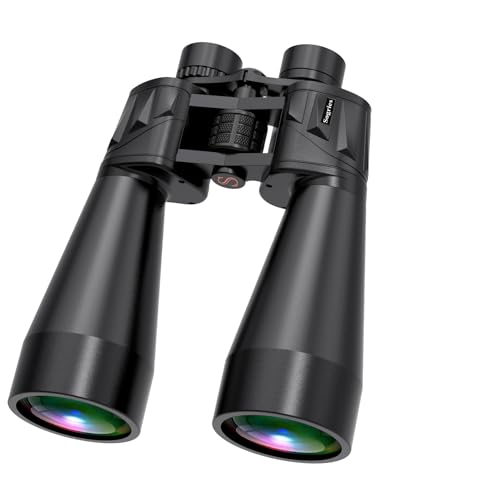 Best for handheld versatilitySogries 18×70 High Power Binoculars for AdultsView on Amazon
- 4
 Best for general-purpose use20×70 Binoculars for Adults High PoweredView on Amazon
Our Top Picks
Quick Comparison
| Product | Best for | Key feature |
|---|---|---|
| Celestron SkyMaster 20×80 | Deep-sky viewing | 80mm objectives, tripod adaptable |
| Sogries 25×100 | Extreme magnification | 100mm objectives, high power |
| Sogries 18×70 | Handheld versatility | 70mm objectives, low-light clarity |
| 20×70 Binoculars for Adults | General-purpose use | 70mm objectives, easy focus |
Celestron SkyMaster 20×80 Binoculars for Deep-Sky Astronomy
Celestron SkyMaster 20×80 Binoculars for Deep-Sky Astronomy – 80mm Aperture | Large 80mm Objectives, Bright Deep-Sky Views, Multi-Coated BaK-4 Optics,Tripod Adaptable, Ultra-Stable Mounting
Best for: Deep-sky viewing from a fixed position
This model suits observers who plan to mount binoculars on a tripod and spend long sessions on star clusters and nebulae. The 80mm objectives gather substantial light, and manufacturers specify a tripod-adaptable design for steadier viewing.
Pros
- Large 80mm objectives collect plenty of light for faint targets
- Tripod adaptable mounting reduces hand shake at 20x
Cons
- Heavier than handheld models, so it is less convenient to carry
Sogries 25×100 Astronomy Binoculars for Stargazing
Sogries 25×100 Astronomy Binoculars for Stargazing High Powered Long Range | Astronomy Binoculars for Adults High Powered Long Distance Professional Powerful Binoculars Star Gazing Planets Waterproof
Best for: Extreme magnification of the Moon and planets
Listings for this model emphasize very high magnification and 100mm objectives. It fits observers who want maximum detail on the Moon and bright planets and who will steady the binoculars on a support.
Pros
- 100mm objectives gather a large amount of light
- Very high magnification shows fine lunar and planetary detail
Cons
- Magnification this high is difficult to hold steady without a tripod
Sogries 18×70 High Power Binoculars for Adults
Sogries 18×70 High Power Binoculars for Adults Professional Long Range | Powerful Binoculars for Adults Astronomy Stargazing Planets Long Distance Bird Watching Wildlife Hi Power Clear Low Light
Best for: Handheld stargazing with a balance of power and portability
This pair offers a middle ground between magnification and weight. It suits observers who want to move between star fields, planets and terrestrial targets without setting up a tripod each time.
Pros
- 70mm objectives balance light gathering with manageable weight
- Usable handheld more often than the largest high-power models
Cons
- Image shake at 18x is noticeable without some form of support
20×70 Binoculars for Adults High Powered
20×70 Binoculars for Adults High Powered Bird Watching Hunting Travel | Large View, HD Vision, Easy Focus, Powerful for Cruise Ship,Camping, Hiking, Christmas Birthday Gifts for Men
Best for: General-purpose use across astronomy and daytime observing
Listings describe this model for stargazing as well as bird watching and travel. It suits buyers who want one pair for several outdoor uses and are comfortable with moderate magnification.
Pros
- 70mm objectives provide good light for deep-sky targets
- Versatile enough for daytime and nighttime use
Cons
- Optical quality varies across budget models, so check reviews for specifics
Buying Guide
Aperture
Aperture is the diameter of the front lens in millimeters. Larger apertures gather more light, which helps with faint deep-sky objects. For a deeper look at sizing, see What Size Binoculars for Astronomy? A Practical Guide.
Magnification and Stability
Higher magnification magnifies hand shake along with the image. Above about 15x, most observers need a tripod or monopod to keep views steady. A useful companion read is Monopod for Astronomy Binoculars: How to Pick and Use One for Steady Views.
Coatings and Build
Multi-coated lenses reduce light loss and improve contrast. Look for waterproof sealing if you observe in dew-prone conditions and a sturdy tripod adapter if you plan to mount the binoculars.
Binoculars or a Telescope
Binoculars give wide, low-power views that are easy to share, while telescopes reach further into deep space. Telescope vs Binoculars for Astronomy: Which Should You Choose? compares the two in more detail.
Good picks for this: Celestron SkyMaster 20×80 and Sogries 18×70
FAQ
Are powerful binoculars good enough for astronomy?
Yes, for many deep-sky objects, star clusters, the Moon and bright planets. Their wide fields make them good for sweeping the Milky Way.
Do I need a tripod for high-power binoculars?
Usually, yes. Magnification above about 15x magnifies hand shake, so a tripod or monopod improves viewing considerably.
What magnification is best for stargazing?
Moderate magnification around 7x to 15x is easiest to hold and gives wide views, while higher powers suit specific targets like the Moon and planets.
Conclusion
The Celestron SkyMaster 20×80 suits observers who will use a tripod for deep-sky work. The Sogries 25×100 fits those chasing lunar and planetary detail, while the Sogries 18×70 works best for handheld observing. The 20×70 model is the most flexible choice for buyers who want one pair for several outdoor uses.
Related reading
- Zeiss Binoculars for Astronomy: 5 Best Picks Compared (2026)
- Used Astronomy Binoculars for Sale: 5 Best Picks Compared
- Top 6 Astronomy Binoculars with Angled Eyepieces for Stargazing
About Audrey Hayes
Audrey Hayes is part of our editorial team and reviews and edits our telescopes & stargazing guides, checking product details against manufacturer specifications and owner feedback.
About the author
Audrey Hayes writes reviews and buying guides for Astronomy Site.