3 Best National Geographic 70/350 Automatic Refractor Telescope Picks Compared
Comparing national geographic 70/350 automatic refractor telescope options and the three National Geographic scopes shoppers consider most, with pros, cons and
 By Claire Whitaker
Updated November 15, 2026
 By Claire Whitaker
Updated November 2026
Shoppers searching for a national geographic 70/350 automatic refractor telescope usually want a small, easy scope that shows the Moon, bright planets and a few deep-sky targets without a steep learning curve. The criteria here are aperture and light-gathering, mount type and setup effort, portability, and how well each model suits a first-time observer. The three National Geographic models below cover different needs rather than competing head-to-head on the same spec sheet.
Our top picks at a glance
- 1TOP CHOICEBest overallNational Geographic Directional STARAPP 70mm Telescope Fully Coated GlView on Amazon
- 2
 Best for portable observingNational Geographic 76MM Compact Reflector TelescopeView on Amazon
- 3
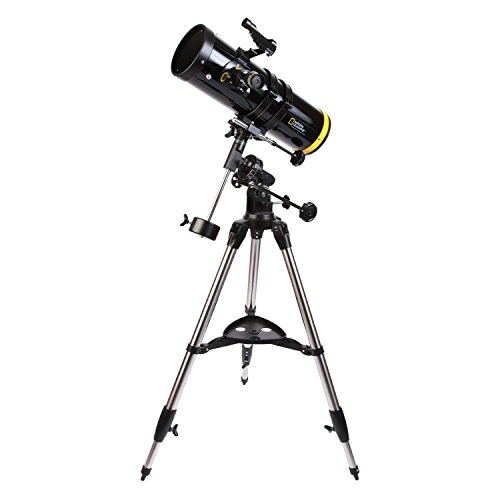 Best for serious beginnersNational Geographic 114Eq TelescopeView on Amazon
Our Top Picks
Quick Comparison
| Product | Best for | Key feature |
|---|---|---|
| National Geographic Directional STARAPP 70mm Telescope | Automatic-style app-guided viewing | 70mm refractor with app |
| National Geographic 76MM Compact Reflector Telescope | Portable observing | Compact reflector design |
| National Geographic 114Eq Telescope | Serious beginners | 114mm equatorial mount |
National Geographic Directional STARAPP 70mm Telescope Fully Coated Glass Optics – Adjustable Height Tripod
National Geographic Directional STARAPP 70mm Telescope Fully Coated Glass Optics – Adjustable Height Tripod – Bonus Astronomy App
Best for: Automatic-style app-guided viewing
This suits households who want the simplest route from unboxing to first view, especially with a younger observer. The 70mm aperture is a good match for lunar detail and bright planetary views. The adjustable-height tripod helps with comfortable eyepiece positioning.
Pros
- Bonus astronomy app helps locate objects
- Fully coated glass optics for brighter, sharper views
Cons
- Aperture limits faint deep-sky targets
National Geographic 76MM Compact Reflector Telescope
National Geographic 76MM Compact Reflector Telescope
Best for: Portable observing
This fits observers who carry their scope to a dark-sky site or a friend’s yard. The 76mm reflector collects more light than a 70mm refractor of similar size. Its compact tube keeps the setup manageable for short sessions.
Pros
- Compact tube is easy to transport
- Larger aperture than many entry-level refractors
Cons
- Reflector optics need occasional collimation
National Geographic 114Eq Telescope
National Geographic 114Eq Telescope
Best for: Serious beginners
This is aimed at observers who want more light and resolution and are willing to learn an equatorial mount. The 114mm aperture reveals more lunar and planetary detail, along with brighter galaxies and clusters. Expect a longer learning curve than with the app-guided models.
Pros
- 114mm aperture gathers substantially more light
- Equatorial mount supports tracking
Cons
- Heavier and more involved to set up
Buying Guide
Aperture and Light Gathering
Aperture determines how much light the scope collects, which controls brightness and detail. Larger apertures reveal fainter objects, so match the size to the targets you care most about.
Mount Type
Altazimuth mounts move up-down and left-right and are intuitive to use. Equatorial mounts track the sky more smoothly but require alignment and practice.
Portability
Consider how often you will move the scope and how far. A compact tube saves effort if you observe away from home.
Ease of Setup
App-guided and automated features shorten the time to first light, which matters most for new observers.
Good picks for this: National Geographic Directional STARAPP 70mm Telescope, National Geographic 76MM Compact Reflector Telescope
FAQ
Can a 70mm scope show planets?
Yes, bright planets such as Jupiter and Saturn are visible, with Saturn’s rings showing as a distinct shape. Fine surface detail will be limited compared with larger apertures.
Do I need an equatorial mount?
Not necessarily. Altazimuth mounts are fine for the Moon and planets, though equatorial mounts make long-exposure astrophotography and tracking easier.
Is a reflector or refractor better for beginners?
Refractors need less maintenance and have sealed optics. Reflectors offer more aperture per dollar of size, but may need collimation.
Conclusion
Choose the National Geographic Directional STARAPP 70mm Telescope if simple, app-guided viewing matters most. Pick the 76MM Compact Reflector Telescope for portability, and the 114Eq Telescope if you want more light and are ready to learn an equatorial mount.
Sources
- Current sky events, planetary visibility and observing basics (nasa.gov)
- Guidance on telescope types and beginner observing practice
Related reading
- National Geographic Srt70app 70mm Refractor Telescope with Astronomy App: A Practical Guide (2026)
- National Geographic 70mm Refractor Telescope with Case: A Practical Guide (2026)
- National Geographic 70mm Refractor Telescope with Astronomy App: A Practical Guide (2026)
About Claire Whitaker
Claire Whitaker is part of our editorial team and reviews and edits our telescopes & stargazing guides, checking product details against manufacturer specifications and owner feedback.
About the author
Claire Whitaker writes reviews and buying guides for Astronomy Site.