5 Best Heavy Duty Equatorial Mounts for Astrophotography and Visual Observing
Compare five heavy duty equatorial mounts by payload, tracking, and use case, from budget bases to GoTo German mounts, to find the right one for your scope.
 By Colin Foster
Updated November 22, 2026
 By Colin Foster
Updated November 2026
A heavy duty equatorial mount is the foundation that decides whether your telescope can track a target steadily for minutes at a time, and whether a heavier optical tube will stay put on a windy night. Choosing one means weighing payload capacity, the stability of the tripod or pier, how the mount tracks the sky, and whether you want to point it manually or let a computer do the work. The five options below are compared on those criteria, with the best fit for visual observers, imagers, and beginners who want a solid base without a large jump in complexity.
Our top picks at a glance
- 1TOP CHOICEBest overallCelestron Advanced VX Computerized German Equatorial MountView on Amazon
- 2
 TOP CHOICEBest for imaging on a budgetSky-Watcher HEQ5-R MountView on Amazon
- 3
 TOP CHOICEBest for manual observingCelestron CG-4 Manual German Equatorial MountView on Amazon
- 4
 Best for heavy loads on a carbon baseCarbon Fiber Telescope Equatorial Base Mount TripodView on Amazon
- 5
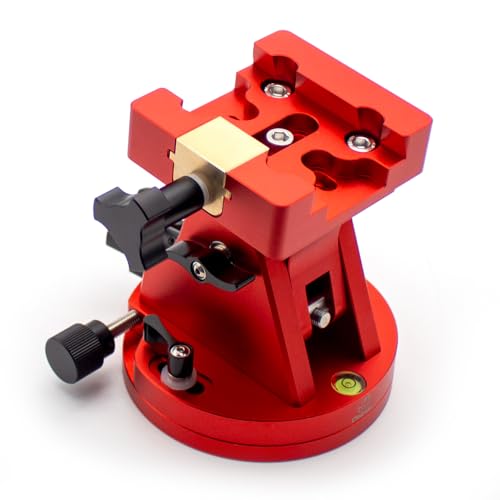 Best for adjustable latitude setupsEquatorial Mount Base with Latitude AdjustmentView on Amazon
Our Top Picks
Quick Comparison
| Product | Best for | Key feature |
|---|---|---|
| Celestron Advanced VX Computerized German Equatorial Mount | Beginners wanting GoTo and imaging | GoTo tracking with NexStar+ hand control |
| Sky-Watcher HEQ5-R Mount | Astro imaging on a mid-tier budget | Upgraded EQ mount with rock-solid build |
| Celestron CG-4 Manual German Equatorial Mount | Manual observers and motor-drive upgraders | Slow-motion controls and steel tripod |
| Carbon Fiber Telescope Equatorial Base Mount Tripod | Light, portable heavy loads | 50 kg / 110 lb rated load capacity |
| Equatorial Mount Base with Latitude Adjustment | Adjustable setups and quick alignment | Dovetail slot with anti-detachment design |
Celestron Advanced VX Computerized German Equatorial Mount
Celestron Advanced VX Computerized German Equatorial Mount – 30lb Payload | Ideal Beginner EQ Setup, Precision GoTo Tracking, NexStar+ Hand Control, Perfect for Imaging or Advanced Visual Astronomy
Best for: Beginners who want computerized GoTo and a path into astrophotography
This mount suits observers who want a single platform that can handle visual work and longer exposures, with a computer that finds objects for them. It is a common step up for people moving beyond a simple alt-azimuth stand.
Key specs
- Advertised payload of 30 lb
- German equatorial design with GoTo tracking
- NexStar+ hand control for object selection
Pros
- GoTo makes finding deep-sky objects much faster for newcomers
- Suitable for both visual observing and imaging setups
- Well-documented setup process widely discussed by owners
Cons
- Payload limit means heavier imaging rigs need a larger mount
- Setup and polar alignment take practice before they feel quick
Bottom line: Pick this if you want computer-assisted pointing and a mount that grows with you into imaging.
View on AmazonSky-Watcher HEQ5-R Mount
Sky-Watcher HEQ5-R Mount – Upgraded Rock-Solid Mid-Tier EQ Mount for Astro Imaging, White (S30450)
Best for: Astro imaging on a mid-tier budget
This is a mid-tier German equatorial mount aimed at imagers who need steady tracking for long exposures. It fits users who have outgrown entry mounts and want a sturdier platform for guided imaging.
Key specs
- Upgraded mid-tier EQ mount designed for astro imaging
- White finish, model S30450
Pros
- Built for the stability imagers need during long exposures
- Mid-tier positioning suits a step up from entry mounts
- Widely used in the Sky-Watcher imaging community
Cons
- Manual setup and polar alignment require more time than GoTo mounts
- Heavier than lightweight options, which matters for transport
Bottom line: A strong choice for imagers who want a dependable mid-tier EQ mount and accept manual alignment.
View on AmazonCelestron CG-4 Manual German Equatorial Mount
Celestron CG-4 Manual German Equatorial Mount with Steel Tripod | Smooth Manual Tracking, Precision Slow-Motion Controls, Heavy-Duty Steel Tripod, Adjustable Latitude, Accepts Motor Drive
Best for: Manual observers and anyone planning a later motor drive
The CG-4 is aimed at observers who prefer hands-on control and smooth manual tracking. It also accepts a motor drive, so it can grow into a tracked setup later.
Key specs
- Manual German equatorial design
- Precision slow-motion controls
- Heavy-duty steel tripod with adjustable latitude
- Accepts motor drive
Pros
- Slow-motion controls make fine tracking adjustments easy
- Steel tripod adds stability for larger optics
- Upgradable with a motor drive later
Cons
- No built-in GoTo, so locating objects takes practice
- Steel tripod is heavier to carry than carbon alternatives
Bottom line: Choose this if you enjoy learning the sky by hand and want a mount that can be motorized later.
View on AmazonCarbon Fiber Telescope Equatorial Base Mount Tripod
Carbon Fiber Telescope Equatorial Base Mount Tripod 50KG/110Lb High Load Capacity
Best for: Light, portable heavy loads
This carbon fiber base is aimed at users who want to carry a heavy rig without a heavy tripod. It suits portable observing where weight matters as much as capacity.
Key specs
- Rated load capacity of 50 kg / 110 lb
- Carbon fiber construction
Pros
- High stated load capacity for its weight class
- Carbon fiber reduces carrying effort
- Useful for portable setups that still need rigidity
Cons
- Carbon fiber legs need careful handling to avoid damage
- Owner feedback on long-term alignment stability varies, so check reviews before committing
Bottom line: A good pick for portable observers who want a high load rating without a heavy steel tripod.
View on AmazonEquatorial Mount Base with Latitude Adjustment
Equatorial Mount Base with Latitude Adjustment High Load Capacity Dovetail Slot Anti-Detachment Design
Best for: Adjustable setups and quick alignment across observing sites
This base is built around latitude adjustment and a dovetail slot, which suits observers who move between sites or want to fine-tune their pointing. It is a practical choice for building a custom setup.
Key specs
- Latitude adjustment for polar alignment
- High load capacity rating
- Dovetail slot with anti-detachment design
Pros
- Latitude adjustment simplifies polar alignment at different sites
- Anti-detachment dovetail adds security for heavier tubes
- Works as a base for custom builds
Cons
- Works best as part of a complete setup, not as a stand-alone tracker
- Requires compatibility checks with your tripod and tube rings
Bottom line: Best for experienced builders who want an adjustable base and a secure dovetail connection.
View on AmazonBuying Guide
Payload capacity and your telescope weight
Payload is the weight the mount can carry while still tracking accurately. Add the weight of the optical tube, eyepieces, camera, guide scope, and counterweights, then leave a margin of 20 to 30 percent. Manufacturers’ stated payload figures assume ideal conditions, so a heavier rig can strain the drive even when the number looks sufficient.
Good picks for this: Celestron Advanced VX Computerized German Equatorial Mount, Sky-Watcher HEQ5-R Mount
Tripod and pier stability
A heavy mount on a weak tripod will vibrate with every breeze. Steel tripods are heavier but more rigid, while carbon fiber is lighter and stiff enough for many loads. Look for wide leg spreads and locking hardware that stays tight over repeated use.
Good picks for this: Celestron CG-4 Manual German Equatorial Mount, Carbon Fiber Telescope Equatorial Base Mount Tripod
Tracking method: manual, GoTo, or motorized
Manual mounts rely on slow-motion knobs and teach you the sky. GoTo mounts point to objects automatically. Motor drives keep a target in the field during long exposures. Decide whether you want to observe, image, or both before choosing.
Good picks for this: Celestron Advanced VX Computerized German Equatorial Mount, Celestron CG-4 Manual German Equatorial Mount
Polar alignment and latitude adjustment
Accurate polar alignment is what keeps stars from drifting during long exposures. Latitude adjustment lets you set the mount’s angle to match your location, which simplifies alignment and helps when you move between sites.
Good picks for this: Equatorial Mount Base with Latitude Adjustment, Sky-Watcher HEQ5-R Mount
Portability and weight
A mount you never carry outside is a mount you never use. Weigh the full setup, including the tripod, counterweights, and case. Carbon fiber reduces weight but usually costs more in durability considerations, so compare the materials against how often you will move the gear.
Good picks for this: Carbon Fiber Telescope Equatorial Base Mount Tripod, Celestron Advanced VX Computerized German Equatorial Mount
Durability and build quality
Look for machined gears, sealed bearings where listed, and dovetail connections with secure locking. Owners often report that anti-detachment features matter more than they expect once a heavy tube is mounted at an angle.
Good picks for this: Equatorial Mount Base with Latitude Adjustment, Celestron CG-4 Manual German Equatorial Mount
Upgrade path and accessories
Think about where your hobby is heading. A mount that accepts a motor drive, guide port, or GoTo hand control can save you from replacing the whole base later. Check the accessory compatibility list before you buy.
Good picks for this: Celestron CG-4 Manual German Equatorial Mount, Sky-Watcher HEQ5-R Mount
FAQ
What is a heavy duty equatorial mount used for?
It holds a telescope or camera rig and rotates it to follow the sky’s motion, usually around one axis aligned with the celestial pole. This keeps objects centered for visual observing and long exposures in astrophotography.
How much payload should I plan for?
Add up the full weight of your tube, camera, eyepieces, guide scope, and counterweights, then choose a mount rated comfortably above that total. A margin of 20 to 30 percent is a common rule of thumb among observers.
Do I need GoTo, or is a manual mount enough?
Manual mounts are fully usable and teach you the sky well. GoTo saves time finding objects and is helpful for imaging, where finding targets quickly matters. Your choice depends on how you plan to observe.
Is polar alignment difficult for beginners?
It takes practice. Most owners recommend learning the basic method on a clear night, then refining it over several sessions. Latitude adjustment and a polar scope make the process faster.
Can I upgrade a manual mount later?
Some manual German mounts accept a motor drive or hand control upgrade. Check the manufacturer’s accessory list before buying so you know what the mount supports.
Is carbon fiber as stable as steel?
Carbon fiber can be very stiff for its weight, but stability depends on leg design, joint tightness, and the load. Steel is heavier and often seen as more rigid, so compare specifications rather than material alone.
Conclusion
For most beginners who want computer-assisted pointing, the Celestron Advanced VX is a practical centerpiece. Imagers who want a mid-tier EQ platform should look at the Sky-Watcher HEQ5-R. Manual observers who may motorize later will find the Celestron CG-4 a flexible base. Portable observers with heavy loads may prefer the carbon fiber tripod, and builders who want an adjustable base can consider the latitude-adjustable mount. Match the payload, tracking method, and portability to your own rig and sky, and the right mount will follow.
Sources
- Background on how the sky's apparent motion affects telescope tracking and observing (nasa.gov)
- Guidance and educational resources from the American Astronomical Society for amateur observers
- Introductory material on telescope mounts and night-sky observing basics
Related reading
- 7 Best Celestron Heavy Duty Manual Tripods with Alt Azimuth Mount (2026)
- iOptron iEQ30 Pro Equatorial Mount Review: 4 Best Options Compared (2026)
- ZWO AM5N Harmonic Equatorial Mount: Setup Guide for Beginners
About Colin Foster
Colin Foster is part of our editorial team and reviews and edits our telescopes & stargazing guides, checking product details against manufacturer specifications and owner feedback.
About the author
Colin Foster writes reviews and buying guides for Astronomy Site.