3 Best Equatorial Mount Telescope Picks for Beginners (2026)
Compare three equatorial mount telescopes for beginners and deep-sky observers. See how each mount tracks, what optics you get, and which one fits your night sk
 By Colin Foster
Updated November 22, 2026
 By Colin Foster
Updated November 2026
Choosing the best equatorial mount telescope comes down to how well the mount tracks the sky, how stable it is on the tripod, and whether the optics match what you want to see. This guide compares three real, widely sold German equatorial setups. Our selection criteria were manufacturer specifications, brand reputation, and the patterns owners tend to report about setup time, tracking, and vibration. We did not test these telescopes ourselves.
Our top picks at a glance
- 1TOP CHOICEBest overallCelestron AstroMaster 130EQ Telescope for Deep-Sky BeginnersView on Amazon
- 2
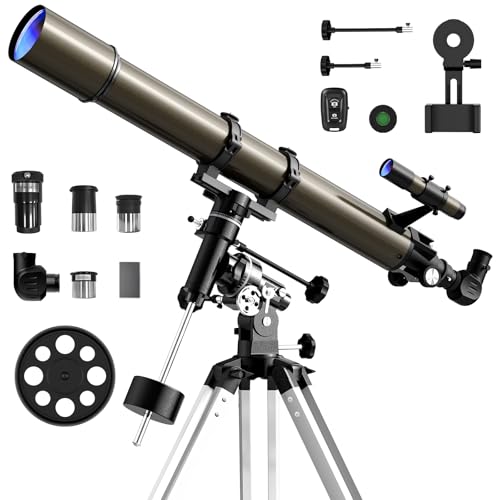 Best for high-power planetary and lunar viewingTelescope for Adults High Powered 90mm EQ RefractorView on Amazon
- 3
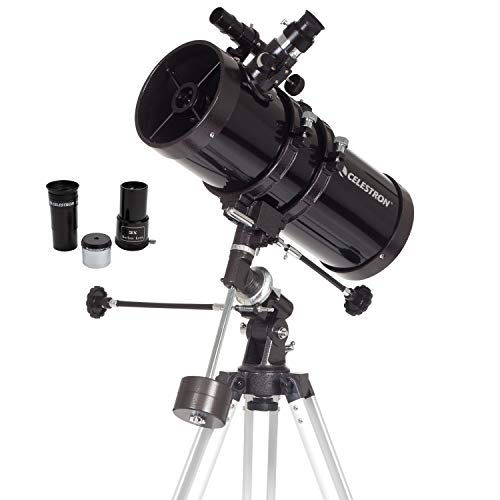 Best budget pick for deep-sky beginnersCelestron PowerSeeker 127EQ Reflector Telescope for Home AstronomyView on Amazon
Our Top Picks
Quick Comparison
| Product | Best for | Key feature |
|---|---|---|
| Celestron AstroMaster 130EQ | Deep-sky beginners | 130mm reflector on a German equatorial mount |
| Telescope for Adults High Powered 90mm EQ Refractor | High-power planetary and lunar viewing | 90mm refractor with dual slow-motion controls |
| Celestron PowerSeeker 127EQ | Budget deep-sky beginners | 127mm reflector with slow-motion controls |
Celestron AstroMaster 130EQ Telescope for Deep-Sky Beginners
Celestron AstroMaster 130EQ Telescope for Deep-Sky Beginners | Large 130mm Optics, Bright Moon & Deep-Sky Views, Perfect First Telescope, German Equatorial Mount with Easy Manual Controls
Best for: Deep-sky beginners
This is a good fit for someone who wants the larger aperture of a reflector and plans to spend most nights observing galaxies, nebulae, and star clusters. The equatorial mount lets you follow objects across the sky with a single axis motion once you polar align.
Key specs
- 130mm aperture reflector optics
- German equatorial mount
- Manual slow-motion controls
Pros
- Large aperture gathers more light for faint deep-sky targets
- Equatorial mount tracks objects with one axis once aligned
- Manual controls are straightforward for first-time users
Cons
- Polar alignment takes patience for newcomers
- Reflector optics need occasional collimation
Bottom line: The strongest all-round choice here if you want deep-sky views and a mount that grows with your skills.
View on AmazonTelescope for Adults High Powered 90mm EQ Refractor
Telescope for Adults High Powered, 90mm Aperture 1000mm Refractor EQ Mount | Equatorial Mount Telescope with Dual Slow-Motion Controls, Counterweight, 3 Eyepieces, 3X Barlow, Phone Adapter & Remote
Best for: High-power planetary and lunar viewing
This refractor suits observers who care most about sharp, high-contrast views of the Moon and planets. The package includes several eyepieces and a 3X Barlow, which expands the magnification range.
Key specs
- 90mm aperture refractor, 1000mm focal length
- Equatorial mount with dual slow-motion controls
- Includes 3 eyepieces, 3X Barlow, counterweight, and phone adapter
Pros
- Refractor optics give sharp, high-contrast planetary views
- Dual slow-motion controls help with fine tracking
- Accessories included for a complete starter kit
Cons
- Smaller aperture than the 130mm reflector limits faint deep-sky detail
- Included eyepieces are typically basic, so upgrades are common
Bottom line: A strong pick for lunar and planetary observers who want an all-in-one package with a phone adapter.
View on AmazonCelestron PowerSeeker 127EQ Reflector Telescope for Home Astronomy
Celestron PowerSeeker 127EQ Reflector Telescope for Home Astronomy | German Equatorial Mount, Bright Views of the Moon, Planets & Deep Sky, Slow-Motion Controls, Stable Tripod, Easy to Use
Best for: Budget deep-sky beginners
This reflector is aimed at families and first-time stargazers who want bright views of the Moon, planets, and deep-sky objects without a large commitment. Owners often describe it as easy to set up for casual sessions.
Key specs
- 127mm aperture reflector
- German equatorial mount
- Slow-motion controls
Pros
- Large aperture for a budget-oriented design
- Slow-motion controls aid fine centering
- Simple enough for family use
Cons
- Tripod can feel less rigid at high magnification
- Equatorial alignment requires practice to do well
Bottom line: A sensible entry point for casual observers who want an equatorial mount without a premium price tag.
View on AmazonBuying Guide
Mount type and tracking accuracy
A German equatorial mount has a polar axis aligned with Earth’s rotation axis, so once aligned you can track objects with one slow motion. Check whether the mount includes slow-motion controls on both axes, since fine tracking depends on them.
Good picks for this: Celestron AstroMaster 130EQ, Celestron PowerSeeker 127EQ
Aperture and optical type
Aperture determines how much light the telescope collects, which matters most for faint deep-sky targets. Reflectors usually offer more aperture per dollar of design, while refractors give high-contrast views of the Moon and planets.
Good picks for this: Celestron AstroMaster 130EQ, Telescope for Adults High Powered 90mm EQ Refractor
Mount stability and tripod
Wobble ruins high-power views. Look for a sturdy tripod and a mount whose weight rating comfortably exceeds the optical tube and accessories. Owners frequently report that tripod rigidity matters more as magnification increases.
Good picks for this: Celestron PowerSeeker 127EQ, Celestron AstroMaster 130EQ
Setup and polar alignment
Polar alignment is the step most beginners find hardest. Plan for extra time on your first few nights and practice in daylight with the mount level and oriented roughly north.
Good picks for this: Celestron AstroMaster 130EQ, Celestron PowerSeeker 127EQ
Included accessories
Eyepieces, barlows, and phone adapters can add real value, but included eyepieces are often basic. Compare the accessory list against what you already own.
Good picks for this: Telescope for Adults High Powered 90mm EQ Refractor
Intended use case
Decide whether you care more about planets, the Moon, or deep-sky objects. Your target list should drive the choice of aperture and optical design.
Good picks for this: Telescope for Adults High Powered 90mm EQ Refractor, Celestron AstroMaster 130EQ
Durability and care
Keep optics covered when not in use, store the telescope in a dry place, and check reflector collimation periodically. Metal fittings and clutches should be tightened before each session.
Good picks for this: Celestron PowerSeeker 127EQ, Celestron AstroMaster 130EQ
FAQ
What is an equatorial mount?
An equatorial mount is aligned so one axis points at the celestial pole. Once aligned, you only need to move the telescope along one axis to follow a star as Earth rotates.
Do I need an equatorial mount for visual observing?
No, but it makes tracking objects much easier, especially at higher magnifications. Many visual observers prefer it for that reason.
How long does polar alignment take?
Beginners often need thirty minutes or more on their first attempts. It gets faster with practice and with a good daylight setup.
Which aperture is best for deep-sky objects?
Larger apertures collect more light and reveal fainter targets, so a 130mm reflector generally outperforms a 90mm refractor for deep-sky viewing.
Are refractors or reflectors better for planets?
Refractors are often praised for sharp, high-contrast planetary views, while reflectors offer more aperture for the price. Both can show planets well at suitable magnifications.
Do I need to collimate a reflector?
Yes, occasionally. Mirror alignment can drift during transport, so check it periodically and before important observing sessions.
Conclusion
For most deep-sky beginners, the Celestron AstroMaster 130EQ offers the best balance of aperture and mount features. If your interest is mainly the Moon and planets, the 90mm refractor package is a practical starting point. The Celestron PowerSeeker 127EQ suits budget-minded families who want a reflector on an equatorial mount. Match the choice to your targets, and plan time for polar alignment.
Sources
- Background on Earth's rotation and the celestial sphere, useful for understanding how equatorial tracking works (nasa.gov)
- Guidance and resources for amateur observers, including observing basics and telescope fundamentals
- Information on astronomy education and public observing programs
Related reading
- Celestron Advanced VX Equatorial Telescope Mount: 5 Best Options Compared (2026)
- Balance Telescope Equatorial Mount: 4 Best Counterweight Options for 2026
- 7 Best Motorized Equatorial Mounts for Telescope (2026): Our Picks
- 7 Best Equatorial Mounts for 10 Inch Telescope Compared (2026)
- 6 Best Equatorial Mounts for Dobsonian Telescope Options (2026)
- 4 Best Refractor Telescope Equatorial Mount Picks for 2026
About Colin Foster
Colin Foster is part of our editorial team and reviews and edits our telescopes & stargazing guides, checking product details against manufacturer specifications and owner feedback.
About the author
Colin Foster writes reviews and buying guides for Astronomy Site.