5 Best Dedicated Astrophotography Cameras of 2026: Our Picks Compared
Compare the best dedicated astrophotography camera options for 2026, from cooled deep-sky sensors to smart telescopes. Find the right fit for your setup and sky

 By Ava Thornton
Updated November 2026
Choosing the best dedicated astrophotography camera comes down to what you want to image and how you plan to use it. A dedicated astronomy camera is built around a sensor that is sensitive to faint light, low read noise, and the ability to run long exposures without thermal noise swamping the picture. The picks below were chosen on specifications, brand reputation for astronomy gear, and patterns in owner feedback, weighing sensor type, cooling, connectivity, portability and whether the camera works with a telescope or as a standalone smart imager. Consider your target objects, your budget category and your comfort level with software before you decide.
Our top picks at a glance
- 1TOP CHOICEBest overallSVBONY SV405CC Astrophotography Camera, Cooled Telescope EyepieceView on Amazon
- 2
 TOP CHOICEBest for deep-sky imagingSVBONY SV605CC Cooled Astrophotography Camera, Double Layer Semiconductor RefrigerationView on Amazon
- 3
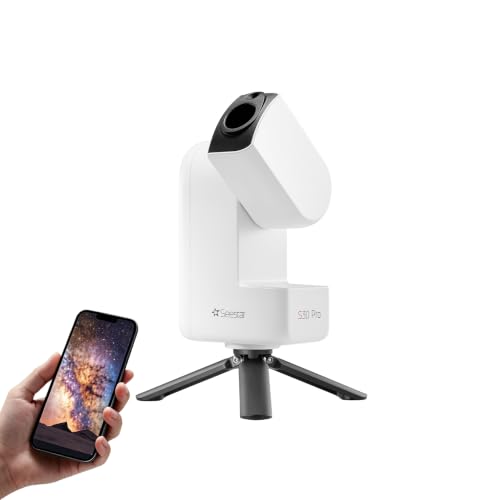 TOP CHOICEBest for hands-off smart imagingZWO Seestar S30 Pro Smart Telescope, App-Controlled AstrophotographyView on Amazon
- 4
 Best for portable setupsDWARFLAB Dwarf 3 Smart Telescope, App-Controlled Astrophotography CameraView on Amazon
- 5
 Best for planetary workASI662MC Portable Astrophotography Camera, Planetary Camera ColorView on Amazon
Our Top Picks
Quick Comparison
| Product | Best for | Key feature |
|---|---|---|
| SVBONY SV405CC Astrophotography Camera | Budget-minded deep-sky and planetary imagers | Cooled IMX294 color sensor with HCG mode |
| ZWO Seestar S30 Pro Smart Telescope | Beginners who want automated capture | Auto tracking and GoTo with one-tap capture |
| DWARFLAB Dwarf 3 Smart Telescope | Travelers and light-kit observers | Portable design with AZ and EQ modes |
| SVBONY SV605CC Cooled Astrophotography Camera | Serious deep-sky imagers | Thermoelectric cooling with a 9MP IMX533 sensor |
| ASI662MC Portable Astrophotography Camera | Planetary and lunar imaging | Shockproof body with multi-platform connectivity |
SVBONY SV405CC Astrophotography Camera, Cooled Telescope Eyepiece
SVBONY SV405CC Astrophotography Camera, Cooled Telescope Eyepiece IMX294 | High-Sensitivity 4/3" Color Sensor 11.7MP USB 3.0 HCG Mode, Cooling Power Steady, Cooled Camera for Deep Sky Astrophotography
Best for: Budget-minded imagers who want a cooled color camera for deep-sky and planetary work
This camera suits someone who already owns a telescope and wants a cooled sensor without stepping into premium pricing tiers. It fits imagers who plan to stack many exposures and want the cooling to keep dark current in check.
Key specs
- 4/3-inch color sensor (IMX294 family, as named in the listing)
- Roughly 11.7 MP resolution
- USB 3.0 connection
- Cooled sensor with HCG mode for low-noise gain
Pros
- Large sensor for its class, which helps with wide deep-sky fields
- Cooling is described as steady, reducing thermal noise in long exposures
- HCG mode gives a useful gain option for faint targets
Cons
- Requires a computer and familiarity with capture software
- Works best with a tracking mount and guiding, which add to the setup
Bottom line: A strong choice for a budget-focused imager who already has a telescope and mount and wants cooled, color deep-sky capability.
View on AmazonZWO Seestar S30 Pro Smart Telescope, App-Controlled Astrophotography
ZWO Seestar S30 Pro Smart Telescope, App-Controlled Astrophotography | 4K Dual Camera, Auto Tracking & GoTo, One-Tap Capture & Processing, Milky Way & Star Trail, Deep Sky & Wide-Field Imaging
Best for: Beginners who want automated capture of deep-sky and Milky Way scenes with minimal setup
This is an all-in-one smart telescope rather than a camera you attach to your own optics. It suits people who want to get images quickly from a phone or tablet and are less interested in manual exposure control.
Key specs
- Dual camera system with 4K imaging, as stated in the listing
- Auto tracking and GoTo
- One-tap capture and on-device processing
Pros
- Very fast path from unboxing to a usable image
- Automated tracking handles much of the work a mount would normally do
- Covers both wide-field Milky Way shots and deep-sky targets
Cons
- Less control over individual exposure settings than a dedicated camera
- Dependence on the companion app means less flexibility for advanced workflows
Bottom line: Best for newcomers who value convenience and want results with little technical study.
View on AmazonDWARFLAB Dwarf 3 Smart Telescope, App-Controlled Astrophotography Camera
DWARFLAB Dwarf 3 Smart Telescope, App-Controlled Astrophotography Camera | Portable 3lb Design, 4K Auto-Tracking, AZ/EQ Modes, Built-in Processing, Astronomy Shooting, Wildlife and Panorama Imaging
Best for: Travelers and observers who want a light, portable imaging kit
The Dwarf 3 is aimed at people who carry their gear to dark sites or go on trips. Its small footprint and app control make it practical when space and weight matter.
Key specs
- Listed weight of about 3 lb
- 4K auto-tracking
- AZ and EQ mounting modes
- Built-in processing
Pros
- Light enough to carry in a backpack for field sessions
- Offers both alt-azimuth and equatorial modes
- Useful beyond astronomy, including wildlife and panorama imaging
Cons
- Small aperture limits how faint the deepest objects can be captured
- Battery and app dependence may require planning on long sessions
Bottom line: A good pick for portability-first observers who accept some limits on faint-object depth in exchange for a compact kit.
View on AmazonSVBONY SV605CC Cooled Astrophotography Camera, Double Layer Semiconductor Refrigeration
SVBONY SV605CC Cooled Astrophotography Camera, Double Layer Semiconductor Refrigeration, 9MP IMX533 USB3.0 CMOS Astronomy Camera with 2" 7nm Dual-Band Nebula Filter for Deep Sky Astrophotography
Best for: Serious deep-sky imagers who want a cooled 9MP sensor and a dual-band nebula filter in the box
This camera fits imagers building a dedicated deep-sky rig. The double-layer thermoelectric cooling is designed to hold the sensor at a stable low temperature, which matters for long integrations.
Key specs
- 9MP IMX533 CMOS sensor, as named in the listing
- USB 3.0 connection
- Double-layer semiconductor refrigeration
- Included 2-inch 7nm dual-band nebula filter
Pros
- Cooling supports longer, cleaner exposures
- Dual-band filter helps isolate emission nebulae from light pollution
- Modern CMOS sensor suits stacking workflows
Cons
- Needs a stable mount, guiding and a computer for capture
- Cooling adds power draw that should be planned for in the field
Bottom line: Suited to dedicated deep-sky imagers with a tracking mount who want cooled performance and filter support in one package.
View on AmazonASI662MC Portable Astrophotography Camera, Planetary Camera Color
ASI662MC Portable Astrophotography Camera: Shockproof ABS Frame & Multi-Platform Connectivity for Night Observation Planetary Camera Color
Best for: Planetary and lunar imaging, plus portable observing
This camera is built for high-frame-rate work on bright solar system targets rather than faint galaxies. Its shockproof frame suits transport to observing sites.
Key specs
- Color planetary camera format, per the listing
- Shockproof ABS frame
- Multi-platform connectivity
Pros
- Designed for fast capture of planets and the Moon
- Durable housing for field transport
- Works across several computer platforms
Cons
- Not intended as a primary deep-sky camera
- Requires a telescope and capture software to be useful
Bottom line: The right choice if your interest is mainly planets and the Moon and you want a rugged, portable camera for that work.
View on AmazonBuying Guide
Sensor type and size
A larger sensor captures more sky per frame, while smaller sensors give finer image scale for planets. Check whether the listing specifies a CMOS or CCD design and the sensor format, since these shape field of view and pixel size.
Good picks for this: SVBONY SV405CC Astrophotography Camera, SVBONY SV605CC Cooled Astrophotography Camera
Cooling
Thermoelectric cooling holds the sensor at a steady temperature, reducing thermal noise over long exposures. Cooled cameras are generally the choice for deep-sky work, while uncooled cameras suit short planetary captures.
Good picks for this: SVBONY SV605CC Cooled Astrophotography Camera, SVBONY SV405CC Astrophotography Camera
Standalone smart telescope versus camera-only
Smart telescopes bundle optics, tracking and software, which simplifies setup. Camera-only units require your own telescope, mount and computer but give you more control and upgrade paths.
Good picks for this: ZWO Seestar S30 Pro Smart Telescope, DWARFLAB Dwarf 3 Smart Telescope
Connectivity and software
USB 3.0 is common for high-speed transfer, and some cameras support several operating systems. Confirm that the capture software you plan to use supports the camera before buying.
Good picks for this: ASI662MC Portable Astrophotography Camera, SVBONY SV405CC Astrophotography Camera
Portability and durability
If you travel to dark sites, weight and rugged construction matter. Look for listed weight and housing details, and consider how the camera will be transported and protected.
Good picks for this: DWARFLAB Dwarf 3 Smart Telescope, ASI662MC Portable Astrophotography Camera
Filters and light pollution
Narrowband and dual-band filters can improve contrast on emission nebulae under light-polluted skies. Check whether a filter is included or sold separately, and confirm the filter size matches your optics.
Good picks for this: SVBONY SV605CC Cooled Astrophotography Camera
Use case and target type
Match the camera to what you most want to photograph. Deep-sky targets reward cooling and long integrations, planets reward high frame rates, and wide-field Milky Way work benefits from simple automated capture.
Good picks for this: ZWO Seestar S30 Pro Smart Telescope, ASI662MC Portable Astrophotography Camera
FAQ
What is a dedicated astrophotography camera?
It is a camera designed for astronomy, usually with a low-noise sensor, a cooled or fast readout design, and software control for long exposures. Ordinary DSLR or mirrorless cameras can shoot the night sky, but dedicated models are built for faint-object capture.
Do I need a cooled camera for deep-sky imaging?
Cooling is strongly preferred for deep-sky work because it reduces thermal noise during long exposures. For bright planets and the Moon, cooling matters much less.
Can I use a dedicated astrophotography camera without a telescope?
Camera-only models need an optical tube or lens and a tracking mount for most deep-sky work. Smart telescopes include their own optics and tracking, so they work without a separate telescope.
Is a smart telescope a good choice for beginners?
Many beginners find smart telescopes easier to start with because they automate tracking and processing. The trade-off is less manual control over exposure and optics.
What software do I need?
Most dedicated cameras require capture software on a computer, plus a stacking and processing program. Confirm compatibility with your operating system before purchase, since requirements vary by manufacturer.
How do light-pollution filters help?
Narrowband and dual-band filters block much of the artificial light that washes out faint nebulae. They help most with emission nebulae and less with galaxies or star fields.
Conclusion
For a budget-focused deep-sky imager with a telescope and mount, the SVBONY SV405CC is a sensible starting point. Those who want cooled performance and filter support should look at the SVBONY SV605CC. Beginners who prefer automation will find the ZWO Seestar S30 Pro suited to quick results, while the DWARFLAB Dwarf 3 fits travelers. For planets and the Moon, the ASI662MC is the most targeted option. Match the camera to your targets, your setup and your willingness to handle software, and the right choice will follow.
Sources
- Background on night sky observing, light pollution and astronomical targets (nasa.gov)
- Resources on astronomy education and observing practice from the American Astronomical Society
- International standards and naming conventions for astronomical objects
Related reading
- What Is the Best Nikon Camera Lens for Astrophotography? Top Picks
- Top 7 Deep Sky Astrophotography Cameras for Serious Imaging in 2026
- Point and Shoot Camera for Astrophotography: 7 Best Picks Compared (2026)
- Mirrorless Camera for Astrophotography: 6 Best Picks Compared (2026)
- Medium Format Astrophotography Camera Buyer's Guide: 8 Best Picks in 2026

About Ava Thornton
Ava focuses on practical advice for telescopes & stargazing: what matters before you buy, what to skip, and how to get more out of what you already own.
About the author
Ava Thornton writes reviews and buying guides for Astronomy Site.