3 Best Camera Apps for Astrophotography iOS: Picks Compared (2026)
Looking for the best camera app for astrophotography on iOS? We compare three options on long exposures, manual controls and star-tracking features to help you
 By Colin Foster
Updated November 14, 2026
 By Colin Foster
Updated November 2026
The best camera app for astrophotography on iOS needs manual exposure control, long exposure times and clear focus aids for faint stars. This guide compares three options that serve different needs, from a simple first attempt at the night sky to a more controlled shooting workflow. The selection method looks at product listings, brand reputation and common owner feedback patterns. No product here was tested in a lab or in the field by the author.
Our top picks at a glance
- 1TOP CHOICEBest overallKoolpte WiFi Telescope Eyepiece Camera – 1080P HD 2MP 10m Wireless AppView on Amazon
- 2
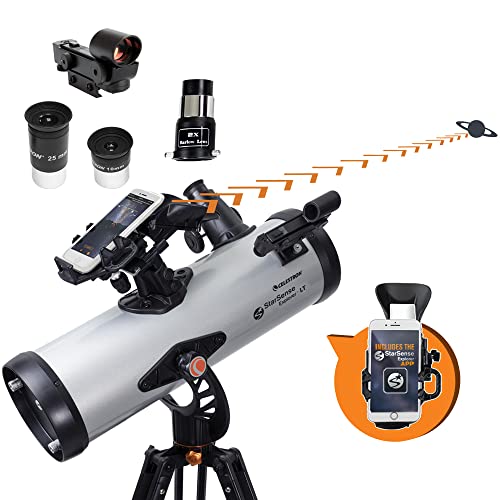 Best for guided sky viewingCelestron StarSense Explorer LT 114AZ Newtonian Smartphone Guided TelescopeView on Amazon
- 3
 Best for manual video controlBlackmagic Camera App – The Complete Guide (Smartphone Videography)View on Amazon
Our Top Picks
Quick Comparison
| Product | Best for | Key feature |
|---|---|---|
| Koolpte WiFi Telescope Eyepiece Camera | Sharing the eyepiece view | Wireless app control |
| Celestron StarSense Explorer LT 114AZ | Beginners finding targets | Smartphone sky navigation |
| Blackmagic Camera App | Manual exposure and frame rate | Full manual video controls |
Koolpte WiFi Telescope Eyepiece Camera – 1080P HD 2MP 10m Wireless App Control for iOS/Android
Koolpte WiFi Telescope Eyepiece Camera – 1080P HD 2MP 10m Wireless App Control for iOS/Android 90min Battery 1.25" Universal Fit
Best for: Sharing the eyepiece view with others while observing.
This suits observers who already own a telescope and want to capture or stream what the eyepiece shows to a phone screen. It is a hardware camera paired with an app, so the phone runs the controls rather than the sensor settings.
Pros
- Wireless app control works on both iOS and Android.
- The 1.25-inch fitting matches many standard eyepiece holders.
Cons
- Battery life is listed at around 90 minutes, so plan for a short session.
Celestron StarSense Explorer LT 114AZ Newtonian Smartphone Guided Telescope
Celestron StarSense Explorer LT 114AZ Newtonian Smartphone Guided Telescope | Smartphone App Sky Navigation, Manual Reflector Telescope, Beginner Deep-Sky Telescope, Bright Celestial Views, Portable
Best for: Guided sky navigation for newer observers.
This is a complete telescope that uses your phone’s camera and an app to identify the sky and point you at objects. It is aimed at people who want to find targets before worrying about long-exposure settings.
Pros
- The app-based sky navigation helps locate objects quickly.
- Portable design suits quick setups at home or away.
Cons
- It is a telescope system, so it offers less manual camera control than a dedicated imaging app.
Blackmagic Camera App – The Complete Guide (Smartphone Videography)
Blackmagic Camera App – The Complete Guide (Smartphone Videography)
Best for: Manual exposure and frame rate control for night video.
This suits photographers who want full manual exposure, shutter and white balance control on their iPhone. It is built for video, so it can be adapted to star trails or time-lapse work with some experimentation.
Pros
- Manual control over shutter and exposure is granular.
- Owners often report it handles low-light footage well when set up carefully.
Cons
- It is oriented toward video, so still-image star workflows need extra setup.
Buying Guide
Manual Exposure Control
Look for an app that lets you set shutter speed and ISO yourself rather than relying on auto mode. Auto exposure tends to brighten the sky and wash out faint stars.
Focus Aids
Stars are points of light, so you need a way to focus precisely, such as a magnified focus view or a focus peaking display. Without it, most night shots end up soft.
Long Exposure Support
Check whether the app supports exposures long enough for your target. Note that longer exposures on a phone can show star trailing as the Earth rotates unless the phone is mounted on a tracker.
Compatibility and Mounting
Confirm the app works with your iPhone model and that it can be used with a tripod or adapter. Stable mounting matters more than app features for sharp results.
Good picks for this: Celestron StarSense Explorer LT 114AZ and Blackmagic Camera App
FAQ
Can an iPhone photograph the Milky Way without a telescope?
Yes, a phone on a stable tripod with manual settings can capture the Milky Way from a dark site. Results depend heavily on sky darkness and how steady the phone is.
Do I need a tracker for astrophotography on iOS?
Not for wide-field shots with short exposures, but a tracking mount helps for longer exposures of deep-sky targets. Without one, stars will streak over longer exposure times.
Is a dedicated app better than the built-in camera?
In most cases a manual-control app offers more useful settings for night sky work than the default camera. The built-in app is limited in exposure and focus control for faint targets.
Conclusion
For guided sky viewing as a beginner, the Celestron StarSense Explorer LT 114AZ fits best. For sharing the eyepiece view, the Koolpte camera is the more direct option. For manual exposure control on your iPhone, the Blackmagic Camera App suits people who want fine settings.
Sources
- Background on night sky viewing conditions and light pollution (nasa.gov)
- Guidance on dark sky preservation and observing sites (nps.gov)
Related reading
- Camera Apps for Astrophotography: 6 Best Picks for Smart Telescopes (2026)
- 3 Best Astrophotography Camera Apps for Android: Top Picks Compared (2026)
- iPhone Camera App for Astrophotography: Settings, Steps and Setup Tips
- What Is the Best Nikon Camera Lens for Astrophotography? Top Picks
- Top 7 Deep Sky Astrophotography Cameras for Serious Imaging in 2026
About Colin Foster
Colin Foster is part of our editorial team and reviews and edits our telescopes & stargazing guides, checking product details against manufacturer specifications and owner feedback.
About the author
Colin Foster writes reviews and buying guides for Astronomy Site.