6 Best Beginner DSLR Cameras for Astrophotography: Picks Compared (2026)
Find the best beginner DSLR camera for astrophotography. We compare six options on sensor, high-ISO performance, controls and ease of use for night sky shots.
 By Colin Foster
Updated November 11, 2026
 By Colin Foster
Updated November 2026
Choosing the best beginner DSLR camera for astrophotography comes down to a handful of practical traits: a sensor that holds up at high ISO, full manual exposure control, a way to run long exposures without shake, and a body that a newcomer can learn in a few weekends. This guide compares six options against those criteria, from a classic entry-level DSLR to a compact mirrorless body and a few cameras that aren’t DSLRs at all but are often bought by people starting out in night sky imaging. Each pick is judged on specifications, brand support and patterns that owners commonly report, not on personal testing.
Our top picks at a glance
- 1TOP CHOICEBest overallCanon EOS Rebel T7 DSLR Camera with 18-55mm LensView on Amazon
- 2
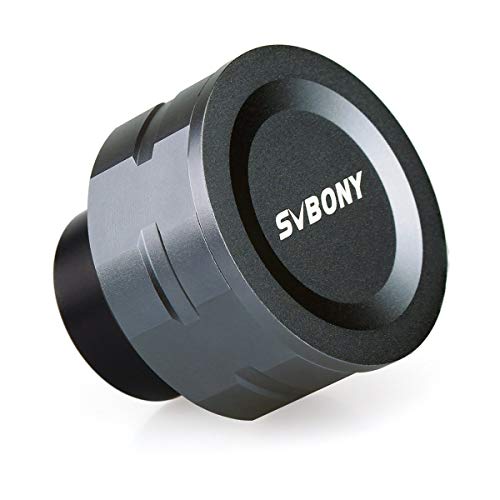 TOP CHOICEBest for planetary imagingSVBONY SV105 Telescope CameraView on Amazon
- 3
 TOP CHOICEBest for learning processingAstrophotography Image Processing with GraXpert, Siril & GIMPView on Amazon
- 4
 Best for video-first beginnersCamtryzine 6K Digital CameraView on Amazon
- 5
 Best budget pickG-Anica 8K Digital Cameras KitView on Amazon
- 6
 Best mirrorless step-upCanon EOS R100 Mirrorless CameraView on Amazon
Our Top Picks
Quick Comparison
| Product | Best for | Key feature |
|---|---|---|
| Canon EOS Rebel T7 DSLR Camera with 18-55mm Lens | Beginners who want a true DSLR | Optical viewfinder and full manual modes |
| SVBONY SV105 Telescope Camera | Planetary imaging through a telescope | 1.25″ CMOS color eyepiece camera with USB 2.0 |
| Astrophotography Image Processing with GraXpert, Siril & GIMP | Learning post-processing | Step-by-step stacking and editing workflow |
| Camtryzine 6K Digital Camera | Video-first beginners | High-resolution video, flip screen, time-lapse |
| G-Anica 8K Digital Cameras Kit | Lowest-commitment entry point | Dual-lens kit with 16X zoom and two batteries |
| Canon EOS R100 Mirrorless Camera | Buyers planning to grow into a system | 24.1 MP APS-C sensor with RF mount |
Canon EOS Rebel T7 DSLR Camera with 18-55mm Lens
Canon EOS Rebel T7 DSLR Camera with 18-55mm Lens (Black) (Renewed) | 18-55mm
Best for: Beginners who want a true DSLR with an optical viewfinder and full manual control.
This is the most conventional choice on the list. It suits someone who wants a familiar DSLR body, a broad support ecosystem of lenses and accessories, and a camera that can handle wide-field Milky Way shots with a fast lens and a sturdy tripod.
Key specs
- Canon EF-S mount (APS-C sensor)
- Bundled 18-55mm kit lens
- Optical pentaprism viewfinder
- Full manual exposure modes and bulb mode
Pros
- Optical viewfinder shows the real scene, useful for framing in the dark
- Wide range of compatible lenses, including fast wide-angle primes
- Simple menus that owners often find approachable
Cons
- Kit zoom is slow (f/3.5–5.6), so most astro users add a faster lens
- Live view autofocus is slower than on newer mirrorless bodies
Bottom line: A strong first DSLR for Milky Way and wide-field work if you pair it with a fast lens and a tripod.
View on AmazonSVBONY SV105 Telescope Camera
SVBONY SV105 Telescope Camera, 1.25" IMX307 CMOS Color Eyepiece Camera | Plug and play, M28.5×0.6 Thread, USB 2.0 Electronic Telescope Eyepiece for Telescope, Suitable for Astrophotography Beginners
Best for: Planetary imaging through a telescope, not wide-field night sky shots.
This is an eyepiece-style color camera rather than a DSLR. It fits buyers who already own a telescope and want to image the Moon and planets, and who find that a DSLR is awkward to attach to an eyepiece holder.
Key specs
- 1.25-inch barrel, fits standard eyepiece holders
- IMX307 CMOS sensor
- USB 2.0 connection to a computer
- M28.5 x 0.6 thread for adapters
Pros
- Plug-and-play setup with capture software on a laptop
- Small and light, easy to balance on a telescope
- Good match for lunar and planetary video stacking
Cons
- Not suited to wide-field Milky Way or deep-sky photography
- Requires a telescope and a computer, which adds to the setup
Bottom line: Pick this if your interest is planets and the Moon and you already own a telescope.
View on AmazonAstrophotography Image Processing with GraXpert, Siril & GIMP
Astrophotography Image Processing with GraXpert, Siril & GIMP: : For DSLRs, Astro Cameras, Seestar and Dwarf 3 (Astro Imaging Guides)
Best for: Learning post-processing and stacking, whatever camera you use.
This is a guidebook, not a camera. It belongs on the list because many beginners find that processing, not capture, determines whether a night sky image looks good. It works with images from DSLRs, dedicated astro cameras and smart telescopes.
Key specs
- Covers GraXpert gradient removal, Siril stacking and GIMP editing
- Written for DSLR and dedicated astro camera workflows
Pros
- Practical workflow from raw files to finished image
- Covers free, widely used software
- Useful regardless of which camera you buy
Cons
- Software versions change, so some screenshots may differ from what you see
- Does not help with capture hardware decisions
Bottom line: A worthwhile companion for any beginner who expects to spend as much time editing as shooting.
View on AmazonCamtryzine 6K Digital Camera
Camtryzine 6K Digital Camera, 64MP Vlogging Camera for YouTube, WiFi | AF, 3" Flip Screen, 16X Zoom, 18 Filters, Time-Lapse, Slow-Mo, 64GB Card, 2 Batteries, photography for beginners camera,Black
Best for: Video-first beginners who also want to try night photography.
This is a compact point-and-shoot style camera, not a DSLR. Its strengths are video features and a flip screen. For serious astrophotography its small sensor and limited manual control are real limits, so treat it as a starting point rather than a long-term astro tool.
Key specs
- 64 MP advertised resolution
- 3-inch flip screen
- 16X zoom and time-lapse modes
Pros
- Flip screen makes framing and self-shots easier
- Includes accessories such as a memory card and spare batteries
- Simple controls for newcomers
Cons
- Small sensor produces noisy long exposures at high ISO
- Advertised megapixel figures do not reflect low-light performance
Bottom line: Suitable for casual star trails and video, but not the first pick if real astro image quality is the goal.
View on AmazonG-Anica 8K Digital Cameras Kit
G-Anica 8K Digital Cameras Kit for Photography with Dual-Lens | 64MP WiFi Vlogging Point and Shoot Camera for Beginners,with 180° Flip Screen,16X Zoom,32GB Card,2 Batteries
Best for: The lowest-commitment entry point into night sky photography.
This kit is a point-and-shoot style camera with a dual-lens design and a bundle of accessories. It fits someone who wants to see whether they enjoy night photography before investing in a DSLR or mirrorless system.
Key specs
- Dual-lens design
- 180-degree flip screen
- 16X zoom, 32GB card, two batteries
Pros
- Complete kit with memory and spare power
- Flip screen and simple menus suit beginners
- Useful for learning composition and exposure basics
Cons
- Small sensor limits high-ISO and long-exposure quality
- Limited lens options and no optical viewfinder
Bottom line: A reasonable trial camera for budget-minded beginners, with the expectation that you may upgrade later.
View on AmazonCanon EOS R100 Mirrorless Camera
Canon EOS R100 Mirrorless Camera RF-S18-45mm F4.5-6.3 is STM Lens Kit | 24.1 Megapixel CMOS (APS-C) Sensor, 4K Video, Wi-Fi & Bluetooth, Beginner Photographers & Creators, Digital Camera
Best for: Buyers who want a modern body and plan to grow into a larger system.
This is a mirrorless camera rather than a DSLR, but it is included because many beginners now choose mirrorless and the RF lens system supports fast wide-angle optics. It is a sensible choice for someone who values an electronic viewfinder and good autofocus.
Key specs
- 24.1 MP APS-C CMOS sensor
- RF mount
- Bundled RF-S 18-45mm F4.5-6.3 IS STM lens
- Wi-Fi and Bluetooth
Pros
- Electronic viewfinder previews exposure before you shoot
- Autofocus is generally considered strong for its class
- Room to grow with RF lenses
Cons
- Kit zoom is slow, so astro work needs a faster lens
- Electronic viewfinder can make very dark scenes harder to judge without tuning
Bottom line: The best fit for buyers who want mirrorless from the start and are willing to add a fast lens.
View on AmazonBuying Guide
Sensor size and high-ISO performance
Larger sensors generally gather more light and produce cleaner results at high ISO, which matters when you shoot the Milky Way at ISO 3200 or above. APS-C is the common sweet spot for beginners. Full-frame bodies perform better in low light but cost more to buy and lens up. Compact cameras with small sensors struggle most with noise in long exposures.
Good picks for this: Canon EOS Rebel T7 DSLR Camera with 18-55mm Lens, Canon EOS R100 Mirrorless Camera
Manual exposure control
You need to set shutter speed, aperture and ISO yourself, and ideally use a bulb mode for exposures longer than 30 seconds. Check that the camera allows full manual mode and that you can turn off automatic noise reduction or long-exposure processing if you plan to stack frames.
Good picks for this: Canon EOS Rebel T7 DSLR Camera with 18-55mm Lens, Canon EOS R100 Mirrorless Camera
Lens compatibility and aperture
The kit lens is usually the weak point. A lens with an aperture of f/2.8 or faster lets you use shorter exposures at lower ISO, which means less noise and fewer star trails. Confirm the lens mount matches the body and check whether wide-angle primes are available for the system you choose.
Good picks for this: Canon EOS Rebel T7 DSLR Camera with 18-55mm Lens, Canon EOS R100 Mirrorless Camera
Live view and focusing aids
Focusing on stars in the dark is hard. Look for a camera that offers live view magnification so you can focus on a bright star, and consider a bright, flip-out screen for awkward angles. Electronic viewfinders help with preview but can be hard to read in very dark conditions.
Good picks for this: Canon EOS R100 Mirrorless Camera, Camtryzine 6K Digital Camera
Use case: wide-field versus planetary
Wide-field Milky Way and constellation shots need a camera body on a tripod with a wide lens. Planetary imaging through a telescope needs a small camera that fits an eyepiece holder. Decide which you want first, because the two use cases point to very different products.
Good picks for this: SVBONY SV105 Telescope Camera, Canon EOS Rebel T7 DSLR Camera with 18-55mm Lens
Durability and battery life
Cold nights drain batteries quickly. Owners commonly recommend carrying at least one spare battery and keeping it warm in an inside pocket. Check battery life ratings and whether the camera can be powered from an external source for long sessions.
Good picks for this: G-Anica 8K Digital Cameras Kit, Camtryzine 6K Digital Camera
Learning and post-processing
Raw images from any camera need stacking and editing before they look finished. Budget time and attention for software as well as hardware, because the processing workflow shapes the final result.
Good picks for this: Astrophotography Image Processing with GraXpert, Siril & GIMP, Canon EOS Rebel T7 DSLR Camera with 18-55mm Lens
FAQ
Is a DSLR necessary for astrophotography?
No, but a camera with a larger sensor, manual controls and bulb mode makes night sky work considerably easier. Many beginners start with a smartphone or compact camera and later move to a DSLR or mirrorless body.
What ISO should I use for Milky Way photos?
Many beginners start around ISO 1600 to 3200 and adjust based on sky darkness and the camera’s noise performance. Test a few settings on a dark night and compare results.
How long can I expose before stars trail?
A common rule of thumb is the 500 rule: divide 500 by your focal length in millimeters to get a maximum exposure in seconds for a full-frame camera. APS-C bodies need a smaller number because of the crop factor.
Do I need a tracking mount?
Not for wide-field shots with short exposures. For longer exposures or deep-sky targets, a tracking mount keeps the camera aimed at the same spot as the sky rotates.
Which lens should I buy first?
A fast wide-angle lens, such as one at f/2.8 or faster, is a common first upgrade for Milky Way work. Check compatibility with your camera mount before buying.
Can I use a DSLR with a telescope?
Yes, with a T-ring adapter and a telescope designed for camera attachment. Planetary and deep-sky imaging through a telescope usually calls for a dedicated astro camera or a DSLR with an appropriate adapter.
Conclusion
For most beginners who want a true DSLR for wide-field night sky work, the Canon EOS Rebel T7 is a logical starting point, especially with a faster lens added later. If you already own a telescope and care mainly about planets, the SVBONY SV105 fits that job better than any camera body. Buyers who prefer mirrorless should look at the Canon EOS R100, and those on a tight budget or mainly interested in video can consider the compact kits, with the understanding that their small sensors limit astro image quality. Whatever you choose, budget time for a processing workflow, because it shapes the final image as much as the camera does.
Sources
- Sky event calendars and guidance on dark-sky observing conditions (nasa.gov)
- Night sky resources and information on light pollution at national park sites (nps.gov)
- Practical advice on reducing light pollution and finding dark observing sites
Related reading
- Digital Camera for Astrophotography: 6 Best Picks for Beginners (2026)
- Best DSLR Camera Astrophotography: 6 Factors That Matter for Night Sky Shots
- Best Canon DSLR Camera for Astrophotography: 5 Factors and Picks (2026)
About Colin Foster
Colin Foster is part of our editorial team and reviews and edits our telescopes & stargazing guides, checking product details against manufacturer specifications and owner feedback.
About the author
Colin Foster writes reviews and buying guides for Astronomy Site.