6 Best APO Refractor Telescopes: Picks Compared for 2026
Looking for the best APO refractor telescope? Compare six models by aperture, focuser, flattener and imaging fit to match your night-sky goals.
 By Claire Whitaker
Updated November 8, 2026
 By Claire Whitaker
Updated November 2026
Shoppers searching for the best APO refractor telescope usually want sharp, color-free views of planets, double stars and deep-sky targets without a huge price-of-admission in size or setup time. An apochromatic refractor uses extra-low-dispersion or fluorite-type glass to bring three or more colors to a common focus, which reduces the purple fringing that plagues cheaper achromats. This list weighs optical design, aperture and focal ratio, focuser quality, field flattening, and whether the tube suits visual use, astrophotography, or both. The picks run from a compact 80mm travel-friendly instrument to a 122mm f/7 model built for serious deep-sky work.
Our top picks at a glance
- 1TOP CHOICEBest overallSVBONY SV550 APO Telescope with SV209 Field Flattener, SV405CC Cooled CameraView on Amazon
- 2
 TOP CHOICEBest for visual deep-skySVBONY SV550 Triplet APO Telescope, 122mm F7 ED Glass Telescope for AdultsView on Amazon
- 3
 TOP CHOICEBest for wide-field imagingAskar 71F Flat-Field Telescope, 71mm Aperture F6.9 ED Glass Refractor OTAView on Amazon
- 4
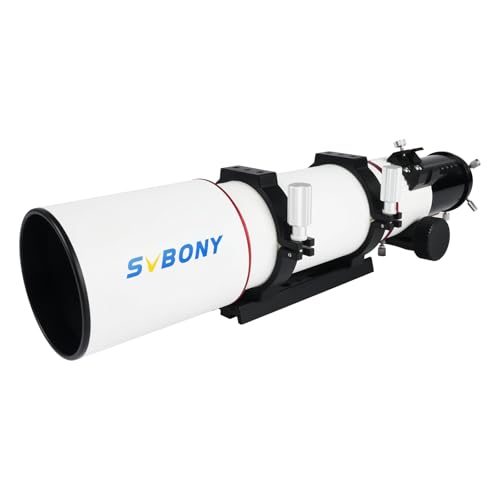 Best for portabilitySVBONY SV550 AP0 Telescope, 80mm ED F6 Triplet Apochromatic Refractor OTAView on Amazon
- 5
 Best budget pickSVBONY SV503 Upgraded ED Refractor Telescope, 80mm F7 with Field FlattenerView on Amazon
- 6
 Best for beginners and familiesCelestron StarSense Explorer LT 80AZ Smartphone Guided Refractor TelescopeView on Amazon
Our Top Picks
| Product | Best for | Key feature |
|---|---|---|
| SVBONY SV550 APO Telescope with SV209 Field Flattener, SV405CC Cooled Camera | Serious deep-sky astrophotography | 122mm f/7 with field flattener and cooled camera bundle |
| SVBONY SV550 Triplet APO Telescope, 122mm F7 | Visual deep-sky observing | Large 122mm triplet aperture with dual-speed focuser |
| Askar 71F Flat-Field Telescope | Wide-field imaging | Quadruplet air-spaced APO at f/6.9 with Vixen-style dovetail |
| SVBONY SV550 AP0 Telescope, 80mm ED F6 Triplet | Portable grab-and-go use | Compact 80mm triplet with micro-reduction focuser |
| SVBONY SV503 Upgraded ED Refractor Telescope, 80mm F7 | Budget-minded APO-style views | Built-in field flattener and 0.8X focal reducer option |
| Celestron StarSense Explorer LT 80AZ | First telescope for beginners | Smartphone app sky navigation on an alt-azimuth mount |
SVBONY SV550 APO Telescope with SV209 Field Flattener, SV405CC Cooled Camera
SVBONY SV550 APO Telescope with SV209 Field Flattener,SV405CC Cooled Camera | 122mm F7 Telescope for Adults High Powered, 87mm Focus Travel Distance , 0.8X Focal Reducer, SV405CC Astrophotography Came
Best for: Serious deep-sky astrophotography
This bundle suits imagers who want a 122mm f/7 APO tube paired with a flattener and a cooled camera from the start. It is aimed at people already comfortable with guiding, polar alignment and stacking software.
Key specs
- 122mm aperture, f/7 focal ratio
- SV209 field flattener included
- SV405CC cooled astrophotography camera included
- 87mm focus travel distance
Pros
- Flattener and camera matched out of the box
- Large aperture gathers light for faint targets
- Focus travel leaves room for camera backfocus
Cons
- Heavier than the 80mm models, so it needs a sturdy mount
- Bundle complexity can overwhelm first-time imagers
Bottom line: Pick this if you want a complete deep-sky imaging kit and already have a capable equatorial mount.
View on AmazonSVBONY SV550 Triplet APO Telescope, 122mm F7 ED Glass Telescope for Adults
SVBONY SV550 Triplet APO Telescope, 122mm F7 ED Glass Telescope for Adults | 2.5" Dual-Speed Focuser, 87mm Focus Travel Distance, Refractor Telescope High Power, for Deep Space Astrophotography Visual
Best for: Visual deep-sky observing
Visual observers who want the light-gathering of a 122mm objective without buying a camera they do not need will find this tube a good match. It targets galaxies, nebulae and globular clusters seen through the eyepiece.
Key specs
- 122mm aperture, f/7 focal ratio
- ED glass triplet objective
- 2.5-inch dual-speed focuser
- 87mm focus travel distance
Pros
- Large aperture shows more faint detail visually
- Dual-speed focuser makes fine adjustments easier
- Triplet design limits color fringing on bright planets
Cons
- Long tube and weight call for a solid, larger mount
- Coma can show at the edge of the field at f/7 with some eyepieces
Bottom line: A strong choice for visual observers who want serious aperture on a dedicated deep-sky tube.
View on AmazonAskar 71F Flat-Field Telescope, 71mm Aperture F6.9 ED Glass Refractor OTA
Askar 71F Flat-Field Telescope, 71mm Aperture F6.9 ED Glass Refractor OTA, Quadruplet air-Spaced APO, 230mm Vixen Dovetail Plate for Deep Sky Astrophotography and Visual Astronomy
Best for: Wide-field imaging
Astrophotographers working with DSLRs or mirrorless cameras who want a flat, even field across a full sensor will find the flat-field design attractive. It also works well for wide nebulae and star fields visually.
Key specs
- 71mm aperture, f/6.9 focal ratio
- Quadruplet air-spaced APO design
- 230mm Vixen dovetail plate
Pros
- Designed for flat illumination across the full image circle
- Four-element APO correction for strong color control
- Dovetail plate works with common mounts
Cons
- Smaller aperture than the 122mm models limits faint detail
- Optical tube only, so you must supply a focuser and camera
Bottom line: Best for imagers who prioritize field flatness and a wide view over raw aperture.
View on AmazonSVBONY SV550 AP0 Telescope, 80mm ED F6 Triplet Apochromatic Refractor OTA
SVBONY SV550 AP0 Telescope, 80mm ED F6 Triplet Apochromatic Refractor OTA | "2.5"" Micro-Reduction Rap Focuser, 87mm Back Focus Distance, Telescope for Adults for Deep Sky Astrophotography & Visual "
Best for: Portable grab-and-go use
Observers who travel to dark sites or want a tube they can carry in one trip will appreciate the 80mm size. It is a practical match for planets, the Moon and brighter deep-sky objects.
Key specs
- 80mm aperture, f/6 focal ratio
- ED triplet apochromatic objective
- 2.5-inch micro-reduction rack-and-pinion focuser
- 87mm back focus distance
Pros
- Light enough for easy transport
- Triplet optics reduce color on bright targets
- Micro-reduction focuser aids fine focusing
Cons
- Limited light grasp compared with 100mm-plus tubes
- Accessory-dependent for imaging, as the back focus must suit your camera
Bottom line: Ideal if portability matters more than maximum aperture and you want APO color control.
View on AmazonSVBONY SV503 Upgraded ED Refractor Telescope, 80mm F7 with Field Flattener
SVBONY SV503 Upgraded ED Refractor Telescope, 80mm F7 with Field Flattener | OTA with 0.8X Focal Reducer, Faster Imaging & Clear Edge-to-Edge, Telescope for Adults Deep-Sky Astronomical Observation
Best for: Budget APO-style views
Buyers who want low-color-fringing views and a flattener without moving into premium glass will find this a sensible compromise. It suits imaging newcomers as well as visual observers.
Key specs
- 80mm aperture, f/7 focal ratio
- Field flattener included
- 0.8X focal reducer option in the OTA package
Pros
- Built-in flattener helps edge-to-edge sharpness
- Focal reducer shortens exposure times for imaging
- Sensible size for a first serious refractor
Cons
- Glass is not a full fluorite-class APO, so color control is good rather than perfect
- Smaller aperture limits faint deep-sky detail
Bottom line: A budget-minded choice for those who want flattener and reducer flexibility at a modest size.
View on AmazonCelestron StarSense Explorer LT 80AZ Smartphone Guided Refractor Telescope
Celestron StarSense Explorer LT 80AZ Smartphone Guided Refractor Telescope | Smartphone App Sky Navigation, Lightweight Manual Refractor Telescope, Perfect First Telescope, Great for Kids & Families
Best for: First telescope for beginners and families
Newcomers who want to find objects without memorizing the sky will benefit from the smartphone-guided navigation. It is also easy to share with kids, since setup takes little time.
Key specs
- 80mm refractor aperture
- Alt-azimuth mount with smartphone sky navigation
- Lightweight, manual tube
Pros
- App-guided alignment helps beginners locate targets
- Simple alt-azimuth mount is easy to operate
- Light enough for quick setup in the backyard
Cons
- Not an APO-class objective, so color correction is more limited than the other picks
- Alt-azimuth mount is less suited to long-exposure imaging
Bottom line: The most approachable entry point here, best for beginners who value guided navigation over optical purity.
View on AmazonBuying Guide
Optical design: APO versus achromat
An APO refractor corrects for color by combining specialized low-dispersion glass elements, typically in doublet, triplet or quadruplet arrangements. An achromat corrects for only two colors, so faint purple fringing can appear around bright planets and the Moon. Check whether a listing specifies ED or fluorite-type elements and how many lenses make up the objective.
Good picks for this: SVBONY SV550 Triplet APO Telescope, 122mm F7; Askar 71F Flat-Field Telescope
Aperture and light gathering
Aperture determines how much light the objective collects and how faint an object you can see. Doubling aperture roughly doubles the light, which matters most for galaxies and nebulae. Larger tubes are heavier, so balance aperture against how often you will actually carry the scope outside.
Good picks for this: SVBONY SV550 APO Telescope with SV209 Field Flattener; SVBONY SV550 AP0 Telescope, 80mm ED F6 Triplet
Focal ratio and field of view
Focal ratio, the focal length divided by aperture, affects field of view and exposure speed. Lower numbers such as f/6 to f/7 give wider, brighter fields that suit deep-sky imaging, while higher ratios favor planetary work. A focal reducer can shorten the effective ratio for imaging.
Good picks for this: SVBONY SV503 Upgraded ED Refractor Telescope, 80mm F7; Askar 71F Flat-Field Telescope
Field flattener and back focus
Fast refractors often show curved fields without a flattener, so stars swell at the edges of an image. Check whether a flattener is included or needs to be bought separately, and confirm the back focus distance so your camera reaches focus. Many imaging problems come from ignoring these numbers.
Good picks for this: SVBONY SV550 APO Telescope with SV209 Field Flattener; SVBONY SV503 Upgraded ED Refractor Telescope, 80mm F7
Focuser quality
A smooth, low-backlash focuser with fine adjustment makes critical focus much easier, especially at high magnification. Dual-speed or micro-reduction designs help when you are chasing sharp stars or planetary detail. Also check whether the focuser diameter, typically 2 or 2.5 inches, matches your eyepieces and accessories.
Good picks for this: SVBONY SV550 Triplet APO Telescope, 122mm F7; SVBONY SV550 AP0 Telescope, 80mm ED F6 Triplet
Mount compatibility and weight
A refractor is only as steady as its mount. Longer tubes with larger apertures need a sturdier equatorial or alt-azimuth mount, and imaging requires accurate tracking. Compare the tube weight to your mount’s rated payload and leave a margin for cameras and accessories.
Good picks for this: Celestron StarSense Explorer LT 80AZ; SVBONY SV550 Triplet APO Telescope, 122mm F7
Use case: visual, imaging or both
Decide first whether you mainly observe through an eyepiece, image with a camera, or want both. Visual observers can prioritize aperture and focuser feel, while imagers should weigh flattener quality, back focus and tracking. A bundle may save setup time but locks you into specific accessories.
Good picks for this: SVBONY SV550 APO Telescope with SV209 Field Flattener, SV405CC Cooled Camera; Askar 71F Flat-Field Telescope
FAQ
What does APO mean on a telescope?
APO stands for apochromat, a refractor design that brings at least three colors to a common focus. It reduces the color fringing that appears on bright objects through many achromatic refractors.
Is an APO refractor better than a reflector?
Each has strengths. Refractors have sealed tubes and sharp, high-contrast views, while reflectors offer more aperture for the same cost. Your choice depends on whether you value contrast and portability or raw light gathering.
Do I need a field flattener with an APO?
Not always, but fast APO refractors often benefit from one, especially for astrophotography. Visual observers may notice less of a difference. Check the telescope’s specifications to see whether a flattener is included.
What aperture should a beginner choose?
An 80mm to 100mm refractor is a practical starting size. It is light enough to carry, shows planets and brighter deep-sky objects, and keeps setup manageable. Larger apertures suit experienced observers willing to handle more weight.
Can I use an APO refractor for astrophotography?
Yes. APO refractors are popular for imaging because of their low color error and sharp stars. You will still need a stable mount, a suitable camera, and accurate tracking to get good results.
How do I maintain a refractor objective?
Keep dust caps on when the telescope is not in use, and clean the lens only with proper optical cleaning fluid and tissue. Avoid touching the glass with bare fingers, and store the tube in a dry place to prevent fogging.
Conclusion
For most readers, the SVBONY SV550 APO Telescope with SV209 Field Flattener, SV405CC Cooled Camera is the strongest all-around pick if you want a complete deep-sky imaging kit. Visual observers wanting maximum aperture should look at the SVBONY SV550 Triplet APO Telescope, 122mm F7. The Askar 71F suits wide-field imaging, the 80mm SVBONY SV550 AP0 suits portable use, the SVBONY SV503 offers budget-minded flattener versatility, and the Celestron StarSense Explorer LT 80AZ is the friendliest starting point. Match your choice to your mount, your goals and how often you will carry the telescope outdoors.
Sources
- Background on telescope optics, light gathering and how aperture affects observing (nasa.gov)
- Beginner guidance on choosing and using a telescope for backyard observing
- Information on astronomy education and amateur observing resources
Related reading
- 7 Best Cameras for Astrophotography with Telescope: 7 Picks Compared (2026)
- 7 Best Barlow Lens for Telescope Picks Compared (2026)
- Telescope vs Binoculars for Astronomy: Which Should You Choose?
- Is a Barlow Lens Worth It? 6 Picks Compared for Every Telescope
About Claire Whitaker
Claire Whitaker is part of our editorial team and reviews and edits our telescopes & stargazing guides, checking product details against manufacturer specifications and owner feedback.
About the author
Claire Whitaker writes reviews and buying guides for Astronomy Site.