Rich Field Refractor Telescope: 5 Best Picks Compared for 2026
Comparing five rich field refractor telescope options by focal ratio, aperture and focuser design, so you can match a wide-view scope to your observing goals.
 By Claire Whitaker
Updated November 9, 2026
 By Claire Whitaker
Updated November 2026
A rich field refractor telescope is built for one job: showing large, low-power views of the sky with sharp stars edge to edge. If you want to sweep the Milky Way, frame the Pleiades or Andromeda in a single eyepiece view, or try astrophotography without a complicated mount, a fast refractor with a short focal ratio is the tool to look at. This guide compares five refractors from one manufacturer’s range, judged on focal ratio, aperture, optical design, focuser quality and how well each suits visual observing versus imaging.
Our top picks at a glance
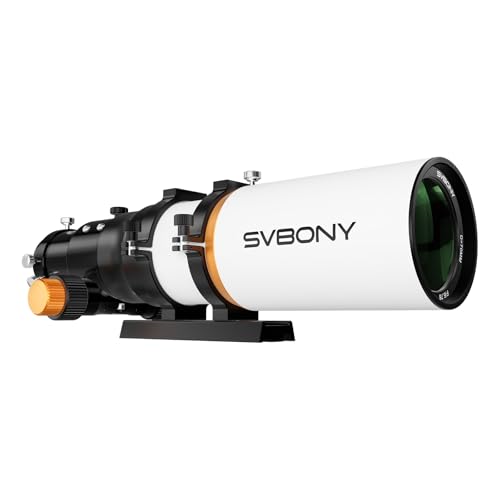
- 1TOP CHOICEBest overallSVBONY SV503 Refractor Telescope, with Field Flattener, 70mm ED RefractorView on Amazon
- 2
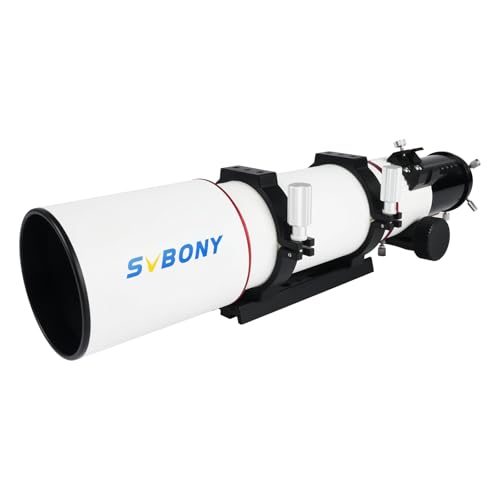
 TOP CHOICEBest for wide-field imagingSVBONY SV503 Telescope for Adults High Powered, 102mm Large Diameter F7 EDView on Amazon
- 3
 TOP CHOICEBest for compact travelSVBONY SV48P Telescope, 90mm Aperture F5.5 Refractor OTAView on Amazon
- 4
 Best for color-free imagingSVBONY SV550 AP0 Telescope, 80mm ED F6 Triplet Apochromatic Refractor OTAView on Amazon
- 5
 Best for beginnersCelestron StarSense Explorer LT 80AZ Smartphone Guided Refractor TelescopeView on Amazon
Our Top Picks
Quick Comparison
| Product | Best for | Key feature |
|---|---|---|
| SVBONY SV503 70mm ED Refractor | Wide-field visual and imaging | F6.78 focal ratio with field flattener |
| SVBONY SV503 102mm F7 ED | Larger aperture wide views | 102mm ED objective with dual-speed focuser |
| SVBONY SV48P 90mm F5.5 | Compact portable observing | F5.5 fast focal ratio in a short tube |
| SVBONY SV550 80mm APO | Color-corrected astrophotography | Triplet apochromatic design, micro-reduction focuser |
| Celestron StarSense Explorer LT 80AZ | First-time users | Smartphone app sky navigation |
SVBONY SV503 Refractor Telescope, with Field Flattener, 70mm ED Refractor
SVBONY SV503 Refractor Telescope, with Field Flattener, 70mm ED Refractor | F6.78 Focal Ratio, Extra Low Dispersion Achromatic OTA, Telescope for Adults, for Astrophotography Visual Astronomy
Best for: Wide-field visual observing and beginner-to-intermediate astrophotography.
This is a good fit for observers who want a fast, lightweight scope that frames large star fields and nebulae without a heavy setup. The included field flattener is aimed at keeping stars sharp toward the edge of the image, which matters most for photography.
Key specs:
- 70mm aperture
- F6.78 focal ratio
- Extra low dispersion (ED) achromatic objective
- Field flattener included
Pros:
- Short tube makes it easy to carry and store
- Wide true field for sweeping the Milky Way
- Field flattener helps with imaging corners
Cons:
- 70mm aperture limits faint deep-sky detail compared with larger scopes
- Mount and accessories must be sourced separately for stable imaging
Bottom line: A strong all-round choice for someone who wants one wide-view scope for both eyepiece viewing and simple photography.
View on AmazonSVBONY SV503 Telescope for Adults High Powered, 102mm Large Diameter F7 ED
SVBONY SV503 Telescope for Adults High Powered, 102mm Large Diameter F7 ED | Extra Low Dispersion Achromatic OTA, Dual-Speed Focuser, Refractor Telescope for Planets Deep Sky Astrophotography Visual
Best for: Wide-field imaging and brighter deep-sky targets with more light gathering.
Observers who want more light than a 70mm scope but still need a manageable tube length will find this model appealing. The larger aperture pulls in more detail on galaxies and nebulae.
Key specs:
- 102mm aperture
- F7 focal ratio
- ED objective
- Dual-speed focuser
Pros:
- Noticeably more light than 70mm or 80mm scopes
- Dual-speed focuser allows finer focusing
- Good balance of field width and resolution
Cons:
- Heavier and longer than smaller refractors, needing a sturdier mount
- Higher focal ratio than the F5-range scopes gives a slightly narrower field
Bottom line: Best for observers who have room for a larger tube and want more brightness on deep-sky objects.
View on AmazonSVBONY SV48P Telescope, 90mm Aperture F5.5 Refractor OTA
SVBONY SV48P Telescope, 90mm Aperture F5.5 Refractor OTA | Telescope for Adults & Beginner Astronomers, Telescopes for Deep Sky Astrophotography and Visual Astronomy
Best for: Compact, portable wide-field observing.
The F5.5 focal ratio gives a very wide field and short exposure times for photography. It suits people who travel to dark sites and want a scope that packs easily.
Key specs:
- 90mm aperture
- F5.5 focal ratio
- Optical tube assembly (OTA) only, mount sold separately
Pros:
- Very fast focal ratio for wide fields
- Short, portable tube
- Good light gathering for its size
Cons:
- Fast optics are less forgiving of eyepiece and focus errors
- Requires a separate mount and accessories
Bottom line: A good pick for travelers who want maximum field width in a small package.
View on AmazonSVBONY SV550 AP0 Telescope, 80mm ED F6 Triplet Apochromatic Refractor OTA
SVBONY SV550 AP0 Telescope, 80mm ED F6 Triplet Apochromatic Refractor OTA | "2.5"" Micro-Reduction Rap Focuser, 87mm Back Focus Distance, Telescope for Adults for Deep Sky Astrophotography & Visual "
Best for: Color-corrected astrophotography and high-contrast visual work.
Apochromatic triplet designs are built to bring three wavelengths of light to a common focus, reducing color fringing around bright stars. This model suits imagers who want clean star edges in their photos.
Key specs:
- 80mm aperture
- F6 focal ratio
- Triplet apochromatic (APO) objective
- 2.5-inch micro-reduction focuser
- 87mm back focus distance
Pros:
- Apochromatic design reduces color fringing
- Sturdy 2.5-inch focuser suits heavier cameras
- Good contrast for planetary and lunar viewing
Cons:
- Costlier optics than standard achromat or ED designs (described in general terms only)
- Needs a full-frame-friendly flattener and camera setup to reach corner sharpness
Bottom line: The right choice for imagers who prioritize color accuracy over the widest possible field.
View on AmazonCelestron StarSense Explorer LT 80AZ Smartphone Guided Refractor Telescope
Celestron StarSense Explorer LT 80AZ Smartphone Guided Refractor Telescope | Smartphone App Sky Navigation, Lightweight Manual Refractor Telescope, Perfect First Telescope, Great for Kids & Families
Best for: First-time users who want help finding objects.
The smartphone app guides you to targets by pointing you toward the right part of the sky, which reduces frustration for newcomers. It is a practical option for families and younger observers.
Key specs:
- 80mm refractor
- Smartphone app sky navigation (StarSense)
- Manual altazimuth mount
Pros:
- App-based guidance helps beginners locate objects
- Lightweight and easy to set up
- Good starting point for learning the sky
Cons:
- Altazimuth mount is less suited to long-exposure astrophotography
- Relies on a smartphone, which must be charged and compatible
Bottom line: A friendly first scope for visual observers who want guided navigation more than imaging performance.
View on AmazonBuying Guide
Focal ratio and field of view
Focal ratio is the focal length divided by aperture. Lower numbers, such as F5 or F6, give wider fields and shorter exposures, which is the defining trait of a rich field scope. Higher numbers like F7 give a narrower view but often more forgiving optics.
Good picks for this: SVBONY SV48P 90mm F5.5, SVBONY SV503 70mm ED
Aperture and light gathering
Aperture determines how much light the objective collects. Doubling aperture roughly quadruples light-gathering area, which shows up as brighter deep-sky objects. Larger apertures also resolve finer detail on planets.
Good picks for this: SVBONY SV503 102mm F7 ED, SVBONY SV550 80mm APO
Optical design: achromat, ED and apochromat
Achromatic lenses use two elements to reduce color fringing. ED (extra low dispersion) glass further reduces color. Apochromatic triplets aim for the strongest color correction. Choose based on whether you care most about cost-to-performance or top color accuracy.
Good picks for this: SVBONY SV550 80mm APO, SVBONY SV503 70mm ED
Focuser quality
A smooth, stable focuser matters more on fast refractors because small focus errors show up quickly. Dual-speed focusers and larger drawtubes help when you attach a heavier camera.
Good picks for this: SVBONY SV503 102mm F7 ED, SVBONY SV550 80mm APO
Mount compatibility
Many rich field refractors ship as optical tube assemblies only. Check that your mount can handle the tube weight and that it has the right dovetail or saddle. Equatorial mounts are better for long exposures; altazimuth mounts suit visual use.
Good picks for this: SVBONY SV48P 90mm F5.5, Celestron StarSense Explorer LT 80AZ
Size, weight and portability
A shorter tube with a fast focal ratio is easier to carry to a dark site. Consider how far you will walk and how much gear you can lift on your own.
Good picks for this: SVBONY SV48P 90mm F5.5, Celestron StarSense Explorer LT 80AZ
Care and storage
Keep dust caps on both ends when not in use, store the scope in a dry place, and let it acclimate to outdoor temperature before observing to reduce dew and fogging. Avoid touching the lens surfaces; use a soft brush and an approved lens cleaning solution if needed.
Good picks for this: SVBONY SV550 80mm APO, SVBONY SV503 70mm ED
FAQ
What is a rich field refractor telescope used for?
It is used for wide, low-power views of large sky regions such as the Milky Way, star clusters and large nebulae. It is also popular for astrophotography because fast focal ratios shorten exposure times.
Is a fast focal ratio better?
Not always. Fast focal ratios give wider fields and shorter exposures, but they can be harder to focus and more sensitive to eyepiece and camera spacing. Slower ratios are often easier to use at high magnification.
Do I need a field flattener?
For visual observing, usually not. For photography, a field flattener helps keep stars sharp toward the edges of the image, especially with fast refractors.
What aperture should I choose?
A 70mm to 90mm refractor is a practical starting point for wide views. Choose 100mm or more if you want stronger deep-sky brightness and can handle a heavier tube.
Do I need a mount to use these telescopes?
Most rich field refractors sold as optical tube assemblies require a separate mount. Check the tube weight and mount rating before buying.
Can beginners use a rich field refractor?
Yes. Smaller, lighter models with guided navigation are well suited to new observers. Expect a learning curve with focusing and eyepiece choice at fast focal ratios.
Conclusion
For the widest views and simple photography, the SVBONY SV503 70mm ED is a balanced all-round option. Choose the SVBONY SV503 102mm F7 ED if you want more light and have room for a larger mount. The SVBONY SV48P suits travelers who value a compact, fast tube. The SVBONY SV550 APO is the pick for imagers who want the strongest color correction. The Celestron StarSense Explorer LT 80AZ is the most approachable starting point for first-time observers who want guided navigation.
Sources
- Background on telescope optics, light gathering and how the sky is observed from space and ground (nasa.gov)
- Beginner resources on telescope types, observing techniques and dark-sky practices
- Professional astronomy society materials on amateur observing and astrophotography
Related reading
- Wide Field Refractor Telescope Picks Compared for 2026
- iTek Refractor Telescope Review: Specs, Strengths and Who It Suits
- Top 7 Refractor Telescope Solar Filters Compared for Safe Sun Viewing
About Claire Whitaker
Claire Whitaker is part of our editorial team and reviews and edits our telescopes & stargazing guides, checking product details against manufacturer specifications and owner feedback.
About the author
Claire Whitaker writes reviews and buying guides for Astronomy Site.