Tasco 60mm Refractor Telescope: 5 Best Picks Compared for 2026
Comparing five tasco 60mm refractor telescope options for beginners. See how each one handles Moon, planets and bright objects before you buy.
 By Claire Whitaker
Updated November 9, 2026
 By Claire Whitaker
Updated November 2026
Shoppers searching for a tasco 60mm refractor telescope usually want one thing: a small, simple scope that shows the Moon, the planets and a handful of bright deep-sky targets without a steep learning curve. This guide compares five Tasco and Celestron models built around a 60mm-class objective. The selection criteria were aperture and optical design, mount type, how stable the setup is on a tripod, the eyepiece and finder included, and the kind of feedback owners tend to report after the first few months of use. Nothing here is based on our own bench testing; the picks reflect manufacturer specifications and patterns in owner feedback.
Our top picks at a glance
- 1TOP CHOICEBest overallTasco Spacestation 600 x 50mm Refractor Telescope, Astronomy TelescopeView on Amazon
- 2
 TOP CHOICEBest for Moon and planet viewingCelestron PowerSeeker 60AZ Refractor Telescope for Moon & Planet ViewingView on Amazon
- 3
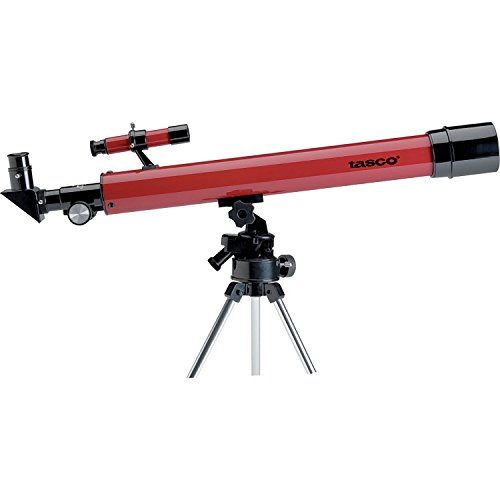 TOP CHOICEBest for a simple first scopeTasco Refractor Telescope (Novice)View on Amazon
- 4
 Best for a larger tabletop-to-tripod setupTASCO Spacestation 70x800mm Refractor AZ with Variable LED Red Dot FinView on Amazon
- 5
 Best budget pick for travelCELESTRON Travel Scope 60 Refractor TelescopeView on Amazon
Our Top Picks
| Product | Best for | Key feature |
|---|---|---|
| Tasco Spacestation 600 x 50mm Refractor Telescope | Beginners who want a complete kit | Compact refractor with accessories for everyday use |
| Celestron PowerSeeker 60AZ Refractor Telescope | Moon and planet viewing | 60mm objective with manual alt-azimuth controls |
| Tasco Refractor Telescope (Novice) | Absolute first-time observers | Straightforward setup and simple controls |
| TASCO Spacestation 70x800mm Refractor AZ | Users wanting a 70mm-class aperture | Variable LED red dot finderscope |
| Celestron Travel Scope 60 Refractor Telescope | Portable observing trips | Lightweight, easy-to-carry design |
Tasco Spacestation 600 x 50mm Refractor Telescope, Astronomy Telescope for Adults and Beginners, Black
Tasco Spacestation 600 x 50mm Refractor Telescope, Astronomy Telescope for Adults and Beginners, Black
Best for: Beginners who want a complete kit
This is a good fit for an adult or older teen who wants to start observing without buying separate accessories. The listing name points to a 50mm objective and a 600mm focal length, which suits lunar and bright planetary views better than faint galaxies.
Key specs
- Refractor optical design
- 50mm objective lens (from listing name)
- 600mm focal length (from listing name)
- Designed for adults and beginners
Pros
- Simple, quick setup for a first session
- Focal length suits Moon and bright planets
- Black tube keeps the build understated
Cons
- A 50mm aperture limits faint deep-sky detail
- Accessory quality varies between kits and owners often suggest upgrading the eyepiece
Bottom line: A sensible pick for someone who wants an all-in-one starter scope and mainly plans to look at the Moon and planets.
View on AmazonCelestron PowerSeeker 60AZ Refractor Telescope for Moon & Planet Viewing
Celestron PowerSeeker 60AZ Refractor Telescope for Moon & Planet Viewing | Larger 60mm Objective Lens, Bright Lunar & Planetary Views, Manual Alt-Azimuth Controls, Adjustable Tripod, Easy to Use
Best for: Moon and planet viewing
This model is aimed at people who want clear lunar and planetary views with a traditional refractor and manual controls. It is a reasonable choice for a parent and child, or a student who will observe from a backyard or balcony.
Key specs
- 60mm objective lens (from listing name)
- Manual alt-azimuth mount
- Adjustable tripod
Pros
- 60mm objective gathers more light than many smaller starter refractors
- Alt-azimuth controls are easy to learn
- Adjustable tripod helps with comfortable eye height
Cons
- Manual tracking means targets drift out of view at higher magnifications
- Deep-sky objects will look faint and small
Bottom line: The most direct match for buyers who want crisp Moon and planet views with minimal fuss.
View on AmazonTasco Refractor Telescope (Novice)
Tasco Refractor Telescope (Novice)
Best for: Absolute first-time observers
This is a basic refractor aimed at someone who has never used a telescope and wants to learn the fundamentals: finding targets, changing eyepieces and focusing. Expectations should stay modest, since listing details for this model are limited.
Key specs
- Refractor optical design
- Novice-level build intended for entry use
Pros
- Designed for ease of use by new observers
- Familiar Tasco brand with a long history in consumer optics
- Low barrier to a first night outside
Cons
- Limited published specifications make it harder to compare precisely
- Owners often report that upgrading eyepieces improves results
Bottom line: A reasonable starting point for a curious beginner who wants to learn before spending more.
View on AmazonTASCO Spacestation 70x800mm Refractor AZ with Variable LED Red Dot Finderscope Telescope, Black
TASCO Spacestation 70x800mm Refractor AZ with Variable LED Red Dot Finderscope Telescope, Black, one Size (49070800)
Best for: Users wanting a 70mm-class aperture
This pick suits someone who wants a slightly larger objective than the 50mm and 60mm models here, along with a finder that helps locate targets. It is a practical step up for lunar detail and brighter planetary views.
Key specs
- 70mm objective (from listing name)
- 800mm focal length (from listing name)
- Alt-azimuth mount (from listing name)
- Variable LED red dot finderscope
Pros
- Larger aperture than the 50mm and 60mm options
- Red dot finder makes aiming faster
- Alt-azimuth mount is simple to understand
Cons
- Still a small aperture for faint galaxies and nebulae
- Owners often report that the mount can feel wobbly at high power
Bottom line: A good choice for buyers who want a bit more light and a finder system without moving into a much larger budget tier.
View on AmazonCELESTRON Travel Scope 60 Refractor Telescope
CELESTRON Travel Scope 60 Refractor Telescope
Best for: Portable observing trips
This model is designed to be packed up easily for camping trips, road trips or observing away from home. It is a good companion scope for someone who wants a grab-and-go instrument rather than a heavy tripod setup.
Key specs
- 60mm objective (from listing name)
- Refractor optical design
- Compact travel-oriented build
Pros
- Easy to carry and set up quickly
- 60mm aperture is a practical size for Moon and planets
- Suited to travel and dark-sky trips
Cons
- Smaller mount may feel less stable than a full tripod setup
- Limited aperture for faint deep-sky work
Bottom line: The best fit for people who value portability above all and plan to observe mostly at the Moon and bright planets.
View on AmazonBuying Guide
Aperture and objective size
Aperture is the diameter of the objective lens, and it controls how much light the telescope gathers. A 50mm to 70mm refractor will show the Moon’s craters clearly and bright planets like Jupiter and Saturn as small but recognizable disks. Faint galaxies and nebulae need much larger apertures. For a first scope, a 60mm or 70mm objective is a practical balance of size and light.
Good picks for this: Celestron PowerSeeker 60AZ, TASCO Spacestation 70x800mm Refractor AZ
Focal length and magnification
Focal length, combined with the eyepiece you use, determines magnification. Higher magnification is not always better, because the atmosphere and the small aperture limit sharpness. Check the listed focal length and pair it with eyepieces that give moderate power for most targets.
Good picks for this: Tasco Spacestation 600 x 50mm Refractor Telescope, Tasco Refractor Telescope (Novice)
Mount type and stability
Alt-azimuth mounts move up-down and left-right, which is intuitive for beginners. Stability matters more than most shoppers expect, since a wobbly tripod makes focusing frustrating. Look for a sturdy tripod and a mount that locks firmly.
Good picks for this: Celestron PowerSeeker 60AZ, TASCO Spacestation 70x800mm Refractor AZ
Finder system
A finderscope or red dot finder helps you point the telescope at a target before you look through the eyepiece. A red dot system is generally easier for beginners than a small optical finder, because the target is visible at a glance.
Good picks for this: TASCO Spacestation 70x800mm Refractor AZ
Portability and setup time
If you plan to observe away from home, weight and packing size matter. A compact refractor can be carried in one hand, while a heavier tripod setup is better for a backyard. Consider where you will actually use the telescope most often.
Good picks for this: Celestron Travel Scope 60 Refractor Telescope, Tasco Spacestation 600 x 50mm Refractor Telescope
Included accessories
Many starter kits include eyepieces, a finder and a tripod, but accessory quality varies. Owners frequently report that the included eyepieces are the weakest link, and replacing them can noticeably improve views. Check whether the kit contains a tripod, at least one eyepiece and a finder.
Good picks for this: Tasco Spacestation 600 x 50mm Refractor Telescope, Tasco Refractor Telescope (Novice)
Care and durability
Keep lens surfaces clean and covered when not in use. Store the telescope indoors to avoid temperature swings that can cause condensation. Never point a telescope at the Sun without a proper solar filter designed for that purpose, as direct sunlight through an optical instrument can cause permanent eye damage.
Good picks for this: Celestron PowerSeeker 60AZ, Celestron Travel Scope 60 Refractor Telescope
FAQ
Is a 60mm refractor good enough for beginners?
Yes, for the Moon, bright planets and some star clusters. It will not reveal faint galaxies or detailed nebulae, which need larger apertures. Many beginners use a 60mm scope for their first year before deciding what to upgrade.
What can I see with a tasco 60mm refractor telescope?
Expect clear views of lunar craters and maria, the phases of Venus, the bands of Jupiter when it is well placed, the rings of Saturn as a small disk, and bright double stars. Brighter open clusters such as the Pleiades also look good at low power.
Do I need a tripod that comes with the telescope?
Most starter refractors include a tripod, but stability varies. A sturdy tripod reduces vibration and makes focusing easier. If the included one feels flimsy, an upgrade can improve the experience more than a new eyepiece.
Are the included eyepieces good enough?
They are usually enough to start. Owners often report that replacing them with better-quality eyepieces gives sharper, brighter views, especially at higher magnification.
Can I use a tasco 60mm refractor telescope for astrophotography?
Basic phone-through-eyepiece photos of the Moon are possible. Serious astrophotography needs a motorized mount, a camera and tracking, which these starter scopes are not designed for.
How much magnification should I use?
Start with low to moderate power, roughly 20x to 50x, for most targets. Higher magnification reduces brightness and sharpness, and the atmosphere often limits detail on nights of poor seeing.
Is it safe to look at the Sun through this telescope?
No, not without a certified solar filter placed over the front of the objective. Eyepiece-mounted filters are unsafe. Consult a professional astronomy club or the manufacturer’s instructions before any solar observation.
Conclusion
For most beginners searching for a tasco 60mm refractor telescope, the Celestron PowerSeeker 60AZ is the most direct match for Moon and planet viewing, while the Tasco Spacestation 600 x 50mm works well as a complete starter kit. Buyers who want a slightly larger aperture and a red dot finder should look at the TASCO Spacestation 70x800mm, and the Celestron Travel Scope 60 suits anyone who prioritizes portability. The Tasco Refractor (Novice) is a simple entry point for those who want to learn the basics first. Whichever you choose, budget for a better eyepiece later if the included ones disappoint.
Sources
- Background on the Moon, planets and how telescopes reveal them (nasa.gov)
- Consumer safety guidance, including caution around optical instruments and products for children (cpsc.gov)
- Resources from the American Astronomical Society on beginner observing and telescope basics
Related reading
- Tasco 800x60mm Novice Refractor Telescope: 4 Best Picks Compared (2026)
- iTek Refractor Telescope Review: Specs, Strengths and Who It Suits
- Wide Field Refractor Telescope Picks Compared for 2026
- Top 7 Refractor Telescope Solar Filters Compareds for Safe Sun Viewing
About Claire Whitaker
Claire Whitaker is part of our editorial team and reviews and edits our telescopes & stargazing guides, checking product details against manufacturer specifications and owner feedback.
About the author
Claire Whitaker writes reviews and buying guides for Astronomy Site.