Celestron Light Pollution Reduction Filter: 7 Best Picks Compared for 2026
Compare the best Celestron light pollution reduction filter options for telescopes, including UHC and LPR models, to find the right filter for your night sky vi
 By Audrey Hayes
Updated November 25, 2026
 By Audrey Hayes
Updated November 2026
A Celestron light pollution reduction filter can make a noticeable difference when you observe from a suburb or a city edge, where sky glow washes out faint nebulae and galaxies. This guide compares seven filters that fit standard 1.25-inch eyepiece barrels, along with a few related options from other makers. Our selection criteria were specifications, brand reputation, and the patterns owners tend to report: how much background sky they clear, whether star color shifts, how easily the filter threads or slides into a diagonal, and how well the coatings hold up over time. This is a research-based comparison; we have not tested these filters ourselves, so treat the notes below as a guide to what each design is built to do.
Our top picks at a glance
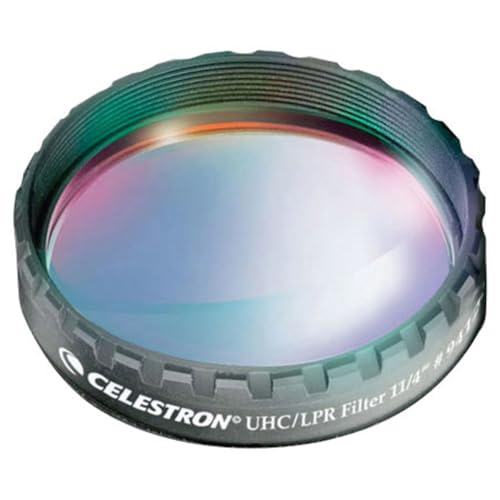
- 1TOP CHOICEBest overallCelestron UHC/LPR Light Pollution Reduction Filter for Telescopes – 1.25"View on Amazon
- 2
 TOP CHOICEBest for dual-filter setsCelestron 94123 1.25-Inch UHC/LPR Filter (Black) & 93623 Narrowband OxView on Amazon
- 3
 TOP CHOICEBest for Celestron Origin ownersCelestron Nebula Narrowband Astroimaging Filter – Exclusively for OriginView on Amazon
- 4
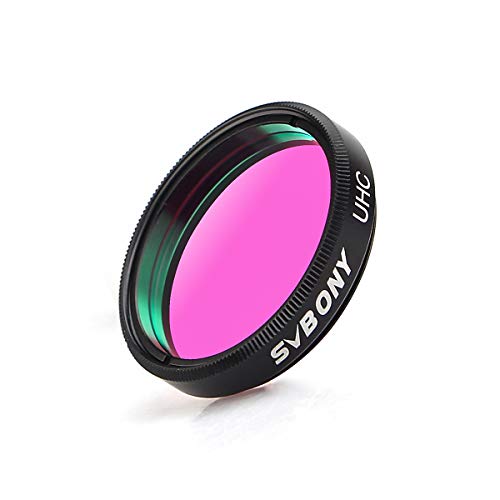 Best budget pickSVBONY Telescope Filter, 1.25" UHC Filter Improve Contrast for TelescopeView on Amazon
- 5
 Best for broadband sky glowICE 1.25" LiPo Didymium Optical Glass Filter for Telescope Broadband LView on Amazon
- 6
 Best for lunar and planetary viewingCelestron Moon Filter for Telescopes – Fits Most 1.25" EyepiecesView on Amazon
- 7
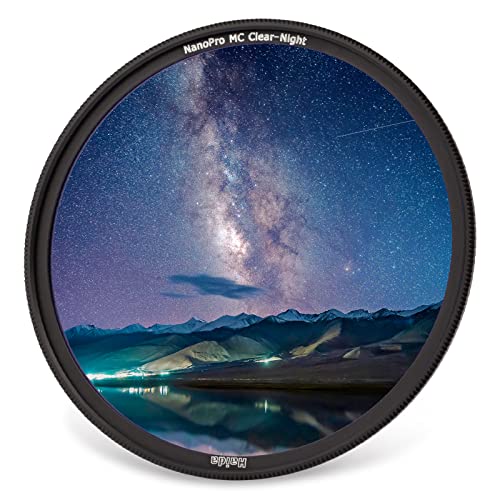 Best for camera and large-format useHaida 52MM Clear-Night Filter Light Pollution Source ReductionView on Amazon
Our Top Picks
Quick Comparison
| Product | Best for | Key feature |
|---|---|---|
| Celestron UHC/LPR Light Pollution Reduction Filter – 1.25″ | Overall visual use from light-polluted sites | Ultra-high-contrast coating for nebula contrast |
| ICE 1.25″ LiPo Didymium Optical Glass Filter | Broadband sky glow and general star fields | Didymium-based optical glass |
| Celestron 94123 UHC/LPR Filter with 93623 Narrowband Oxygen III Filter | Owners who want two filter types in one set | Broadband plus narrowband OIII options |
| Celestron Nebula Narrowband Astroimaging Filter | Celestron Origin users | Tri-band Hα, Hβ and OIII isolation |
| SVBONY 1.25″ UHC Filter | Budget-minded visual observers | Optical glass in an aluminum frame |
| Celestron Moon Filter for Telescopes | Lunar and planetary glare control | Reduces glare, restores surface contrast |
| Haida 52MM Clear-Night Filter | Camera lenses and large-format astrophotography | 52mm screw-in clear-night design |
Celestron UHC/LPR Light Pollution Reduction Filter for Telescopes – 1.25″
Celestron UHC/LPR Light Pollution Reduction Filter for Telescopes – 1.25" | Light Pollution Reduction, Enhanced Nebula Contrast, Darker Sky Background, High Transmission Optical Coating, For Visual Us
Best for: Overall visual use from light-polluted suburban skies
This is the most direct match for the search, and it is the filter most observers start with when sky glow is the main problem. It suits people who want a single eyepiece-end filter for nebula and deep-sky work without moving to narrowband gear.
Key specs
- 1.25-inch barrel, fits standard eyepiece-end filter threads
- Light pollution reduction (UHC/LPR) coating
- Designed for visual use with a telescope or binoculars
Pros
- Improves nebula contrast from suburban skies
- Darkens the background sky without a large color shift
- Simple to screw into most 1.25-inch eyepieces
Cons
- Helps less on galaxies than on emission nebulae
- Dims the image somewhat, so dark-sky sites still give the best results
Bottom line: The best starting point for most visual observers who need one filter for light-polluted sites.
View on AmazonICE 1.25″ LiPo Didymium Optical Glass Filter for Telescope Broadband Light Pollution Reduction
ICE 1.25" LiPo Didymium Optical Glass Filter for Telescope Broadband Light Pollution Reduction for Night Sky/Star
Best for: Broadband sky glow and general star fields
Owners who observe mostly star clusters and galaxies from a moderately bright site often pick a didymium-style broadband filter. It is a reasonable option for someone who wants to reduce skyglow without committing to narrowband work.
Key specs
- 1.25-inch format
- Optical glass construction with a light pollution (LiPo) design
- Intended for telescope visual use
Pros
- Broadband design suits varied targets
- Optical glass is widely favored over plain plastic-based filters
- Straightforward eyepiece-end mounting
Cons
- Broadband filters generally give smaller gains on emission nebulae than narrowband designs
- Color balance can look slightly warm on some stars
Bottom line: A good fit for observers who want a general-purpose skyglow reducer for mixed targets.
View on AmazonCelestron 94123 1.25-Inch UHC/LPR Filter (Black) and 93623 Narrowband Oxygen III 1.25 Filter
Celestron 94123 1.25-Inch UHC/LPR Filter (Black) & 93623 Narrowband Oxygen III 1.25 Filter
Best for: Owners who want two filter types in one set
This pairing gives you a broadband UHC/LPR filter for everyday sky glow plus a narrowband OIII filter for planetary nebulae and supernova remnants. It suits observers who want to match the filter to the target.
Key specs
- 1.25-inch format for both filters
- Includes a UHC/LPR broadband filter and an Oxygen III narrowband filter
- Designed for visual use
Pros
- Two filter types cover broad and targeted use
- OIII filter is useful on planetary nebulae
- Same 1.25-inch format keeps swaps simple
Cons
- Narrowband OIII reduces brightness of many targets, so it is situational
- Owners often need to learn which filter suits which object
Bottom line: Best for observers ready to match filters to targets rather than relying on one filter for everything.
View on AmazonCelestron Nebula Narrowband Astroimaging Filter – Exclusively for Origin
Celestron Nebula Narrowband Astroimaging Filter – Exclusively for Origin | Tri-Band Narrowband Filter, Isolates Hα, Hβ & OIII, Reveals Emission Nebulae, Optimized for Celestron Origin f/2.2
Best for: Celestron Origin users
This filter is built for a specific telescope rather than a general 1.25-inch eyepiece. If you own a Celestron Origin, it is one of the more targeted options for emission nebula work from bright skies.
Key specs
- Tri-band narrowband design isolating Hα, Hβ and OIII
- Optimized for the Celestron Origin at f/2.2
- Intended for emission nebulae
Pros
- Tri-band design passes the main nebula emission lines
- Matched to a specific optical system
- Useful for both visual and imaging work on emission targets
Cons
- Only suited to the Origin, so the use case is narrow
- Galaxies and star clusters show little benefit
Bottom line: The right choice if you own an Origin and mainly photograph or observe emission nebulae.
View on AmazonSVBONY Telescope Filter, 1.25″ UHC Filter Improve Contrast for Telescope
SVBONY Telescope Filter, 1.25" UHC Filter Improve Contrast for Telescope | Optical Glass Lens, Aluminum Frame, Astrophotography Filter, Light Pollution Filter Nebula Filters, Telescope Accessories
Best for: Budget-minded visual observers
New observers who want to try a UHC-style filter before spending more often start here. It is a sensible entry point for checking whether a filter helps at your site.
Key specs
- 1.25-inch UHC filter
- Optical glass lens with an aluminum frame
- Marketed for telescope and astrophotography use
Pros
- Optical glass rather than basic plastic
- Aluminum frame adds durability
- Easy entry point for trying a UHC filter
Cons
- Fewer published specifications than some premium filters
- Gains on galaxies may be modest from heavily light-polluted sites
Bottom line: A practical budget choice for observers testing whether a UHC filter suits their sky.
View on AmazonCelestron Moon Filter for Telescopes – Fits Most 1.25″ Eyepieces
Celestron Moon Filter for Telescopes – Fits Most 1.25" Eyepieces | Reduces Lunar Glare, Improves Contrast, Reveals Surface Detail, Great for Bright Moon & Planet Viewing
Best for: Lunar and planetary glare control
Although not a light pollution filter, this Celestron moon filter is a common companion for the same eyepiece kit. It cuts glare from a bright Moon and can make planetary detail easier to see.
Key specs
- Fits most 1.25-inch eyepieces
- Reduces lunar glare
- Intended for bright Moon and planet viewing
Pros
- Lowers glare from the bright lunar surface
- Can improve contrast on surface features
- Simple 1.25-inch fit
Cons
- Does nothing for sky glow on deep-sky targets
- Dims the image, which may be unwelcome on faint planets
Bottom line: A useful add-on for Moon observers, but not a substitute for a light pollution filter.
View on AmazonHaida 52MM Clear-Night Filter Light Pollution Source Reduction
Haida 52MM Clear-Night Filter Light Pollution Source Reduction for Sky/Star
Best for: Camera lenses and large-format astrophotography
Photographers who shoot wide night skies with a camera lens rather than a telescope eyepiece will find this filter fits a different workflow. It is designed for screw-in use on a 52mm lens thread.
Key specs
- 52mm screw-in thread
- Clear-night design for light pollution source reduction
- Intended for camera and lens use
Pros
- Standard 52mm thread fits many lenses
- Targets sky glow for wide-field night shots
- Usable on lenses rather than only telescopes
Cons
- Not designed for telescope eyepieces
- Thread size must match your lens exactly
Bottom line: Suited to photographers who need a light pollution filter for a camera lens, not a telescope.
View on AmazonBuying Guide
Eyepiece barrel size and thread fit
Most visual light pollution filters sold for telescopes use a 1.25-inch barrel that threads onto the eyepiece. Confirm your eyepieces are 1.25-inch before you buy, and check whether your diagonal or eyepiece uses a different standard. Camera filters use a different system altogether, typically a screw-in thread measured in millimeters on the lens.
Good picks for this: Celestron UHC/LPR Light Pollution Reduction Filter, SVBONY 1.25″ UHC Filter
Broadband versus narrowband design
Broadband filters such as UHC and LPR types block a wide band of artificial light and suit mixed targets. Narrowband filters pass only specific emission lines, which can produce large gains on emission nebulae but dim many other objects. Decide which targets you observe most before choosing.
Good picks for this: ICE 1.25″ LiPo Didymium Optical Glass Filter, Celestron Nebula Narrowband Astroimaging Filter
Matching the filter to your telescope
Some filters are generic, while others are matched to a specific instrument. The Origin-specific narrowband filter, for example, is designed around that telescope’s focal ratio. Check the listing for compatibility before assuming a universal fit.
Good picks for this: Celestron Nebula Narrowband Astroimaging Filter, Celestron 94123 UHC/LPR Filter with 93623 Oxygen III Filter
Optical glass versus plastic
Optical glass filters generally hold their color and sharpness better over time than plastic-based designs. Owners often report that glass versions keep stars looking neutral, while cheaper plastic filters can show a faint tint. Glass is heavier, but the difference is rarely a problem at the eyepiece.
Good picks for this: SVBONY 1.25″ UHC Filter, ICE 1.25″ LiPo Didymium Optical Glass Filter
Use case: visual versus astrophotography
Visual observers judge filters by what they see through the eyepiece, while astrophotographers look at what the sensor records. A filter that feels dim at the eyepiece may still help a long exposure. Think about whether you mainly sit at the eyepiece or mount a camera.
Good picks for this: Haida 52MM Clear-Night Filter, Celestron Nebula Narrowband Astroimaging Filter
Lunar and planetary add-ons
A light pollution filter does not reduce Moon glare. If you observe the Moon or bright planets, a separate moon filter gives a different benefit: lower brightness and better surface contrast. Many observers keep both types in their kit.
Good picks for this: Celestron Moon Filter for Telescopes
Care, cleaning and durability
Filter coatings are delicate. Use a soft brush or air blower for dust, then a microfiber cloth and lens-safe cleaning solution if needed. Store filters in a padded case so the threads and glass do not scratch. Owners generally report longer-lasting results when filters stay capped and out of humid storage.
Good picks for this: Celestron UHC/LPR Light Pollution Reduction Filter, SVBONY 1.25″ UHC Filter
FAQ
Does a Celestron light pollution reduction filter work on galaxies?
Broadband UHC and LPR filters generally help more with emission nebulae than with galaxies. Galaxies are faint and broadband, so the gain is usually smaller. From a very bright site, you may see modest improvement, but dark skies remain the best option for galaxy observing. For another angle, check out Astronomik Light Pollution Filter Picks: 7 Best Compared for 2026.
Can I use a light pollution filter with a Celestron moon filter together?
You generally should not stack filters on the same eyepiece unless the manufacturer says the combination is safe and suitable. Most observers swap between a light pollution filter for deep-sky work and a moon filter for lunar viewing.
What is the difference between UHC and LPR filters?
Both are broadband designs aimed at reducing artificial light. The exact coating specifications differ by manufacturer, so check the product description for the details. In practice, both aim to darken the sky background and improve nebula contrast.
Will a light pollution filter change star colors?
Some filters add a slight tint, which owners sometimes notice on bright stars. Optical glass designs generally keep color more neutral than basic plastic filters. A small tint is normal for many broadband filters.
Do I need a narrowband filter if I already have a UHC filter?
Not necessarily. UHC-style broadband filters work for a wide range of targets. Narrowband filters add the most benefit on emission nebulae, so they are useful once you know you want to focus on those objects.
Can I use a telescope light pollution filter on a camera lens?
Usually not directly. Telescope filters use 1.25-inch eyepiece threads, while camera filters use lens threads measured in millimeters. A camera-specific filter, such as a 52mm screw-in model, is designed for lens use.
Will a filter help if I observe from a dark rural site?
At a truly dark site, a light pollution filter often adds little and can dim the view. Filters are most useful when artificial sky glow is significant. If your sky is already dark, observe without one for the widest range of targets.
Conclusion
For most visual observers, the Celestron UHC/LPR Light Pollution Reduction Filter is the most direct starting point. Owners who want to try a broadband filter on a budget may prefer the SVBONY UHC option, while those who want two filter types can look at the Celestron 94123 and 93623 pairing. Celestron Origin owners interested in emission nebulae should consider the Origin-specific narrowband filter. Moon observers will find the Celestron Moon Filter a useful companion, and camera users should choose the Haida 52MM Clear-Night Filter for lens work. Match the filter to your telescope, your targets, and your sky before buying.
Sources
- Background on light pollution, its sources, and how sky glow affects observing and astrophotography
- Guidance on observing planets, the Moon and deep-sky objects and the effects of sky conditions (nasa.gov)
- Resources from professional astronomy societies on telescope use and observing practice
Before you buy: helpful guides
- Lumicon Light Pollution Filter: How It Works and Where It Helps
- Light Pollution Gel Filter: How It Works and How to Use One (2026)
- Gskyer 70mm Astronomical Refractor Telescope: Setup and First-Light Guide
- Astrophotography Color Camera Filters: What to Use and When (2026)
- Celestron Astromaster 90az Refractor Telescope: A Practical Guide (2026)
About Audrey Hayes
Audrey Hayes is part of our editorial team and reviews and edits our telescopes & stargazing guides, checking product details against manufacturer specifications and owner feedback.
About the author
Audrey Hayes writes reviews and buying guides for Astronomy Site.