7 Best Light Pollution Filters for DSLR Astrophotography: Picks Compared
Find the best light pollution filter for DSLR astrophotography. We compare seven filters on coatings, glass, fit and use case to help you pick the right one.
 By Audrey Hayes
Updated November 25, 2026
 By Audrey Hayes
Updated November 2026
Shooting the Milky Way from a suburban backyard usually means fighting sodium streetlights and sky glow that wash out faint nebulae and flatten contrast. A light pollution filter for DSLR astrophotography sits in front of the lens and blocks part of the unwanted light, letting more of the sky’s signal through. This guide compares seven clear-band, broadband light pollution filters from makers that are well known in astrophotography circles. Our selection criteria were specifications (glass type, coating count, thread size), brand reputation for optical quality, and patterns in owner feedback about color cast, flare and ease of mounting. Nothing here comes from our own lab or field testing; the notes reflect manufacturer claims and what owners commonly report.
Our top picks at a glance
- 1TOP CHOICEBest overallWalking Way 77mm Natural Night FilterView on Amazon
- 2
 TOP CHOICEBest for magnetic mountingHaida HD4676-62 62mm Clear Night Light Pollution FilterView on Amazon
- 3TOP CHOICEBest for smaller lensesWalking Way 67mm Natural Night FilterView on Amazon
- 4
 Best for slim mounting rings62mm Night Sky Light Pollution Reduction Filter (Breakthrough Photography)View on Amazon
- 5
 Best budget pickK&F CONCEPT 67mm Clear Natural Night FilterView on Amazon
- 6
 Best for star-field detailMarumi 77mm Slim MC StarScape FilterView on Amazon
- 7
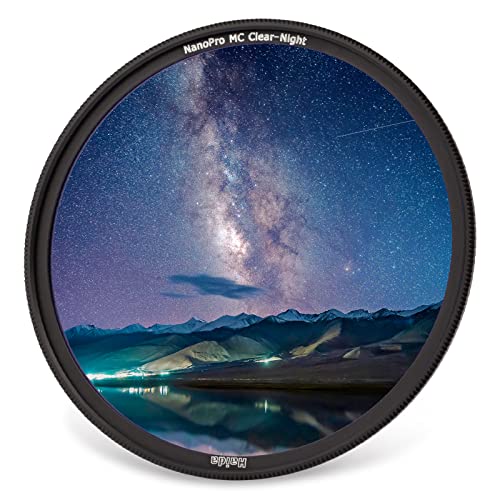 Best for 77mm lenses with a premium brandHaida 77MM Clear-Night FilterView on Amazon
Our Top Picks
Quick Comparison
| Product | Best for | Key feature |
|---|---|---|
| Walking Way 77mm Natural Night Filter | Overall use on 77mm lenses | Nano-coated optical glass |
| 62mm Night Sky Filter (Breakthrough Photography) | Slim mounting on 62mm lenses | Ultra-slim traction frame, weather sealing |
| Walking Way 67mm Natural Night Filter | 67mm lenses | Nano-coated optical glass |
| Haida HD4676-62 62mm Clear Night Filter | Magnetic mounting workflows | Magnetic MC optical glass |
| K&F CONCEPT 67mm Clear Natural Night Filter | Budget-conscious shooters | 28 multi-layer coatings |
| Marumi 77mm Slim MC StarScape Filter | Star-field detail | Broadband reduction, Japanese manufacturing |
| Haida 77MM Clear-Night Filter | 77mm lenses from an established filter brand | Light source reduction for sky and stars |
Walking Way 77mm Natural Night Filter
Walking Way 77mm Natural Night Filter for Light Pollution Reduction Nano-Coated Optical Glass for Night Sky/Astrophotography/Star Clarity Anti-Light Pollution Filter
Best for: Overall use on 77mm lenses for suburban night sky work
This is a good starting point for photographers who own a 77mm lens and want a filter that targets common artificial light sources without a strong color shift. Its listing emphasizes nano-coated optical glass and a neutral, natural rendering of the night sky.
Key specs:
- Filter diameter: 77mm
- Glass: nano-coated optical glass (per listing)
- Purpose: broadband light pollution reduction for night sky and star photography
Pros:
- Clearly sized for 77mm threads, avoiding step-up ring compromises
- Coatings are described as designed to reduce flare and ghosting
- Neutral sky color is a common goal for owners editing their own files
Cons:
- Broadband designs reduce some light from every source, so results in heavily lit cities will still be limited
- Owners sometimes mention that a lens hood or careful exposure is needed to control stray reflections
Bottom line: A sensible first filter for anyone with a 77mm lens who wants balanced, low-fuss results across general night sky shots.
View on Amazon62mm Night Sky Light Pollution Reduction Filter (Breakthrough Photography)
62mm Night Sky Light Pollution Reduction Filter for Camera Lenses with MRC16, Nanotec Coatings, Ultra-Slim, Traction Frame, Weather-Sealed by Breakthrough Photography
Best for: Slim mounting on 62mm lenses where space and thread profile matter
This filter is aimed at photographers who stack accessories or use lenses where a thick filter ring can cause vignetting. Its listing points to an ultra-slim design, a traction frame for easier removal, and weather sealing.
Key specs:
- Filter diameter: 62mm
- Design: ultra-slim profile with traction frame
- Listed features: MRC16 and nanotec coatings, weather-sealed construction
Pros:
- Slim profile suits wide-angle work where thick filters can cause corner darkening
- Traction frame is intended to make it easier to unscrew without slipping
- Weather sealing is useful for dew-prone observing nights
Cons:
- Only useful if your lens takes a 62mm thread; adapters add complexity
- Owners generally note that dew and condensation still need active management in humid climates
Bottom line: The right choice for 62mm owners who want low profile and a secure, weather-resistant fit.
View on AmazonWalking Way 67mm Natural Night Filter
Walking Way 67mm Natural Night Filter for Light Pollution Reduction Nano-Coated Optical Glass for Night Sky/Astrophotography/Star Clarity Anti-Light Pollution Filter
Best for: 67mm lenses that need the same natural-night approach as larger sizes
This is the 67mm sibling of the 77mm model, suited to lenses in that thread size. It follows the same design philosophy: nano-coated glass aimed at reducing artificial light while keeping stars and sky color natural.
Key specs:
- Filter diameter: 67mm
- Glass: nano-coated optical glass (per listing)
- Purpose: light pollution reduction for night sky and star clarity
Pros:
- Fills a common size gap for mid-range zoom and prime lenses
- Consistent design language with the 77mm version eases comparisons
- Natural rendering suits editing workflows
Cons:
- Limited to 67mm threads; step-up rings may affect edge sharpness
- Like all broadband filters, it cannot remove light from every spectral line
Bottom line: Pick this if your lens is 67mm and you want the same workflow as a larger Walking Way filter.
View on AmazonHaida HD4676-62 62mm Clear Night Light Pollution Filter
Haida HD4676-62 62mm Clear Night Light Pollution Magnetic MC Optical Glass Filter
Best for: Magnetic mounting workflows and quick filter swaps in the field
Haida is a long-established maker of filters for landscape and night photography. This model’s listing highlights a magnetic mount system, which lets you swap filter faces quickly without fiddling with threads in the dark.
Key specs:
- Filter diameter: 62mm
- Glass: MC optical glass (per listing)
- Mounting: magnetic system (per listing)
Pros:
- Magnetic mounting speeds up swaps during long sessions
- Multi-coated optical glass is a standard expectation from this brand
- Good fit for photographers who alternate between clear and other filter types
Cons:
- Magnetic systems require a compatible holder or adapter, which adds to the setup
- Owners sometimes report that a light seal is needed to block stray light around the magnet ring
Bottom line: A strong option for shooters who value fast changes and already use a magnetic filter system.
View on AmazonK&F CONCEPT 67mm Clear Natural Night Filter
K&F CONCEPT 67mm Clear Natural Night Filter Pollution Reduction | 28 Multi-Layer Coatings Light Pollution Reduction Filter for Night City Sky Star Shots.No Color Cast Nano-X Series FE707
Best for: Budget-conscious shooters who want multi-layer coatings on a 67mm lens
This filter is positioned as an accessible entry into night sky filtration. Its listing emphasizes a high coating count and a clear, no-color-cast design aimed at city and suburban night shots.
Key specs:
- Filter diameter: 67mm
- Coatings: 28 multi-layer coatings (per listing)
- Series: Nano-X (per listing)
Pros:
- Strong coating count is a visible selling point for the price tier
- Designed to avoid a noticeable color cast on the night sky
- Good option for testing whether a light pollution filter suits your sky before spending more
Cons:
- Owners often compare it with premium glass and note some differences in flare control
- Coating claims are manufacturer-stated; independent verification varies
Bottom line: A sensible budget pick for 67mm lenses if you want to learn the workflow before investing in top-tier glass.
View on AmazonMarumi 77mm Slim MC StarScape Filter
Marumi 77mm Slim MC StarScape Filter Broadband Light Pollution Reduction for Night Sky/Star 77 Made in Japan
Best for: Star-field detail and a slim profile on 77mm lenses
Marumi is a Japanese filter maker with a broad following among photographers. Its StarScape line is aimed specifically at night sky work, with a slim frame and broadband light reduction.
Key specs:
- Filter diameter: 77mm
- Coating: MC (multi-coated) per listing
- Origin: made in Japan (per listing)
Pros:
- Slim frame reduces the risk of vignetting on wide-angle 77mm lenses
- Japanese manufacturing and a focus on night-sky use are commonly cited strengths
- Multi-coated design is intended to limit flare on bright star fields
Cons:
- Like other broadband filters, it cannot separate sodium or mercury lines as narrowband filters can
- Owners sometimes report a slightly warmer or cooler tone that needs white balance adjustment
Bottom line: Worth considering for shooters who prioritize star detail and a slim, well-regarded brand on a 77mm lens.
View on AmazonHaida 77MM Clear-Night Filter
Haida 77MM Clear-Night Filter Light Pollution Source Reduction for Sky/Star
Best for: 77mm lenses from an established filter brand focused on sky and stars
This Haida model targets the same 77mm user base as the Walking Way and Marumi options, with a clear-night design intended to reduce light source glow while keeping the sky neutral.
Key specs:
- Filter diameter: 77mm
- Design: clear-night, light source reduction (per listing)
- Purpose: sky and star photography
Pros:
- Brand has a long track record in landscape and night filters
- Clear-night design is aimed at minimizing color shift
- Good match for 77mm owners who want a brand-name alternative to budget glass
Cons:
- Owners sometimes note that it costs more than budget options without a proportional gain in every scene
- Results still depend heavily on local light levels and exposure choices
Bottom line: A solid pick for 77mm users who want an established name and clear-night performance over the cheapest option.
View on AmazonBuying Guide
Broadband vs. Narrowband Filters
Broadband light pollution filters, like the clear-band models here, reduce a wide range of artificial light while passing most of the visible spectrum. That keeps star colors and Milky Way structure relatively natural and makes them practical for general night sky imaging. Narrowband filters pass only specific emission lines and are generally better for emission nebulae but produce strong color shifts that must be corrected in processing.
Good picks for this: Walking Way 77mm Natural Night Filter, Marumi 77mm Slim MC StarScape Filter
Thread Size and Lens Compatibility
Check the filter thread diameter printed on the front of your lens, usually in millimeters. Common sizes in this group are 62mm, 67mm and 77mm. Step-up rings let you use a larger filter on a smaller lens, but they can introduce vignetting at wide angles. Matching the thread size directly is the cleanest option.
Good picks for this: 62mm Night Sky Filter (Breakthrough Photography), Walking Way 67mm Natural Night Filter
Coating Quality and Flare Control
Multi-layer and nano coatings are meant to reduce reflections between glass surfaces, which helps limit flare around bright stars and ghosting from streetlights. Manufacturers often cite coating counts; owners tend to judge by how well the filter handles a bright planet or star near the frame edge. A lens hood remains important regardless of coating quality.
Good picks for this: K&F CONCEPT 67mm Clear Natural Night Filter, Haida 77MM Clear-Night Filter
Slim Profile and Vignetting
A thick filter ring can cause corner darkening on wide-angle lenses, especially when stacked with other accessories. Slim frames reduce this risk. If you shoot at focal lengths below about 24mm on a full-frame body, check user reports on vignetting before buying a thick-rimmed model.
Good picks for this: 62mm Night Sky Filter (Breakthrough Photography), Marumi 77mm Slim MC StarScape Filter
Mounting Method
Standard screw-in filters are simple and reliable. Magnetic systems allow faster swaps but require a compatible holder and careful alignment. Choose based on whether you change filters often during a session or prefer a fixed setup for a single night.
Good picks for this: Haida HD4676-62 62mm Clear Night Light Pollution Filter, Walking Way 77mm Natural Night Filter
Durability and Weather Resistance
Dew forms easily on front elements on cool, humid nights. Weather-sealed frames and sturdy traction rings make it easier to clean and handle filters with cold fingers. Store filters in a padded case and keep the front glass free of grit, which can scratch coatings over time.
Good picks for this: 62mm Night Sky Filter (Breakthrough Photography), Walking Way 77mm Natural Night Filter
Care and Cleaning
Use a blower first, then a microfiber cloth and a lens-safe cleaning solution. Avoid wiping dry grit across the coated surface. Check the filter after each session for dew spots and fingerprints, since these reduce contrast on faint targets more than most people expect.
Good picks for this: Marumi 77mm Slim MC StarScape Filter, K&F CONCEPT 67mm Clear Natural Night Filter
FAQ
Does a light pollution filter work on DSLR cameras?
Yes. A light pollution filter threads onto the front of the lens and works with any DSLR or mirrorless camera that accepts the same thread size. It reduces some artificial light before the sensor records the image.
Will a light pollution filter remove all city glow?
No. Broadband filters reduce a portion of the artificial light, mostly in the bands emitted by common sodium and mercury sources. Severe skyglow over a large city will still limit faint targets, and results depend on local conditions.
Do I need a filter if I shoot from a dark site?
Often not. Under dark skies, a filter mainly reduces contrast and can add a slight color shift. Many astrophotographers keep one for suburban sessions and remove it when conditions are already dark.
Can I use a filter with a wide-angle lens?
You can, but slim-profile filters are preferred because thick frames may cause corner vignetting. Check the lens’s minimum focal length and any user reports on your specific model before buying.
What thread size do I need?
Look at the filter thread marking on the front of your lens, typically 62mm, 67mm, 77mm or similar. Match it directly where possible. Step-up rings work but add height and can introduce vignetting.
Should I use a lens hood with a light pollution filter?
Generally yes. A hood reduces stray light and lens flare, which matters more when the sky is already bright. It pairs well with any filter in this list, especially when shooting near streetlights.
Is it safe to leave a filter on the lens overnight?
Dew is the main concern. Leaving a filter on can trap moisture against the lens if conditions are humid. If you are unsure about cleaning or handling optical equipment in cold conditions, consult a camera repair professional or the manufacturer.
Conclusion
For most DSLR owners, the best light pollution filter for DSLR astrophotography depends on thread size, lens profile and how often you swap filters. The Walking Way 77mm Natural Night Filter is a sensible overall choice for 77mm lenses. The Breakthrough Photography 62mm model suits slim-mounting needs, and the Haida HD4676-62 fits magnetic workflows. For 67mm lenses, the Walking Way 67mm is the natural match, while the K&F CONCEPT 67mm works as a budget pick. The Marumi StarScape and Haida 77MM suit photographers who prioritize star detail and brand familiarity. Match the filter to your lens first, then choose based on profile and mounting preference.
Sources
- Guidance on night sky conditions, light pollution effects and dark-sky preservation in national parks (nps.gov)
- International Astronomical Union resources on light pollution and astronomical observing
- International Dark-Sky Association information on outdoor lighting and skyglow
Before you buy: helpful guides
Related reading
- Top 3 Clip in Light Pollution Filters for DSLR and Mirrorless Cameras
- Dslr Light Pollution Filter: 6 Best Picks Compared for Night Sky Shots
- 7 Best Light Pollution Filters for Nikon DSLR Picks Compared (2026)
- 7 Best Light Pollution Filters for Astrophotography Picks in 2026
About Audrey Hayes
Audrey Hayes is part of our editorial team and reviews and edits our telescopes & stargazing guides, checking product details against manufacturer specifications and owner feedback.
About the author
Audrey Hayes writes reviews and buying guides for Astronomy Site.