Wide Field Refractor Telescope Picks Compared for 2026
Compare six wide field refractor telescope options by focal ratio, aperture and imaging fit, with clear pros, cons and who each one suits.
 By Elliot Harper
Updated November 2026
A wide field refractor telescope gives you a large sky view at low magnification, which makes it one of the most useful instruments for deep-sky observing, star fields, and large nebulae. Choosing one comes down to a few things: aperture, focal ratio, how flat the field stays across the eyepiece or sensor, and whether you plan to observe visually, photograph, or do both. The six models below were compared using manufacturer specifications, brand reputation for optics and focusers, and the patterns owners tend to report, rather than any hands-on testing. Each one is listed with its best use case so you can match the telescope to the sky you want to see.
Our top picks at a glance
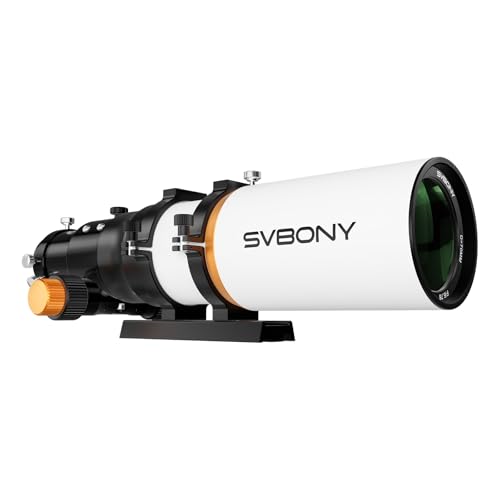
- 1TOP CHOICEBest overallSVBONY SV503 Refractor Telescope, with Field Flattener, 70mm ED RefractorView on Amazon
- 2
 TOP CHOICEBest for deep-sky astrophotographyAskar 71F Flat-Field Telescope, 71mm Aperture F6.9 ED Glass Refractor OTAView on Amazon
- 3
 TOP CHOICEBest for wide-field imaging on a budgetSVBONY SV503 Upgraded ED Refractor Telescope, 80mm F7 with Field FlattenerView on Amazon
- 4
 Best for beginnersSVBONY SV530 ED Refractor Telescope Built-in Field Flattener, 80mm ApertureView on Amazon
- 5
 Best for larger aperture visual useSVBONY SV503 Telescope for Adults High Powered, 102mm Large Diameter F7 EDView on Amazon
- 6
 Best for dedicated imaging systemsSVBONY SV550 APO Telescope with SV209 Field Flattener, SV405CC Cooled CameraView on Amazon
Our Top Picks
| Product | Best for | Key feature |
|---|---|---|
| SVBONY SV503 70mm ED Refractor | Overall wide-field use | Built-in field flattener, F6.78 |
| Askar 71F Flat-Field Telescope | Deep-sky astrophotography | Quadruplet air-spaced APO design |
| SVBONY SV503 Upgraded 80mm F7 | Wide-field imaging on a budget | 0.8X focal reducer included |
| SVBONY SV530 ED 80mm f/6 | Beginners | Dual-speed focuser, 480mm focal length |
| SVBONY SV503 102mm F7 ED | Larger aperture visual use | 102mm ED objective, dual-speed focuser |
| SVBONY SV550 APO 122mm F7 | Dedicated imaging systems | 122mm APO with field flattener and 0.8X reducer |
SVBONY SV503 Refractor Telescope, with Field Flattener, 70mm ED Refractor
SVBONY SV503 Refractor Telescope, with Field Flattener, 70mm ED Refractor | F6.78 Focal Ratio, Extra Low Dispersion Achromatic OTA, Telescope for Adults, for Astrophotography Visual Astronomy
Best for: Overall wide-field use
This is a compact, versatile refractor for people who want a bright, flat field for both visual observing and entry-level astrophotography. Its short focal ratio keeps star fields and large nebulae framed well at low power. For another angle, check out Reflector or Refractor Telescope for Beginner: Which Should You Choose?.
Key specs
- 70mm aperture
- Focal ratio F6.78
- Extra low dispersion achromatic optical tube
- Includes field flattener
Pros
- Built-in field flattener helps keep stars sharp toward the edges
- Short tube length makes it easy to carry and set up
- Fast focal ratio suits wide star fields and nebulae
Cons
- Smaller aperture limits faint detail on deep-sky targets
- Mount and accessories are usually needed separately
Bottom line: A strong first choice for someone who wants one scope for wide views and light astrophotography.
View on AmazonAskar 71F Flat-Field Telescope, 71mm Aperture F6.9 ED Glass Refractor OTA
Askar 71F Flat-Field Telescope, 71mm Aperture F6.9 ED Glass Refractor OTA, Quadruplet air-Spaced APO, 230mm Vixen Dovetail Plate for Deep Sky Astrophotography and Visual Astronomy
Best for: Deep-sky astrophotography
Designed around a flat-field optical layout, this model is aimed at imagers who want even illumination and color correction across a camera sensor. It suits people already comfortable with mounts and cameras.
Key specs
- 71mm aperture
- Focal ratio F6.9
- ED glass optics
- 230mm Vixen dovetail plate
Pros
- Quadruplet air-spaced design is built for flat, color-corrected fields
- Vixen dovetail plate fits common mounting systems
- Well suited to long-exposure deep-sky work
Cons
- Requires a capable mount and camera setup to show its strengths
- Less immediately rewarding for purely visual observers
Bottom line: Best for imagers who already own or plan to build a dedicated astrophotography rig.
View on AmazonSVBONY SV503 Upgraded ED Refractor Telescope, 80mm F7 with Field Flattener
SVBONY SV503 Upgraded ED Refractor Telescope, 80mm F7 with Field Flattener | OTA with 0.8X Focal Reducer, Faster Imaging & Clear Edge-to-Edge, Telescope for Adults Deep-Sky Astronomical Observation
Best for: Wide-field imaging on a budget
This model is intended for people who want more aperture than a 70mm scope while keeping a wide, edge-to-edge field. The included focal reducer is aimed at faster imaging.
Key specs
- 80mm aperture
- Focal ratio F7
- Field flattener and 0.8X focal reducer
- Extra low dispersion optics
Pros
- Focal reducer shortens exposure times for wide-field photos
- Larger aperture than the 70mm version gathers more light
- Good balance of field size and light for mixed use
Cons
- Focal reducer can add light path complexity for new users
- Still a modest aperture for very faint galaxies
Bottom line: A practical choice for wide-field imaging when you want more light than a small refractor offers.
View on AmazonSVBONY SV530 ED Refractor Telescope Built-in Field Flattener, 80mm Aperture
SVBONY SV530 ED Refractor Telescope Built-in Field Flattener, 80mm Aperture | f/6 Focal Ratio 480mm Focal Length, Dual‑speed Focuser, Wide-Field Imaging, Visual & Astrophotography for Astronomy Beginn
Best for: Beginners
The f/6 focal ratio and 480mm focal length give a wide view that is easy to point and frame. The dual-speed focuser makes fine focusing less frustrating for newcomers.
Key specs
- 80mm aperture
- f/6 focal ratio, 480mm focal length
- Built-in field flattener
- Dual-speed focuser
Pros
- Dual-speed focuser makes precise focusing easier
- Wide field at low power helps beginners find targets
- Built-in flattener reduces extra accessories
Cons
- Not ideal for high-power planetary viewing
- A sturdy mount is still needed for steady views
Bottom line: A friendly starting point for beginners who want wide, bright views of the night sky.
View on AmazonSVBONY SV503 Telescope for Adults High Powered, 102mm Large Diameter F7 ED
SVBONY SV503 Telescope for Adults High Powered, 102mm Large Diameter F7 ED | Extra Low Dispersion Achromatic OTA, Dual-Speed Focuser, Refractor Telescope for Planets Deep Sky Astrophotography Visual
Best for: Larger aperture visual use
A 102mm objective collects noticeably more light than the smaller models here, which helps with fainter deep-sky objects and brighter planetary detail. It is aimed at visual observers who want more aperture without leaving the wide-field format.
Key specs
- 102mm aperture
- Focal ratio F7
- Extra low dispersion achromatic optics
- Dual-speed focuser
Pros
- Larger aperture gathers more light for visual observing
- Dual-speed focuser aids precise focus
- Good for both nebulae and planetary targets
Cons
- Heavier, so the mount needs to be stable
- Larger tube is less convenient for travel
Bottom line: Ideal for visual observers who want more light and detail from a refractor.
View on AmazonSVBONY SV550 APO Telescope with SV209 Field Flattener, SV405CC Cooled Camera
SVBONY SV550 APO Telescope with SV209 Field Flattener,SV405CC Cooled Camera | 122mm F7 Telescope for Adults High Powered, 87mm Focus Travel Distance , 0.8X Focal Reducer, SV405CC Astrophotography Came
Best for: Dedicated imaging systems
This is a larger apochromatic system bundled with a field flattener, focal reducer, and a cooled camera option. It suits imagers who want a complete setup rather than piecing components together.
Key specs
- 122mm aperture
- Focal ratio F7
- Apochromatic optics
- Includes field flattener and 0.8X focal reducer
Pros
- Apochromatic design aims for strong color correction
- Bundled flattener and reducer simplify imaging setup
- Large aperture supports detailed deep-sky imaging
Cons
- Heavier system needs a robust mount
- Full setup requires more knowledge and equipment
Bottom line: Best for experienced imagers who want a complete wide-field imaging package.
View on AmazonBuying Guide
Aperture and light gathering
Aperture controls how much light the telescope collects, which determines how faint an object you can see and how much detail appears. For wide-field work, a moderate aperture of 70mm to 80mm is a practical balance. Larger apertures show more on faint nebulae but are heavier and need better mounts.
Good picks for this: SVBONY SV503 102mm F7 ED, SVBONY SV503 Upgraded ED 80mm F7
Focal ratio and field of view
A low focal ratio, such as f/6 or f/7, produces a wide field of view at low magnification. This is what makes a refractor suited to large star fields and nebulae. Check the focal length and the eyepiece or sensor size together to estimate the true field width you will get.
Good picks for this: SVBONY SV530 ED 80mm f/6, SVBONY SV503 70mm ED Refractor
Field flatness and built-in flatteners
Many refractors can show star bloating or curvature toward the edges of the field. A built-in or included field flattener helps keep stars sharp across the view, which matters most for astrophotography. Confirm whether the flattener is included or sold separately.
Good picks for this: Askar 71F Flat-Field Telescope, SVBONY SV550 APO 122mm F7
Optical design: ED, APO, and achromatic
Extra low dispersion (ED) and apochromatic (APO) glass reduce false color around bright objects compared with simple achromatic designs. Manufacturers describe these designs as improving color correction, which is especially useful for imaging and high-contrast targets.
Good picks for this: Askar 71F Flat-Field Telescope, SVBONY SV550 APO 122mm F7
Focuser quality
A smooth, dual-speed focuser makes critical focusing easier, especially with heavier cameras or eyepieces. Owners often point to focuser feel as a major factor in daily satisfaction, so look for a model that explicitly mentions fine-focus control.
Good picks for this: SVBONY SV530 ED 80mm f/6, SVBONY SV503 102mm F7 ED
Mount and tube weight
Tube weight and mount capacity matter more than many buyers expect. A heavier aperture needs a stable mount to avoid vibration, and wide-field imaging can be sensitive to tracking errors. Check the manufacturer’s stated load rating for your mount before buying.
Good picks for this: SVBONY SV503 102mm F7 ED, SVBONY SV550 APO 122mm F7
Portability and storage
Shorter tubes and lighter optics are easier to carry outdoors and store between sessions. If you observe from a backyard, weight matters less; if you travel to dark sites, a compact tube can make the difference in how often you actually go out.
Good picks for this: SVBONY SV503 70mm ED Refractor, SVBONY SV530 ED 80mm f/6
FAQ
What is a wide field refractor telescope used for?
It is mainly used for observing large star fields, open clusters, and extended nebulae, and for wide-angle astrophotography. Its low magnification and wide field make these targets easier to frame and enjoy.
Is a wide field refractor good for planets?
It can show planets, but it is not optimized for high magnification. Larger aperture models with good optics perform better on planets than small wide-field scopes, which are better suited to broad views.
Do I need a field flattener?
For visual observing, you may not need one. For astrophotography, a flattener is strongly recommended because it helps keep stars sharp to the edges of a camera sensor.
What focal ratio is best for wide-field viewing?
Focal ratios around f/6 to f/7 are commonly described as good for wide views. Faster ratios give a wider field but can be more demanding on eyepieces and focusing.
Can a beginner use a wide field refractor?
Yes. Models with dual-speed focusers and built-in flatteners are generally easier for beginners. Plan on a stable mount and start with low-power eyepieces to find targets.
Refractor or reflector for wide views?
Refractors tend to have sealed tubes and minimal maintenance, while reflectors offer more aperture per dollar in general. For wide-field, high-contrast views, a refractor is often preferred. For a deeper comparison, see Telescope vs Binoculars for Astronomy: Which Should You Choose?.
Conclusion
A wide field refractor telescope suits anyone who wants broad, bright views of star fields and nebulae, or who plans to photograph large parts of the sky. For overall use, the SVBONY SV503 70mm ED is a practical starting point. The Askar 71F fits imagers building a dedicated system, while the SVBONY SV503 Upgraded 80mm F7 offers a strong wide-field imaging option with more light. The SVBONY SV530 ED 80mm f/6 suits beginners, the SVBONY SV503 102mm F7 ED fits visual observers wanting more aperture, and the SVBONY SV550 APO 122mm F7 is the choice for experienced imagers who want a complete package. If you are weighing imaging gear, see 7 Best Cameras for Astrophotography with Telescope: 7 Picks Compared (2026) and Top 6 APO Refractor Telescopes for Astrophotography Compared (2026).
Sources
- Background on telescope optics, light gathering and how observing targets are studied (nasa.gov)
- Beginner guides to telescope types, focal ratio and observing techniques
- Professional resources on astronomy education and observing practice
Related reading
- Is a Barlow Lens Worth It? 6 Picks Compared for Every Telescope
- Alt Azimuth Telescope Mount: How It Works and Who Should Use One
- 7 Best Barlow Lens for Telescope Picks Compared (2026)

About Elliot Harper
Elliot has been writing about telescopes & stargazing for this site, with an eye on clear explanations, honest trade-offs and options for different needs and budgets.
About the author
Elliot Harper writes reviews and buying guides for Astronomy Site.